Interpreters making health care safer, more accessible
Advertisement
Read this article for free:
or
Already have an account? Log in here »
To continue reading, please subscribe:

Digital Subscription
One year of digital access for only $205*
- Enjoy unlimited reading on winnipegfreepress.com
- Read the E-Edition, our digital replica newspaper
- Access News Break, our award-winning app
- Play interactive puzzles
*First annual payment billed as $205.00 + GST for one year. This annual subscription will automatically renew at $233.00 + GST every 52 weeks (10% off the regular annual price of $259.35). Offer available to new and qualified returning subscribers only. Cancel any time.
To continue reading, please subscribe:
Add Free Press access to your Brandon Sun subscription for only an additional
$1 for the first 4 weeks*
- Enjoy unlimited reading on winnipegfreepress.com
- Read the E-Edition, our digital replica newspaper
- Access News Break, our award-winning app
- Play interactive puzzles
*Your next Brandon Sun subscription payment will increase by $1.00 and you will be charged $17.95 plus GST for four weeks. After four weeks, your payment will increase to $24.95 plus GST every four weeks.
Read unlimited articles for free today:
or
Already have an account? Log in here »
Hey there, time traveller!
This article was published 28/02/2020 (2407 days ago), so information in it may no longer be current.
Imagine going to your physician to seek help with a significant health-care concern. Now imagine you can’t understand one another because neither of you speak the same language.
That’s a scenario that plays out an average of more than 80 times a day in doctors’ offices and health-care facilities throughout the city, and it’s a significant barrier for both patients and health-care staff.
The Winnipeg Regional Health Authority’s Language Access Interpreter Service is there to bridge the communication gap. In order to access the program, patients or their families should ask their physician, nurse or health-care provider to make the request for an interpreter.
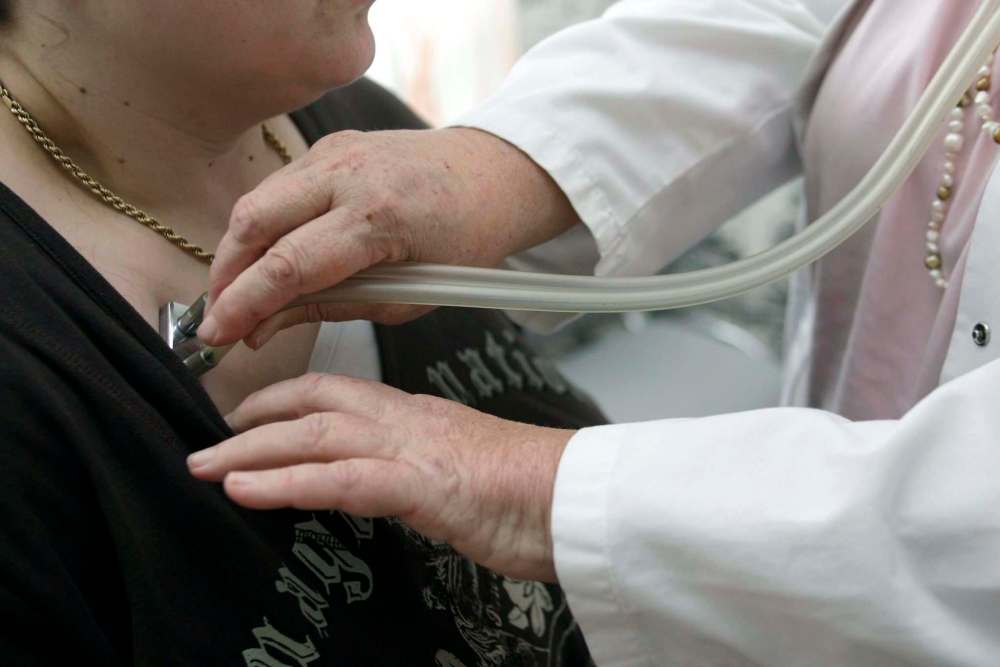
When it was formed in 2007, the WRHA’s Language Access team consisted of 14 interpreters offering service in 12 languages at the Women’s Hospital and Children’s Hospital. That year, the team completed just over 400 requests for service. In 2018-2019, the team successfully completed more than 30,000 requests for service — a number they expect to match or exceed this year.
The team — which now provides service on a referral basis at no cost to every site and program across the WRHA, as well as to CancerCare Manitoba and doctors’ offices in Winnipeg — has grown to 95 professionally trained interpreters, who provide face-to-face service in 32 languages. They are backed by an external agency that offers over-the-phone interpretation services in more than 200 international languages.
Interpretation requests for Indigenous languages such as Cree are referred to the WRHA’s Indigenous Health program, while requests for sign language are referred to ECCOE, a local non-profit organization.
The need for interpreters is significant. Statistics show that the number of immigrant landings in Manitoba in 2019 reached 18,905, the highest in the province’s 150-year history. These newcomers are contributing in wonderful ways to our economy and to the cultural diversity of the province, and Language Access interpreters play an important role in helping them improve their access to safe and equitable health care services.
There is overwhelming international evidence that demonstrates the risks associated with language barriers in health care. Misunderstandings about a diagnosis or medication dosage, for example, can lead to increased patient safety risks.
Having access to professional interpreters improves efficiency and service use for newcomers. It also improves health outcomes by facilitating informed consent and improved understanding and access for patients. That, in turn, leads to increased patient and provider satisfaction.
Perhaps most importantly, professional interpretation gives patients with no or limited English skills a voice in a health-care system that can otherwise seem complicated and difficult to navigate.
Having access to professional interpreters whom patients can trust for their neutrality, accuracy, cultural sensitivity and confidentiality allows them take an active role in their own health care. Patients working with interpreters may feel more at ease, may be more willing to share information about their health, and may enjoy an improved ability to ask questions rather than having decisions made for them – all things people not facing language barriers may take for granted.
The work of an interpreter isn’t easy. They have to be ready to face any situation on a given day, ranging from joyful events like births to delivering emotionally difficult messages such as a dire diagnosis or death. They are there for the whole spectrum of service – from home care visits to the operating room – and a lot is riding on their training and professionalism.

That’s why becoming an interpreter for the WRHA involves much more than the ability to speak another language.
Candidates undergo rigorous screening and training prior to being hired, including the completion of nationally recognized interpreter skills assessment tests, such as the Cultural Interpreter Language and Interpreting Skills Assessment Tools (CILISAT) and the Interpreter Language & Skills Assessment Tool (ILSAT). Only about 55 percent of the individuals the WRHA tests are successful.
In addition, candidates must complete the WRHA’s in-house training program, sign a confidentiality pledge, learn medical terminology, and adhere to the WRHA’s Code of Ethics and Standards of Practice for Interpreters. It can take six to eight months to complete the process.
Why do they do it? For many, it allows them to support their respective communities. For others, it’s because, like the clients and health care providers they serve, they simply recognize the importance of the work. Whatever their reasons, Manitobans can take pride in their professionalism and dedication to helping people communicate effectively through their health-care journey.
Allana Carlyle is manager, Language Access for the Winnipeg Regional Health Authority.
Most requested languages*
Face-to-face and over-the-phone interpretation
October 1 to December 31, 2019
Language request percentage
Arabic 17%
Tigrinya 11%
Cantonese 8%
Somali 7%
Kurmanji 7%
Mandarin 6%
Punjabi 6%
French 4%
Swahili 4%
Vietnamese 3%
Russian 3%
Korean 3%
Amharic 2%
Spanish 2%
Tagalog 2%
Other 15%
Source: WRHA Language Access Quarterly Report
*Does not include requests for Indigenous languages, which are handled through Indigenous Health, or requests for ASL, which are handled through ECCOE.
Related Articles
Warm and fuzzy for Winnipeg winter



Advertisement Advertise With Us
Advertisement Advertise With Us