Canada prepared to monitor for community spread of COVID-19: Tam

Advertisement

Advertise with us

OTTAWA - Canada's top public-health official Dr. Theresa Tam says Canada has begun to look at tracking local spread of the novel coronavirus, just as the United States confirmed a case of the virus that does not appear linked with international travel.

Read this article for free:


By clicking the button above, an account will be created and you will begin to receive some of our recommended newsletters. You may opt out of any newsletter by visiting your Email and Communication Preferences page or by clicking "unsubscribe" at the bottom of any email.

or

Already have an account? Log in here »

To continue reading, please subscribe:

Digital Subscription

One year of digital access for only $1.44 a week*

  • Enjoy unlimited reading on winnipegfreepress.com
  • Read the E-Edition, our digital replica newspaper
  • Access News Break, our award-winning app
  • Play interactive puzzles

*Billed as $5.77 plus GST every four weeks. After 52 weeks, price increases to the regular rate of $19.95 plus GST every four weeks. Offer available to new and qualified returning subscribers only. Cancel any time.

To continue reading, please subscribe:

Add Free Press access to your Brandon Sun subscription for only an additional

$1 for the first 4 weeks*

  • Enjoy unlimited reading on winnipegfreepress.com
  • Read the E-Edition, our digital replica newspaper
  • Access News Break, our award-winning app
  • Play interactive puzzles
Start now

*Your next Brandon Sun subscription payment will increase by $1.00 and you will be charged $17.95 plus GST for four weeks. After four weeks, your payment will increase to $24.95 plus GST every four weeks.

Hey there, time traveller!
This article was published 27/02/2020 (2437 days ago), so information in it may no longer be current.

OTTAWA – Canada’s top public-health official Dr. Theresa Tam says Canada has begun to look at tracking local spread of the novel coronavirus, just as the United States confirmed a case of the virus that does not appear linked with international travel.

The risk of contracting the disease in Canada is low, but for the second day in a row Thursday the number of new cases confirmed outside China was greater than the number of new cases within the country where the illness was first detected.

Dr. Tedros Adhanom Ghebreyesus, the World Health Organization’s director general, said the world is at a decisive point in its fight to contain the virus, which has now spread to 46 countries.

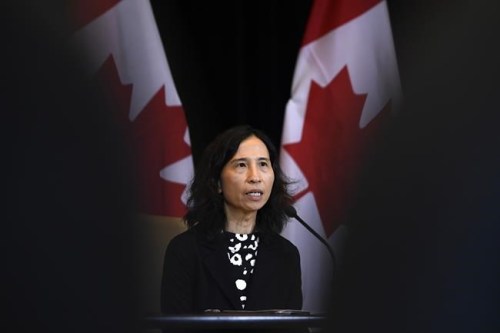
Chief Public Health Officer of Canada Dr. Theresa Tam speaks at a press conference in Ottawa, on Sunday, Jan. 26, 2020. Canada's chief public health officer Theresa Tam says the window of opportunity to contain the spread of the novel coronavirus is closing as the virus begins to spread in more and more countries. THE CANADIAN PRESS/Justin Tang

“In the past 24 hours, seven countries have reported cases for the first time,” Ghebreyesus said in a briefing, adding that “community-based transmission” — when the bug spreads within new areas, rather than being brought in by one person at a time from somewhere else — is being seen in more countries as well.

The U.S. confirmed one case of the new coronavirus, or COVID-19, in California Thursday that could not be linked to international travel, suggesting the person contracted the virus within the United States.

The woman, who was not identified, first sought medical care at a hospital in Vacaville, a city of more than 100,000 people about 95 kilometres from San Francisco.

She stayed there for three days but doctors did not test her for the virus because she did not meet federal testing criteria, NorthBay Healthcare Group president Aimee Brewer said in a statement. The patient was then transferred to a Sacramento hospital where she tested positive for the virus.

In a briefing Thursday, Tam said Canada has methods to monitor for possible spread of the virus within the country — systems typically used to monitor influenza — and if public-health agencies discover the spread of COVID-19 they will work quickly to try to contain it.

“I think that’s actually something that all countries should be moving toward as well,” she said.

In the meantime, while Canada is still trying to keep COVID-19 out of the country, the public health agency is taking stock of the need for personal protective equipment and other supplies to make sure there are enough to go around in case of a pandemic outbreak.

On Thursday night, Quebec public health officials reported the province’s first presumptive case of the coronavirus.

Health Minister Danielle McCann said the patient, a woman from the Montreal region, had recently returned from Iran.

She said testing by the province’s public health lab came back positive for COVID-19, but the result needs to be confirmed by the National Microbiology Lab in Winnipeg.

Earlier Thursday, Ontario confirmed its first case of person-to-person transmission. The patient is the husband of a woman believed to have contracted the virus in Iran, which has seen a sudden rash of cases in the last week.

The husband was not in Iran with his wife and health officials said is marks the first time Ontario has seen a case of human-to-human transmission — the patients in all of the other cases had recently travelled to China.

British Columbia has also had a case of person-to-person transmission, also involving a man who had close contact with a woman who had recently been to Iran.

There are 13 confirmed cases of the virus in Canada, all in Ontario or B.C., and so far all have been linked to international travel or close contact with someone who has recently returned to the country.

If Quebec’s case is confirmed, it would be the 14th confirmed case of the virus in Canada, and the first outside of Ontario and B.C.

Globally, there are 82,000 confirmed cases of COVID-19 and more than 2,800 deaths.

This report by The Canadian Press was first published Feb. 27, 2020.

—With files from the Associated Press and Allison Jones in TORONTO

Report Error Submit a Tip

More Stories

Waiting for Cormier verdict the ‘calm before the storm’

Katie May 6 minute read Preview

Waiting for Cormier verdict the ‘calm before the storm’

Katie May 6 minute read Thursday, Feb. 22, 2018

As the jury room door closed behind the seven women and four men who are now deliberating on the evidence against Tina Fontaine’s accused killer, Thelma Favel rose from the chair she’s occupied for most of Raymond Cormier’s second-degree murder trial.

Almost every day over the past three weeks, Favel, the woman who raised 15-year-old Tina, has sat right up front, directly across from the jury box, listening, sobbing and soaking in disturbing details of the teen’s last days that have come to light over the course of Cormier’s second-degree murder trial.

On Wednesday afternoon, after Court of Queen’s Bench Chief Justice Glenn Joyal instructed the jury and sent them off to be sequestered until they decide whether 56-year-old Raymond Cormier is guilty of killing Tina, Favel got up and hugged Crown prosecutor Breta Passler. It was one of many moments, this one shielded from jurors, that have long since proven the emotional impact of the case and the lasting power of Tina’s legacy.

Tina’s death sparked a public outcry that renewed calls for a national inquiry into disproportionately high rates of missing and murdered Indigenous women and girls across Canada, and the criminal trial for the man accused of killing her hasn’t happened in a vacuum.

Read
Thursday, Feb. 22, 2018

Opera singer David Daniels no longer in singers’ union following sexual assault guilty plea

The Associated Press 2 minute read Preview

Opera singer David Daniels no longer in singers’ union following sexual assault guilty plea

The Associated Press 2 minute read Thursday, Dec. 21, 2023

NEW YORK (AP) — Countertenor David Daniels is no longer a member of the union for singers following his guilty plea to a charge of sexual assault.

The 57-year-old and his husband, Scott Walters, pleaded guilty to sexual assault of an adult, a second-degree felony, in Houston's Harris County District Court on Aug. 4. Their accuser was aspiring opera singer Sam Schultz.

They both were sentenced to eight years’ probation and required to register as sex offenders.

American Guild of Musical Artists spokesperson Alicia Cook said Wednesday that Daniels is no longer a member of the union.

Read
Thursday, Dec. 21, 2023

Canada eyes community COVID-19 transmission

Laura Osman, The Canadian Press 4 minute read Preview

Canada eyes community COVID-19 transmission

Laura Osman, The Canadian Press 4 minute read Thursday, Feb. 27, 2020

OTTAWA - Canada's top public-health official Dr. Theresa Tam says Canada has begun to look at tracking local spread of the novel coronavirus, just as the United States confirmed a case of the virus that does not appear linked with international travel.

The risk of contracting the disease in Canada is low, but for the second day in a row Thursday the number of new cases confirmed outside China was greater than the number of new cases within the country where the illness was first detected.

Dr. Tedros Adhanom Ghebreyesus, the World Health Organization's director general, said the world is at a decisive point in its fight to contain the virus, which has now spread to 46 countries.

"In the past 24 hours, seven countries have reported cases for the first time," Ghebreyesus said in a briefing, adding that "community-based transmission" — when the bug spreads within new areas, rather than being brought in by one person at a time from somewhere else — is being seen in more countries as well.

Read
Thursday, Feb. 27, 2020

Science-art collaboration injects dose of emotion into cold, hard truths

Sarah Lawrynuik 5 minute read Preview

Science-art collaboration injects dose of emotion into cold, hard truths

Sarah Lawrynuik 5 minute read Wednesday, Apr. 28, 2021

Looking at spreadsheets and map plots of trees is far beyond Rhian Brynjolson’s typical day as a visual artist, but she became entranced and inspired by data collected by Canadian scientists for a new art project.

Her hope is to try and bring the numbers, map dots and statistics to life in a new way to help the public better connect to climate science.

Falcon Lake’s Brynjolson is one of 12 Canadian artists who participated in an art-science collaboration exhibit, co-ordinated by the Global Water Futures program out of the University of Saskatchewan. The project saw the artists paired with researchers and scientists across the country who then engaged in conversations to try to inspire a new angle to their art.

“The whole idea behind it is: water is life,” says Louise Arnal, the project lead, and a post-doctoral fellow at the Centre for Hydrology and Coldwater Laboratory.

Read
Wednesday, Apr. 28, 2021

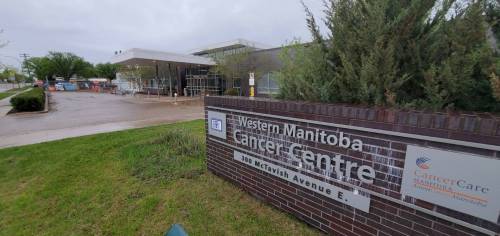
Westman to lose sole medical oncologist

Rylee Gerrard 5 minute read Preview

Westman to lose sole medical oncologist

Rylee Gerrard 5 minute read Updated: 9:26 AM CDT

BRANDON — Western Manitoba is about to lose its only medical oncologist, leaving just 22 in the province — all of whom are in Winnipeg.

Brandon West MLA Wayne Balcaen raised the issue during question period Thursday, saying the departure of Dr. Brady Anderson will be a “major loss” for the region.

After four years working out of the Western Manitoba Cancer Centre in Brandon, Anderson’s last day will be Nov. 13.

“He literally sees hundreds of patients within the Westman area, and now those individuals will have to travel to Winnipeg to get that personal service,” Balcaen said, calling Anderson’s impending departure “catastrophic.”

Read
Updated: 9:26 AM CDT

Is Canada headed for time chaos this weekend?

Michelle Bastian 5 minute read 2:00 AM CDT

When Manitoba Premier Wab Kinew declared Sept. 17 that the province would remain on permanent daylight time, he suggested it was a historical moment people would share with their “great-great-grandkids.” But, while Sunday, Nov. 1 has been heralded as the date many Canadians will stop changing their clocks, there are rumblings behind the scenes suggesting this will actually cause more trouble than ever before.

There are, of course, the warnings from chrono-biologists and sleep scientists about the damage permanent daylight time will do. The lighter evenings will mean many more dark mornings. But there is another set of problems in the offing in the critical infrastructure that underpins our digital lives.

While it used to be common to spend the Sunday morning after a time change going around our homes updating the clocks, we now wake up to devices that have already adjusted to the new time. These automatic updates occur regularly for daylight time, as well as when we travel to new time zones.

Our clocks are able to change by themselves owing to the hard work of a group of volunteers who were recently named in a list of the people who hold up the internet. This group, led by Paul Eggert, a computer scientist at UCLA, maintains a little-known tool called the Time Zone Database. Since the 1980s, it has kept track of regional, national and international debates about clock time and provided an up-to-date table of what time it should be on our walls.