Coronavirus poses tough challenge for economic policymakers
Advertisement
Read this article for free:
or
Already have an account? Log in here »
To continue reading, please subscribe:

Digital Subscription
One year of digital access for only $205*
- Enjoy unlimited reading on winnipegfreepress.com
- Read the E-Edition, our digital replica newspaper
- Access News Break, our award-winning app
- Play interactive puzzles
*First annual payment billed as $205.00 + GST for one year. This annual subscription will automatically renew at $233.00 + GST every 52 weeks (10% off the regular annual price of $259.35). Offer available to new and qualified returning subscribers only. Cancel any time.
To continue reading, please subscribe:
Add Free Press access to your Brandon Sun subscription for only an additional
$1 for the first 4 weeks*
- Enjoy unlimited reading on winnipegfreepress.com
- Read the E-Edition, our digital replica newspaper
- Access News Break, our award-winning app
- Play interactive puzzles
*Your next Brandon Sun subscription payment will increase by $1.00 and you will be charged $17.95 plus GST for four weeks. After four weeks, your payment will increase to $24.95 plus GST every four weeks.
Read unlimited articles for free today:
or
Already have an account? Log in here »
Hey there, time traveller!
This article was published 25/02/2020 (2412 days ago), so information in it may no longer be current.
WASHINGTON – The fast-moving coronavirus isn’t just confounding health officials. It’s also bedeviling policymakers and central bankers who are struggling to assess the economic damage from an outbreak that’s reached 37 countries and territories, infected 80,000 people and killed 2,700 worldwide.
They don’t know where or how fast the virus will spread. They can’t draw on clear precedents to consider what to do. And the tools they normally use to fight economic slumps — interest-rate cuts, government spending hikes and tax relief — either might not work very well, lack broad support or carry their own risks.
If they overreact, policymakers can cause self-defeating panic. Yet if they respond too slowly or timidly, they risk having the economic damage deepen and spread.
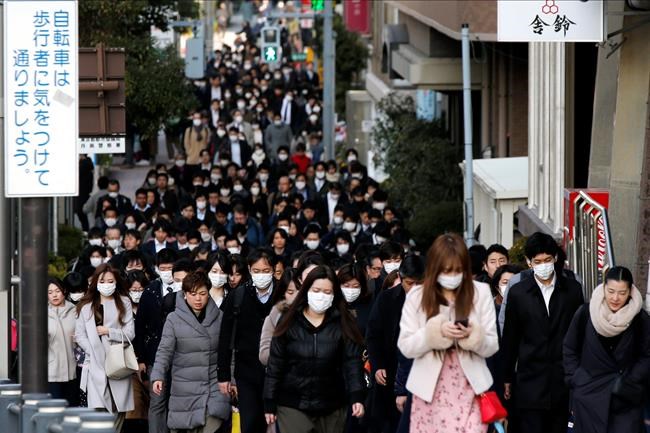
Stock markets tumbled and bond yields sank Tuesday for a second day on rising fears that COVID-19 and the quarantines being imposed to fight it are obstructing global supply chains and could derail corporate earnings and the global economy. The Dow Jones industrial plunged 878 points — 3% — after plummeting more than 1,000 points Monday, the sharpest drop in two years.
“This outbreak will have a significant effect on worldwide demand for tourism, travel, and other services, while the supply chain disruptions and increased uncertainty will hurt current production as well as investment,” said Eswar Prasad, a Cornell University economist. “The timing of the outbreak is especially unfortunate … Europe and Japan are flirting with recession while China and India had been losing growth momentum.’’
Mark Zandi, chief economist at Moody’s Analytics, suggested that the European Central Bank has little ability to counteract a recession. It has cut its benchmark rate into negative territory, to -0.5%, and is already buying government bonds to try to further lower longer-term rates.
“What is the policy response in Europe?” Zandi asked. “There is none.”
With so many other economies overseas struggling, the U.S. would likely suffer a hit just from the overseas slowdown, he said.
Catherine Mann, chief economist at Citi, said the financial services giant has cut its forecast for global economic growth this year to 2.5%, the weakest pace since the Great Recession more than a decade ago.
When the virus began grabbing headlines last month, most economists were relatively sanguine about the economic damage it could cause. They predicted a repeat of what happened when the SARS outbreak hit China and its neighbours in 2003: A short-lived blow to economic output, followed by a relatively quick rebound.
But the virus has proved virulent and fast-moving. No one expected the virus to slam countries as far-flung as Italy and South Korea. And the quarantines and lock-downs that governments have imposed to try to stop the outbreak have brought business to a standstill in hard-hit places such as Chinese industrial hub of Wuhan, a city of 11 million where COVID-19 originated.
What happens in China carries far greater economic weight than it did 17 years ago. Back then, China accounted for just 4% of the global economy. Now, it’s 16%. And its factories and warehouses are deeply integrated with the rest of the world, supplying toys, shoes, cellphones to importers around the world.
“This is unprecedented,’’ said Sung Won Sohn, an economist at Loyola Marymount University in California. “That’s one of the reasons we cannot really say this will be another SARS.’’
Policymakers have decades of experience fighting traditional downturns. Typically, consumers and businesses lose confidence. They become reluctant to spend and invest, potentially creating a self-fulfilling downward spiral.
In response, governments can inject money into public works projects or approve sharp tax cuts. The Federal Reserve and other central banks can slash interest rates. Given enough of a financial incentive to borrow and spend, consumers eventually will open their wallets. And companies will hire, buy equipment and open new factories, offices and shops.
So revving up demand is something policymakers are used to. But this time, they don’t have a go-to remedy for the kind of supply shock that the coronavirus is causing — the lockdown of factories in China and elsewhere that is cutting off the flow of raw materials and finished products to customers around the globe.
“Fed policy can’t fix that,’’ said Joe Brusuelas, chief economist at the tax advisory firm RSM.
The virus and the health measures that are meant to combat it are depressing consumer demand. Families quarantined in Wuhan and elsewhere tend to “stay at home and cut back on discretionary spending for eating, recreation and travel,’’ said economist Paul Sheard, senior fellow at Harvard Kennedy School.
Earlier this week, Beijing pledged to enact tax cuts and other aid to help companies recover from the crisis. Chinese officials expressed confidence that economic growth can meet the Communist Party’s targets despite anti-virus policies that have shut down much of the world’s No. 2 economy.
Elsewhere, policymakers face difficult decisions.
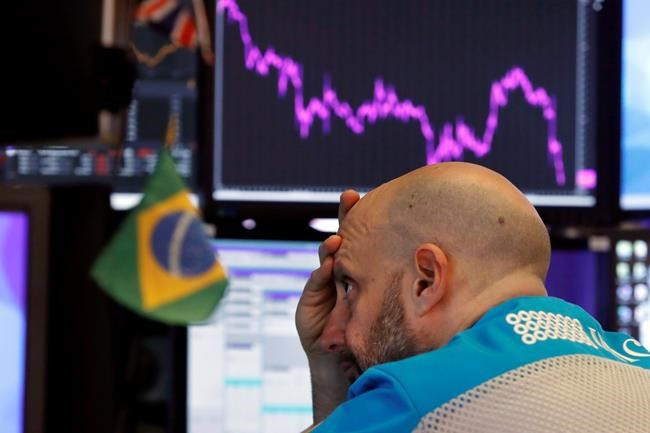
“A big looming shock calls for an early and aggressive policy response, but such a response could turn out to be unnecessary and look panicky,’’ Sheard said. On the other hand, if COVID-19 continues to inflict damage, “policymakers who take an inordinate wait-and-see approach will look to have been heavy-footed and complacent in retrospect.’’
So far, the Fed has chosen to monitor the health crisis and its economic fallout and hold off on any decision to cut rates below their already low levels. Its cautious approach is beginning to draw criticism from some.
“They need to be proactive,’’ said Loyola Marymount’s Sohn.
Fed officials have made clear that they are monitoring the virus but do not have a clear handle on its current or potential impact.
“I’m really a data wonk — I’ll look at anything that moves,” Richard Clarida, vice chair of the Federal Reserve, said Tuesday at an economics conference. But he said it’s “still too soon to even speculate about either the size or the persistence” of the coronavirus’ effects.
Loretta Mester, president of the Federal Reserve Bank of Cleveland, said this week that the Fed will keep in close touch with its business contacts to see how the disease affects their sales and outlooks. That may be where policymakers will see the first signs of an impact.
The Fed reduced rates three times last year, leaving its benchmark rate in a low range of 1.5% to 1.75%. There’s little more room to cut. Likewise, the government has already enacted tax cuts and spending increases that have put the nation on track to record its first $1 trillion budget deficit in eight years.
“There really isn’t much we can do in terms of fiscal policy,” Sohn said. “Our deficits are so high, and it takes time for Congress to act. I’m not expecting much from the administration.’’

Larry Kudlow, President Donald Trump’s top economic adviser, however, promised Tuesday that “we will be ready with a number of measures, emergency measures, common sense measures” if the virus’ “contagion rate picks up.’’
___
AP Writer Kevin Freking in Washington contributed to this report.
___
Follow Paul Wiseman on Twitter at @PaulWisemanAP and Christopher Rugaber at http://Twitter.com/ChrisRugaber
Related Articles
World battles virus epidemic as cases multiply outside China
Advertisement Advertise With Us
Advertisement Advertise With Us