Canadians in Iran ask for consular services in wake of coronavirus outbreak

Advertisement

Advertise with us

OTTAWA - Canadians in Iran say they have no way to leave the country now that it is dealing with an outbreak of the novel coronavirus and they are asking Ottawa to help them come home — or at least provide consular services while they are there.

Read this article for free:


or

Already have an account? Log in here »

To continue reading, please subscribe:

Subscribe and receive a limited-edition Free Press branded hat or tote.

Digital Subscription

One year of digital access for only $205*

  • Enjoy unlimited reading on winnipegfreepress.com
  • Read the E-Edition, our digital replica newspaper
  • Access News Break, our award-winning app
  • Play interactive puzzles

*First annual payment billed as $205.00 + GST for one year. This annual subscription will automatically renew at $233.00 + GST every 52 weeks (10% off the regular annual price of $259.35). Offer available to new and qualified returning subscribers only. Cancel any time.

To continue reading, please subscribe:

Add Free Press access to your Brandon Sun subscription for only an additional

$1 for the first 4 weeks*

  • Enjoy unlimited reading on winnipegfreepress.com
  • Read the E-Edition, our digital replica newspaper
  • Access News Break, our award-winning app
  • Play interactive puzzles
Start now

*Your next Brandon Sun subscription payment will increase by $1.00 and you will be charged $17.95 plus GST for four weeks. After four weeks, your payment will increase to $24.95 plus GST every four weeks.

Hey there, time traveller!
This article was published 25/02/2020 (2418 days ago), so information in it may no longer be current.

OTTAWA – Canadians in Iran say they have no way to leave the country now that it is dealing with an outbreak of the novel coronavirus and they are asking Ottawa to help them come home — or at least provide consular services while they are there.

The federal government has repatriated more than 500 Canadians and their families from areas affected by the new strain of coronavirus, which causes a disease known as COVID-19, including Wuhan, the central Chinese city at the centre of the outbreak, and the Diamond Princess cruise ship in Japan.

The virus recently spread to Iran, which has confirmed 95 cases and 16 deaths in the last week alone. Even the Iranian deputy health minister has tested positive for the virus.
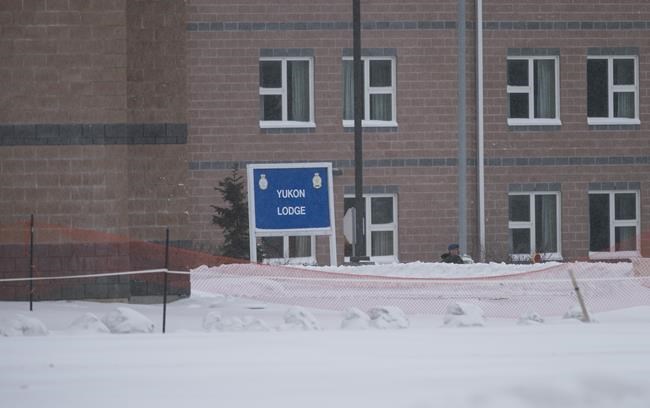
The Yukon Lodge, which will temporarily house passengers from a charter flight that took 176 Canadian citizens from the centre of the global novel coronavirus outbreak in Wuhan, China, is seen at CFB Trenton, in Trenton, Ont., on February 7, 2020. THE CANADIAN PRESS/Justin Tang

Mashhoud Nasseri, 64, said he rushed to Tehran last week to be with his family after his mother died. He was to fly home to Toronto March 2.

“Just today I heard that my flight is cancelled,” Nasseri said Tuesday by telephone from his family’s home in Tehran.

The flight itinerary was to take him from Tehran to Dubai, in the United Arab Emirates, before going on to New York and finally Toronto, but the U.A.E. has halted all flights from Iran for at least a week.

Several countries neighbouring Iran closed their land borders to anyone travelling from Iran following the viral outbreak and some others have also restricted air travel to and from the country.

Canada has not had a diplomatic presence in Iran since 2012. The federal government advises Canadians travelling to Iran that the Canadian embassy in Ankara, Turkey, is responsible for providing consular assistance for Iran. The Italian embassy in Tehran has also represented Canadian interests in Iran for the past eight years and has provided consular assistance to Canadians there when needed.

Nasseri said it’s unclear who to approach for help getting back to his wife and children in Canada.

“Basically there is nowhere to go, no one to ask,” he said.

The Iranian Canadian Congress has called on the federal government to resume providing consular services in Iran.

“Unfortunately, this is another example where a lack of diplomatic relations and consular services only harms vulnerable Canadian citizens abroad,” Younes Zangiabadi with the Iranian Canadian Congress said in an email Tuesday.

“We experienced the airplane shot down in January where families of victims had nowhere to go for support after that tragedy and this is, unfortunately, happening again with coronavirus.”

Nasseri said the mood in Tehran is tense, and some Canadians are desperate to get home. He’s looking at all his options, including the possibility of chartering a boat to another country in the Persian Gulf — though he’s not sure that will work.

Federal Health Minister Patty Hajdu said Canadian repatriation efforts are limited, given the spread of the virus globally.

“It’s difficult at this point to commit to an ongoing repatriation effort. We have to remember that it takes a lot of resources and the resources have to be focused in terms of our domestic response,” Hajdu said Tuesday in Ottawa.

Foreign Affairs Minister Francois-Philippe Champagne said Canada is monitoring the global coronavirus situation very closely, particularly in South Korea, Italy and Iran, which have all seen sudden spikes in the number of people infected with the virus.

He said he’s been in touch with foreign ministers from several countries for more information about the situation abroad, and advises anyone thinking about leaving Canada on an international trip to inquire about the status of the coronavirus in the place they are travelling to.

While all the Canadians and their families repatriated from Wuhan have been released from quarantine at Canadian Forces Base Trenton in Ontario, a group of about 50 who are still in China is hoping the federal government can charter another flight to bring them home.

Canadians in Hubei, a group advocating for those stuck in Wuhan, sent an open letter to Global Affairs Canada last week asking for help.

Global Affairs Canada said in a statement that the government continues to remain available to provide assistance for Canadians in China, to the extent possible.

Elaine Cheng, a Canadian citizen, and her husband, who has a visa, are among those looking for help.

When she contacted the embassy, she said she was told her husband cannot accompany her and called the decision “incompassionate, unfair, inhumane.”

Simon Zheng, another Canadian citizen who lives in B.C., said his wife holds a work permit and went to Wuhan to celebrate the holidays and the Chinese New Year.

He said he was supposed to meet up with his wife in mid-January but she told him to not to come because of the outbreak, and now he hopes the Canadian government will send another plane.

“We have the good faith that the government will actually help us, but we don’t know in what way.”

Canada’s top health official approved the released of the final 195 Canadians and their families after two weeks of observation.

All the Wuhan evacuees were quarantined at CFB Trenton for 14 days — the presumed incubation period of the virus — to be isolated and observed for signs of the disease now called COVID-19.

A group of 219 evacuees were allowed to leave the base last week after passing a final round of health screening.

Chief public health officer Dr. Theresa Tam says none of the evacuees from Wuhan showed any signs of the virus, and they do not pose a risk of transmitting the disease when they return to their homes.

The government has offered to transport the evacuees to Toronto, where they will make their way to their homes.

Tam says the risk of the coronavirus spreading within Canada is still low.

This report by The Canadian Press was first published Feb. 25, 2020

— With files from Hina Alam in Vancouver and The Associated Press.

Report Error Submit a Tip

More Stories

Alarm bells ring as contact tracing clock ticks on

Tom Brodbeck 4 minute read Thursday, Oct. 29, 2020

The provincial government says it doesn’t know how long it’s taking for public health officials to connect with people infected with COVID-19 or their close contacts.

With infection rates and the number of COVID-19 patients admitted to hospital growing at an alarming rate, the province’s inability (or refusal) to share contact tracing data with the public raises serious questions about how many people may be spreading the novel coronavirus unwittingly.

The Free Press has asked the provincial government repeatedly over the past week for pandemic contact tracing information, including how long it’s taking public health officials to follow up with people who test positive and to track down their close contacts.

“We do not have these statistics readily compiled, and do not have the capacity to pull them at this time,” a government spokeswoman said in an email Wednesday.

School divisions to argue against paying property taxes on buildings

Maggie Macintosh 4 minute read Preview

School divisions to argue against paying property taxes on buildings

Maggie Macintosh 4 minute read Tuesday, Mar. 29, 2022

A fall court date has been set for Winnipeg school divisions to argue why they should not have to pay municipal property taxes on any of their buildings — not just elementary, junior high and high schools.

Under Manitoba’s Municipal Assessment Act, properties that are “used for a public school” should be exempt from taxation to a maximum exemption of 4.047 hectares.

Divisions claim that all of their non-school facilities, ranging from bus depots to education resource centres, contribute to schooling. The City of Winnipeg, however, only wants to provide exceptions to active schools.

“Schools are very different today. There’s a lot happening in the schools, in terms of all aspects of the mental, emotional, physical well-being of children,” said Mark Newman, the lawyer representing all six metro-area divisions: Winnipeg, Seven Oaks, River East Transcona, Pembina Trails, St. James-Assiniboia, and Louis Riel.

Read
Tuesday, Mar. 29, 2022

Winnipeg artist’s solo exhibition invites viewers on a disorienting, rewarding journey

Jen Zoratti 5 minute read Preview

Winnipeg artist’s solo exhibition invites viewers on a disorienting, rewarding journey

Jen Zoratti 5 minute read Tuesday, Sep. 22, 2026

Ryan Smoluk’s Maze City, on now at WAG-Qaumajuq, is a full circle moment.

The Winnipeg visual artist took art classes as a kid at the Winnipeg Art Gallery, his work first exhibited there as part of Through the Eyes of a Child.

Since then, his art — informed by his perspectives and experiences as an artist with autism — has been exhibited internationally, and Smoluk has worked with the United Nations, the New York Stock Exchange, Apple, the Manitoba Government, Manitoba Opera Society, Winnipeg Symphony Orchestra and a host of others.

And now, his work is back on the walls of the WAG, this time in his first solo exhibition at the city’s largest gallery.

Read
Tuesday, Sep. 22, 2026

Israeli election once again up for grabs

Allan Levine 5 minute read Preview

Israeli election once again up for grabs

Allan Levine 5 minute read Yesterday at 2:00 AM CDT

The next general election in Israel will be held on Oct. 27. Needless to say, like most elections in the country’s modern and fraught history since 1948, it is a critical contest between right and left, secular and orthodox, and left, moderate, right and extreme.

Also, given Israel’s complex proportional representative political system, which allocates a seat in its 120-seat Knesset (parliament) for winning only 3.25 per cent of the national vote, this election is nearly impossible to predict.

Even before 1948, Israelis’ ardent faith in democracy, their differing points of view and penchant for arguing led to the establishment of a multitude of political parties representing a smorgasbord of almost every conceivable position on the political spectrum.

Because no political party has ever won the 61 seats required to form a majority government, the major parties have frequently had to rely on fringe parties to hold power.

Read
Yesterday at 2:00 AM CDT

Dozens of Uber, Lyft drivers switched to cheaper insurance coverage: MPI probe

Erik Pindera 5 minute read Preview

Dozens of Uber, Lyft drivers switched to cheaper insurance coverage: MPI probe

Erik Pindera 5 minute read Updated: Yesterday at 6:09 PM CDT

Ride-service drivers have been defrauding Manitoba Public Insurance by improperly insuring their vehicles as for personal use.

The public insurer and the City of Winnipeg, which regulates ride-hailing services like Uber and Lyft, discovered the widespread fraud after MPI conducted a review in December last year.

“When a driver changes their coverage from ride-share insurance to a personal vehicle coverage and continues to operate as a ride-share driver, that is fraud, plain and simple,” said MPI chief executive officer Satvir Jatana at a news conference Thursday.

MPI’s review looked at a random sample of 408 ride-hailing vehicles and found 108 were operating without the proper vehicle-for-hire insurance coverage. In order to register with the city as a ride-service driver, a vehicle must have such insurance and proof must be provided to the ride-booking company.

Read
Updated: Yesterday at 6:09 PM CDT

Fantastical, moving graphic memoir explores addictions, organ procurement and more

Reviewed by Candida Rifkind 4 minute read Preview

Fantastical, moving graphic memoir explores addictions, organ procurement and more

Reviewed by Candida Rifkind 4 minute read Saturday, May. 30, 2026

At the heart of Mary Shelley’s 1818 classic Frankenstein and its many pop culture adaptations is the scene in the mad scientist’s lab where Victor Frankenstein, helped by a bolt of lightning, animates the grotesque figure made out of human and animal parts lying on his anatomy table.

As much as Shelley’s novel is a philosophical investigation into the desire of modern science to create new life, it is also a gruesome window into the clandestine European trade in graveyard and battlefield body snatching that fuelled early 19th-century anatomy research, medical training and public dissection theatres.

Whose bodies ended up on the slab to advance medical knowledge? As Montreal-based artist Arizona O’Neill explains in her captivating first graphic narrative, it was inevitably poor, racialized and criminalized bodies that were deemed appropriate for the indignities of public display and dissection in earlier periods.

But what about today? This is the central question driving the story of Opioids & Organs, O’Neill’s beautifully drawn story of coming to terms with her father’s untimely death due to a fentanyl overdose as well as the awful truth that Canada’s post-2015 opioid crisis has greatly increased the number of organs available for donation, mostly from otherwise healthy young men like her father.

Read
Saturday, May. 30, 2026