WEATHER ALERT

Pregnant Canadian woman stuck in Wuhan, China, coronavirus epicentre

Advertisement

Advertise with us

A teacher who is living with his pregnant wife and child in a city that is at the epicentre of China's coronavirus outbreak is hoping to get his family out safely.

Read this article for free:


By clicking the button above, an account will be created and you will begin to receive some of our recommended newsletters. You may opt out of any newsletter by visiting your Email and Communication Preferences page or by clicking "unsubscribe" at the bottom of any email.

or

Already have an account? Log in here »

To continue reading, please subscribe:

Digital Subscription

One year of digital access for only $1.44 a week*

  • Enjoy unlimited reading on winnipegfreepress.com
  • Read the E-Edition, our digital replica newspaper
  • Access News Break, our award-winning app
  • Play interactive puzzles

*Billed as $5.77 plus GST every four weeks. After 52 weeks, price increases to the regular rate of $19.95 plus GST every four weeks. Offer available to new and qualified returning subscribers only. Cancel any time.

To continue reading, please subscribe:

Add Free Press access to your Brandon Sun subscription for only an additional

$1 for the first 4 weeks*

  • Enjoy unlimited reading on winnipegfreepress.com
  • Read the E-Edition, our digital replica newspaper
  • Access News Break, our award-winning app
  • Play interactive puzzles
Start now

*Your next Brandon Sun subscription payment will increase by $1.00 and you will be charged $17.95 plus GST for four weeks. After four weeks, your payment will increase to $24.95 plus GST every four weeks.

Hey there, time traveller!
This article was published 27/01/2020 (2471 days ago), so information in it may no longer be current.

A teacher who is living with his pregnant wife and child in a city that is at the epicentre of China’s coronavirus outbreak is hoping to get his family out safely.

Tom Williams is a British expat who has been living and working for about five years in Wuhan, which is the capital of Hubei province in China.

His wife Lauren, who is from Langley, B.C., is about 35 weeks pregnant, he said in a telephone interview from Wuhan. He also has a two-and-a-half-year-old son, James, who was born in White Rock, B.C.

Tom Williams along with his wife Lauren and son James are seen in this undated handout photo. Tom Williams is a British expat who has been living and working for about five years in Wuhan, which is the capital of Hubei province in China. His wife Lauren, who is from Langley, B.C., is about 35 weeks pregnant, he said in a telephone interview from Wuhan. He also has a two-and-a-half-year-old son, James, who was born in White Rock, B.C. THE CANADIAN PRESS/HO, Tom Williams *MANDATORY CREDIT*

“We are quarantined in the city,” he said.

While he said things are “pretty calm” and “under control” he noted the road closures have added a “little bit of worry” for when they will have to get his wife to the maternity hospital. She is due in the middle of February, he said.

“We’re due to give birth in Wuhan. That’s becoming a little bit more risky as time goes on,” Williams said. “It’s a changing picture. It’s changing everyday. New stuff and new guidelines going on.”

He contacted the emergency hotline for the Canadian embassy over the weekend, he said.

Staff there put him through to Ottawa and he said he was told that he and his family should stay put.

“There’s no imminent plans to evacuate Canadians from the city,” Williams said, adding that he would like to get out of Wuhan “as soon as possible,” but was prepared for the alternative.

“If I have to stay behind, so be it. As long as my wife is guaranteed a safe birth.”

Other countries need to follow the lead of the United States, which has had a flight approved while working with the Chinese authorities, he said.

“Particularly for people who are at higher risk.”

China has now reported more than 2,700 cases of the new virus with at least 80 deaths, and officials say the rate at which it’s spreading is accelerating.

In a news conference in Ottawa Monday, Foreign Affairs Minister Francois-Philippe Champagne said 167 Canadian citizens in the affected region have registered their whereabouts with the federal government, a voluntary move that helps Canada keep track of them and get them information.

Eight of those have requested some form of “consular assistance,” he said.

Canada doesn’t have a standing diplomatic presence specifically in Wuhan. Some of its allies, such as the United States, have large consulates, which they’re evacuating. They’re taking some particularly vulnerable citizens with them on charter flights, where there’s room alongside the diplomatic staff.

Canada does have a hotline for Canadians to call if they need help.

“We are also liaising with our international partners to ensure options to ensure the safety and well-being of all Canadians who need consular assistance in China,” Champagne said.

In Wuhan, Williams said local shops are still open and well-stocked, however, some of the roads are allowing only approved vehicles.

“If you are more central in the city or closer to the epicentre of the virus then there are only approved vehicles allowed on those.”

People have to wear masks according to guidelines and local authorities are checking peoples’ temperatures, he said.

Williams and his family are not in the central part of the city, so cars are still allowed but there’s very little traffic, he said.

Although the situation is “sad and upsetting,” Williams said he’s quite peaceful about it.

“It is what it is. You can’t control these things sometimes,” he said. “We’re trying to have hope instead of fear.”

This report by The Canadian Press was first published Jan. 27, 2020.

Report Error Submit a Tip

More Stories

The new normal in Canadian politics

David McLaughlin 5 minute read Preview

The new normal in Canadian politics

David McLaughlin 5 minute read Saturday, Oct. 31, 2026

“Nothing happening, all at once.”

Welcome to the new normal of Canadian politics, where normality is the new normal. Routine and stable are in; disruptive and excessive are out. Exhibits A and B are the Alberta referendum and the British Columbia election. Voters opted for stability over volatility.

The opposite of being normal is being different from the norm. In politics that means different from where we’ve been and what we’ve come to expect. Two competing trends have dominated our politics for the past decade and a half — progressivism and populism. Think Justin Trudeau and liberal, progressive identity politics in Canada, and Donald Trump and conservative, populist MAGA politics in America. We are now experiencing a swing away from both those trends.

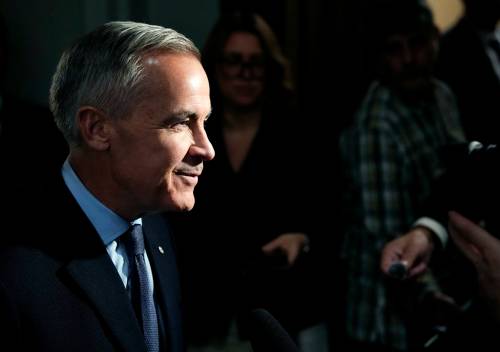
Representing this “new normal” are Prime Minister Mark Carney, for one, and newly elected British Columbia premier, Lorne Doerksen, for another. Both are considered normal because they talk and act like adults in a childish political world. Their political flair is to not have any political flair. They stand out for not standing out.

Read
Saturday, Oct. 31, 2026

Sharpton decries 'stench of racism' in Daunte Wright's death

Aaron Morrison, Tim Sullivan And Tammy Webber, The Associated Press 5 minute read Friday, Apr. 23, 2021

MINNEAPOLIS - Daunte Wright, the young Black man shot by an officer during a traffic stop in suburban Minneapolis, was not “just some kid with an air freshener,” but a “prince” whose life ended too soon at the hands of police, the Rev. Al Sharpton said Thursday during an emotional funeral.

Hundreds of people wearing COVID-19 masks packed into Shiloh Temple International Ministries to remember Wright, a 20-year-old father of one who was shot by a white police officer on April 11 in the small city of Brooklyn Center. The funeral was held just two days after former Minneapolis police Officer Derek Chauvin was convicted in the death of George Floyd and amid a national reckoning on racism and policing.

“The absence of justice is the absence of peace,” Sharpton said. “You can’t tell us to shut up and suffer. We must speak up when there is an injustice.”

The civil rights leader's thundering eulogy included a stinging rebuke of the possibility that Wright was pulled over for having air fresheners dangling from his mirror. Wright’s mother has said her son called her after he was stopped and told her that was the reason. Police said it was for expired registration.

Ottawa announces $500 million for North End sewage plant upgrade

Joyanne Pursaga 4 minute read Preview

Ottawa announces $500 million for North End sewage plant upgrade

Joyanne Pursaga 4 minute read Friday, Oct. 30, 2026

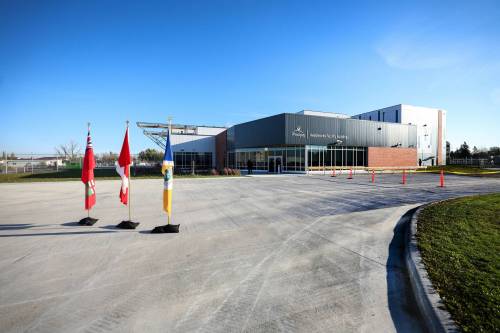
The federal government will provide $500 million to help complete the major upgrade to Winnipeg’s North End sewage treatment plant.

Winnipeg South MP Terry Duguid confirmed the total funding at a news conference at the plant Friday, calling the work critical to Winnipeg’s future.

“The stakes could not be higher. Without expanded wastewater treatment, Winnipeg would run out of capacity to build new homes and accommodate new industries within six years,” said Duguid.

The commitment offers the final funding needed to cover the $1.57-billion third and final phase of the upgrade. The city and province will also pay $500 million each for the work.

Read
Friday, Oct. 30, 2026

Imperialist crusades: 21st-century style

John R. Wiens 5 minute read Preview

Imperialist crusades: 21st-century style

John R. Wiens 5 minute read Wednesday, Jul. 8, 2026

In the 11th century and lasting into the 13th, the papacy launched a series of at least eight military campaigns we now refer to as the Crusades, or Holy Wars. They were an imperialistic call to arms for Christians to retake Jerusalem, which was at the time under Muslim rule.

Spiritual rewards for participation were implied, and other incentives offered, to dull the extra taxation demanded to fund the campaigns. Over time, the “crusades” morphed to become massacres of not only Muslims but also Jews and Christian dissidents — in other words, any enemies of the papacy. If today’s news sounds like déjà vu all over again, it probably should.

The stories keep repeating themselves in many forms. We now know that two 20th century world wars, global in scope, were caused by imperialistic ambitions, changes in the balance of international powers and corresponding arms races. The first was attributed to the assassination of the heir to the Austro-Hungarian throne by a Bosnian Serb, a kind of “regime change” initiative. The second resulted from rising tensions between Allied and Axis powers, triggered by the rise of European fascism and Japanese militarism. The human toll of both was unimaginable.

In the First World War, 15 to 22 million people, including soldiers and civilians, were killed and another 23 million were wounded. These numbers do not account for those otherwise affected — victims of chemical warfare whose compromised health shortened their lives; of the subsequent Spanish flu epidemic amplified by the displacement of peoples; others who died from other diseases caused by war conditions; and those who were malnourished or starved. Nor do they account for the ongoing trauma and resentments passed on intergenerationally to this day.

Read
Wednesday, Jul. 8, 2026

‘We’re just all thankful to have some baseball’

Mike McIntyre 6 minute read Preview

‘We’re just all thankful to have some baseball’

Mike McIntyre 6 minute read Wednesday, Jun. 24, 2020

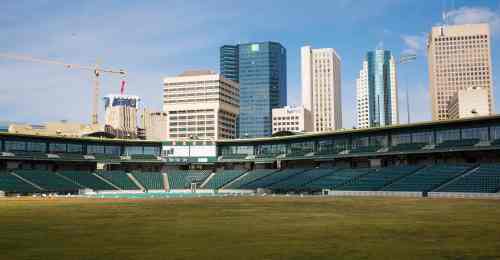
Driving more than 2,000 kilometres in less than a day might seem like the equivalent of getting a root canal to many. But it's a journey Winnipeg Goldeyes manager Rick Forney was happy to make this week, one that started from his residence in Maryland and ended in his most unusual temporary baseball home of Fargo, N.D.

Unable to play games at Shaw Park this summer owing to COVID-19 restrictions banning large gatherings for sporting events until at least September, the Fish will instead fly in enemy territory. An abbreviated spring training gets underway Thursday followed by an abbreviated 60-game American Association baseball season starting July 3.

Forney's 24th season with the Goldeyes, including the past 15 as skipper, is going to be unlike any other.

"It's not ideal, but it's not a reason to not work. If the Goldeyes are going to operate in any fashion, then I want to be a part of it," Forney said by telephone as he passed the midway point of his solo trek just outside Chicago.

Read
Wednesday, Jun. 24, 2020

Court ruling concludes Canadian Wheat Board saga

Laura Rance-Unger 4 minute read Preview

Court ruling concludes Canadian Wheat Board saga

Laura Rance-Unger 4 minute read Saturday, Oct. 31, 2026

It remains to be seen whether the recent court ruling in a lawsuit filed after Canadian Wheat Board’s dissolution in 2012 puts the whole debate to rest, as some no doubt hope.

But either way, the dust has settled on the post-CWB world. The sun still rises and a new generation of farmers on the land only knows by name an institution that for generations influenced every aspect of Prairie grain farming.

The first Rural Revival column I wrote for this newspaper more than 30 years ago was about a thousand farmers from Western Canada demonstrating in support of the Wheat Board. It was in the aftermath of the Western Grain Marketing Panel report, one of several efforts that eventually included a plebiscite to help the federal government decide what to do about a vocal minority of farmers who wanted marketing “freedom.”

The polls at the time suggested about two-thirds of farmers were comfortable enough with the single-desk system for food wheat and barley to keep it around. It served as a counterbalance to canola, which they sold on the open market. They essentially had a dual market.

Read
Saturday, Oct. 31, 2026