WEATHER ALERT

Mass coronavirus quarantines seen in China won’t happen in Canada: authorities

Advertisement

Advertise with us

TORONTO - Canadians have no need to worry about the prospect of mass quarantines, even in the likely event the coronavirus is discovered here, public health authorities said on Friday.

Read this article for free:


By clicking the button above, an account will be created and you will begin to receive some of our recommended newsletters. You may opt out of any newsletter by visiting your Email and Communication Preferences page or by clicking "unsubscribe" at the bottom of any email.

or

Already have an account? Log in here »

To continue reading, please subscribe:

Digital Subscription

One year of digital access for only $1.44 a week*

  • Enjoy unlimited reading on winnipegfreepress.com
  • Read the E-Edition, our digital replica newspaper
  • Access News Break, our award-winning app
  • Play interactive puzzles

*Billed as $5.77 plus GST every four weeks. After 52 weeks, price increases to the regular rate of $19.95 plus GST every four weeks. Offer available to new and qualified returning subscribers only. Cancel any time.

To continue reading, please subscribe:

Add Free Press access to your Brandon Sun subscription for only an additional

$1 for the first 4 weeks*

  • Enjoy unlimited reading on winnipegfreepress.com
  • Read the E-Edition, our digital replica newspaper
  • Access News Break, our award-winning app
  • Play interactive puzzles
Start now

*Your next Brandon Sun subscription payment will increase by $1.00 and you will be charged $17.95 plus GST for four weeks. After four weeks, your payment will increase to $24.95 plus GST every four weeks.

Hey there, time traveller!
This article was published 24/01/2020 (2474 days ago), so information in it may no longer be current.

TORONTO – Canadians have no need to worry about the prospect of mass quarantines, even in the likely event the coronavirus is discovered here, public health authorities said on Friday.

They said scary images coming from a now isolated Wuhan, a Chinese city with 11 million people, will not be repeated here.

“Absolutely not,” Dr. Peter Donnelly, with Public Health Ontario, said. “If a case comes here, and it is probably likely that we will have a case here, it will still be business as normal.”
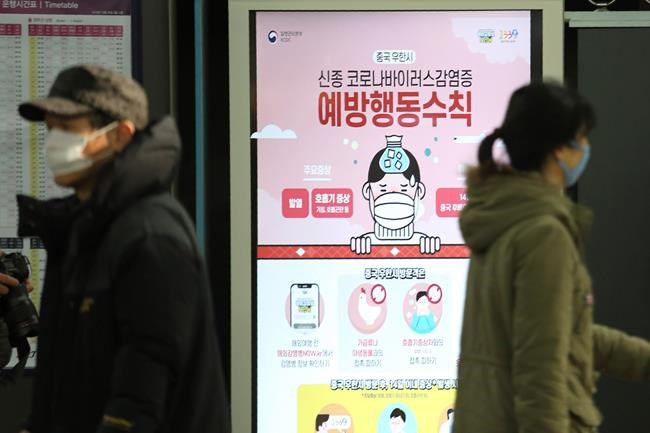
People pass by a poster warming about a new coronavirus at Suseo Station in Seoul, South Korea, Friday, Jan. 24, 2020. China broadened its unprecedented, open-ended lockdowns to encompass around 25 million people Friday to try to contain a deadly new virus that has sickened hundreds, though the measures' potential for success is uncertain. The sign reads
People pass by a poster warming about a new coronavirus at Suseo Station in Seoul, South Korea, Friday, Jan. 24, 2020. China broadened its unprecedented, open-ended lockdowns to encompass around 25 million people Friday to try to contain a deadly new virus that has sickened hundreds, though the measures' potential for success is uncertain. The sign reads "Prevention." (AP Photo/Ahn Young-joon)

In addition to Wuhan, where the virus outbreak has been concentrated, China has shut transportation in at least 12 other cities home to more than 36 million people. Bustling streets, malls and other public spaces have turned eerily quiet, masks are mandatory in public, and some hospitals have run low on medical supplies.

Toronto’s medical officer of health, Dr. Eileen de Villa, urged people to consult credible information sources on the outbreak. Good places include websites of the Public Health Agency of Canada, Public Health Ontario and Toronto Public Health, she said.

“I ask members of the public to rely on evidence-informed, credible sources of information when you’re looking for updates,” de Villa said.

So far, the coronavirus is reported to have killed more than two dozen people and made hundreds of others ill. Symptoms can mirror those of the cold and flu, including cough, fever, chest tightening and shortness of breath, but can worsen to pneumonia.

While no cases have been reported in Canada, concerns about the virus have stirred memories of the SARS outbreak in 2003 that killed 44 Canadians and saw Toronto turn temporarily into something of an international pariah after the World Health Organization issued a travel advisory warning people to avoid the city.

Donnelly said the situation is now very different from what it was then. Authorities, he said, are much better prepared than they were for SARS: Communications are more robust, hospitals have better isolation facilities, and a reliable test is available to detect the coronavirus within 24 hours.

“This was a disease unknown to science only two weeks ago and we now have the full genetic fingerprint of the virus and we have a test, which is specific and reliable,” Donnelly said. “In situations like this, speed and certainty are both very important.”

Health officials were also working with the National Microbiology Lab in Winnipeg to develop an even quicker test.

The federal government has beefed up measures at major airports in Toronto, Vancouver and Montreal.

Visitors are now being asked about any travel to Wuhan in the past 14 days and a positive response would trigger further investigation.

Ontario Health Minister Christine Eliott said border agents will decide if a traveller needs an immediate medical assessment and treatment. An ambulance would take the person from the airport directly to hospital. Fact sheets are also being prepared, she said.

De Villa stressed the importance of good hygiene to prevent virus transmission. Simple steps include washing hands thoroughly, covering coughs and sneezes, and staying home if you’re ill.

While the World Health Organization has decided for now against declaring the outbreak a global emergency, Donnelly said public health authorities were still working to ensure any cases here are dealt with effectively.

“We are not complacent, we’re working extremely hard on this but we are quietly confident that we can handle this,” Donnelly said.

Canada’s chief medical officer has said the chances of a outbreak here were low. Health officials note the common cold comes from the same family as the latest coronavirus and that influenza virus kills thousands of Canadians every year.

On Friday, Quebec health officials said coronavirus tests on six travellers from China under observation in Montreal and Quebec City hospitals had come back negative.

Dr. Horracio Arruda, Quebec’s director of public health, said earlier in the week the six had landed in Quebec with symptoms associated with the illness. Arruda said vigilance is key.

“There’s no reason for fear because sometimes the epidemic of fear is greater than what is going on,” he said.

— with files from Sidhartha Banerjee in Montreal

This report by The Canadian Press was first published Jan. 24, 2020.

Report Error Submit a Tip

More Stories

Killer pleads guilty in three-year-old daughter’s fatal stabbing

Dean Pritchard 4 minute read Preview

Killer pleads guilty in three-year-old daughter’s fatal stabbing

Dean Pritchard 4 minute read Thursday, May. 26, 2022

A Winnipeg man has pleaded guilty to second-degree murder in the shocking stabbing death of his three-year-old daughter.

Frank Nausigimana, 29, entered his plea before Queen’s Bench Justice Joan McKelvey during a brief hearing Thursday morning.

Asked if he understood he was waiving his right to a trial, Nausigimana, through an American Sign Language interpreter, told McKelvey: “ Yes, I accept the punishment and I am following the law of God.”

“I’ve decided that I am going to pray,” Nausigimana said. “I admit I am guilty.”

Read
Thursday, May. 26, 2022

Manitoba’s First Nations and the Indian Act

Hersh Seth 6 minute read 2:00 AM EST

On Monday in Ottawa, Manitoba Premier Wab Kinew called for the Indian Act to be abolished. Prime Minister Mark Carney said he was open to working with First Nations to reform or repeal this law, calling it racist.

The act was created in 1876 and still controls Indian status, reserve lands and band governance. It’s understandable why many people want a better relationship.

But repealing a law and building a new relationship are not the same. What would replace the act’s protections? Who decides? How do governments ensure removing federal authority gives First Nations power while the Crown keeps its promises?

Manitoba has faced these questions before. In 1971, First Nations created a document called Wahbung: Our Tomorrows, in response to then-prime minister Pierre Trudeau’s white paper on assimilation. More than 45 years later, elders and knowledge keepers met at Turtle Lodge, north of Winnipeg, to continue the conversation. Manitobans Dave Courchene Sr. and his son, Dave Courchene Jr., are generational links to the broader movement, and their story should be part of this discussion.

New council, new opportunies for Winnipeg

Brent Bellamy 6 minute read Preview

New council, new opportunies for Winnipeg

Brent Bellamy 6 minute read 2:00 AM EST

Last week, Winnipeg voters returned Mayor Scott Gillingham to city hall for a second term, but the more surprising election storyline is that nine of the 15 councillors surrounding him will be new faces.

One encouraging aspect of the results is the community-building experience several of these new councillors bring to the job. Their backgrounds in urban planning, neighbourhood advocacy and community development offer valuable perspectives as Winnipeg confronts difficult questions about how it grows.

These perspectives will be particularly important because some of the most consequential decisions councillors can make happen when they evaluate residential development proposals at committee meetings. Over the next four years, the 16 people we’ve just elected will bear the enormous responsibility of deciding where and how Winnipeggers live. These choices will have profound implications for quality of life, social opportunity and the economic viability of our city. They will shape not only the Winnipeg we know today, but the city we leave to our children and grandchildren.

At committee meetings, councillors will hear endless arguments about parking, traffic, and protecting “neighbourhood character.”

Read
2:00 AM EST

Expect a reasonable approach to keep Manitoba’s minimum wage out of cellar

Tom Brodbeck 5 minute read Preview

Expect a reasonable approach to keep Manitoba’s minimum wage out of cellar

Tom Brodbeck 5 minute read Tuesday, May. 31, 2022

The devil will be in the details when it comes to how much the Stefanson government will increase the minimum wage in 2022 under proposed legislation that’s expected to become law this week.

My prediction: government will boost the base wage by at least $1.10 an hour this year.

As expected, the Stefanson government plans to alter its inflation-based formula for setting the minimum wage, which now stands at $11.95 an hour. Normally, the base wage is indexed to the previous year’s rate of inflation. That’s sound policy during normal times. However, with inflation growing at rates not seen in more than 30 years, an immediate adjustment is required to ensure minimum-wage earners don’t lose purchasing power.

Conservative governments in Saskatchewan, Ontario and New Brunswick have all announced significant increases to their base wages in 2022, putting pressure on the Stefanson government to follow suit. Failure to do so would see Manitoba’s minimum wage (previously scheduled to rise 40 cents an hour to $12.35 on Oct. 1) rank lowest in the country.

Read
Tuesday, May. 31, 2022

The ‘Gang of Nine’ and business as usual at city hall

Editorial 4 minute read Preview

The ‘Gang of Nine’ and business as usual at city hall

Editorial 4 minute read 2:00 AM EST

In the early 1990s, after the province reduced the number of municipal wards in Winnipeg to 15, critics spoke at length of how a theoretical “Gang of Eight” could control all decision making at city hall. In subsequent years, there were various incarnations of a Gang of Eight, although it was never conclusively shown that eight members of city council could consistently stay on the same page long enough to dominate civic affairs.

That is an apt tale to consider now, as Winnipeg city hall welcomes nine rookie councillors, the largest number of non-incumbents elected in more than 30 years.

Theoretically, this new group of councillors could band together and push through various reforms. It’s a highly intriguing scenario for anyone who has watched the city, on occasion, shun riskier strategies in favor of status quo politics.

However, as was the case in the early 1990s, the chances of that happening begin to fall apart once you consider the work of building and sustaining a coalition of rookie councillors who come from a broad array of backgrounds.

Read
2:00 AM EST

Submit a news tip

1 minute read Monday, Mar. 16, 2026

Submit a news tip