British Columbia ends practice of ‘birth alerts’ in child welfare cases

Advertisement

Advertise with us

VICTORIA - The B.C. government is ending a practice that allowed hospitals to inform child welfare agencies of possible safety risks to infants at birth without the consent of parents.

Read this article for free:


By clicking the button above, an account will be created and you will begin to receive some of our recommended newsletters. You may opt out of any newsletter by visiting your Email and Communication Preferences page or by clicking "unsubscribe" at the bottom of any email.

or

Already have an account? Log in here »

To continue reading, please subscribe:

Digital Subscription

One year of digital access for only $1.44 a week*

  • Enjoy unlimited reading on winnipegfreepress.com
  • Read the E-Edition, our digital replica newspaper
  • Access News Break, our award-winning app
  • Play interactive puzzles

*Billed as $5.77 plus GST every four weeks. After 52 weeks, price increases to the regular rate of $19.95 plus GST every four weeks. Offer available to new and qualified returning subscribers only. Cancel any time.

To continue reading, please subscribe:

Add Free Press access to your Brandon Sun subscription for only an additional

$1 for the first 4 weeks*

  • Enjoy unlimited reading on winnipegfreepress.com
  • Read the E-Edition, our digital replica newspaper
  • Access News Break, our award-winning app
  • Play interactive puzzles
Start now

*Your next Brandon Sun subscription payment will increase by $1.00 and you will be charged $17.95 plus GST for four weeks. After four weeks, your payment will increase to $24.95 plus GST every four weeks.

Hey there, time traveller!
This article was published 16/09/2019 (2600 days ago), so information in it may no longer be current.

VICTORIA – The B.C. government is ending a practice that allowed hospitals to inform child welfare agencies of possible safety risks to infants at birth without the consent of parents.

Katrine Conroy, the minister of children and family development, says so-called hospital or birth alerts have “primarily” been used in cases involving marginalized women and “disproportionately” in births for Indigenous women.

Conroy says the province is changing its approach in cases where children might be at risk.

Instead of alerts, Conroy says the province will work collaboratively with parents expecting a child to keep newborns safe and families together.

She says birth alerts are used by a number of provinces and territories, but B.C. is ending the decades-old practice effective immediately.

Conroy says Indigenous communities and organizations, as well as the National Inquiry into Missing and Murdered Indigenous Women and Girls, has called for the practice to stop.

“We acknowledge the trauma women experience when they become aware that a birth alert has been issued,” Conroy says in a statement released Monday.

“Health care providers and social service workers will no longer share information about expectant parents without consent from those parents and will stop the practice of birth alerts.”

Report Error Submit a Tip

More Stories

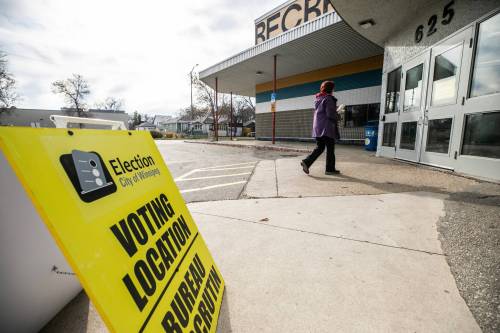
Voter turnout in mayoral race about 38 per cent

Free Press staff 2 minute read Preview

Voter turnout in mayoral race about 38 per cent

Free Press staff 2 minute read Updated: 1:16 PM CDT

Voter turnout in Wednesday’s mayoral contest in Winnipeg was 38 per cent, based on a Free Press analysis of unofficial results.

The city has not yet provided a figure for overall turnout for the municipal and school board election.

Incumbent Scott Gillingham won a second term with 39.82 per cent of the vote. He was followed by Kevin Klein (20.71 per cent), Noah Redden (19.84 per cent) and Mike Vogiatzakis (9.66 per cent) in a field of 12 candidates.

Unofficial voter turnout within the city’s 15 wards ranged from 26 per cent (Point Douglas) to 46 per cent (River Heights-Fort Garry).

Read
Updated: 1:16 PM CDT

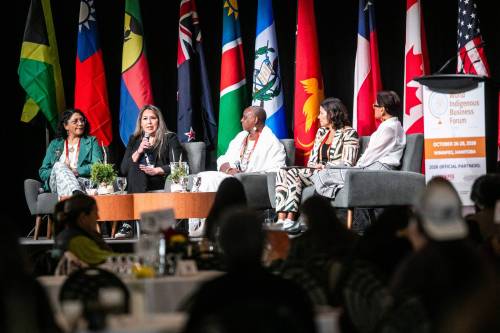
World Indigenous Business Forum comes home to Winnipeg for first time, ponders questions for future prosperity

Aaron Epp 5 minute read Preview

World Indigenous Business Forum comes home to Winnipeg for first time, ponders questions for future prosperity

Aaron Epp 5 minute read Tuesday, Oct. 27, 2026

When Nicola Shirley-Phillips imagines what the Indigenous economy in her country might look like 100 years from now, she doesn’t mention social media or artificial intelligence. Instead, she envisions a holistic way of life where people work alongside each other in a way that cares for the planet.

“I see community (and) I see us being more respectful of all the energies around us — our water energy, our climate (and) the soil,” she said. “In all of that, there are opportunities for us to create businesses and opportunities to provide our services.”

Shirley-Phillips, a serial entrepreneur, organic farmer and community economic development specialist from Jamaica, shared her vision Tuesday morning during a panel discussion focused on Indigenous women and prosperity.

The discussion was one of the first items on the schedule during the first full day of the World Indigenous Business Forum at the RBC Convention Centre in Winnipeg.

Read
Tuesday, Oct. 27, 2026

Election results: School trustees 2026

Staff 1 minute read Preview

Election results: School trustees 2026

Staff 1 minute read Friday, Oct. 23, 2026

Below you’ll find live 2026 election results for school trustees in Winnipeg divisions.

We can display results only for wards in which Winnipeg voters cast a ballot; we do not have access to live results reporting for school boards outside of Winnipeg.


Read
Friday, Oct. 23, 2026

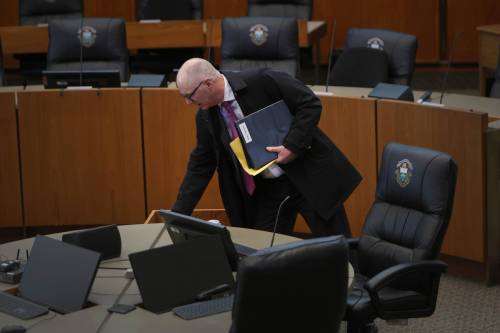
Gillingham celebrates ‘stronger’ support, plans to meet with new councillors

Malak Abas 2 minute read Preview

Gillingham celebrates ‘stronger’ support, plans to meet with new councillors

Malak Abas 2 minute read 10:58 AM CDT

Mayor Scott Gillingham was greeted with cheers and hugs from staff at city hall Thursday morning after he won his second term as mayor the night before.

Gillingham, who won with 39.82 per cent of the vote, said he’s taking that percentage as a win, describing it as a 50 per cent increase from 2022, when he won with just over 27 per cent of the vote.

“I see this as progress, especially in a time where we see across Manitoba, Ontario and British Columbia in the last seven days, many incumbent mayors, many incumbent councillors lost their seats,” he told reporters from city hall Thursday morning.

“There is more work to do for sure, but I take this as a much stronger mandate that I had in 2022.”

Read
10:58 AM CDT

Carrying a torch for tiki

Eva Wasney 5 minute read Preview

Carrying a torch for tiki

Eva Wasney 5 minute read Monday, Nov. 15, 2021

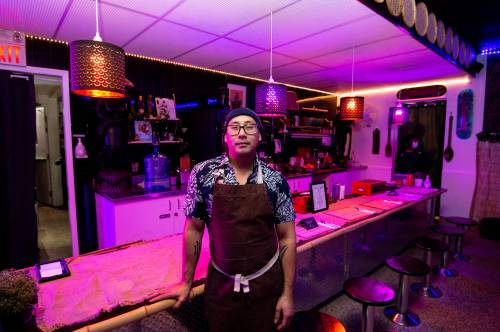
A paper tiki mask is the only indication that the door it’s affixed to leads somewhere other than a dive bar. Ring the doorbell and walk through the kitchen, however, and you’ll be transported to an island-themed lounge that’s equal parts kitschy and comfortable.

“This is just from people’s houses, like my mom’s,” says Allan Pineda, pointing to the wood carvings, water-buffalo horns and rattan furniture decorating the room. “A lot of the stuff you see in here, you’d see in a Filipino’s house back in the day — like second-wave immigrants in the ‘60s and ‘70s, they’d bring this stuff home (from the Philippines).”

Pineda is a local chef and part of the team behind the Bahay Kubo Tiki Bar, a pop-up Filipino drinking and dining experience hosted weekly at an undisclosed Winnipeg establishment.

The details are hush-hush because the temporary eatery is meant to operate like a speakeasy. The dinners are an offshoot of Baon Manila Nights, which Pineda started as a way to highlight Winnipeg’s Filipino culinary scene.

Read
Monday, Nov. 15, 2021

B.C. ends practice of 'birth alerts'

The Canadian Press 2 minute read Monday, Sep. 16, 2019

VICTORIA - The B.C. government is ending a practice that allowed hospitals to inform child welfare agencies of possible safety risks to infants at birth without the consent of parents.

Katrine Conroy, the minister of children and family development, says so-called hospital or birth alerts have "primarily" been used in cases involving marginalized women and "disproportionately" in births for Indigenous women.

Conroy says the province is changing its approach in cases where children might be at risk.

Instead of alerts, Conroy says the province will work collaboratively with parents expecting a child to keep newborns safe and families together.