Extinctions, shrinking habitat spur ‘rewilding’ in cities
Advertisement
Read this article for free:
or
Already have an account? Log in here »
To continue reading, please subscribe:

Digital Subscription
One year of digital access for only $205*
- Enjoy unlimited reading on winnipegfreepress.com
- Read the E-Edition, our digital replica newspaper
- Access News Break, our award-winning app
- Play interactive puzzles
*First annual payment billed as $205.00 + GST for one year. This annual subscription will automatically renew at $233.00 + GST every 52 weeks (10% off the regular annual price of $259.35). Offer available to new and qualified returning subscribers only. Cancel any time.
To continue reading, please subscribe:
Add Free Press access to your Brandon Sun subscription for only an additional
$1 for the first 4 weeks*
- Enjoy unlimited reading on winnipegfreepress.com
- Read the E-Edition, our digital replica newspaper
- Access News Break, our award-winning app
- Play interactive puzzles
*Your next Brandon Sun subscription payment will increase by $1.00 and you will be charged $17.95 plus GST for four weeks. After four weeks, your payment will increase to $24.95 plus GST every four weeks.
Read unlimited articles for free today:
or
Already have an account? Log in here »
Hey there, time traveller!
This article was published 07/12/2022 (1383 days ago), so information in it may no longer be current.
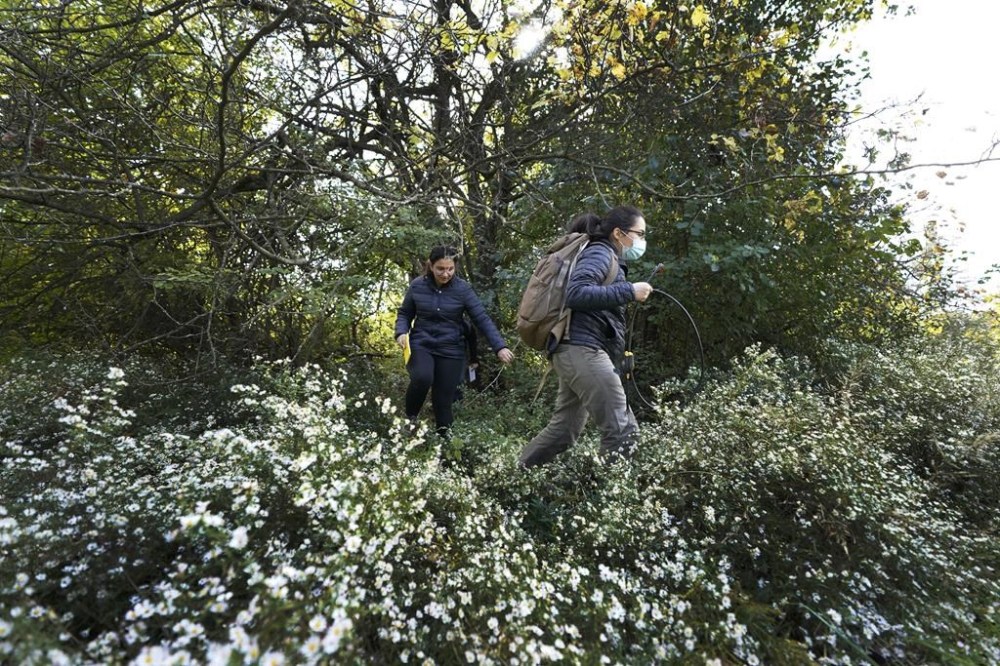
DETROIT (AP) — In a bustling metro area of 4.3 million people, Yale University wildlife biologist Nyeema Harris ventures into isolated thickets to study Detroit’s most elusive residents — coyotes, foxes, raccoons and skunks among them.
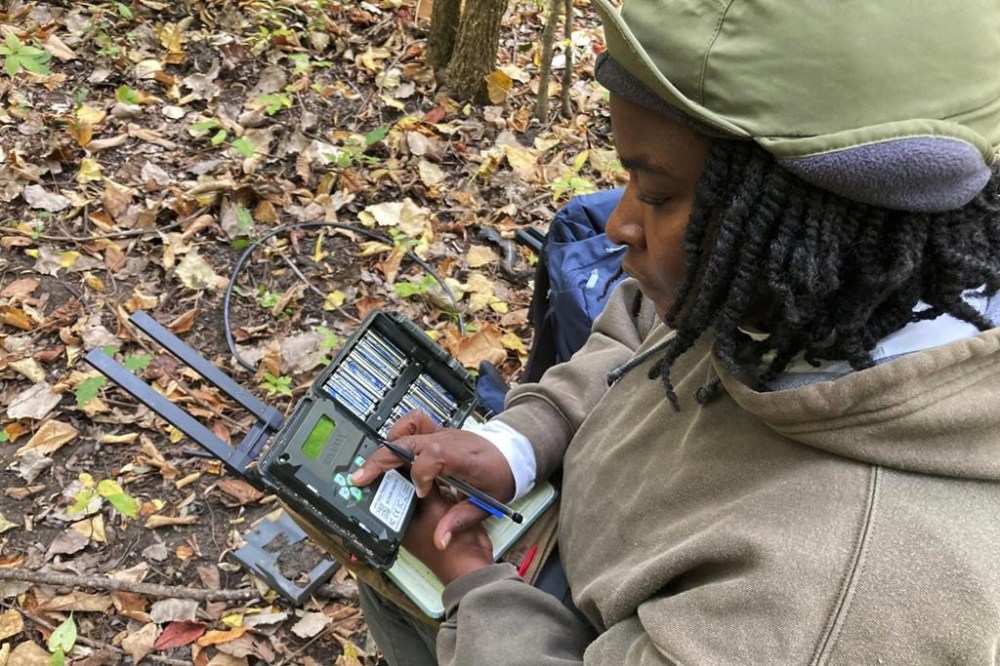
Harris and colleagues have placed trail cameras in woodsy sections of 25 city parks for the past five years. They’ve recorded thousands of images of animals that emerge mostly at night to roam and forage, revealing a wild side many locals might not know exists.
“We’re getting more and more exposure to wildlife in urban environments,” Harris said recently while checking several of the devices fastened to trees with steel cables near the ground. “As we’re changing their habitats, as we’re expanding the footprint of urbanization, … we’ll increasingly come in contact with them.”
Animal and plant species are dying off at an alarming rate, with up to 1 million threatened with extinction, according to a 2019 United Nations report. Their plight is stirring calls for “rewilding” places where they thrived until driven out by development, pollution and climate change.
Rewilding generally means reviving natural systems in degraded locations — sometimes with a helping hand. That might mean removing dams, building tunnels to reconnect migration pathways severed by roads, or reintroducing predators such as wolves to help balance ecosystems. But after initial assists, there’s little human involvement.
The idea might seem best suited to remote areas where nature is freer to heal without interference. But rewilding also happens in some of the world’s biggest urban centers, as people find mutually beneficial ways to coexist with nature.
The U.S. Forest Service estimates 6,000 acres (2,428 hectares) of open space are lost daily as cities and suburbs expand. More than two-thirds of the global population will live in urban areas by 2050, the U.N. says.
“Climate change is coming, and we are facing an equally important biodiversity crisis,” said Nathalie Pettorelli, senior scientist with the Zoological Society of London. “There’s no better place to engage people on these matters than in cities.”
In a September report, the society noted rewilding in metropolises such as Singapore, where a 1.7-mile (2.7-kilometer) stretch of the Kallang River has been converted from a concrete-lined channel into a twisting waterway lined with plants, rocks and other natural materials and flanked by green parkland.
Treating urban rivers like natural waters instead of drainage ditches can boost fish passage and let adjacent lands absorb floodwaters as global warming brings more extreme weather, the report says.
The German cities of Hannover, Frankfurt and Dessau-Rosslau designated vacant lots, parks, lawns and urban waterways where nature could take its course. As native wildflowers have sprung up, they’ve attracted birds, butterflies, bees, even hedgehogs.
London Mayor Sadiq Khan, describing the United Kingdom as “one of the most nature-depleted countries in the world,” announced a plan last year to fund 45 urban rewilding projects to improve habitat for stag beetles, water voles and birds such as swifts and sparrows.
In the north London borough of Enfield, two beavers were released in March — 400 years after the species was hunted to extinction in Great Britain — in the hope their dams would prevent flash flooding. One died but was to be replaced.
Chicago’s Shedd Aquarium and the nonprofit Urban Rivers are installing “floating wetlands” on part of the Chicago River to provide fish breeding areas, bird and pollinator habitat and root systems that cleanse polluted water.
Urban rewilding can’t return landscapes to pre-settlement times and doesn’t try, said Marie Law Adams, a Northeastern University associate professor of architecture.
Instead, the aim is to encourage natural processes that serve people and wildlife by increasing tree cover to ease summer heat, storing carbon and hosting more animals. Or installing surface channels called bio-swales that filter rainwater runoff from parking lots instead of letting it contaminate creeks.
“We need to learn from the mistakes of the mid-20th century — paving over everything, engineering everything with gray infrastructure” such as dams and pipes, Adams said.
Detroit’s sprawling metro area illustrates how human actions can boost rewilding, intentionally or not.
Hundreds of thousands of houses and other structures were abandoned as the struggling city’s population fell more than 60% since peaking at 1.8 million in the 1950s. Many were razed, leaving vacant tracts that plants and animals have occupied. Nonprofit groups have planted trees, community gardens and pollinator-friendly shrubs.
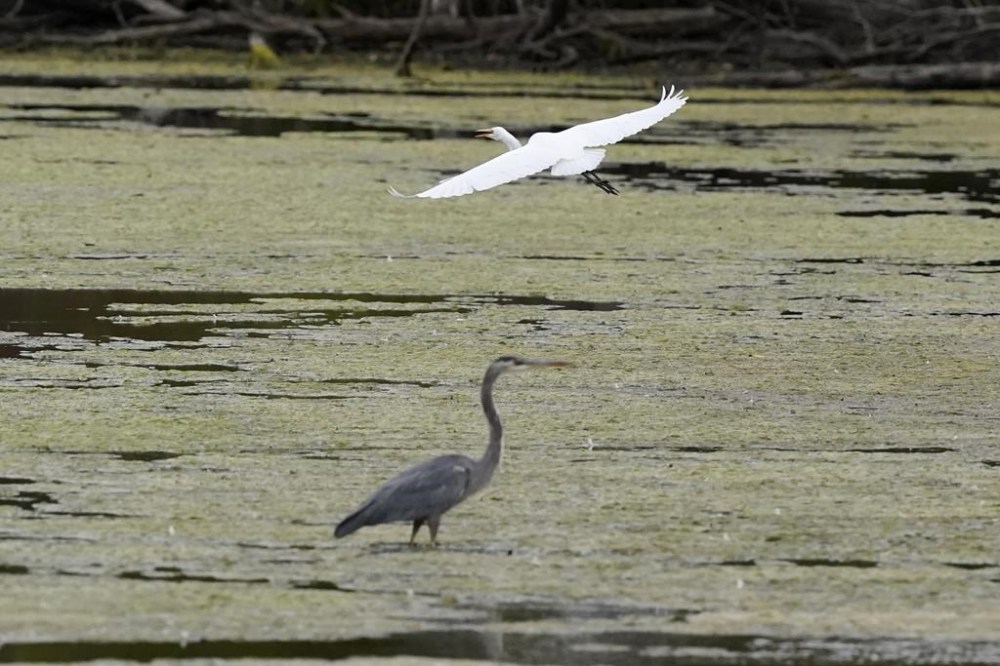
Conservation projects reintroduced ospreys and peregrine falcons. Bald eagles found their way back as bans on DDT and other pesticides helped expand their range nationwide. Anti-pollution laws and government-funded cleanups made nearby rivers more hospitable to sturgeon, whitefish, beavers and native plants, such as wild celery.
“Detroit is a stellar example of urban rewilding, ” said John Hartig, a lake scientist at the nearby University of Windsor and former head of the Detroit River International Wildlife Refuge. “It’s been more organic than strategic. We created the conditions, things got better environmentally, and the native species came back.”
The refuge, a half-hour’s drive from downtown, consists of 30 parcels totaling 6,200 acres (2,509 hectares), including islands, wetlands and former industrial sites. It’s home to 300 bird species and a busy stopover for ducks, raptors and others during migration, said Manager Dan Kennedy.
To Harris, the Yale School of the Environment biologist formerly with the University of Michigan, Detroit offers a unique backdrop for studying wildlife in urban settings.
Unlike most big cities, its human population is declining, even as its streets, buildings and other infrastructure remain largely intact. And there’s diverse habitat. It ranges from large lakes and rivers to neighborhoods — some occupied, others largely deserted — and parklands so quiet “you don’t even know you’re in the city,” Harris said while changing camera batteries and jotting notes in a woodsy section of O’Hair Park.
Her team’s photographic observations have yielded published studies on how mammals react to each other, and to people, in urban landscapes.
The project connects them with local residents, some intrigued by coyotes and raccoons in the neighborhood, others fearful of diseases or harm to pets.
It’s an educational opportunity, Harris said — about proper trash disposal, resisting the temptation to feed wild animals and the value of healthy, diverse ecosystems.
“It used to be that you had to go to some remote location to get exposure to nature,” said Harris, a Philadelphia native who was excited as a child to glimpse an occasional squirrel or deer. “Now that’s not the case. Like it or not, rewilding will occur. The question is, how can we prepare communities and environments and societies to anticipate the presence of more and more wildlife?”
Rewilding can be a tough sell for urbanites who prefer well-manicured lawns and think ecologically rich systems look weedy and unkempt or should be used for housing.
But advocates say it isn’t just about animals and plants. Studies show time in natural spaces improves people’s physical and mental health.

“A lot of city people have lost their tolerance to live with wildlife,” said Pettorelli of Zoological Society of London. “There’s a lot of reteaching ourselves to be done. To really make a difference in tackling the biodiversity crisis, you’re going to have to have people on board.”
______
Follow John Flesher on Twitter: @JohnFlesher
______
Associated Press climate and environmental coverage receives support from several private foundations. See more about AP’s climate initiative here. The AP is solely responsible for all content.