Clear as the Bell Former Main Street flophouse's transition to supportive housing facility helping people turn their lives around
Read this article for free:
or
Already have an account? Log in here »
To continue reading, please subscribe:
Digital Subscription
One year of digital access for only $1.44 a week*
- Enjoy unlimited reading on winnipegfreepress.com
- Read the E-Edition, our digital replica newspaper
- Access News Break, our award-winning app
- Play interactive puzzles
*Billed as $5.77 plus GST every four weeks. After 52 weeks, price increases to the regular rate of $19.95 plus GST every four weeks. Offer available to new and qualified returning subscribers only. Cancel any time.
To continue reading, please subscribe:
Add Free Press access to your Brandon Sun subscription for only an additional
$1 for the first 4 weeks*
- Enjoy unlimited reading on winnipegfreepress.com
- Read the E-Edition, our digital replica newspaper
- Access News Break, our award-winning app
- Play interactive puzzles
*Your next Brandon Sun subscription payment will increase by $1.00 and you will be charged $17.95 plus GST for four weeks. After four weeks, your payment will increase to $24.95 plus GST every four weeks.
Read unlimited articles for free today:
or
Already have an account? Log in here »
Hey there, time traveller!
This article was published 31/12/2020 (2118 days ago), so information in it may no longer be current.
”I found more than I expected. My strength, my family, my voice. Something is different though. I’ve been a warrior for my own selfish wants my whole life, but somehow still so very humble. I’d like to think that good little part is my mother shining through.”– Desirae
The days seep and ooze into one another.
As the seasons change, the weather changes too: bitterly cold in winter, sticky hot in summer, pleasantly mild come fall. But otherwise, much about life on the Main Street strip remains the same, as it has for a very long time.
The homeless encampments have a life cycle like the tide: here one minute, gone the next. But even when they’re not visible to the eyes of passing motorists, the camps aren’t really gone. They simply break up, find new ground and re-form.
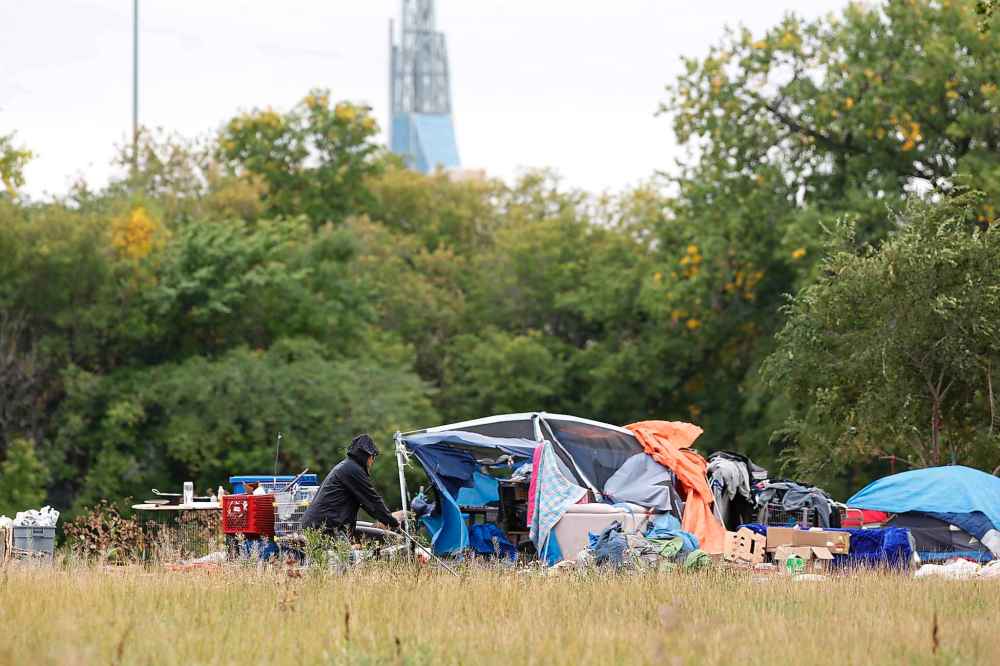
The bus shacks are still crowded in the mornings. The shelters are still opening their doors at nights. The sidewalks are still dirty and strewn with trash. The people are still lined up at soup kitchens dressed in donated clothes.
Life on the strip
The costs of homelessness — both in fiscal resources and human misery — are difficult to fathom. And the problem, which has has plagued Winnipeg for decades, is growing.
In order to better understand the issue, the Free Press spent the past year documenting life on the streets and in the shelters.
The costs of homelessness — both in fiscal resources and human misery — are difficult to fathom. And the problem, which has plagued Winnipeg for decades, is growing.
In order to better understand the issue, the Free Press spent the past year documenting life on the streets and in the shelters, interviewing advocates, community activists and academics, reviewing research papers, shadowing social-service workers and consulting people with expertise gained through lived experience.
The result is Life on the Strip: A year-long examination of Main Street homelessness.
At the start of each instalment is a quote from Desirae, one of the people profiled in this series. She lives on the streets of Winnipeg in a tent. The quotes are excerpted from an essay she wrote and submitted to the Free Press.
Chapter eight looks at the Bell Hotel, a potential solution to Winnipeg’s homeless problem, which operates under the Housing First model.
See the full series at wfp.to/lifeonthestrip.
The need is desperate and deep.
It’s a warm fall afternoon and there’s shouting in the streets. Down a back alley near Henry Avenue, five pairs of sneakers dangle from a powerline, twisting lazily in the wind as pedestrians pass underneath.
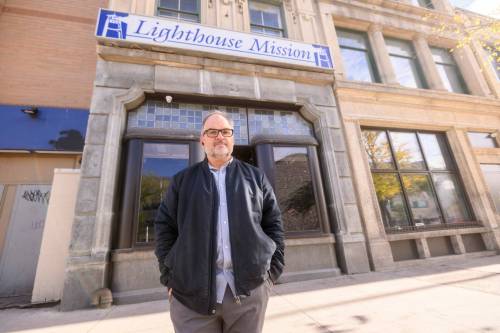
There’s plywood on the front door of the old Bell Hotel at 662 Main St., which most people know as one of the many single-occupancy rooming houses that studded the strip for decades. But behind that boarded-up front door is a solution that could change the face of homelessness in Winnipeg.
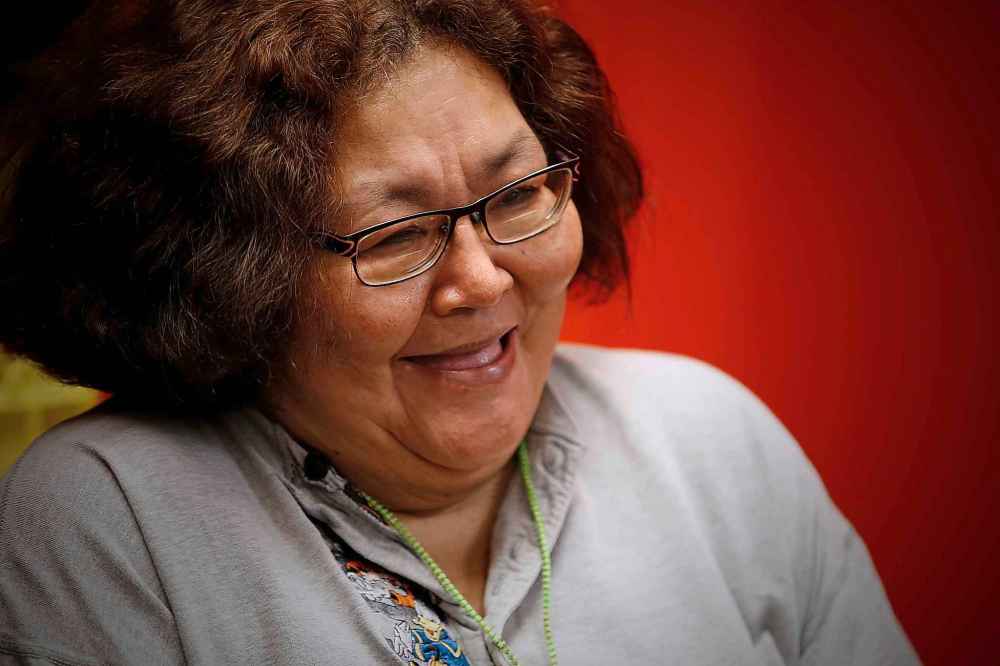
“I’ve been here six years. It’s the place where I sobered up. Well, at least, most of the time I’ve been sober,” says Ramona, 55, a resident of the Bell, which is run as a supported-living community aimed at getting, and keeping, people off the street.
“These people are really helpful. I owe them my life.”
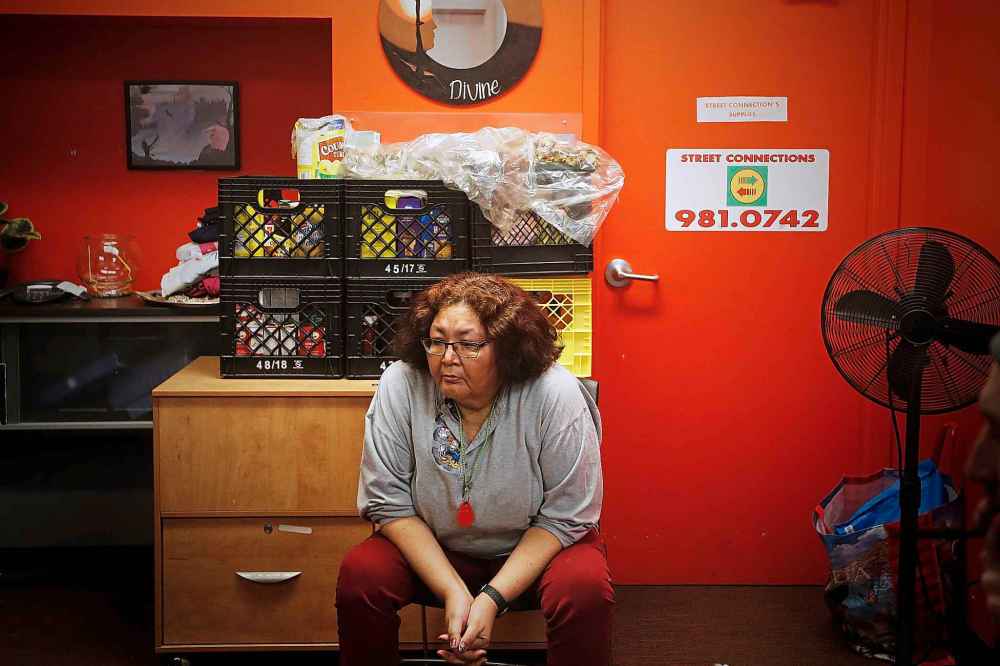
Ramona is seated in a back room at the Bell, alongside site supervisor Kerri Smith and Adrienne Dudek, director of supportive and transitional housing at Main Street Project. Since 2011, the non-profit homeless shelter has operated the facility using Housing First principles.
The idea behind Housing First — a recovery-oriented approach to homelessness that’s been developed since at least the late-1980s — is deceptively simple: it’s much easier for people to improve their lives when they have a home.
Traditionally, people would be forced to meet certain conditions — giving up drugs or alcohol, for example — before being eligible for transitional housing.
In 2010, as the redevelopment of the Bell Hotel was underway, prime minister Stephen Harper’s Conservative government, which contributed $2.75 million to the $5.25-million redevelopment, made its preference known that it be a “dry” facility. The provincial Tories, who were in opposition, agreed but in the end didn’t get what they wanted.
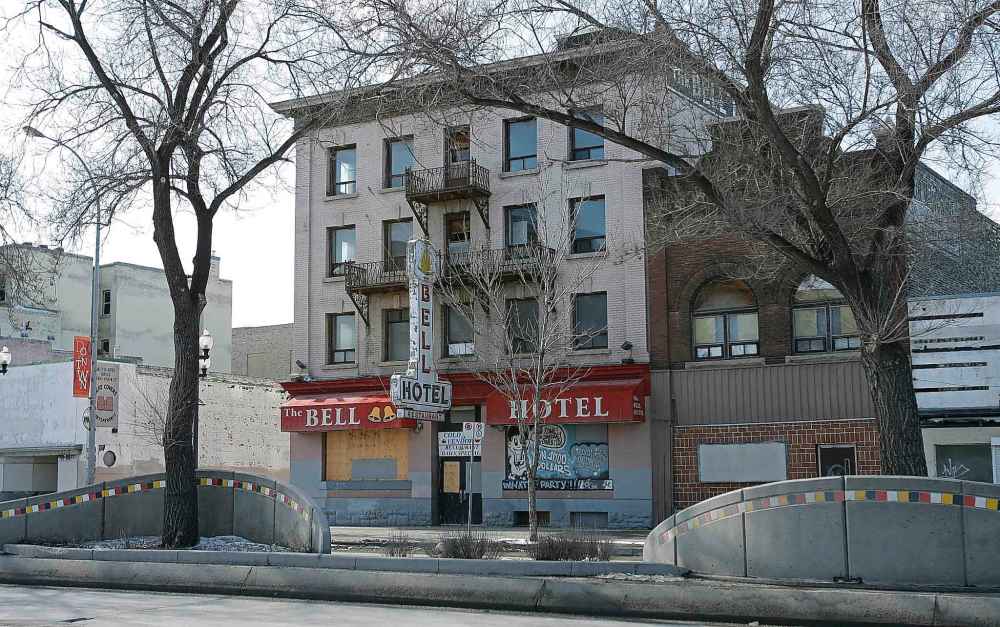
If the Bell were run as a dry facility, people such as Ramona — who has been sober for long stretches punctuated by relapses — would have been forced to return to the women’s shelter she was staying at before she moved in.
Her life would have been subject to more instability, with unknown consequences, and it’s possible she would not be the productive member of her community that she now is, volunteering several times a week at Harvest Manitoba (the food bank recently changed its name from Winnipeg Harvest).
“Most of the time I’ve been sober, but sometimes I take a break from that. I felt kind of bad for drinking sometimes. Sometimes it was really hard to stay sober and I started drinking again,” Ramona says.
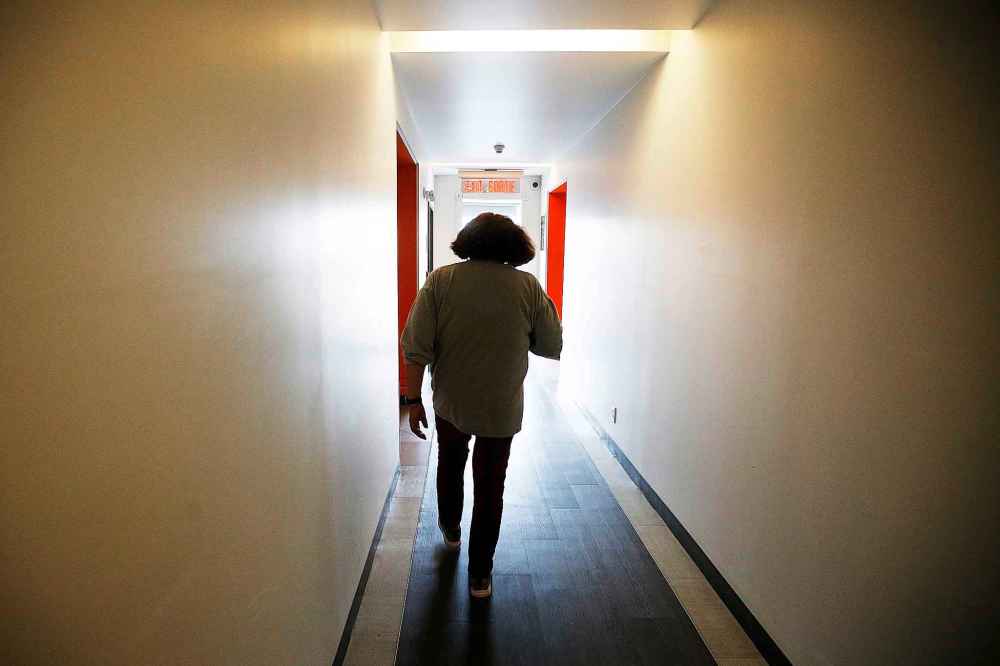
On top of her struggles with substance use, Ramona has experienced long stretches of homelessness throughout her life. She’s also been diagnosed with schizophrenia, a condition she describes as giving her “mind phases.”
And the revolutionary insight of the Housing First approach was that for Ramona — and many, many others — access to stable, secure housing is a precondition for addressing other problems in their lives.
There is significant research that shows the effectiveness of this model, which not only gets people off the streets as soon as possible, but provides them with supports so they can piece their lives back together and reintegrate into wider society.
“The Bell Hotel’s original intent was… to look at how to house, with supports, people who were deemed high service users. People who maybe had complex housing histories or who were living in emergency rooms or always calling ambulances (or) involved quite a bit with the police,” Dudek says.
“The idea was to quantify the costs of what it was to support those people per year in the community versus what it would cost to support them in supportive housing.”
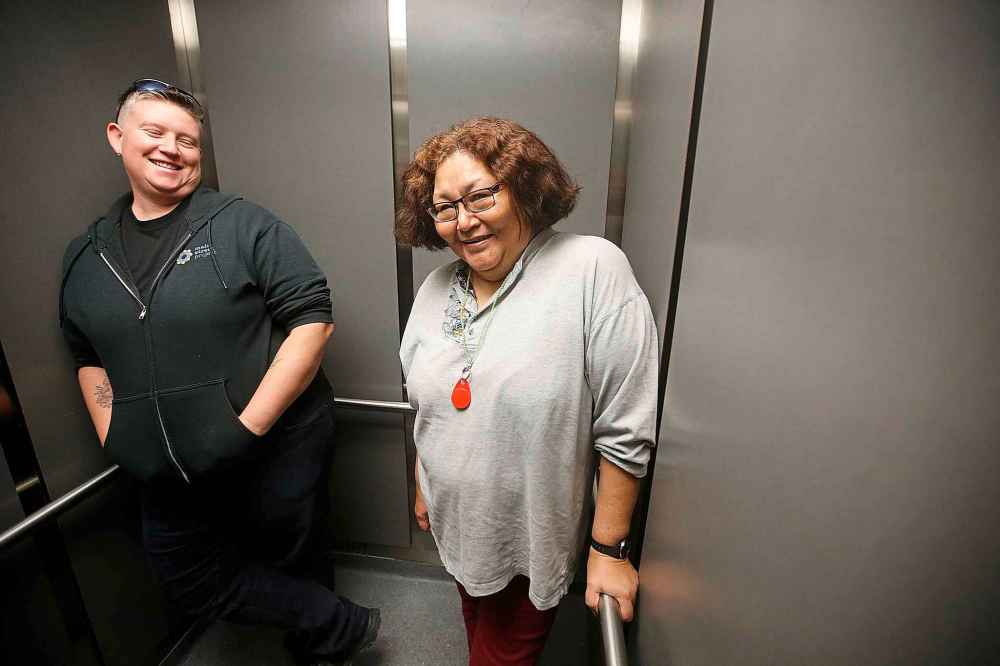
The Bell Hotel has been a remarkable success, with a stable group of tenants that’s seen relatively little turnover through the years. For many people, including Ramona, the Housing First approach has radically transformed and improved their lives.
CFS impact
Research indicates time spent in Child and Family Services is one of the most common pathways into homelessness, according to the 2018 Winnipeg Street Census.
In Winnipeg, half of the homeless population reported having spent time in CFS, foster care or group homes.
But the long list of people seeking to move into the Bell, hoping for a suite to open up and their name to be called, shows there’s a need for supportive housing in Winnipeg that can’t be met by a single 42-unit building operating with Housing First principles.
Smith believes it would be possible to take the Housing First model and use it to set up other spaces similar to the Bell. The important thing, she adds, is to be flexible and fine-tune the programming to meet the expressed needs of residents.
“I don’t tell people what they need. People tell us what they need and then we figure out a needs plan. I don’t tell Ramona what she needs in her life to be successful. She tells me that and then we sit down and figure out how to make that happen,” Smith says.
“Maybe some people don’t want to stop using. Maybe they’re not ready to stop using. Maybe they never want to stop using and that works for them…. We take people as they are.”
”“I don’t tell people what they need. People tell us what they need and then we figure out a needs plan.” – Kerri Smith
One concern at the Bell is people cannot live with partners or roommates. The suites are single-occupancy and small, with a personal bathroom and kitchenette. And while that works for the current residents, it may not work for others looking to escape street life.
Dudek says people experiencing homelessness form bonds with one another to survive, and that “moving-on guilt” is common. That’s why it’s important to have flexible models to accommodate different living arrangements — be it between romantic partners, close friends or “street families.”
“When we talk about an ‘exit’ from homelessness, it’s housing. And the only way to get housing is through political will and investment,” she says.
Case studies across Canada — from Vancouver to Edmonton and Hamilton to Fredericton — have shown the effectiveness of the Housing First approach. But if that model is to be expanded, it will require a shift from the social-control response to homelessness that’s been dominant for decades.
As the American writer James Baldwin wrote in his 1948 essay The Harlem Ghetto, the social-control response to community ills is “about as helpful as makeup to a leper.”
Ramona rises from her chair and leads the way from the back room, down through the hall and into the Bell’s front lobby, where one of her neighbours is playing cards with a staff member at the front desk through a Plexiglas divider.
The COVID-19 pandemic has disrupted normal operations at the Bell, where the importance of building a sense of community — not just between residents, but also between tenants and staff — is incredibly important to its success.
“We had a big calendar here that laid out movie nights and Jets games and recreation and when elders would come, taking people to the food bank and smudging ceremonies,” Dudek says, pointing to an empty space on the wall.
“We’ve taken that down because people would just be continuously let down…. But that’s just the reality of the world right now. It’s been hard on the staff and the people who live here. It’s so, so different because of COVID.”
“It’s been a real challenge to figure out, ‘How do we still foster that sense of community while we have to tell everybody to stay away from each other?” Smith adds.
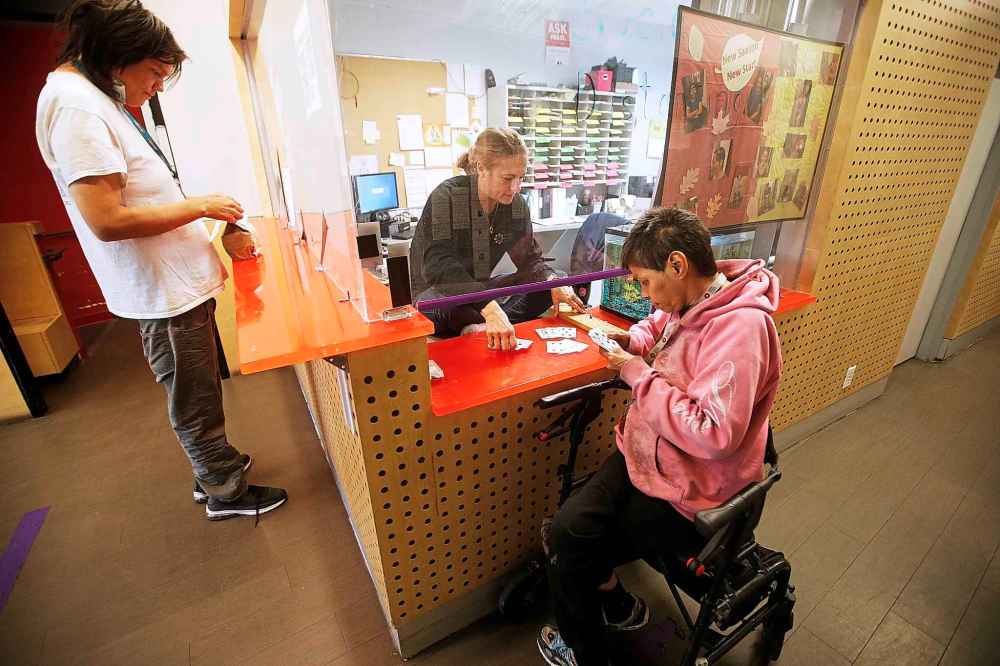
Ramona says she was “freaked out” when she first heard about the pandemic and worried it was the “end of the world.” While she still misses group activities, she says she’s not as afraid of the virus as she once was.
“I’m getting used to it. We’re not allowed visitors, but that’s OK because no one comes to see me, anyway. Most of my family has other things going for them and I’ve learned to accept that,” she says.
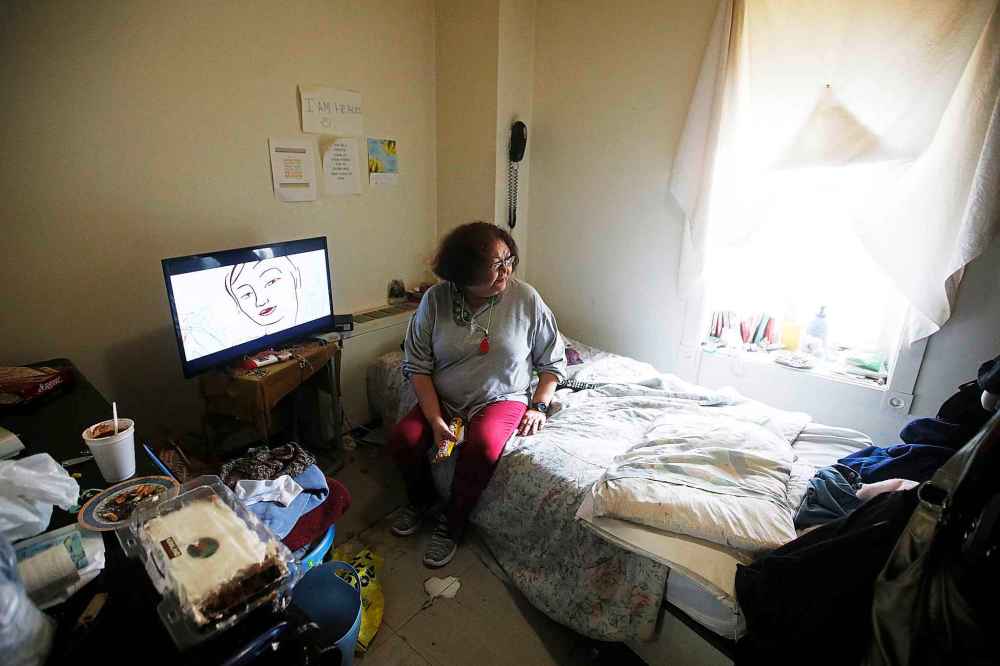
After a short elevator ride to the second floor and a quick walk down the hallway, Ramona opens the door to her room and steps inside. It’s tight-quartered and cluttered, with dirty dishes in the sink and cigarette butts in an ashtray.
A TV flashes in the corner of the room and there’s a stack of books on the windowsill. A microwave and hot plate sit on the countertop, next to a partially eaten cake. Motivational quotes have been printed out and taped to the wall, and when asked about them, Ramona says, “It’s good to have reminders.”
This is home, a space for Ramona to call her own — something so important to one’s well-being that, for far too long, she went without. And if you ask her, she says the success she’s had since moving into the Bell is, in large part, due to the support she was given and the kindness she was shown.
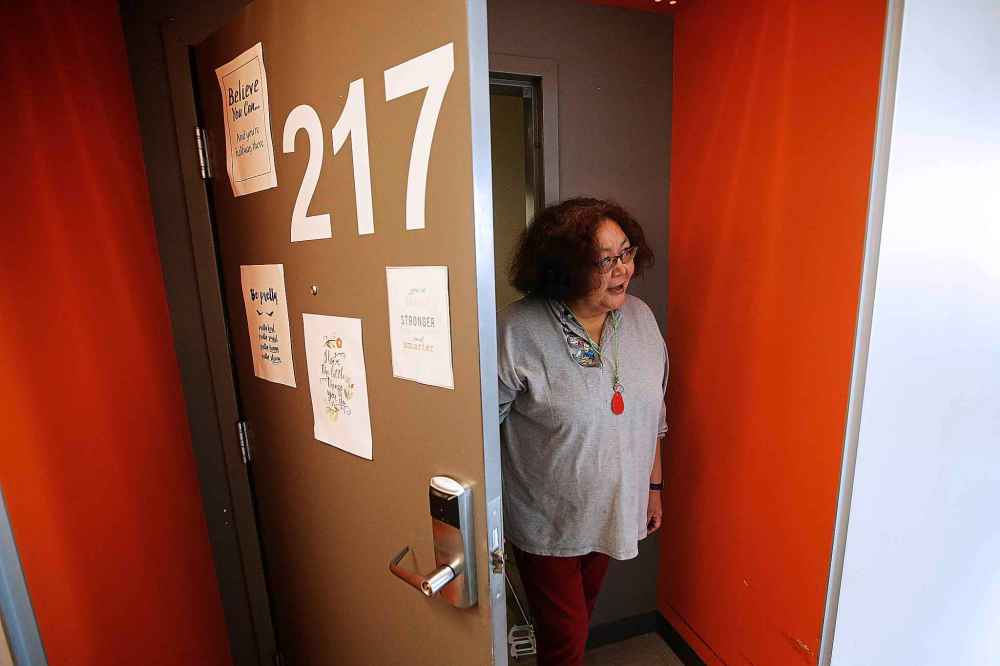
“You can’t just throw someone into an apartment and go, ‘You got this,’ and then wonder why they fail,” Smith says, shortly after saying goodbye to Ramona and heading back downstairs.
Dudek agrees, saying people are finally starting to talk about “co-ordinated access” and “housing as an exit,” so it’s important for people to figure out how to make that a priority for decision-makers.
Youth most vulnerable
Homeless youth are six times more likely to be victims of violent crime, 11 times more likely to die by suicide or drug overdose and 12 times more likely to have a sexually transmitted disease. They are also more likely to inject drugs or engage in sex work.
“Shelters should be emergent places where people come to get overnight respite and you should be able to refer people to other supports. That way you’re not creating the cycle,” Dudek says.
“That’s how places around the world have reached functional zero and reduced homelessness. But if you don’t have housing, or you’ve got a lot of barriers to maintaining housing, that’s difficult to do.”
Functional zero refers to the situation in a community when homelessness — based on several different metrics — is manageable; when the availability of various services and resources match or exceed demand.
Dudek leaves Smith in the lobby and steps back out onto the strip. The sun remains high in the sky and the smell of smoke from a nearby fire wafts through the air.
She begins the short trek back to Main Street Project’s new facility near the Disraeli Freeway, and as she walks, she passes through the world the residents of the Bell have managed to — at least partially — leave behind.
It is a world of rough living on the cold streets of Winnipeg. It is a world that has claimed far too many lives for far too many years. It is a world that has diminished and extinguished far too much human potential.
And what’s most striking is this world continues right next to the solution — not a one-size-fits-all silver bullet, but a blueprint — there behind the plywood on the front door of the Bell Hotel.
A home.
ryan.thorpe@freepress.mb.ca

Ryan Thorpe likes the pace of daily news, the feeling of a broadsheet in his hands and the stress of never-ending deadlines hanging over his head.
Our newsroom depends on a growing audience of readers to power our journalism. If you are not a paid reader, please consider becoming a subscriber.
Our newsroom depends on its audience of readers to power our journalism. Thank you for your support.