Canada pledges more aid and loans to Ukraine as G7 targets Russian oil
Advertisement
Read this article for free:
or
Already have an account? Log in here »
To continue reading, please subscribe:
Digital Subscription
One year of digital access for only $1.44 a week*
- Enjoy unlimited reading on winnipegfreepress.com
- Read the E-Edition, our digital replica newspaper
- Access News Break, our award-winning app
- Play interactive puzzles
*Billed as $5.77 plus GST every four weeks. After 52 weeks, price increases to the regular rate of $19.95 plus GST every four weeks. Offer available to new and qualified returning subscribers only. Cancel any time.
To continue reading, please subscribe:
Add Free Press access to your Brandon Sun subscription for only an additional
$1 for the first 4 weeks*
- Enjoy unlimited reading on winnipegfreepress.com
- Read the E-Edition, our digital replica newspaper
- Access News Break, our award-winning app
- Play interactive puzzles
*Your next Brandon Sun subscription payment will increase by $1.00 and you will be charged $17.95 plus GST for four weeks. After four weeks, your payment will increase to $24.95 plus GST every four weeks.
Read unlimited articles for free today:
or
Already have an account? Log in here »
Hey there, time traveller!
This article was published 28/06/2022 (1570 days ago), so information in it may no longer be current.
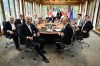
SCHLOSS ELMAU, GERMANY – Canada is ready to help other countries transition away from Russian oil and coal, Prime Minister Justin Trudeau said Tuesday at the end of G7 summit in Germany centred on the war in Ukraine.
In their final communique for the meeting, the G7 leaders said they are working to make sure Russia suffers consequences for its invasion of Ukraine and does not exploit its position as an energy producer to profit from its aggression at the expense of vulnerable countries.
“We will continue to impose severe and immediate economic costs on President Putin’s regime for its unjustifiable war of aggression against Ukraine, while stepping up our efforts to counter its adverse and harmful regional and global impacts, including with a view to helping secure global energy and food security as well as stabilizing the economic recovery,” said the document released on Tuesday.
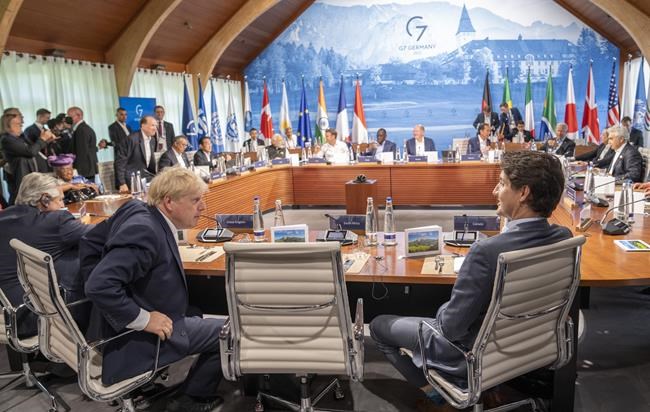
The G7 includes Canada, the United States, the United Kingdom, France, Germany, Italy and Japan.
The conflict has squeezed energy markets in Europe and the security of the supply around the world. Over the course of the three-day summit, the leaders agreed to consider a cap on the price of crude oil and petroleum from Russia, and even a comprehensive ban on Russian oil and coal.
“Canada, obviously as an oil and gas producer, is ensuring that in the short term we’re doing what we can to alleviate pressures,” Trudeau said at a news conference at the close of the summit.
“We’re also looking medium term at expanding some infrastructure, but in a way that hits that medium-term and long-term goal of accelerating transition, not just off Russian oil and gas, but off of all our dependence on fossil fuels.”
The leaders agreed compromising on climate and biodiversity goals was not on the table to address the growing energy crisis.
The idea to ban Russian oil is still only in discussions, and would need to be implemented carefully to mitigate the potential fallout for vulnerable countries that rely on Russia for power.
The success of a price cap would also likely depend on co-operation from as many countries as possible, including India, which has been buying up inexpensive Russian oil.
On Monday, Trudeau met with India’s Prime Minister Narendra Modi, who was invited to the G7 summit by the host, German Chancellor Olaf Scholz.
The Canadian prime minister said he and Modi had a “broad-ranging conversation” and that he is aware that Canada and India do not share the same position on Ukraine.
“I continued to impress upon him that we need to recognize the instability in the world right now was directly caused by Russia’s unprovoked attack on Ukraine, and we’re going to continue to have those conversations in a frank and direct way, because that’s what the world needs,” Trudeau said Tuesday.
Trudeau also met Italy’s Prime Minister Mario Draghi on Tuesday, who said they would discuss solutions to the energy crisis.
“Canada is a big producer and so the perspective of Prime Minister Trudeau is important,” he said.
Trudeau also said Canada remains determined to support Ukraine as it defends its sovereignty and territorial integrity.
On Sunday, just as the summit in Germany was about to begin, weeks of relative quiet in Kyiv were shattered when Russian missiles hit Ukraine’s capital city.
On Monday, a Russian missile hit a shopping mall in the central city of Kremenchuk.
“It’s important that the world doesn’t lose its attention and focus over what’s happening in Ukraine, we must and we will remain committed until Ukraine and democracy prevail,” Trudeau told a news conference.
He announced more money for Ukraine on Tuesday, including a $200-million loan through the International Monetary Fund.
In addition to the loan to the Ukrainian government, Canada is giving $75 million in humanitarian assistance to help with operations in Ukraine and in the neighbouring countries. The aid will include the provision of in-kind food assistance, emergency cash and vouchers, protection, shelter and health services.
“If and when President (Volodymyr) Zelenskyy and Ukrainians decide it’s time to negotiate or move forward to resolving, to ensure that Russia faces defeat in Ukraine, they need to be able to negotiate from a position of force, a position of strength,” Trudeau said.
Earlier in the summit, Trudeau announced $52 million in agricultural aid including mobile grain storage equipment to increase grain storage capacity as well as help to provide speedy diagnostic testing and monitoring of animal diseases to allow for export certification.
Unable to get crops to market because of Russian blockades at its ports, Ukraine needs to keep its grain viable because the potential revenue from its export would help fund the country’s defence.
“Our farmers typically face big challenges and have been proven to be inventive and creative. So we’ll bring this expertise to Ukraine to help as much as we can,” Trudeau said.
Agriculture Minister Marie-Claude Bibeau has said that Canada is also sending seeds to Ukraine, including fast-growing buckwheat, to help out with the food crisis.
By preventing Ukraine’s grain exports Russia has also intensified food scarcity, the leaders said in their final consensus agreement.
The leaders have also agreed to intensify their efforts to mitigate rising food prices and scarcity.

They also plan to expand their resettlement programs to accommodate the millions of Ukrainian refugees who have been displaced by the conflict.
Canada will also spend $15 million to help fund demining efforts and $9.7 million for those tracking human rights violations in Ukraine.
The next stop for Trudeau in his three-summit tour is Madrid, Spain.
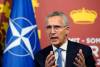
Trudeau will meet with NATO allies there on Wednesday to discuss the military and defence implications of the war in Ukraine.
This report by The Canadian Press was first published June 28, 2022.