Canada urged to help as millions face starvation due to Russian invasion of Ukraine

Advertisement

Advertise with us

OTTAWA - The UN World Food Program has warned that millions of people in the developing world and conflict zones are on the brink of starvation following Russia's invasion of Ukraine, one of the world's biggest wheat exporters.

Read this article for free:


By clicking the button above, an account will be created and you will begin to receive some of our recommended newsletters. You may opt out of any newsletter by visiting your Email and Communication Preferences page or by clicking "unsubscribe" at the bottom of any email.

or

Already have an account? Log in here »

To continue reading, please subscribe:

Digital Subscription

One year of digital access for only $1.44 a week*

  • Enjoy unlimited reading on winnipegfreepress.com
  • Read the E-Edition, our digital replica newspaper
  • Access News Break, our award-winning app
  • Play interactive puzzles

*Billed as $5.77 plus GST every four weeks. After 52 weeks, price increases to the regular rate of $19.95 plus GST every four weeks. Offer available to new and qualified returning subscribers only. Cancel any time.

To continue reading, please subscribe:

Add Free Press access to your Brandon Sun subscription for only an additional

$1 for the first 4 weeks*

  • Enjoy unlimited reading on winnipegfreepress.com
  • Read the E-Edition, our digital replica newspaper
  • Access News Break, our award-winning app
  • Play interactive puzzles
Start now

*Your next Brandon Sun subscription payment will increase by $1.00 and you will be charged $17.95 plus GST for four weeks. After four weeks, your payment will increase to $24.95 plus GST every four weeks.

Hey there, time traveller!
This article was published 09/03/2022 (1698 days ago), so information in it may no longer be current.

OTTAWA – The UN World Food Program has warned that millions of people in the developing world and conflict zones are on the brink of starvation following Russia’s invasion of Ukraine, one of the world’s biggest wheat exporters.

It is asking Canada and other major wheat exporters to open up their silos to urgently fill the shortage, which it said could lead to millions going hungry in countries including Ethiopia, Yemen and Sudan.

The UN program and many countries in the developing world, including Lebanon and Bangladesh, rely on Ukraine, known as the breadbasket of Europe, for its wheat supplies.
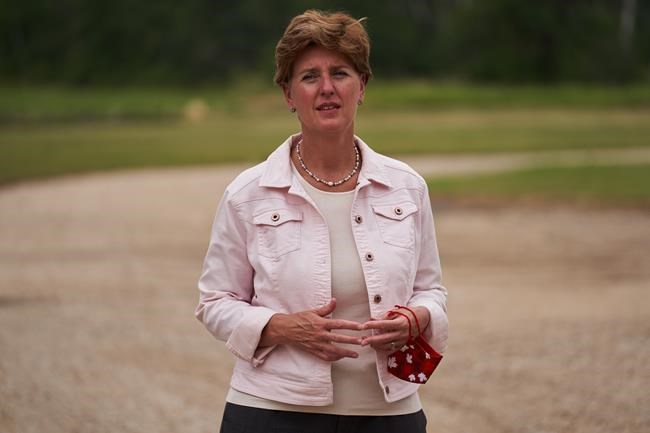
DAVID LIPNOWSKI / THE CANADIAN PRESS FILES
Agriculture Minister Marie-Claude Bibeau
DAVID LIPNOWSKI / THE CANADIAN PRESS FILES Agriculture Minister Marie-Claude Bibeau

But the spike in the cost of grain and the disruption to supplies from Ukraine and Russia has raised the alarm about a global food crisis.

On Friday, Canada’s Agriculture Minister Marie-Claude Bibeau will attend an emergency meeting of her G7 counterparts to discuss the impact of the Russian invasion on global food security.

Bibeau said Canada is aware of the serious situation, is closely monitoring it and wishes to help.

“The global supply chain for wheat has been significantly impacted by this conflict,” Bibeau said in a statement.

“While Canada, as a leading global agri-food exporter of many key products, is working with its allies on how it can assist efforts, Canadian wheat production was significantly reduced due to last year’s drought and there is not a significant amount of wheat uncommitted and available to the market until the next harvest.”

Arif Husain, chief economist at the World Food Program, said the humanitarian organization itself sourced 789,000 tonnes of its wheat supplies from Ukraine last year.

He said another 158,000 tonnes came from Russia. The organization also buys wheat from Canada, one of its biggest financial backers.

He called on Canada and other grain exporters to step in to fill the gap either by making donations from their stocks or selling their supplies at a discount to aid agencies.

“This is as bad as it gets,” Husain said.

“It is necessary for the large producers like Canada, like Australia, to please open your hearts and provide wheat to the aid agencies. In Yemen alone, five million people are literally a step away from famine.”

The price of wheat has risen sharply since the war began, making it more expensive for developing countries, aid agencies and other importers.

Shipping companies that usually transport grain and vegetable oil from Ukraine and Russia are unable to approach ports safely.

Husain said they had also seen their insurance costs spike, as well as the spiralling cost of fuel.

He said the higher price of wheat will also make it more expensive to buy and distribute to the world’s poor and displaced people, who now include Ukrainians.

Prime Minister Justin Trudeau said Monday during his visit to London that Russia’s invasion of Ukraine was having a “ripple effect” across the world, including to the UN World Food Program.

Sandra McCardell, an assistant deputy minister at Global Affairs Canada, told the Senate Foreign Affairs Committee last week that the federal government was “looking at contingencies” for the expected food shortage.

“This is not going to be just about Ukraine and Russia and we do need absolutely to be ready,” she said March 3.

Dave Quist, executive director of the western Canadian Wheat Growers Association, said Ukrainian farmers will find it extremely difficult to get their seeds in the ground and it is doubtful whether those that manage to plant their fields would be able to harvest in August or September.

He also said many Canadian farmers had already brought in seed to plant other crops this spring so it was difficult for them to plant wheat at short notice instead.

This report by The Canadian Press was first published March 9, 2022.

Report Error Submit a Tip

More Stories

Say What?! Sports guys travel to new destination

Steve Lyons and Paul Wiecek 16 minute read Preview

Say What?! Sports guys travel to new destination

Steve Lyons and Paul Wiecek 16 minute read Thursday, Jan. 30, 2020

Say What?! is an email conversation between sports editor Steve Lyons and sports columnist Paul Wiecek. Look for us regularly but intermittently on the Free Press website.


Steve Lyons: Heya. How you doing? How’s 2020 treating you so far?

Few things to get us started:

Read
Thursday, Jan. 30, 2020

Winnipeg novelist's latest offering a riveting fictional account of missionaries' plight

Reviewed by Julienne Isaacs 5 minute read Preview

Winnipeg novelist's latest offering a riveting fictional account of missionaries' plight

Reviewed by Julienne Isaacs 5 minute read Saturday, Sep. 7, 2019

In 1955, five American missionary couples set out to evangelize the Waorani, an Indigenous people group of the Ecuadorian rainforest that had never had contact with the outside world. They dubbed their mission “Operation Auca.”

After a few months of airdropping gifts, the five men — Jim Elliot, Peter Fleming, Nate Saint, Ed McCully and Roger Youderian — opted to set up camp on a beach near a Waorani settlement. Just a few days later, they were all speared to death. Thanks to the swift arrival of a Life magazine photographer, the brutal conclusion to Operation Auca became global news.

In her new novel, Five Wives, Winnipeg writer Joan Thomas tells this story again.

“In the missionaries’ memoirs, ‘God’s leading’ explains almost every impulse,” Thomas writes in a postscript. “I set out to peer behind that, to explore in human terms actions that astonished me.”

Read
Saturday, Sep. 7, 2019

Has the political wind changed?

Gwynne Dyer 5 minute read Yesterday at 2:01 AM CDT

It has been quite a week. First we had “Lula” – Luiz Inácio da Silva (as nobody but his mother ever called him) – defying everybody’s expectations. After winding up two million votes behind his challenger, Flávio Bolsonaro, in the first round of the Brazilian presidential election, he made a “miraculous” comeback in the second.

It was like a man going into a revolving door behind you and coming out in front. At the end of the first round, Lula was two million votes behind; at the end of the second round on Oct. 25 he was four million votes ahead. So how did he win a fourth term without cheating?

That’s what Bolsonaro claims he did, having fled to the United States; Trump, Flávio’s mentor, hints at the same. But Lula’s victory was not miraculous. He only learned to read when he was 10, and at 80 he still refused to have a mobile phone. His team finally made him get one and use it.

He wouldn’t do social media videos, so they created a WhatsApp channel called Lula’s Army, and made him appear on it at least daily. The channel went from zero to 10.8 million viewers in two weeks, and Lula won.

B.C. declares state of emergency over wildfires

Amy Smart, The Canadian Press 5 minute read Preview

B.C. declares state of emergency over wildfires

Amy Smart, The Canadian Press 5 minute read Wednesday, Jul. 21, 2021

VANCOUVER - British Columbia's public safety minister has declared a provincial state of emergency over the growing wildfire threat to prepare for potential mass evacuations and help secure accommodation that might be needed by evacuees.

Mike Farnworth said he made the decision based on information from officials that weather conditions will lead to more severe fire behaviour and the potential for more evacuations.

"In a briefing last night, I received word that we'll be facing a few days of very difficult weather in the Interior," Farnworth said in a statement.

The state of emergency goes into effect on Wednesday and gives government agencies, the fire commissioner and the RCMP the authority to take whatever action they deem is necessary to fight the wildfires and protect people and communities.

Read
Wednesday, Jul. 21, 2021

Letters, Oct. 31

6 minute read Yesterday at 2:01 AM CDT

Civic election a missed opportunity

The outcome of the latest municipal election in Winnipeg is nothing short of baffling. The decline of what was once a proud, beautiful prairie hub is impossible to ignore.

Winnipeg is rapidly sliding into a state of structural and social dilapidation, yet voters have inexplicably chosen to hand incumbent Mayor Scott Gillingham a second term. The decision smells of complacency, and sadly, it represents a massive missed opportunity for real urban renewal.

Walking through downtown Winnipeg today is an exercise in heartbreak. A city centre that should be a bustling economic and cultural core has instead transformed into an absolute eyesore. Encampments and tents are permitted to dot the heart of the city. Streets that used to thrive are now dominated by the tragic, visible reality of severe addiction, with individuals wandering and staggering through public spaces without adequate intervention or care.

Fact Check

1 minute read Thursday, Nov. 30, 2023

Fact Check

Having problems with the form?Contact Us Directly |