Attitude on carbon tax rebate defined by politics, not facts, survey suggests

Advertisement

Advertise with us

Rebates on carbon taxes haven't helped Canadians warm to them, a new survey suggests.

Read this article for free:


By clicking the button above, an account will be created and you will begin to receive some of our recommended newsletters. You may opt out of any newsletter by visiting your Email and Communication Preferences page or by clicking "unsubscribe" at the bottom of any email.

or

Already have an account? Log in here »

To continue reading, please subscribe:

Digital Subscription

One year of digital access for only $1.44 a week*

  • Enjoy unlimited reading on winnipegfreepress.com
  • Read the E-Edition, our digital replica newspaper
  • Access News Break, our award-winning app
  • Play interactive puzzles

*Billed as $5.77 plus GST every four weeks. After 52 weeks, price increases to the regular rate of $19.95 plus GST every four weeks. Offer available to new and qualified returning subscribers only. Cancel any time.

To continue reading, please subscribe:

Add Free Press access to your Brandon Sun subscription for only an additional

$1 for the first 4 weeks*

  • Enjoy unlimited reading on winnipegfreepress.com
  • Read the E-Edition, our digital replica newspaper
  • Access News Break, our award-winning app
  • Play interactive puzzles
Start now

*Your next Brandon Sun subscription payment will increase by $1.00 and you will be charged $17.95 plus GST for four weeks. After four weeks, your payment will increase to $24.95 plus GST every four weeks.

Hey there, time traveller!
This article was published 25/01/2022 (1739 days ago), so information in it may no longer be current.

Rebates on carbon taxes haven’t helped Canadians warm to them, a new survey suggests.

Results published this week in the journal Nature Climate Change say that not only did rebates fail to make much difference to public opinion, Canadians don’t understand them very well.

And those convinced they were paying more in carbon taxes than they received remained just as convinced even when they were shown the facts.

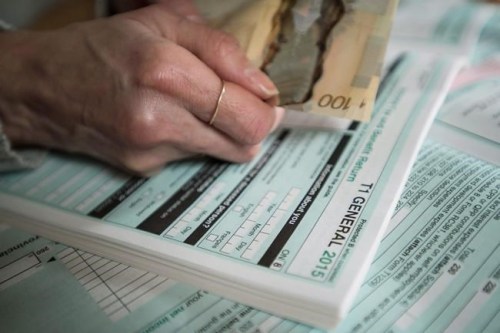
Tax forms and Canadian currency are shown together in this photo illustration taken in Toronto on Sunday, April 3, 2016. A new survey suggests rebates on carbon taxes haven't helped Canadians warm to them. THE CANADIAN PRESS/Graeme Roy

“Partisanship had a big impact — not just on whether people were supportive of the idea of carbon pricing, but on their perception of the facts,” said co-author Kathryn Harrison of the University of British Columbia.

Harrison said she and her colleagues wanted to study whether carbon rebates — returning money to taxpayers to offset or even exceed the amount they’d paid in carbon taxes — would make the policy more palatable.

“Canada was one of the first two countries to do that,” Harrison said. “There was an opportunity to systematically check what was the impact of the policy.”

The team surveyed Canadians between early 2019 and March 2020. They looked at Saskatchewan and Ontario, whose residents get the federal rebate; Quebec, which uses a cap-and-trade system to reduce carbon; British Columbia, which has a provincial carbon tax without rebates; and Alberta, which ended up on the federal program halfway through the study when it cancelled its provincial levy.

Respondents were queried after the rebate plan was announced, after it was implemented, after the first rebates were issued, after the 2019 federal election and a year after the initial announcement. The sample size was 3,313 at the start and 899 by the end of the fifth survey.

“There was no magic,” said Harrison.

The survey found, at most, minor changes in support for carbon pricing over time in all five provinces. British Columbia, which doesn’t offer rebates, showed the biggest increase at about 10 percentage points. No province showed a decrease.

There were wide gaps in support between self-identified Liberal and Conservative respondents.

But the researchers found nearly half the Ontario respondents and about a quarter of those in Saskatchewan didn’t even know they got a rebate. Those who did consistently underestimated the amount by an average of 40 per cent in Ontario and 32 per cent in Saskatchewan.

When researchers showed the respondents the true value of their rebate, a simple calculation that requires no tax data, the results again split over political affiliation.

“After learning how much they were getting back, Conservative voters were more likely to report they were net losers, that they were paying more in taxes than they were getting back,” Harrison said.

“They must have increased their estimate of how much they were paying up front,” she said. “(They) seem to have adjusted their beliefs in order to support their position of opposition to the federal carbon tax.”

When the researchers conducted similar surveys in Switzerland, the other country to have implemented a rebate system, Harrison said the results were similar.

The results are discouraging for those who think of the public as composed of rational actors coolly evaluating information and acting on their best interests, Harrison said.

“Giving people back money doesn’t automatically shift the politics of it.

“Canadians are getting their signals on this type of policy from people they trust, whether it’s interest groups or politicians. In many cases, they are basing those positions on inaccurate information.”

This report by The Canadian Press was first published Jan. 25, 2022.

— Follow Bob Weber on Twitter at @row1960

Report Error Submit a Tip

More Stories

Kinew will listen to city request for new taxes — but no promises

Nicole Buffie 5 minute read Preview

Kinew will listen to city request for new taxes — but no promises

Nicole Buffie 5 minute read Friday, Nov. 1, 2024

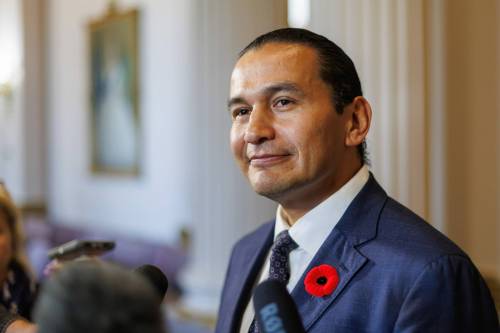
Premier Wab Kinew remained coy about whether he would support a new municipal tax in Winnipeg as the city struggles to maintain services.

Kinew dodged questions on the matter Friday afternoon.

“We want to see services strong, we want to see roads getting fixed,” Kinew said. “Affordability is really top of mind … we got to keep life affordable for the average person out there.”

Some of the items being considered for a new tax are: alcohol, online deliveries, vehicle registration, vacant homes, commercial parking and land transfers with an exemption for first-time homebuyers.

Read
Friday, Nov. 1, 2024

Shocking development

Kelly Taylor 6 minute read Preview

Shocking development

Kelly Taylor 6 minute read 2:00 AM CDT

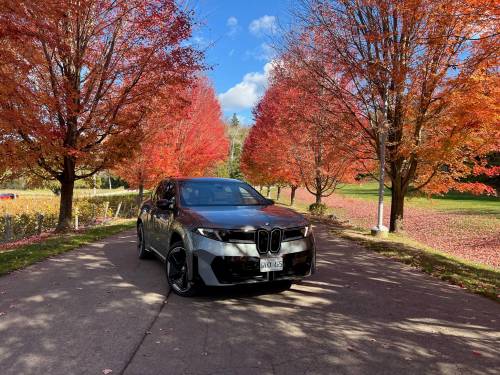
HOCKLEY VALLEY, Ont. — It’s not too often you get into a new vehicle, look at the interior, and say to yourself, “Wow, this is different… in a good way.”

Automakers tend to stick pretty close to defined norms, and when they differ, it’s not always successful. I’m looking at you, Toyota Yaris and Nissan X-Trail.

So, stepping into the 2027 BMW iX3 was refreshing. A bright parallelogram of a main touchscreen is closer to the driver than most, aided in no small part by pushing the instrument cluster to a narrow band just under the windscreen.

The effect is to clean up the look of the dash but without moving to a centre-mount instrument panel like the Yaris and X-Trail. The most valuable information (speed, battery charge, range) is right in front of the driver, visible above the top rim of the steering wheel.

Read
2:00 AM CDT

Fawcett promises growth in second term as Brandon mayor

Alex Lambert 2 minute read Preview

Fawcett promises growth in second term as Brandon mayor

Alex Lambert 2 minute read 9:39 AM CDT

BRANDON — Jeff Fawcett promises “incredible opportunities” for Brandon over the next four years.

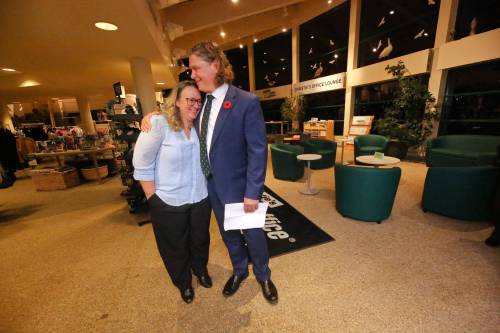
The incumbent was handily re-elected for a second term as Brandon mayor Wednesday evening, receiving 54 per cent of the vote. He defeated his only challenger, former councillor and MLA Len Isleifson, by 907 votes.

“The next four years presents incredible opportunities for our city,” Fawcett told supporters after the victory. “We’ll continue to support responsible growth, strengthening our neighbourhoods, investing in infrastructure, supporting local businesses, and ensuring Brandon remains a place where families and future generations can thrive.”

Isleifson, a Brandon councillor from 2010 to 2014 and Brandon East Tory MLA from 2016 to 2023, called the result disappointing but said he wouldn’t change anything about his campaign.

Read
9:39 AM CDT

Wife’s witchy wonderment won’t spell trouble

Maureen Scurfield 6 minute read 2:00 AM CDT

DEAR MISS LONELYHEARTS: My wife believes in magic potions, which used to make me laugh. But since Halloween season started this year, she’s been acting in a way that frightens me. She seems to think she’s a modern-day “witch.” Give me a break!

Now she has three friends who think they are really casting spells when they get together! And this year on Halloween night she’s being formally accepted into their little witchy group meeting at one of their homes, and is getting a new sorceress name. It’s creepy! How do I cope? I’ve had enough of this.

— Seriously Upset, South St. Vital

Dear Upset: Don’t buy into the hocus pocus by being afraid of it and expressing any trepidation to your wife. She needs you to be strong, so she knows she has a solid anchor and can drop out of this witchy group if it becomes too scary or silly for her.

Trump touts USMCA win in state of the union

James McCarten, The Canadian Press 6 minute read Preview

Trump touts USMCA win in state of the union

James McCarten, The Canadian Press 6 minute read Tuesday, Feb. 4, 2020

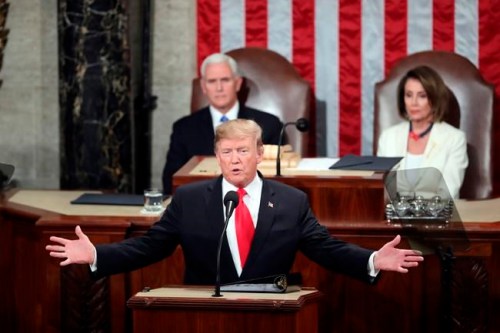
WASHINGTON - President Donald Trump declared his scorched-earth political style an unmitigated success Tuesday in a fiercely partisan, made-for-TV state of the union speech that made it clear he expects to be back in the White House next year on the strength of the U.S. economy and his trade deals with Canada, Mexico and China.

Trump, addressing a joint session of Congress in the very chamber where House Democrats voted to impeach him less than two months ago, became only the second president in American history — Bill Clinton was the first — to deliver a state of the union while standing trial in the Senate.

Unrepentant, he pointedly refused to shake the offered hand of House Speaker Nancy Pelosi on the dais before singing the praises of what he billed as "the great American comeback," pointing to strong job growth, a soaring stock market and low unemployment as evidence of his leadership. And when he was done, Pelosi ripped up the speech in full view of the television cameras.

"America's enemies are on the run, America's fortunes are on the rise, and America's future is blazing bright. The years of economic decay are over," Trump declared, taking full credit for the country's "roaring economy," including what he billed as seven million new jobs and the lowest jobless rate in half a century — a "blue-collar boom" that he's counting on to help his re-election chances in November.

Read
Tuesday, Feb. 4, 2020

Survey reveals carbon tax rebate attitudes

Bob Weber, The Canadian Press 4 minute read Preview

Survey reveals carbon tax rebate attitudes

Bob Weber, The Canadian Press 4 minute read Tuesday, Jan. 25, 2022

Rebates on carbon taxes haven't helped Canadians warm to them, a new survey suggests.

Results published this week in the journal Nature Climate Change say that not only did rebates fail to make much difference to public opinion, Canadians don't understand them very well.

And those convinced they were paying more in carbon taxes than they received remained just as convinced even when they were shown the facts.

"Partisanship had a big impact — not just on whether people were supportive of the idea of carbon pricing, but on their perception of the facts," said co-author Kathryn Harrison of the University of British Columbia.

Read
Tuesday, Jan. 25, 2022