COP26 to accelerate climate action already underway in Canada, experts say

Advertisement

Advertise with us

The delegates are trickling home and Glasgow's streets are clearing of protesters.

Read this article for free:


or

Already have an account? Log in here »

To continue reading, please subscribe:

Subscribe and receive a limited-edition Free Press branded hat or tote.

Digital Subscription

One year of digital access for only $205*

  • Enjoy unlimited reading on winnipegfreepress.com
  • Read the E-Edition, our digital replica newspaper
  • Access News Break, our award-winning app
  • Play interactive puzzles

*First annual payment billed as $205.00 + GST for one year. This annual subscription will automatically renew at $233.00 + GST every 52 weeks (10% off the regular annual price of $259.35). Offer available to new and qualified returning subscribers only. Cancel any time.

To continue reading, please subscribe:

Add Free Press access to your Brandon Sun subscription for only an additional

$1 for the first 4 weeks*

  • Enjoy unlimited reading on winnipegfreepress.com
  • Read the E-Edition, our digital replica newspaper
  • Access News Break, our award-winning app
  • Play interactive puzzles
Start now

*Your next Brandon Sun subscription payment will increase by $1.00 and you will be charged $17.95 plus GST for four weeks. After four weeks, your payment will increase to $24.95 plus GST every four weeks.

Hey there, time traveller!
This article was published 13/11/2021 (1752 days ago), so information in it may no longer be current.

The delegates are trickling home and Glasgow’s streets are clearing of protesters.

Now, experts say, the real work begins of putting meat and bone to the pledges and commitments made by world leaders to keep global warming below catastrophic levels.

“The next couple years are going to be the most important, fastest-moving period of carbon reduction in Canadian history,” said Rick Smith, president of the Canadian Institute for Climate Choices.
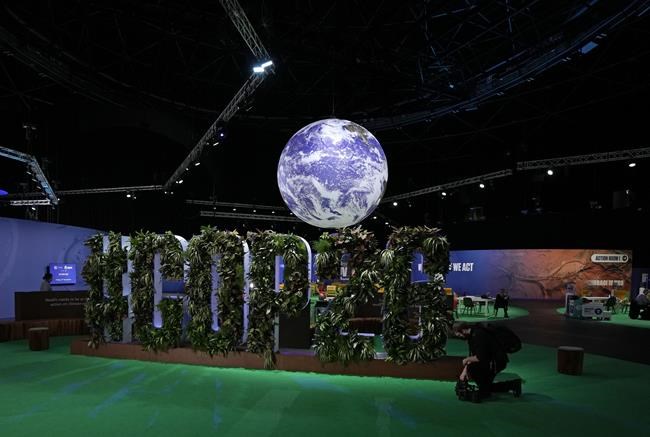
People start to gather near the Action Zone inside the venue of the COP26 U.N. Climate Summit in Glasgow, Scotland, Friday, Nov. 12, 2021. THE CANADIAN PRESS/AP, Alastair Grant

With the UN-sponsored COP26 climate conference coming to an end, the federal government has to put some specifics behind promises. Business leaders are looking for details on everything from when the commitment to cap fossil fuel emissions will kick in to regulations on methane releases to tax credits for carbon storage.

“At the end of the day, it comes back to how you translate those targets into policy in Canada,” said John Dillon of the Business Council of Canada.

Dillon said he expects the climate discussion to broaden after Glasgow to include sectors such as construction, agriculture — even the military.

“The military produces a lot of GHG emissions.”

How quickly those promises are implemented and how deeply they’ll bite will be heated debating points.

“It takes time to adopt new technologies,” said Jack Mintz, President’s Fellow of the School of Public Policy at the University of Calgary.

“The big question for Canada is how fast do you drive down fossil fuel investment in order to encourage more investment in renewables, without creating a lot of harm and cost. I don’t think we have a very satisfactory answer.”

Different countries will have to agree on which approaches they’ll take, Mintz said. Germany, for example, isn’t keen on hydrogen fuels made from natural gas while Canadian producers are.

But make no mistake, action is coming, said Mark Jaccard, an energy economist at Simon Fraser University. He said the recent federal election, in which a solid majority of Canadians voted for parties with strong climate policies, has given the federal Liberals a strong mandate to move.

“It’s a perfect time to go fast,” he said.

“I know there is going to be huge discussions inside government of how you actually do that. (But) you should see stuff pretty quickly here.”

Shane Moffatt of Greenpeace agreed the federal Liberals have a green light to go green — but he warned climate activists will have to keep working to ensure actual policy emerges.

“One of the biggest outcomes from this COP is the sense of expectation and the momentum for more action now,” he said. “There is lots of public support but connecting that public support with real policy changes is sometimes elusive.”

He notes Canadians broadly support conservation, but creating new protected areas remains slow work.

As well, large international questions remain. For example, some sort of global trading system for carbon offsets to allow a country to get credits for helping another country reduce emissions hasn’t gone much further than Prime Minister Justin Trudeau’s suggestion that it would be a good idea.

Dillon said many companies aren’t waiting for governments and are moving ahead on their own. But they can only do so much on their own.

“Some of the big, big investments will require more clarity from government,” he said.

Stand by, Smith suggested.

“Glasgow lands right in the middle of this period of intense activity in Canada to finally put the pedal to the metal. It’s going to accelerate what was going on already.”

This report by The Canadian Press was first published Nov. 13, 2021.

— Follow Bob Weber on Twitter at @row 1960.

Report Error Submit a Tip

More Stories

Cancelled KXL won't lessen oil dependency: experts

The Canadian Press 6 minute read Preview

Cancelled KXL won't lessen oil dependency: experts

The Canadian Press 6 minute read Monday, Jan. 18, 2021

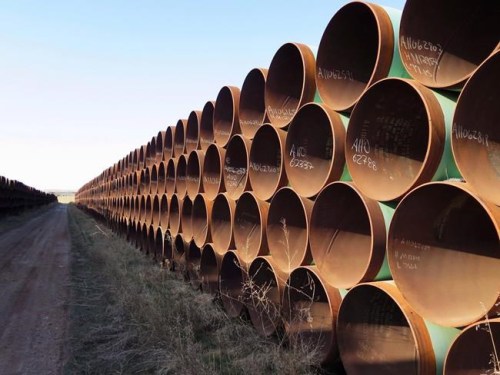
CALGARY - Cancelling the multi-billion dollar Keystone XL pipeline expansion would not only jeopardize thousands of jobs in Alberta, it would also mean the loss of billions of dollars in corporate income taxes, carbon taxes and royalties, according to energy experts.

TC Energy Corp.'s 1,947-kilometre project would carry crude oil from Hardisty, Alta., to Steele City, Neb. From there it would connect with the company's existing facilities to reach the U.S. Gulf Coast – one of the world’s biggest oil refining hubs.

Scrapping the pipeline expansion could threaten the security of supply for those refineries, said Richard Masson, an executive fellow and energy expert at the University of Calgary's School of Public Policy.

Without a pipeline to move bottlenecked bitumen from Canada to U.S. coastal refineries, they'll be forced to import from countries like Saudi Arabia, Iraq and Russia, he said.

Read
Monday, Jan. 18, 2021

Writers’ fest program packed with prose pros

Ben Sigurdson 4 minute read Saturday, Sep. 21, 2024

Thin Air, Winnipeg’s long-running writers festival, hits the ground running with a full slate of events in the coming days.

At 7 p.m. tonight at McNally Robinson’s Grant Park location, the festival’s Signature series kicks off with the launch of Jenny Heijun Wills’ book Everything and Nothing at All, a collection of essays on beauty, language, reading, love and family that serves as a companion piece of sorts to her 2019 memoir Older Sister. Not Necessarily Related. She’ll be joined in conversation by fellow author and University of Winnipeg professor Lindsay Wong. The launch is free, and will be streamed on McNally Robinson’s YouTube channel.

The fest’s first MainStage event in some years takes place Wednesday at 7 p.m. at Ilipvik at WAG-Qaumajuq (300 Memorial Blvd.). MainStage events typically bring a range of writers together under an overarching theme — in this case relationships. Featured authors are 2024 Giller longlisters Caroline Adderson and Shashi Bhat as well as E. McGregor and Oonya Kempadoo. Admission is $15, with tickets available at wfp.to/CbI.

On Thursday from 3:30-4:30 p.m. at the Bill and Helen Norrie Library (15 Poseidon Bay), Free Press columnist Niigaan Sinclair will discuss themes and ideas in his book Wînipêk: Visions of Canada from an Indigenous Centre as part of the festival’s Big Ideas series. The event is free, although registration (at wfp.to/Cbz) is recommended.

Horoscope

Georgia Nicols 4 minute read Preview

Horoscope

Georgia Nicols 4 minute read Monday, Mar. 16, 2026

Moon Alert: Avoid shopping (except food and gas) or major decisions from 2:45 p.m. to 6:30 p.m. After that, the moon moves from Aquarius into Pisces.

Aries (March 21-April 19)

You might meet someone unusual or avant-garde — someone who is different in some way. This person might be a new acquaintance or they could be a member of a group. Be careful not to be influenced in a way that you might later regret.

Taurus (April 20-May 20)

Read
Monday, Mar. 16, 2026

Heavy rain, wind sweep across Manitoba communities

Malak Abas 5 minute read Preview

Heavy rain, wind sweep across Manitoba communities

Malak Abas 5 minute read Updated: 5:07 PM CDT

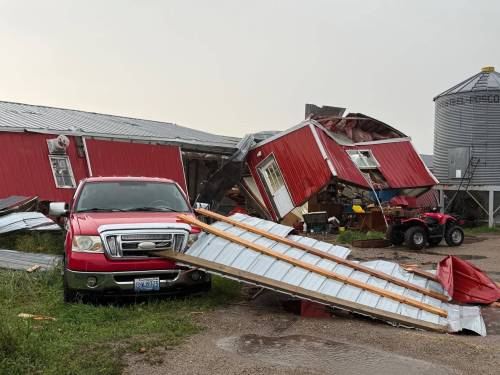
Kelvin Siemens hoped he was dreaming when a tornado touched down near his home Sunday evening.

When he woke up the next morning, the southwestern Manitoba farmer confirmed it was no dream, as his barn and hay shed was toppled and a pile of rubble was left behind.

“This kind of devastation can really test your constitution,” Siemens, 65, told the Free Press from his farm just south of Kola, a small community in the Rural Municipality of Wallace-Woodworth.

The tornado was reported near Elkhorn, about 105 kilometres west of Brandon, at about 6:30 p.m. Sunday. A second tornado touched down near Maryfield, Sask., located southwest of Elkhorn.

Read
Updated: 5:07 PM CDT

Health care needs long-term planning

Editorial, Aug. 31 4 minute read Preview

Health care needs long-term planning

Editorial, Aug. 31 4 minute read 2:01 AM CDT

If there’s been a throughline in the past 30 years of Manitoba politics — apart from the fact the electorate has bounced between NDP and Progressive Conservative governments — it’s that the state of provincial health care is almost always in the headlines.

Remember the “hallway medicine” catchphrase used by Gary Doer’s New Democrats in the 1999 provincial election campaign? It’s not that far removed from the “ER bottlenecks” that Manitobans, especially Winnipeggers, must deal with today.

In a recent Free Press examination of emergency room medicine (Condition critical, Aug. 22), Dr. Alecs Chochinov, a former director of emergency medicine at St. Boniface Hospital, attributed the bottleneck problem to “access block,” meaning that more personal-care home beds and home-care services are needed to free up acute-care hospital beds and enable patients to move more quickly through emergency rooms.

So, how should access block be addressed and who should direct the implementation of long-term investment and solutions?

Read
2:01 AM CDT

Truth must come before reconciliation: experts

Kelly Geraldine Malone, The Canadian Press 5 minute read Preview

Truth must come before reconciliation: experts

Kelly Geraldine Malone, The Canadian Press 5 minute read Friday, Jun. 4, 2021

Stephanie Scott shed tears with her daughter and five-year-old grandchild when remains of what are believed to be more than 200 children were found on the former site of the Kamloops Indian Residential School in British Columbia.

“It really hurt us,” says Scott. “There is no denying the truth that the residential school system was responsible for the death of thousands of children."

Scott is the executive director of the National Centre for Truth and Reconciliation in Winnipeg. It has confirmed the names of 4,117 children who died at residential schools across the country.

That’s an underestimation of the actual deaths, she says. Unresearched records from churches and governments and unmarked graves probably hold the names of many more children who never made it home.

Read
Friday, Jun. 4, 2021