Liberals add $1.4 billion to climate change mitigation fund: McKenna

Advertisement

Advertise with us

OTTAWA - Infrastructure Minister Catherine McKenna says the federal government is adding almost $1.4 billion to the disaster mitigation and adaptation fund this year to help communities across Canada facing climate change and environmental disasters.

Read this article for free:


or

Already have an account? Log in here »

To continue reading, please subscribe:

Subscribe and receive a limited-edition Free Press branded hat or tote.

Digital Subscription

One year of digital access for only $205*

  • Enjoy unlimited reading on winnipegfreepress.com
  • Read the E-Edition, our digital replica newspaper
  • Access News Break, our award-winning app
  • Play interactive puzzles

*First annual payment billed as $205.00 + GST for one year. This annual subscription will automatically renew at $233.00 + GST every 52 weeks (10% off the regular annual price of $259.35). Offer available to new and qualified returning subscribers only. Cancel any time.

To continue reading, please subscribe:

Add Free Press access to your Brandon Sun subscription for only an additional

$1 for the first 4 weeks*

  • Enjoy unlimited reading on winnipegfreepress.com
  • Read the E-Edition, our digital replica newspaper
  • Access News Break, our award-winning app
  • Play interactive puzzles
Start now

*Your next Brandon Sun subscription payment will increase by $1.00 and you will be charged $17.95 plus GST for four weeks. After four weeks, your payment will increase to $24.95 plus GST every four weeks.

Hey there, time traveller!
This article was published 20/07/2021 (1877 days ago), so information in it may no longer be current.

OTTAWA – Infrastructure Minister Catherine McKenna says the federal government is adding almost $1.4 billion to the disaster mitigation and adaptation fund this year to help communities across Canada facing climate change and environmental disasters.

Speaking to reporters in Toronto Tuesday, McKenna says the funding will support communities in conducting projects to face the risks of wildfires and floods, rehabilitate storm water systems and restore wetlands and shorelines.

Her department says in a news release $670 million of the funding will be dedicated to small-scale projects between $1 million and $20 million while remaining funding will be allocated to large-scale projects above $20 million.
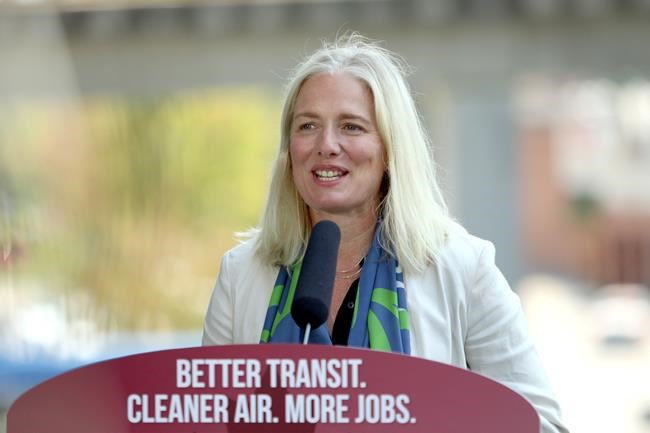
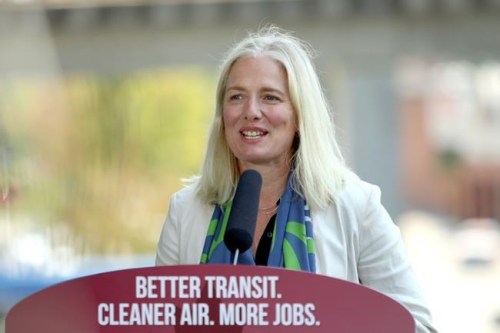
Minister of Infrastructure and Communities Catherine McKenna talks about the recent transit announcement during a press conference at Surrey City Hall in Surrey, B.C., on Friday, July 9, 2021. THE CANADIAN PRESS/Chad Hipolito

British Columbia’s government has said accommodations for wildfire evacuees are filling up as the flames and smoke from numerous blazes spread, forcing more people from their homes and contributing to an acrid haze that’s blanketing cities in neighbouring Alberta.

Smoke from the fires in B.C., as well as others in northern Saskatchewan, Manitoba and northwest Ontario, has resulted in special air quality advisories across the country.

The disaster mitigation and adaptation fund started in 2018 as a $2 billion program over 10 years to support communities in establishing the infrastructure they need to better handle natural disasters including floods, wildfires, earthquakes and droughts.

The new $1.4 billion fund will be spent over 12-year period, the department says.

McKenna says at least 10 per cent of the funding will go to Indigenous recipients.

“Climate change is having a devastating impact on Indigenous communities and a disproportionate impact,” she says.

She says dealing with climate change should be through the same approach that the government has been taking in dealing with COVID-19 pandemic.

“We need to listen to science and scientists. We need to work with partners from municipalities to provinces to the private sector,” she says.

“We all need to work together because, really, we have no choice.”

This report by The Canadian Press was first published July 20, 2021.

——

This story was produced with the financial assistance of the Facebook and Canadian Press News Fellowship.

Report Error Submit a Tip

More Stories

Winnipeg close to ICU capacity, surgeries cancelled as cases rise, death toll hits 61

Danielle Da Silva 7 minute read Preview

Winnipeg close to ICU capacity, surgeries cancelled as cases rise, death toll hits 61

Danielle Da Silva 7 minute read Wednesday, Oct. 28, 2020

Only six intensive-care beds were available in Winnipeg Wednesday as the spike in COVID-19 cases further taxed the hospital system, forced health-care workers into self-isolation and required the cancellation of 43 surgeries.

The province reported three additional deaths — raising the death toll to 61 — and 170 new cases, the third-highest daily tally of the pandemic.

Lanette Siragusa, chief nursing officer with Shared Health, said intensive care unit capacity on Wednesday was at 92 per cent, and continues to be stretched, as more people become sick with COVID-19 and hospital outbreaks swell.

“The way the numbers are going, we do expect that critical care is going to continue to be congested,” Siragusa said at a news conference. “If we have to go over capacity, we already are looking at what those models of care would be and how we would support patients.

Read
Wednesday, Oct. 28, 2020

Finding my way through the ‘odd uneven time’

Pam Frampton 5 minute read Preview

Finding my way through the ‘odd uneven time’

Pam Frampton 5 minute read 2:00 AM CDT

I am taking a turn in the garden with a cup of tea on a Friday morning.

It is 16 C in St. John’s but feels warmer in the stillness. We have been given the rare gift of a morning without wind. I gladly accept it.

High in the overcast sky, a seagull screeches a lament. Near my feet, chickadees and juncos are flittering and tittering in the shrubbery.

Tomorrow and Sunday call for torrential rains, the kind that — when paired with lashing winds — will strip rose petals away and give the slender daylilies a sound thrashing. Violent imagery, yes, but accurate. I know what to expect. I’ve been around the block.

Read
2:00 AM CDT

Double climate whammy hits home

Editorial 4 minute read Preview

Double climate whammy hits home

Editorial 4 minute read 2:00 AM CDT

It’s a bit of a one-two punch.

First, the show-and-tell of what global warming could be bringing us.

Then, the fact we’ve already failed our best chance of halting climate change.

On Sept. 3, the World Meteorological Organization released its forecast of the potential effects of the rapidly-developing super El Niño phenomenon.

Read
2:00 AM CDT

Fund full-day kindergarten for all

Catherine-Laura Dunnington and Molly McCracken 4 minute read Yesterday at 2:00 AM CDT

Children entering kindergarten are starting school this fall. While the 2.5-hour kindergarten day commonly found in Manitoba schools sounds like a pleasant transition to the school system, in truth it remains one of the biggest missing pieces of the child-care puzzle.

Province-wide, families face a stressful dilemma — if they are lucky enough to have child care, they have to leave work at lunch and shuttle a child from school to child care; if they don’t, they must reduce hours, or forgo working or education, because they don’t have child care for their kindergartener.

The Government of Manitoba has made progress on making child care more affordable and accessible. But we have largely left one enormous piece untouched — part-day kindergarten. Why is publicly funded education for kindergarten still only 2.5 hours a day? To date, British Columbia, Ontario, Quebec, New Brunswick, Newfoundland and Labrador, Nova Scotia, and Prince Edward Island have all implemented full-day, publicly funded kindergarten. The Manitoba School Boards Association passed a resolution in 2025 to implement full-day kindergarten programming, but the province has not provided sufficient funding to implement it province-wide.

There are currently 13,600 children in kindergarten in Manitoba. With a coverage rate for licensed child care of 32.3 per cent, roughly 5,000 families with kindergarteners lack access to licensed child care during the part of the day when their child is not in school. That is a precarious position to put any family in.

0 minute read

Wildfires force two northern First Nations, Lynn Lake to evacuate for second consecutive year, province warns of ‘high to extreme’ danger

Tyler Searle 6 minute read Preview

Wildfires force two northern First Nations, Lynn Lake to evacuate for second consecutive year, province warns of ‘high to extreme’ danger

Tyler Searle 6 minute read Monday, Jun. 29, 2026

The Manitoba government warned of “a high to extreme level of fire danger” in northern parts of the province Monday, where out-of-control wildfires have already prompted hundreds of people to flee their homes.

The community of Lynn Lake, about 800 kilometres north of Winnipeg, was evacuated Saturday and nearby Marcel Colomb First Nation followed suit through the weekend. O-Pipon-Na-Piwin Cree Nation, located about 130 kilometres east of the communities, also issued a local state of emergency and began to evacuate vulnerable residents owing to smoke in the region, the province said in a news release Monday.

The province said it is tracking 127 active fires across Manitoba, bringing the year-to-date total up to 196 — well above the annual average of 156 on the same date in previous years.

About 600 people were ordered to leave Lynn Lake Saturday. Some fled in their vehicles while others boarded flights destined for Brandon.

Read
Monday, Jun. 29, 2026