Meeting back on with federal, B.C. governments: Wet’suwet’en hereditary chief
Advertisement
Read this article for free:
or
Already have an account? Log in here »
To continue reading, please subscribe:
Digital Subscription
One year of digital access for only $1.44 a week*
- Enjoy unlimited reading on winnipegfreepress.com
- Read the E-Edition, our digital replica newspaper
- Access News Break, our award-winning app
- Play interactive puzzles
*Billed as $5.77 plus GST every four weeks. After 52 weeks, price increases to the regular rate of $19.95 plus GST every four weeks. Offer available to new and qualified returning subscribers only. Cancel any time.
To continue reading, please subscribe:
Add Free Press access to your Brandon Sun subscription for only an additional
$1 for the first 4 weeks*
- Enjoy unlimited reading on winnipegfreepress.com
- Read the E-Edition, our digital replica newspaper
- Access News Break, our award-winning app
- Play interactive puzzles
*Your next Brandon Sun subscription payment will increase by $1.00 and you will be charged $17.95 plus GST for four weeks. After four weeks, your payment will increase to $24.95 plus GST every four weeks.
Read unlimited articles for free today:
or
Already have an account? Log in here »
Hey there, time traveller!
This article was published 26/02/2020 (2426 days ago), so information in it may no longer be current.
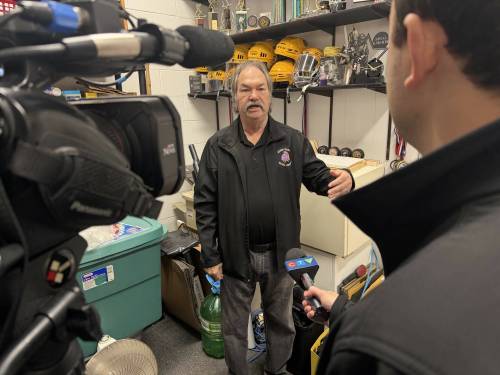
A meeting between the Wet’suwet’en hereditary chiefs, the federal government and the British Columbia government is set to take place Thursday after it was abruptly cancelled Wednesday, one of the leaders of the First Nation said.
Chief Na’Moks, who also goes by John Ridsdale, said the meeting is scheduled in the afternoon and will continue Friday.
“It was abundantly clear to us that both levels of government had cancelled the discussions we had planned,” he said.
By Wednesday evening, he said he and the other hereditary chiefs were told the cancellation was due to a “miscommunication.”
He said talks broke down after they refused to ask other First Nations and their supporters to remove rail blockades throughout the country.
“In our law, we can’t do that,” he said. “We can’t tell another sovereign nation what to do and we would not expect them to do that to us.”
A spokesman for the office of the B.C. premier said Wednesday that the report of a rescheduled meeting was “promising,” but the provincial government was not in a position to confirm it until Thursday morning.
Nationwide rail and road blockades have been popping up for weeks as a show of support for the hereditary chiefs of the Wet’suwet’en Nation, who oppose a natural gas pipeline project cutting across their traditional territory in northwestern British Columbia.
Also Wednesday, protesters behind rail blockades in Quebec and Ontario ramped up their actions as government officials accused them of compromising public safety.
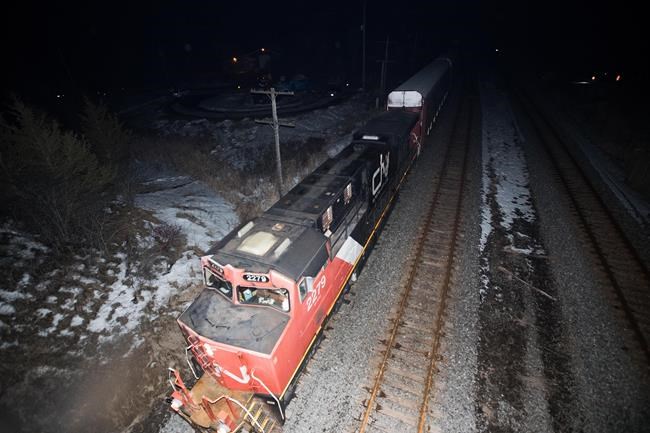
In a video posted on the Real People’s Media website, demonstrators in Tyendinaga Mohawk Territory near Belleville, Ont., were shown standing on rail tracks as a CN Rail train approached, then jumping out of the way at the last second.
Ontario Provincial Police said a handful of protesters also lit fires near and on railway tracks at a secondary camp that remained in place after a raid on another, larger blockade earlier this week.
The latest disruptions were denounced by Prime Minister Justin Trudeau and Public Safety Minister Bill Blair, who called the protesters’ actions unsafe.
“It is extremely concerning to see people endangering their own lives and the lives of others by trying to interfere with the trains,” Trudeau said.
Meanwhile, Quebec Premier Francois Legault suggested provincial police had not moved in to dismantle a blockade on the Kahnawake Mohawk territory south of Montreal because those on the reserve are armed, potentially with assault rifles.
His comments, which came as protesters on the Mohawk territory south of Montreal reinforced a blockade that has been in place since Feb. 8, were rejected by the First Nation, which stressed the demonstration is a peaceful one.
Kenneth Deer, the secretary of the Mohawk Nation at Kahnawake, said the protesters are not armed and the suggestion that there are AK-47s at the site is “highly irresponsible and ludicrous.”
Earlier in the day, Deer spoke out against a possible intervention by outside police, saying any efforts to forcibly remove the site would be seen as an “act of provocation and aggression that will exacerbate an already volatile situation.”
“Ultimately, coercive state-sponsored force is the wrong way to make peace,” Deer said in a statement.
The Assembly of First Nations of Quebec and Labrador also took issue with Legault’s statements, urging him to be more careful in discussing the issue.
“Premier Legault is making very dangerous and offensive comments by suggesting the presence of weapons in Kahnawake,” AFNQL Chief Ghislain Picard said in a statement.
“He certainly did not consider the consequences of his words for community members who live with the memories of 30 years ago on a daily basis.”
The rail company obtained an injunction on Tuesday to end the blockade. Travel disruptions have continued in recent days after several high-profile blockades were dismantled by police in B.C. and Ontario earlier this week.
The agency responsible for a major commuter rail service covering much of southern Ontario said Wednesday it was not anticipating any of the delays and cancellations that brought trains to a standstill during the previous day’s rush hour.

Metrolinx, operator of the GO Transit network, suspended service Tuesday on multiple routes as a series of protests sprang up in and around Toronto.
City police said they arrested three people at the demonstrations. They said Wednesday morning that officers provided protesters with an injunction and began moving them from rail tracks.
The federal governments could not immediately be reached for comment.
This report by The Canadian Press was first published on Feb. 26, 2020
— With files from Liam Casey in Toronto, Dirk Meissner in Victoria, Amy Smart in Vancouver and Teresa Wright in Ottawa.
Related Articles
Province taking close look at Alberta's blockade bill


Advertisement Advertise With Us
Advertisement Advertise With Us