Canada experiencing religious decline
Author details growing number of people without belief in God and the afterlife

Advertisement
Read this article for free:
or
Already have an account? Log in here »
To continue reading, please subscribe:

Digital Subscription
One year of digital access for only $205*
- Enjoy unlimited reading on winnipegfreepress.com
- Read the E-Edition, our digital replica newspaper
- Access News Break, our award-winning app
- Play interactive puzzles
*First annual payment billed as $205.00 + GST for one year. This annual subscription will automatically renew at $233.00 + GST every 52 weeks (10% off the regular annual price of $259.35). Offer available to new and qualified returning subscribers only. Cancel any time.
To continue reading, please subscribe:
Add Free Press access to your Brandon Sun subscription for only an additional
$1 for the first 4 weeks*
- Enjoy unlimited reading on winnipegfreepress.com
- Read the E-Edition, our digital replica newspaper
- Access News Break, our award-winning app
- Play interactive puzzles
*Your next Brandon Sun subscription payment will increase by $1.00 and you will be charged $17.95 plus GST for four weeks. After four weeks, your payment will increase to $24.95 plus GST every four weeks.
Read unlimited articles for free today:
or
Already have an account? Log in here »
Over his 50 years of writing and researching about religion in Canada, Reg Bibby has written books with the titles Fragmented Gods (1987), Unknown Gods (1993), Restless Gods (2002), Beyond the Gods (2011), and Resilient Gods (2017).
If Bibby was to write another book about religion in Canada today, the retired University of Lethbridge professor said he might title it: Vanishing Gods.
“Religion in Canada has known something of a golden era,” he said. “But that era has been over since the final decades of the 20th century.”
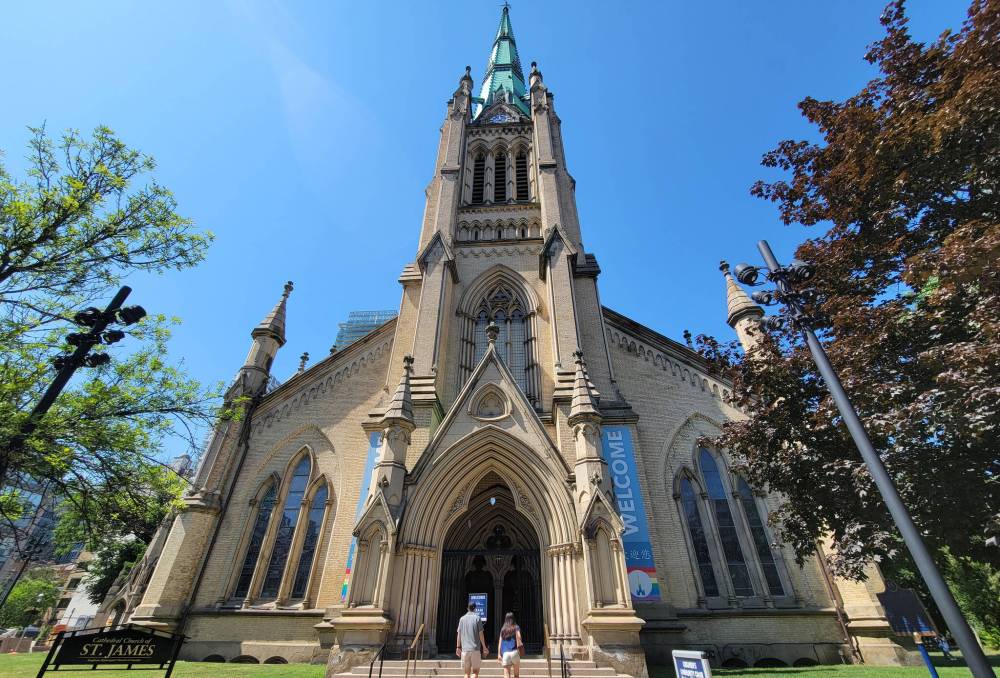
Doug Ives / The Canadian Press files
Regular attendance at religious services went from 60 per cent in the 1940s to around 10 per cent now, author Reg Bibby writes.
Bibby chronicles these changes in a chapter in his new book, The Canadian Transformation: Social Trends 1975-2025. (Project Canada Books).
That chapter contains Bibby’s research and reflections about changes to the religious landscape since his first national survey on Canadian social trends in 1975 to his last one in 2025.
Over the past five decades, religion ceased being central to the lives of most Canadians, he writes, citing as evidence the decrease in regular attendance at religious services. It went from 60 per cent in the 1940s to around 10 per cent now, with over half of Canadians today saying they never attend religious services.
At the same time, a growing number of people claim no religious identity, he notes; the “nones” now are over 36 per cent of the population.
Along with that there have been declines in belief in God (83 per cent in 1985 to 47 per cent in 2025); life after death (65 per cent to 48 per cent); the divinity of Jesus (79 per cent to 37 per cent); and hell (48 per cent to 30 per cent).
“Belief in just about everything religious has decreased,” Bibby said.
He attributes these changes to at least two factors. One is the loss of “social support.” If people no longer grow up going to religious services, traditional religious beliefs are not reinforced through things like Sunday school, youth groups or other forms of religious education.
“Religious beliefs, like all ideas, require social sources to be instilled and retained,” he said. “The obvious deduction is that if Canadians of all ages are decreasingly involved in religious groups, beliefs are going to decrease accordingly.”
The other factor is the freedom Canadians now have when it comes to things like relationships, sexuality, lifestyles and religious beliefs — things where religion once held greater sway. This freedom, Bibby said, has made it harder for religious groups to retain their traditional authority over moral norms.
“The accelerated emphasis on freedom, choice, and egalitarianism has resulted in individuals increasingly feeling able to have alternative mindsets and embrace alternative values and lifestyles without any guilt or stigma,” he said.
This includes how Canadians no longer feel any social pressure about not attending religious services or not believing in God. Nobody needs to be “closet atheists and agnostics” today, he said.
In an interview with me about his book, Bibby noted that most of the religious decline has occurred in Christianity. But he predicted the same will happen to other faith groups like Islam, Sikhism and Hinduism. They will also face the same challenges of retaining their youth as their children are shaped by the same Canadian culture of diversity and individual freedom that impacted Christian denominations.
“I would expect that’s going to translate into all kinds of defection on the part of their children,” he said, noting that sexuality is one area where youth and their parents may disagree.
“What they are going to be met with in our culture is the freedom of people to choose. It’s going to be extremely difficult for these groups.”

The same forces are in play for evangelicals, some of whom believe they are exempt from the same decline. But Bibby’s research shows that’s not the case. Although some independent, non-denominational congregations are growing, he said, traditional evangelical denominations are also experiencing declining participation and identification.
“The fact is evangelicals have not sustained their vibrance over the past 20 years,” said Bibby, who grew up Baptist. “They have not sustained their numbers to the extent they thought.”
Despite all these changes, religion hasn’t disappeared in Canada. Bibby noted that between 30 per cent to 50 per cent of Canadians still retain some or most religious beliefs, and as many as four million people across all faith traditions say they still attend religious services. Even among those who have left organized religion, 35 per cent say they are “spiritual but not religious.”
His conclusion? While there have been many changes for religion in Canada over the past 50 years, “this is far from an age of total disbelief,” he said. “As the sociologist of old, Emile Durkheim once aptly put it, ‘Religion retreats, but it never surrenders.’”
Jdl562000@yahoo.com
The Free Press is committed to covering faith in Manitoba through our Religion in the News project. This reporting continues because readers like you step forward to fund it.
Donate now to support our reporting on religion.
Your donation is eligible for a charitable tax receipt.
BECOME A FAITH JOURNALISM SUPPORTER
John Longhurst has been writing for Winnipeg's faith pages since 2003. He also writes for Religion News Service in the U.S., and blogs about the media, marketing and communications at Making the News.
Our newsroom depends on a growing audience of readers to power our journalism. If you are not a paid reader, please consider becoming a subscriber.
Our newsroom depends on its audience of readers to power our journalism. Thank you for your support.
The Free Press is committed to covering faith in Manitoba through our Religion in the News project. This reporting continues because readers like you step forward to fund it.
Donate now to support our reporting on religion.
Your donation is eligible for a charitable tax receipt.
BECOME A FAITH JOURNALISM SUPPORTER
John Longhurst has been writing for Winnipeg's faith pages since 2003. He also writes for Religion News Service in the U.S., and blogs about the media, marketing and communications at Making the News.
Our newsroom depends on a growing audience of readers to power our journalism. If you are not a paid reader, please consider becoming a subscriber.
Our newsroom depends on its audience of readers to power our journalism. Thank you for your support.
Advertisement Advertise With Us
Advertisement Advertise With Us
The Free Press acknowledges the financial support it receives from members of the city’s faith community, which makes our coverage of religion possible.