Pope Francis says he felt the pain of Indigenous Peoples during trip to Canada

Advertisement

Advertise with us

Crown-Indigenous Relations Minister Marc Miller says a lack of action would be the worst thing to follow an apology for residential schools as Pope Francis reflects on his historic journey to Canada.

Read this article for free:


By clicking the button above, an account will be created and you will begin to receive some of our recommended newsletters. You may opt out of any newsletter by visiting your Email and Communication Preferences page or by clicking "unsubscribe" at the bottom of any email.

or

Already have an account? Log in here »

To continue reading, please subscribe:

Digital Subscription

One year of digital access for only $1.44 a week*

  • Enjoy unlimited reading on winnipegfreepress.com
  • Read the E-Edition, our digital replica newspaper
  • Access News Break, our award-winning app
  • Play interactive puzzles

*Billed as $5.77 plus GST every four weeks. After 52 weeks, price increases to the regular rate of $19.95 plus GST every four weeks. Offer available to new and qualified returning subscribers only. Cancel any time.

To continue reading, please subscribe:

Add Free Press access to your Brandon Sun subscription for only an additional

$1 for the first 4 weeks*

  • Enjoy unlimited reading on winnipegfreepress.com
  • Read the E-Edition, our digital replica newspaper
  • Access News Break, our award-winning app
  • Play interactive puzzles
Start now

*Your next Brandon Sun subscription payment will increase by $1.00 and you will be charged $17.95 plus GST for four weeks. After four weeks, your payment will increase to $24.95 plus GST every four weeks.

Hey there, time traveller!
This article was published 03/08/2022 (1549 days ago), so information in it may no longer be current.

Crown-Indigenous Relations Minister Marc Miller says a lack of action would be the worst thing to follow an apology for residential schools as Pope Francis reflects on his historic journey to Canada.

Miller said Wednesday there is a renewed focus on recognizing that what happened in residential schools was genocide after the Pope used the term last week following his visit to Alberta, Quebec and Nunavut.

Miller added there must be unanimous consent from members of Parliament in the House of Commons in order to have the Canadian government adopt that language when describing the institutions.

Pope Francis leaves the Citadelle in the popemobile following a reconciliation ceremony during his papal visit across Canada in Quebec City on Wednesday, July 27, 2022. Pope Francis says he felt the pain of Indigenous Peoples during his trip to Canada but also left with a sense of hope. THE CANADIAN PRESS/Nathan Denette

“The worst thing you could have after such a historic apology … is for nothing to happen afterward,” Miller said in Peepeekisis Cree Nation, in southeastern Saskatchewan.

Prime Minister Justin Trudeau has said he continues to accept the conclusion from the 2019 inquiry into missing and murdered Indigenous women and girls that “what happened amounts to genocide.”

Governments are bad at affecting culture change, Miller said, but added there is a desire across society for people to inform themselves about the history of residential schools.

“I’m hopeful, with the visit of the Pope, that that will turn people’s minds that don’t think about these issues every day,” he said.

The six-day journey to Canada saw Francis meet with Indigenous people and residential school survivors during stops and repeatedly apologize for some members of the Roman Catholic Church’s role in the institutions.

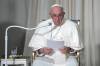
In a general audience in Vatican City on Wednesday, Francis said he felt the pain of Indigenous Peoples but also left with a sense of hope.

“In these meetings, especially the last one, I had to feel the blows of the pain of those people, what they had lost … the elderly who had (lost) their children and did not know what had become of them, due to this policy of assimilation,” Francis said.

“It was a very painful moment, but one we must face up to. We must face up to our errors, our sins.”

Throughout the trip, the Pope also begged for forgiveness for cultural destruction and forced assimilation.

An estimated 150,000 Indigenous children were forced to attend residential schools in Canada, where neglect and physical and sexual abuse were rampant. More than 60 per cent of the schools were run by the Catholic Church.

The Pope said there were many joyful moments throughout his travels and thanked Canadians for their warm welcome and great hospitality.

But the overall meaning and tone was reflection, repentance and reconciliation, he said.

Francis said the fortitude of Indigenous Peoples can be an example to all people “not to close themselves up.”

“But to offer their indispensable contribution for a more fraternal humanity, that knows how to love creation and the creator, in harmony with creation.”

However, some Indigenous leaders say they are disappointed by the Pope’s pilgrimage and apologies, saying it fell short on many fronts.

Assembly of First Nations National Chief RoseAnne Archibald said the Pope stopped short of denouncing the Catholic Church’s role as an institution in creating systems that spiritually and physically harmed Indigenous people. She said the apology felt “incomplete.”

“The fact that the Vatican has not addressed these properly in the Pope’s speech is a real indication that they’re not listening,” Archibald said in a recent news release.

“They’re not hearing First Nations’ concerns. That, to me, has been reflective of this whole tour.”

She said Francis also failed to respond to calls to revoke the Doctrine of Discovery, papal bulls used to justify colonization, as well as return diocese land and sacred items to Indigenous communities.

This report by The Canadian Press was first published Aug. 3, 2022.

— With files from Mickey Djuric in Peepeekisis Cree Nation

Report Error Submit a Tip

The Free Press acknowledges the financial support it receives from members of the city’s faith community, which makes our coverage of religion possible.
More Stories

Moving past the Indian Act will take time and trust

Niigaan Sinclair 5 minute read Preview

Moving past the Indian Act will take time and trust

Niigaan Sinclair 5 minute read 4:52 PM CDT

If I had a dime for every time a politician has called for the “abolishment”of the Indian Act, I’d be a rich man.

OK, maybe I’d have enough coins to jingle loudly in my pocket.

My point: a Canadian leader calling for the end of the race-based law passed in 1867 that is designed to give the federal government broad and brutal control over First Nations governments, membership, and reserve land is nothing new.

Premier Wab Kinew became the latest to advocate for this, during the First Nations-first ministers meeting in Ottawa this week.

Read
4:52 PM CDT

Record number of women elected in Manitoba municipal elections

Chris Kitching 5 minute read Preview

Record number of women elected in Manitoba municipal elections

Chris Kitching 5 minute read 3:33 PM CDT

A record number of women were elected to municipal office in Manitoba in elections held across the province Wednesday.

The Association of Manitoba Municipalities said 213 of 339 women candidates were voted in, accounting for almost 25 per cent of elected municipal officials — up from 20 per cent in 2022.

Portage la Prairie Mayor Sharilyn Knox, who applauded the increase, said there has been progress to reduce barriers that impede women’s participation in local government, “but I don’t think we’re where we need to be yet.”

“I think representation matters. When women see other women sitting around council tables, chairing meetings and taking on leadership roles, it helps them see themselves doing the same thing,” she said.

Read
3:33 PM CDT

Multi-year budget to force councillors, bureaucrats to focus on the big picture

Aldo Santin 12 minute read Preview

Multi-year budget to force councillors, bureaucrats to focus on the big picture

Aldo Santin 12 minute read Tuesday, Feb. 26, 2019

City hall is putting the final touches on the 2019 preliminary budget -- but the real tough job will start after that.

The city is committed to developing a four-year budget beginning with 2020, and having it in place by the end of this year.

It's a process that is filled with uncertainties, trying to balance four successive annual budgets at the same time, using assumptions on revenues and expenses that can change without notice: a provincial government that has frozen funding to city hall at 2016 levels and is reluctant to disclose annual funding commitments or share in unexpected revenues; erratic fuel prices; a possible change in government in Ottawa, which could bring new spending priorities. And in the middle of that four-year span, another civic election where new members of council may have other priorities than those laid out by the current crop of office holders.

Municipal governments across Manitoba are required to approve their annual operating and capital budgets by the end of March each year. But the criticism of decision-making at city hall has been that all the decisions are made on a year-to-year basis, keeping voters happy with an eye on the next election.

Read
Tuesday, Feb. 26, 2019

Railways report more accidents with dangerous goods

Dylan Robertson 6 minute read Preview

Railways report more accidents with dangerous goods

Dylan Robertson 6 minute read Monday, Jan. 20, 2020

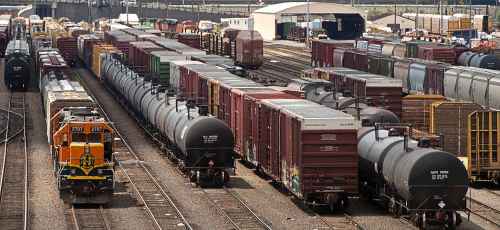
OTTAWA — The number of rail accidents involving dangerous goods more than doubled in Canada in 2018.

There were 25 accidents involving dangerous goods in 2018, involving one death, according to Transport Canada data published Monday.

There were 11 accidents recorded a year prior, and five in 2016.

These accidents involve dangerous goods — flammable or corrosive substances — that either exploded or leaked.

Read
Monday, Jan. 20, 2020

Election results: School trustees 2026

Staff 1 minute read Preview

Election results: School trustees 2026

Staff 1 minute read Friday, Oct. 23, 2026

Below you’ll find live 2026 election results for school trustees in Winnipeg divisions.

We can display results only for wards in which Winnipeg voters cast a ballot; we do not have access to live results reporting for school boards outside of Winnipeg.


Read
Friday, Oct. 23, 2026

Three in-custody fatalities trigger inquests

Free Press staff 2 minute read Preview

Three in-custody fatalities trigger inquests

Free Press staff 2 minute read 1:50 PM CDT

The province’s chief medical examiner has called inquests into the deaths of three men, including two who died by suicide in correctional facilities earlier this year.

Craig Flett, 32, was found hanging in his cell in the Stony Mountain Institution prison on Feb. 10 this year.

Corrections officers were able to cut him down and tried to resuscitate him, but he later died of a brain injury. Flett was serving a life sentence at the time.

Sebastian Atkinson, a 25-year-old inmate at the Winnipeg Remand Centre, was found hanging in his cell by a linen sheet tied to a metal bar about five feet from the floor.

Read
1:50 PM CDT