Papal apology mandatory for reconciliation, B.C. chief says

Advertisement
Read this article for free:
or
Already have an account? Log in here »
To continue reading, please subscribe:
Digital Subscription
One year of digital access for only $1.44 a week*
- Enjoy unlimited reading on winnipegfreepress.com
- Read the E-Edition, our digital replica newspaper
- Access News Break, our award-winning app
- Play interactive puzzles
*Billed as $5.77 plus GST every four weeks. After 52 weeks, price increases to the regular rate of $19.95 plus GST every four weeks. Offer available to new and qualified returning subscribers only. Cancel any time.
To continue reading, please subscribe:
Add Free Press access to your Brandon Sun subscription for only an additional
$1 for the first 4 weeks*
- Enjoy unlimited reading on winnipegfreepress.com
- Read the E-Edition, our digital replica newspaper
- Access News Break, our award-winning app
- Play interactive puzzles
*Your next Brandon Sun subscription payment will increase by $1.00 and you will be charged $17.95 plus GST for four weeks. After four weeks, your payment will increase to $24.95 plus GST every four weeks.
Read unlimited articles for free today:
or
Already have an account? Log in here »
Hey there, time traveller!
This article was published 30/03/2022 (1674 days ago), so information in it may no longer be current.
ROME — It’s nearly 9,000 kilometres from the Vatican to Kamloops, B.C., but for Rosanne Casimir, Kúkpi7 (chief) of the Tk’emlúps te Secwépemc in that interior B.C. community, the two are strongly linked.
“Many believe we wouldn’t be here (in Rome) without the discovery of the graves,” she said of the First Nations, Inuit and Métis meeting with Pope Francis.
For Casimir, as it was for many others on the trip, last year’s discovery of unmarked graves at the former Kamloops residential school represented a turning point in Indigenous relations with the Roman Catholic Church.
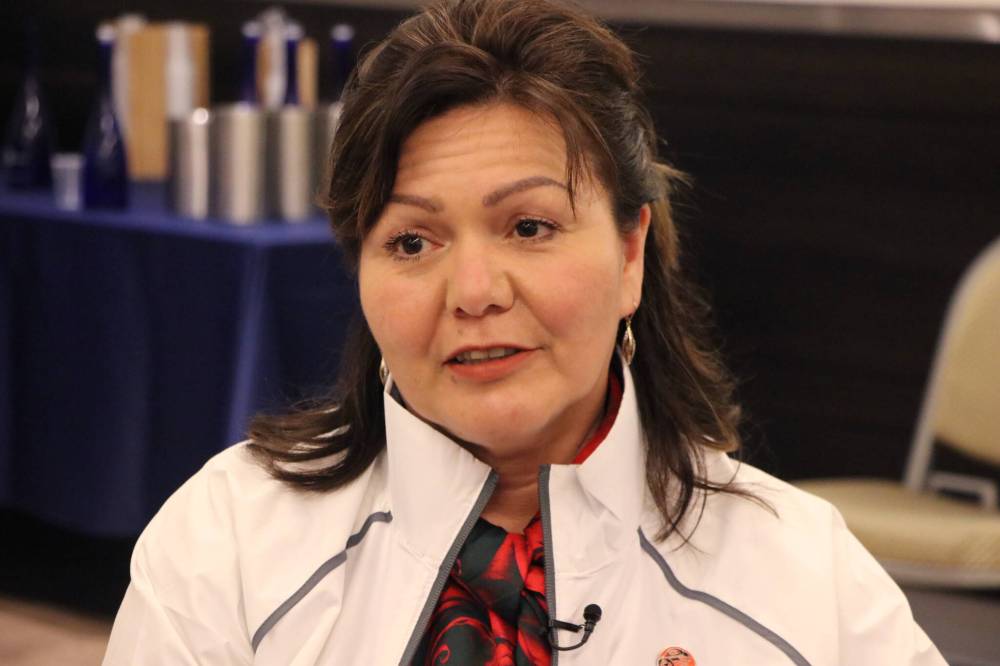
It helped create the conditions for the historic meeting with the Pope, she said, adding she came to Rome with a “deliberate message from my people to have the Pope acknowledge the harm” done by the residential schools.
That admission, and an apology in Canada, will be the first step towards reconciliation with the Church, she said.
“A lot of other things also need to take place,” she said, adding there would be followup with the Canadian Conference of Catholic Bishops when the meetings are over.
She said moving forward will require acts of contrition so “wrongs can be made right for our people.”
Members of her community differ on their willingness to pursue reconciliation with the Church, she said.
“Some are ready, some aren’t,” she said, adding an apology from the Pope — in Canada — is mandatory for her. She would like him to do it in Kamloops, what some call “ground zero” for the current level of awareness about the abuses of residential schools.

Although she acknowledged not everyone in her community supported her trip to meet the Pope, she feels good about the visit, believing it will make a difference for the community.
“It can start the healing,” she said.
Before she left for Rome, Casimir participated in a ceremony with elders and other community members to prepare herself mentally, emotionally and spiritually.
“I felt supported as we sang and prayed together,” she said. “It was the good medicine I needed.”
John Longhurst is in Rome this week to cover the papal visit by Indigenous people for the Free Press. See coverage of the visit at www.winnipegfreepress.com/papalvisit
The Free Press is committed to covering faith in Manitoba through our Religion in the News project. This reporting continues because readers like you step forward to fund it.
Donate now to support our reporting on religion.
Your donation is eligible for a charitable tax receipt.
BECOME A FAITH JOURNALISM SUPPORTER
John Longhurst has been writing for Winnipeg's faith pages since 2003. He also writes for Religion News Service in the U.S., and blogs about the media, marketing and communications at Making the News.
Our newsroom depends on a growing audience of readers to power our journalism. If you are not a paid reader, please consider becoming a subscriber.
Our newsroom depends on its audience of readers to power our journalism. Thank you for your support.
Related Articles
Papal visit 2022: Full coverage from Rome
Advertisement Advertise With Us
Advertisement Advertise With Us
The Free Press acknowledges the financial support it receives from members of the city’s faith community, which makes our coverage of religion possible.