De-colonize your faith, church groups advised

Advertisement
Read this article for free:
or
Already have an account? Log in here »
To continue reading, please subscribe:

Digital Subscription
One year of digital access for only $205*
- Enjoy unlimited reading on winnipegfreepress.com
- Read the E-Edition, our digital replica newspaper
- Access News Break, our award-winning app
- Play interactive puzzles
*First annual payment billed as $205.00 + GST for one year. This annual subscription will automatically renew at $233.00 + GST every 52 weeks (10% off the regular annual price of $259.35). Offer available to new and qualified returning subscribers only. Cancel any time.
To continue reading, please subscribe:
Add Free Press access to your Brandon Sun subscription for only an additional
$1 for the first 4 weeks*
- Enjoy unlimited reading on winnipegfreepress.com
- Read the E-Edition, our digital replica newspaper
- Access News Break, our award-winning app
- Play interactive puzzles
*Your next Brandon Sun subscription payment will increase by $1.00 and you will be charged $17.95 plus GST for four weeks. After four weeks, your payment will increase to $24.95 plus GST every four weeks.
Read unlimited articles for free today:
or
Already have an account? Log in here »
Hey there, time traveller!
This article was published 27/07/2021 (1877 days ago), so information in it may no longer be current.
An Indigenous activist, who is also a former Christian pastor, is teaching faith groups about reconciliation.
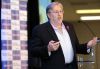
Kyle Mason, son of residential school and day school survivors, has launched a consulting service to help groups that have questions but don’t know who to talk to.
“There are people who want to know more, but don’t know who they could have this dialogue with,” said Mason, the founder and former director of the North End Family Centre, who also served as a pastor with the Pentecostal Assemblies of Canada.
Since the news broke about finding of graves of children at former residential schools, there has been an increase in the number of Canadians who want to talk about reconciliation, he said.
He welcomes the sudden interest, but noted that sharing about those experiences is difficult for Indigenous people, especially survivors.
“They have to relive the trauma and pain when they talk about it. It’s easy for them to be overwhelmed by all the well-intentioned requests for information.”
For this reason, Mason decided to offer his services, even though it’s hard for him, too.
“This is the story of my parents, and of me,” he said. “It’s not just a history book. The conversations can be exhausting. They take a toll emotionally and spiritually.”
To recharge, Mason takes time for self-care, to unwind, recharge and “connect with the creator,” he said.
As for faith groups that want to take time to talk about residential schools and reconciliation, Mason suggests doing some preparation before contacting Indigenous people.
“There are lots of books available, a lot of information online,” he said, adding the report of the Truth and Reconciliation Commission is a good place to start.
But most of all, he wants non-Indigenous people to not be worried about reaching out.
“Don’t be afraid,” he said. “True reconciliation starts with relationships. Indigenous people want to build relationships with non-Indigenous people as a way to understand and overcome the evil that happened.”
At the same time, he recommends that faith groups plan to pay for the help they receive.
“Generally speaking, if you don’t already have an existing relationship with Indigenous people, don’t expect them to talk and relive their trauma for free,” he said.
Expecting them to provide free education about their experiences is another example of the “colonizer mindset,” he said.
“Taking our knowledge, pain and trauma and walking away without paying for it is just another act of colonization,” he added, noting it is common in the business, non-profit and faith worlds to pay guest speakers and consultants.
Indigenous people can decide if they want to be paid or not, he said.
Mason is especially interested in talking to church groups that want to de-colonize their faith.
“Many Christians aren’t aware of how their view of Christian faith was formed from a European or western mindset,” he said. “God is bigger than that. Through discussions with Indigenous people, they can become more inclusive of Indigenous views of spirituality and move away from the old missionary idea of taking God to Indigenous people.”
faith@freepress.mb.ca
The Free Press is committed to covering faith in Manitoba through our Religion in the News project. This reporting continues because readers like you step forward to fund it.
Donate now to support our reporting on religion.
Your donation is eligible for a charitable tax receipt.
BECOME A FAITH JOURNALISM SUPPORTER
John Longhurst has been writing for Winnipeg's faith pages since 2003. He also writes for Religion News Service in the U.S., and blogs about the media, marketing and communications at Making the News.
Our newsroom depends on a growing audience of readers to power our journalism. If you are not a paid reader, please consider becoming a subscriber.
Our newsroom depends on its audience of readers to power our journalism. Thank you for your support.
The Free Press is committed to covering faith in Manitoba through our Religion in the News project. This reporting continues because readers like you step forward to fund it.
Donate now to support our reporting on religion.
Your donation is eligible for a charitable tax receipt.
BECOME A FAITH JOURNALISM SUPPORTER
John Longhurst has been writing for Winnipeg's faith pages since 2003. He also writes for Religion News Service in the U.S., and blogs about the media, marketing and communications at Making the News.
Our newsroom depends on a growing audience of readers to power our journalism. If you are not a paid reader, please consider becoming a subscriber.
Our newsroom depends on its audience of readers to power our journalism. Thank you for your support.
Related Articles
Long journey a show of solidarity

Advertisement Advertise With Us
The Free Press acknowledges the financial support it receives from members of the city’s faith community, which makes our coverage of religion possible.