First Nation says 751 unmarked graves found at Saskatchewan residential school site

Advertisement

Advertise with us

Eagleclaw Thom cried on the phone with family members as they shared stories of attending a former Saskatchewan residential school where a search has revealed what are believed to be 751 unmarked graves.

Read this article for free:


By clicking the button above, an account will be created and you will begin to receive some of our recommended newsletters. You may opt out of any newsletter by visiting your Email and Communication Preferences page or by clicking "unsubscribe" at the bottom of any email.

or

Already have an account? Log in here »

To continue reading, please subscribe:

Digital Subscription

One year of digital access for only $1.44 a week*

  • Enjoy unlimited reading on winnipegfreepress.com
  • Read the E-Edition, our digital replica newspaper
  • Access News Break, our award-winning app
  • Play interactive puzzles

*Billed as $5.77 plus GST every four weeks. After 52 weeks, price increases to the regular rate of $19.95 plus GST every four weeks. Offer available to new and qualified returning subscribers only. Cancel any time.

To continue reading, please subscribe:

Add Free Press access to your Brandon Sun subscription for only an additional

$1 for the first 4 weeks*

  • Enjoy unlimited reading on winnipegfreepress.com
  • Read the E-Edition, our digital replica newspaper
  • Access News Break, our award-winning app
  • Play interactive puzzles
Start now

*Your next Brandon Sun subscription payment will increase by $1.00 and you will be charged $17.95 plus GST for four weeks. After four weeks, your payment will increase to $24.95 plus GST every four weeks.

Hey there, time traveller!
This article was published 24/06/2021 (1954 days ago), so information in it may no longer be current.

Eagleclaw Thom cried on the phone with family members as they shared stories of attending a former Saskatchewan residential school where a search has revealed what are believed to be 751 unmarked graves.

Thom said the discovery on the grounds of the Marieval Indian Residential School announced by the Cowessess First Nation on Thursday left a hole in his heart.

Thom, 40, is from the Sakimay First Nation that borders Cowessess and did not attend Marieval, but his father and paternal grandparents did. Some of his siblings attended different schools throughout the province.

There may have been markers or headstones on the graves at one point, but they were removed in the 1960s, says Cowessess First Nation Chief Cadmus Delorme. (Cowessness First Nation / Facebook)

“People may have been able to leave or escape residential school, but it never left them,” Thom said from Ottawa.

“There was a cultural genocide, but there was also a genocide of our people.”

Cowessess Chief Cadmus Delorme promised that memories of those who died at Marieval will not be wiped out. He said work will be done so a name is placed on each of the unmarked graves he said may have had markers or headstones that were removed in the 1960s.

“The Catholic Church representatives removed these headstones, and today they are unmarked graves,” Delorme said.

“We want to honour our loved ones that lay there today,” he said. “We want to make sure that we keep that place and preserve it so many could come here and heal.”

The Archdiocese of Regina shared a letter it sent to Delorme, which said it has had conversations with the First Nation about abuse at the school, unmarked graves and how one priest destroyed headstones.

“As you have communicated elsewhere, Chief Cadmus, even for those of us who were not there or not involved, it is nonetheless the painful legacy that we need to carry,” Archbishop Don Bolen wrote.

Spokesman Eric Gurash also said the archdiocese contributed $70,000 to the First Nation for cemetery restoration.

The grave search began earlier this month using ground-penetrating radar that recorded 751 hits. The number would be the highest to date found in Canada. Delorme said the technology has a 10 to 15 per cent error rate.

“But we do know there are at least 600 (graves).”

The existence and number of graves does not come as a surprise to those yet living who attended the school, he said.

A 1956 photograph of the parish church in Marieval, Sask., is shown in this handout image provided by Société historique de Saint-Boniface. THE CANADIAN PRESS/HO-Société historique de Saint-Boniface *MANDATORY CREDIT*

“Over the past years, the oral stories of our elders, of our survivors and friends of our survivors, have told us they knew these burials were here,” said Delorme.

At a virtual news conference, he showed a photo of a grassy field with 751 coloured flags sticking out of the ground.

“The grave site is there and it is real.”

Last month, a First Nation in British Columbia revealed that ground-penetrating radar had found what are believed to be the remains of 215 children buried at a former residential school in Kamloops. The school was once the largest in Canada’s residential school network.

An estimated 150,000 First Nations, Inuit and Métis children attended residential schools between the 1860s and 1996. The Truth and Reconciliation Commission documented stories from survivors and families and issued a report in 2015 which detailed mistreatment, including emotional, physical and sexual abuse. It said there were at least 4,100 deaths.

The Cowessess school, about 160 kilometres east of Regina, was built in 1899 by Roman Catholic missionaries. Delorme said it closed in 1996.

Delorme said he’s hoping to get school records held by the church and has “full faith” they will be released.

The search for remains will continue, he said. The discovery was made within the bounds of a Roman Catholic grave site, but survivors believe people who were not baptized or too young to be baptized were buried outside the grounds, he said.

Prime Minister Justin Trudeau said he was terribly saddened.

“The hurt and the trauma that you feel is Canada’s responsibility to bear, and the government will continue to provide Indigenous communities across the country with the funding and resources they need to bring these terrible wrongs to light,” Trudeau said in a statement.

Chief Bobby Cameron of the Federation of Sovereign Indigenous Nations, which represents 74 First Nations in Saskatchewan, said the graves provide “evidence of what the survivors of the Indian Residential Schools have been saying all along for decades.”

Flags mark where ground-penetrating radar recorded hits of what are believed to be 751 unmarked graves near the grounds of the former Marieval Indian Residential School on the Cowessess First Nation in Saskatchewan in this undated handout photo provided by the Federation of Sovereign Indigenous Nations. THE CANADIAN PRESS/HO, FSIN *MANDATORY CREDIT*

“We are seeing the results of the genocide that Canada committed here,” said Cameron. “Genocide on our treaty lands.”

Cameron said the federation will search every school site as well as the grounds of sanatoriums — so-called “Indian hospitals” — and “all the sites where our people were taken and abused, tortured, neglected and murdered.””

“We will find more bodies and we will not stop until we find all of our children.”

Survivors and their descendants will need time to “heal and get stronger,” he said.

“We are not asking for pity, but we are asking for understanding. We need time to heal, and this country must stand by us.”

The Indian Residential Schools Resolution Health Support Program has a hotline to help residential school survivors and their relatives suffering trauma invoked by the recall of past abuse. The number is 1-866-925-4419.

This report by The Canadian Press was first published June 24, 2021.

Report Error Submit a Tip

The Free Press acknowledges the financial support it receives from members of the city’s faith community, which makes our coverage of religion possible.
More Stories

Trump touts USMCA win in state of the union

James McCarten, The Canadian Press 6 minute read Preview

Trump touts USMCA win in state of the union

James McCarten, The Canadian Press 6 minute read Tuesday, Feb. 4, 2020

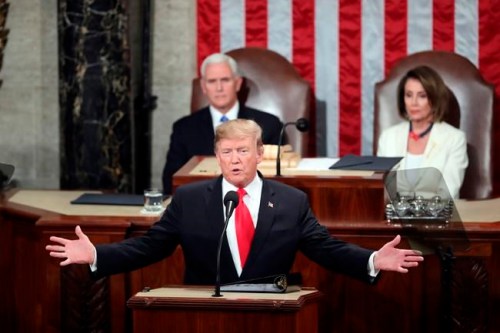
WASHINGTON - President Donald Trump declared his scorched-earth political style an unmitigated success Tuesday in a fiercely partisan, made-for-TV state of the union speech that made it clear he expects to be back in the White House next year on the strength of the U.S. economy and his trade deals with Canada, Mexico and China.

Trump, addressing a joint session of Congress in the very chamber where House Democrats voted to impeach him less than two months ago, became only the second president in American history — Bill Clinton was the first — to deliver a state of the union while standing trial in the Senate.

Unrepentant, he pointedly refused to shake the offered hand of House Speaker Nancy Pelosi on the dais before singing the praises of what he billed as "the great American comeback," pointing to strong job growth, a soaring stock market and low unemployment as evidence of his leadership. And when he was done, Pelosi ripped up the speech in full view of the television cameras.

"America's enemies are on the run, America's fortunes are on the rise, and America's future is blazing bright. The years of economic decay are over," Trump declared, taking full credit for the country's "roaring economy," including what he billed as seven million new jobs and the lowest jobless rate in half a century — a "blue-collar boom" that he's counting on to help his re-election chances in November.

Read
Tuesday, Feb. 4, 2020

Wife’s witchy wonderment won’t spell trouble

Maureen Scurfield 6 minute read 2:00 AM CDT

DEAR MISS LONELYHEARTS: My wife believes in magic potions, which used to make me laugh. But since Halloween season started this year, she’s been acting in a way that frightens me. She seems to think she’s a modern-day “witch.” Give me a break!

Now she has three friends who think they are really casting spells when they get together! And this year on Halloween night she’s being formally accepted into their little witchy group meeting at one of their homes, and is getting a new sorceress name. It’s creepy! How do I cope? I’ve had enough of this.

— Seriously Upset, South St. Vital

Dear Upset: Don’t buy into the hocus pocus by being afraid of it and expressing any trepidation to your wife. She needs you to be strong, so she knows she has a solid anchor and can drop out of this witchy group if it becomes too scary or silly for her.

RCMP to bolster traffic enforcement after ‘concerning’ spike in deadly collisions

Free Press staff 3 minute read Preview

RCMP to bolster traffic enforcement after ‘concerning’ spike in deadly collisions

Free Press staff 3 minute read 12:46 PM CDT

Manitoba RCMP are boosting traffic enforcement after a spike in fatal collisions.

So far this year, 73 people have been killed in 65 collisions — a 28 per cent increase from the 57 deaths in the same January to October period last year, the Mounties said Friday.

The increase in fatalities is 28 per cent higher than the province’s five-year average.

“It’s concerning to me personally, but it’s also concerning to us, the RCMP, to see this many crashes occurring and this many people losing their lives,” RCMP traffic services enforcement commander Staff Sgt. Jon Greer said.

Read
12:46 PM CDT

Just say no (to deficits during good economic times)

Tom Brodbeck 5 minute read Preview

Just say no (to deficits during good economic times)

Tom Brodbeck 5 minute read Wednesday, Oct. 2, 2019

When a political party pledges to run small, “manageable” deficits if elected, it almost always means it will go deeper into the red if it wins government.

It’s human nature.

After all, as a government, if you get the blessing of the public to spend beyond your means, what’s a few billion more a year in overspending?

The problem is, it doesn’t usually end there. When those same politicians seek re-election, they often want permission to post even larger deficits. In some cases, they’ve abandoned the idea of balancing the books altogether, arguing perpetual deficit financing is acceptable, as long as the debt doesn’t exceed a certain percentage of the economy.

Read
Wednesday, Oct. 2, 2019

Building healthier Canadians

Jason M. Sutherland 4 minute read 2:00 AM CDT

Ottawa is betting that billions of taxpayer dollars spent on steel, asphalt and concrete will secure Canada’s economic future and prosperity. Through the $51 billion Build Communities Strong fund, the federal government is paying for roads, bridges, water systems and transit to boost productivity and attract capital from Europe and Asia.

As the shovels hit the ground from Halifax to Vancouver, Canadians should be asking themselves: What good does it do to build a stronger country if we are not building healthier Canadians?

The fund’s $5 billion allocation for health infrastructure is welcome news, as many of our hospitals and long-term care homes across the country are showing severe signs of aging, and modern care centres are much needed. But pouring concrete for new facilities is not the same as building a healthy population.

A ribbon-cutting at a modern hospital does not guarantee you see a family doctor when you need one, keep a rural emergency department open overnight, or shorten the wait for a knee replacement keeping someone off the job or robbing a retiree of independence.

Westman to lose sole medical oncologist

Rylee Gerrard 5 minute read Preview

Westman to lose sole medical oncologist

Rylee Gerrard 5 minute read Updated: 9:26 AM CDT

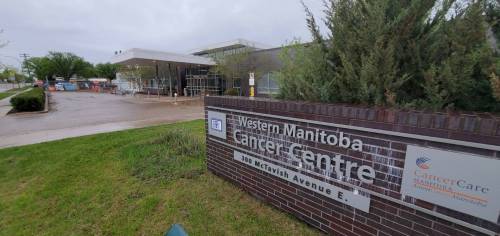
BRANDON — Western Manitoba is about to lose its only medical oncologist, leaving just 22 in the province — all of whom are in Winnipeg.

Brandon West MLA Wayne Balcaen raised the issue during question period Thursday, saying the departure of Dr. Brady Anderson will be a “major loss” for the region.

After four years working out of the Western Manitoba Cancer Centre in Brandon, Anderson’s last day will be Nov. 13.

“He literally sees hundreds of patients within the Westman area, and now those individuals will have to travel to Winnipeg to get that personal service,” Balcaen said, calling Anderson’s impending departure “catastrophic.”

Read
Updated: 9:26 AM CDT