Christians protesting public health orders misguided
Advertisement
Read this article for free:
or
Already have an account? Log in here »
To continue reading, please subscribe:
Digital Subscription
One year of digital access for only $1.44 a week*
- Enjoy unlimited reading on winnipegfreepress.com
- Read the E-Edition, our digital replica newspaper
- Access News Break, our award-winning app
- Play interactive puzzles
*Billed as $5.77 plus GST every four weeks. After 52 weeks, price increases to the regular rate of $19.95 plus GST every four weeks. Offer available to new and qualified returning subscribers only. Cancel any time.
To continue reading, please subscribe:
Add Free Press access to your Brandon Sun subscription for only an additional
$1 for the first 4 weeks*
- Enjoy unlimited reading on winnipegfreepress.com
- Read the E-Edition, our digital replica newspaper
- Access News Break, our award-winning app
- Play interactive puzzles
*Your next Brandon Sun subscription payment will increase by $1.00 and you will be charged $17.95 plus GST for four weeks. After four weeks, your payment will increase to $24.95 plus GST every four weeks.
Read unlimited articles for free today:
or
Already have an account? Log in here »
Hey there, time traveller!
This article was published 12/05/2021 (1995 days ago), so information in it may no longer be current.
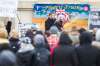
As Canadians grow increasingly weary of public health order restrictions and frustrated by the continual infringement on their daily lives, some churches are pushing back against being denied the opportunity to gather together to worship.
A few of these churches have found unlikely allies in those who are constantly wary of governments trying to limit individual citizen’s personal rights. Most recently, this “alliance” has resulted in legal challenges in the courts asserting that public health orders violate charter-protected freedoms of conscience, religion, expression and peaceful assembly.
While they might believe they are acting in the best interests of Christian discipleship and God’s call, they are misguided on several fronts.

One of the pastors involved is quoted as saying, “We have no authority, scripturally based and based on Christian convictions, to limit anyone from coming to hear the word of God. We have no authority to tell people you can’t come to church. That’s in God’s jurisdiction.”
The New Testament presents quite a different picture of the responsibility of the Church for itself. The first example of this is in Matthew’s Gospel.
When Peter is given the revelation about who Jesus truly is, Jesus begins to share God’s authority with the disciples. “I will give you the keys of the kingdom of heaven, and whatever you bind on earth will be bound in heaven, and whatever you loose on earth will be loosed in heaven,” he said. (Matt. 16:19)
This authority is not limited to Peter. The same authority is given to the gathered assembly of Christ’s disciples. (Matthew 18:18)
Much of the content of the New Testament Epistles, particularly those written by Paul, confronts and admonishes churches to teach, direct and sometimes even discipline their members so as to not hinder or distort the mission of the Gospel in the world and Christ’s command to his Church.
What is that Gospel? It is the supreme command of Jesus Christ “to love one another as I (Jesus) have loved you.”
In 1 Corinthians chapter 9, Paul outlines the many ways in which he sacrifices his own self, his rights and privileges, his freedom in Christ, in order to effectively witness to the love of Christ. “I have become all things to all people, that I might by all means save some,” he said. (I Cor. 9:22)
For the Christian disciple, the effective demonstration and proclamation of the love of God for all people must take precedence over any personal demand or freedom. This is what it means to serve the Lord. The New Testament even uses the stronger term “slave” to describe a Christian’s devotion to Christ.

Another pastor was quoted as saying, “We are here to fight for God. We are here to defend the vulnerable.”
The vulnerable we need to be worried about are those being exposed to COVID-19 by people not following the public health orders. It is those languishing on ventilators in ICUs in hospitals across our country who are the most vulnerable.
Some might call into question the whole nature of what I am saying. Should a Christian publicly challenge the actions of other Christians? Is that not being judgmental?
Not when the integrity of the proclamation of the Gospel is at stake. This practice of dismissing the call to love and protect all of God’s creatures by complying with the health orders — especially the most vulnerable — in the midst of this pandemic needs to be equally strongly challenged for the sake of the Gospel and the integrity of its promise of abundant life for all.
Donald Phillips retired as bishop of the Anglican Diocese of Rupert’s Land of the Anglican Church of Canada in 2018 after for more 18 years in that position.
The Free Press is committed to covering faith in Manitoba through our Religion in the News project. This reporting continues because readers like you step forward to fund it.
Donate now to support our reporting on religion.
Your donation is eligible for a charitable tax receipt.
BECOME A FAITH JOURNALISM SUPPORTER
Related Articles
Infections more likely to occur outside church: ex-health chief




Advertisement Advertise With Us
Advertisement Advertise With Us
The Free Press acknowledges the financial support it receives from members of the city’s faith community, which makes our coverage of religion possible.