A Gimli landmark
Pioneer Icelandic church one of the oldest in Manitoba
Advertisement
Read this article for free:
or
Already have an account? Log in here »
To continue reading, please subscribe:

Digital Subscription
One year of digital access for only $205*
- Enjoy unlimited reading on winnipegfreepress.com
- Read the E-Edition, our digital replica newspaper
- Access News Break, our award-winning app
- Play interactive puzzles
*First annual payment billed as $205.00 + GST for one year. This annual subscription will automatically renew at $233.00 + GST every 52 weeks (10% off the regular annual price of $259.35). Offer available to new and qualified returning subscribers only. Cancel any time.
To continue reading, please subscribe:
Add Free Press access to your Brandon Sun subscription for only an additional
$1 for the first 4 weeks*
- Enjoy unlimited reading on winnipegfreepress.com
- Read the E-Edition, our digital replica newspaper
- Access News Break, our award-winning app
- Play interactive puzzles
*Your next Brandon Sun subscription payment will increase by $1.00 and you will be charged $17.95 plus GST for four weeks. After four weeks, your payment will increase to $24.95 plus GST every four weeks.
Read unlimited articles for free today:
or
Already have an account? Log in here »
Hey there, time traveller!
This article was published 24/11/2012 (5017 days ago), so information in it may no longer be current.
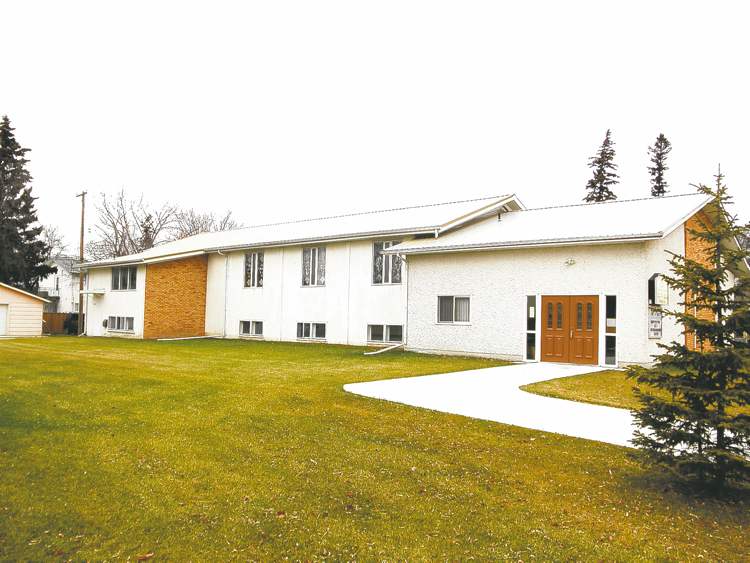
At the corner of Third Avenue and Second Street North in Gimli, not far from the wondrous and vast Lake Winnipeg, stands one of the oldest Icelandic churches in Manitoba.
Gimli Lutheran Church was established by Icelandic settlers soon after their arduous journey from Iceland to the western shores of Lake Winnipeg. This year it is celebrating its 135th anniversary.
It is likely the first Icelandic Lutheran congregation formed in Manitoba.
The first sermon preached in Icelandic in Canada was delivered in Gimli in August 1876 by Rev. Páll Thorláksson.
Thorláksson was the first pastor to arrive in Gimli. Rev. Jón Bjarnason arrived the following year. The two men travelled constantly, and often on foot, to serve their congregations that were scattered throughout New Iceland, the region along Lake Winnipeg stretching from Boundary Creek to north of the Icelandic River.
Carpenter Gudmundur Olson built the first church in 1889 at a cost of $625. Half was paid in cash and church members contributed the remainder in labour.
A second church went up on the corner of Third Avenue and Second Street North on land donated by Gudmundur Solmundson. The local fisherman had hauled the lumber for the little church by oxen and boat.
The church was attended almost entirely by people of Icelandic origin and its services were in Icelandic until about 1949. With the arrival of Pastor Haroldur Sigmar in the early 1950s, changes gradually happened. The dynamic pastor delivered his sermons in English, drawing in residents of non-Icelandic origin and people of other denominations. The congregation grew.
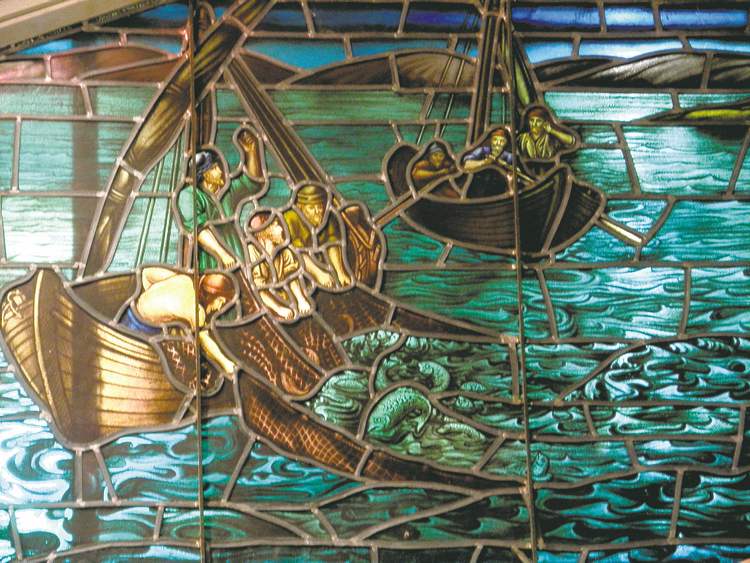
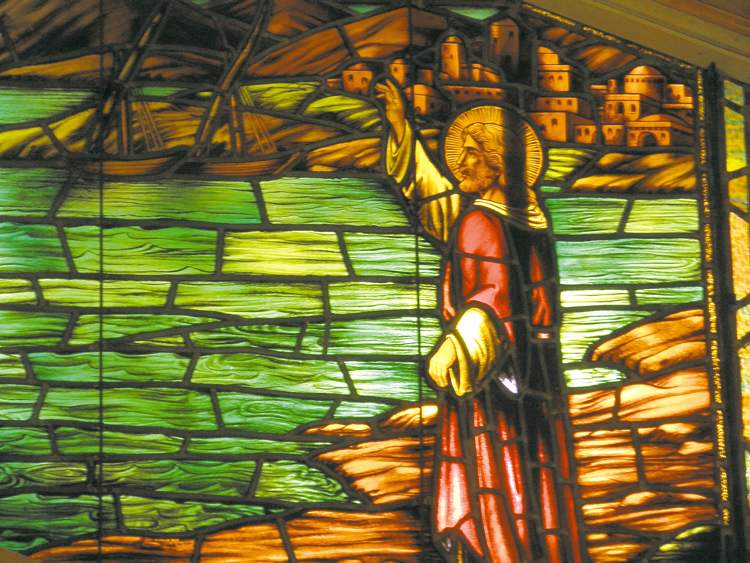
Sigmar led the way for the third and current church, which was built on the same site. Completed in 1953, it was designed to reflect the community it served, a fishing town. According to the Gimli Saga, a history of the Gimli community, the church’s “architecture suggests a ship, and a beautiful stained glass window at the rear of the nave pictures Christ in a fishing boat, calling his followers to become ‘fishers of men.’ “
Sigmar also introduced the Fishermen’s Festival, held to commemorate the departure of the fishermen for the northern waters of Lake Winnipeg at the beginning of June. Services were broadcast on CKRC radio station during the 1950s.
Today, anywhere from 80 to 110 people attend services at the historic church that has only just recently seen the addition of a full-time minister.
Pastor Les Skonnord arrived at Gimli Lutheran in November 2011 after pastoring for about 10 years in Nova Scotia. Originally from Saskatchewan, Skonnord loves Gimli and is familiar with the Interlake region, having served in Moosehorn in previous years.
“It is an older congregation,” says Skonnord of the Gimli church, but there are young children, too. “It is a good wholesome mix but Icelanders are very prevalent.”
It is very much a community church, he adds, sometimes used for concerts and always open to the community. The Women’s Resource Centre and Evergreen Basic Needs are two local organizations that started off meeting in the church. The Betel Home Foundation grew out of the efforts of devoted Icelandic pioneer women of the Lutheran faith.
Religion was essential to the early Icelandic settlers, says Skonnord. They “realized the need for spiritual guidance and solace in the hardships of the settlement days and spirituality was very important to them… there was a ferment of spiritual thinking and an interest in theology that continues to this day.”
“We just celebrated the 135th anniversary… we had cake, we had neighbouring churches in, we invited people… We recently put a new steel roof up and have gone through and painted the whole interior and we have an optimistic view of the future.”
One longtime member is noted Canadian author W.D. Valgardson, who hails from Gimli. “I was born, baptized, confirmed in the Gimli Lutheran Church,” he says. “I expect that my funeral service will be held there.”
Now living in Victoria, Valgardson left Gimli in 1957 but returns for summers. “Like a butterfly, I flit in and out,” he says.

“The church was a major force in my early life. My mother taught Sunday school and belonged to the Lutheran Ladies’ Aid. I was the head of the Luther League. I seriously considered becoming a Lutheran minister and to this day harbour some regrets that I didn’t. Instead, I became a writer and got a larger pulpit.
“The Gimli Lutheran Church did cause me to think about morality, gave me a moral compass, a set of ideals, a way of thinking. It caused me to think about questions larger than what is the latest fashion,” says Valgardson, who was influenced not only by his Lutheran upbringing, but also his Icelandic heritage.
“In the past, I’ve said that if you remove one aspect of society, such as the church and its teachings, it will be replaced by something else. In Canada, today, that replacement has been by secular institutions. Are we really better off with our morals and values being created by fast food outlets, banks, the entertainment industry, etc.? I think not. The church, like any institution, has its faults and many terrible things have been done in the name of Christ, but Christ didn’t do them.”
Valgardson sums it up while reflecting on his blog on the changes in the little church over the years: “I know it doesn’t sound all that exciting but when I’m in Gimli, come Sunday, my feet just lead me down the sidewalk to the church. When I leave, my steps seem lighter.”
girard.cheryl@gmail.com
The Free Press is committed to covering faith in Manitoba through our Religion in the News project. This reporting continues because readers like you step forward to fund it.
Donate now to support our reporting on religion.
Your donation is eligible for a charitable tax receipt.
BECOME A FAITH JOURNALISM SUPPORTER
The Free Press is committed to covering faith in Manitoba through our Religion in the News project. This reporting continues because readers like you step forward to fund it.
Donate now to support our reporting on religion.
Your donation is eligible for a charitable tax receipt.
BECOME A FAITH JOURNALISM SUPPORTER
Related Articles
Our own Icelandic saga
Advertisement Advertise With Us
Advertisement Advertise With Us
The Free Press acknowledges the financial support it receives from members of the city’s faith community, which makes our coverage of religion possible.