Bishop of the Arctic
Christopher Williams immersed himself in northern culture
Advertisement
Read this article for free:
or
Already have an account? Log in here »
To continue reading, please subscribe:

Digital Subscription
One year of digital access for only $205*
- Enjoy unlimited reading on winnipegfreepress.com
- Read the E-Edition, our digital replica newspaper
- Access News Break, our award-winning app
- Play interactive puzzles
*First annual payment billed as $205.00 + GST for one year. This annual subscription will automatically renew at $233.00 + GST every 52 weeks (10% off the regular annual price of $259.35). Offer available to new and qualified returning subscribers only. Cancel any time.
To continue reading, please subscribe:
Add Free Press access to your Brandon Sun subscription for only an additional
$1 for the first 4 weeks*
- Enjoy unlimited reading on winnipegfreepress.com
- Read the E-Edition, our digital replica newspaper
- Access News Break, our award-winning app
- Play interactive puzzles
*Your next Brandon Sun subscription payment will increase by $1.00 and you will be charged $17.95 plus GST for four weeks. After four weeks, your payment will increase to $24.95 plus GST every four weeks.
Read unlimited articles for free today:
or
Already have an account? Log in here »
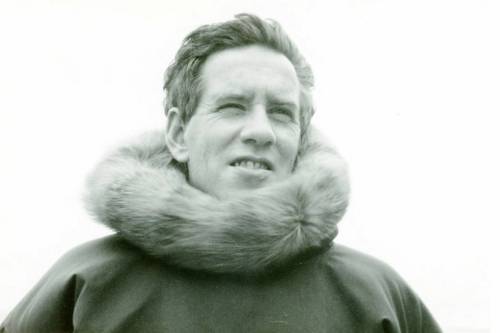
Born on May 22, 1936, in Sale, England, John Christopher Richard Williams arrived in Kugluktuk in 1960 at the age of 24.
His journey north began with what his son Drew described as a chance encounter in a student dormitory room, when he came across a handmade ceramic coin bank shaped like an igloo — a fundraising display for the Diocese of the Arctic.
Williams’ decision to ask what the coin bank was, Drew said, “ended up being either the stupidest or most significant question he would ever ask in his life.” That moment led to a deeper conversation about ministry in the North and the need for clergy in isolated communities.
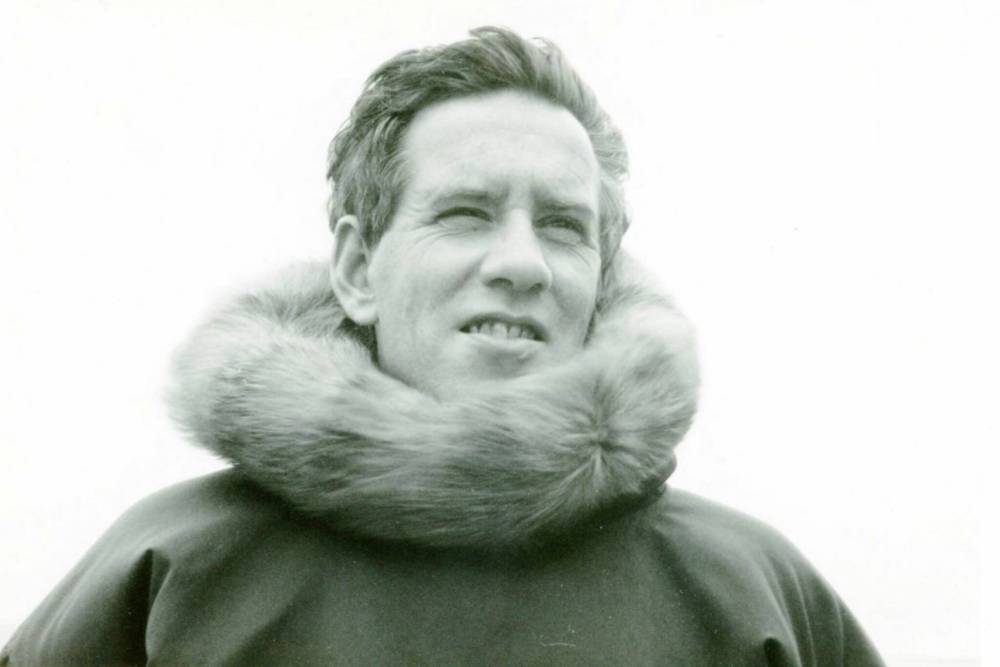
The General Synod Archives, Anglican Church of Canada, Archdeacon Chris Williams, M2023-P282
Moving away from plans for a career in advertising, he instead immersed himself in northern culture, becoming fluent in Inuktitut and later working alongside colleagues to translate portions of the Old Testament, helping to make religious texts more accessible in the language.
Over the years, Williams lived and worked in Taloyoak, northern Quebec, Kinngait and Baker Lake before moving to Yellowknife with his family in 1978. He became the fourth Bishop of the Arctic in 1991 and served in the position until his retirement in 2002. He died on May 16, just days before his 90th birthday.
Drew said that if you asked his father what he was most proud of in his life, he would have probably said his family.
“The fact that he was the bishop didn’t really enter into our relationship. He was just my dad, and I think to my sister the same thing,” he said.
“When we came to Yellowknife back in the ‘70s, she was one of the few kids at school whose dad would be at home after school because he worked predominantly from his home in the office or where we lived right next door to the church. He was never far away, and that always stood out in her mind.”
Drew said his dad was a “church builder” in both a literal and figurative sense. While serving as the priest in charge at Holy Trinity Church in Yellowknife, the church building itself was physically expanded to keep up with a growing congregation. That renovation included installing an automated carillon player, which still rings out daily.
He said that while people sometimes complain about the bells, having grown up in the church, he knows all the tunes and can hum along with them. For him, they’re tied closely to memories of his father.
Williams treated retirement as a chance to catch up on things his travel schedule had previously prevented. He remained deeply involved in community life, volunteering, taking part in theatre productions at the Northern Arts and Cultural Centre, and served as an Arctic ambassador at the airport, welcoming visitors to the North.
He also took up curling later in life, eventually becoming an official and working at competitions including the Arctic Winter Games. A champion swimmer in his youth, Christopher returned to competitive sport decades later, representing the territory at the Canada 55+ Games from 2010 to 2018, where he earned multiple gold medals.
Alongside sport, he stayed active in a range of organizations, including a missionary group based in Edmonton called On Eagle’s Wings.
“He was loved, revered and remembered by these people from his day-to-day activities that he was involved in. I think that was a testament to what kind of a person he was,” his son said.
Williams was predeceased by his father (Frank) and mother (Ceridwen). He is survived by his wife of 62 years Rona (née Aitken); his children, Drew (Lisa) and Judy (Geoff); his grandchildren, Andy, Taryn, Kea, Gillian, and Lacey; and his great-grandchildren, Owen, Alivia, and Gavin.
Drew said his parents met in Salluit when his father was posted there as a missionary. Rona, a missionary nurse from Scotland, had been posted there separately after being appointed to the Salluit Nursing Station.
In 1994, Christopher escorted Queen Elizabeth II during a visit to an Anglican cathedral in Iqaluit, where he showed her features of the building, including a narwhal tusk used in the cathedral’s cross. To this, Drew said, the Queen replied that Buckingham Palace had one that was longer and in better condition.
He later attended the Lambeth Conference, a major gathering of Anglican bishops in London, which included an event at Buckingham Palace. During that period he had a second, unexpected interaction with the Queen during a walkabout, where – Drew said – she appeared to recognize Christopher and recalled their earlier meeting in Iqaluit.
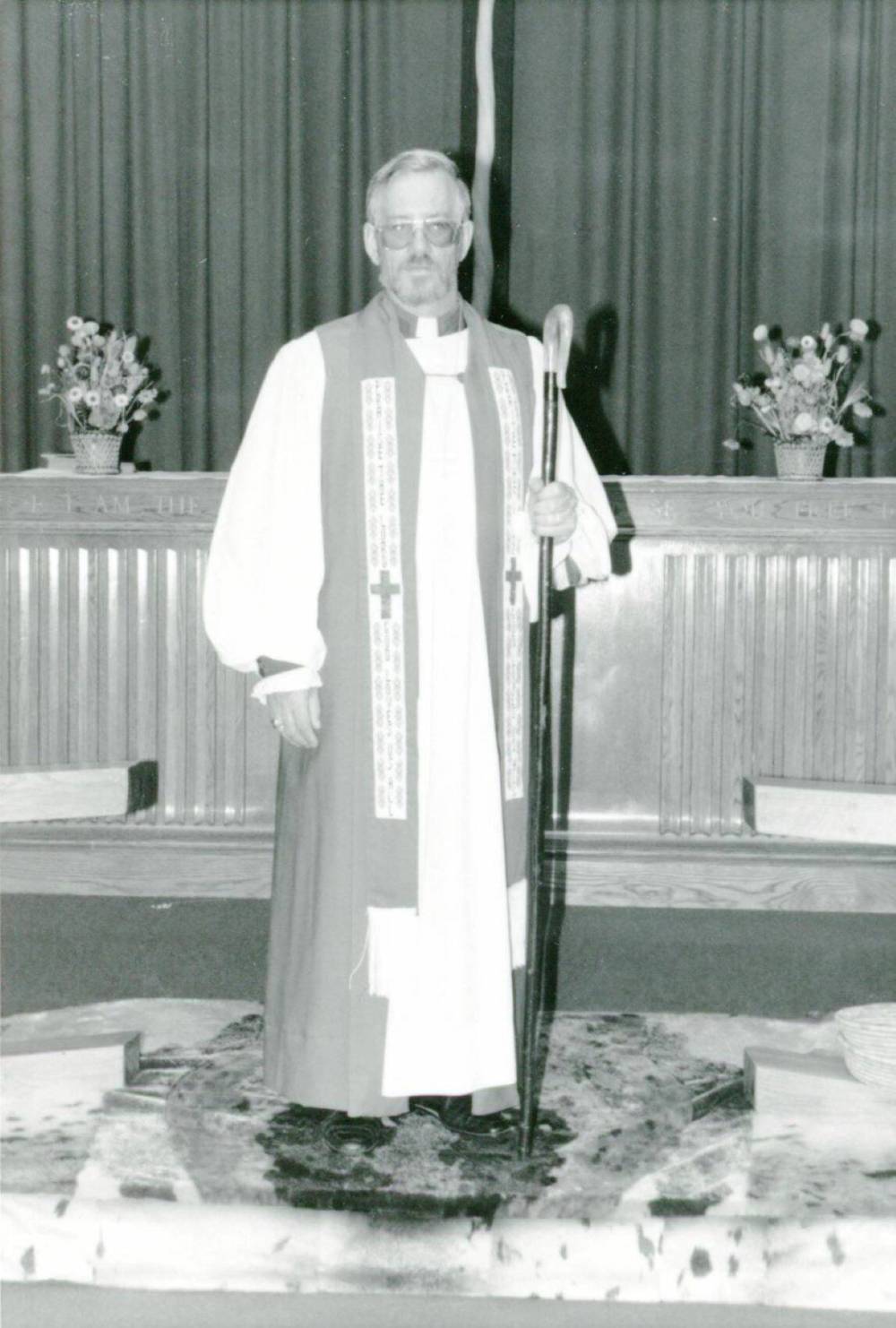
The General Synod Archives, Anglican Church of Canada, M2023-03 P075, Bishop J. C. R. Williams
Bishop John Christopher Richard Willliams
Drew said his father had a “cheeky sense of humour” and often said things with a sideways grin that made people laugh. He occasionally misinterpreted modern shorthand, Drew added, like believing LOL meant “lots of love,” which became a joke within the family.
Robin Abrol, executive director of On Eagle’s Wings, said he remembers Christopher as jovial and enthusiastic about the ministry’s work.
“Last year when our vehicle was experiencing some difficulties, Bishop Chris once again offered his volunteer services and went to Behchokǫ̀ to pick up our volunteer team,” he said in an email.
“Every time I was in (Yellowknife), Bishop Chris would extend an invitation to his house for a cup of tea. We would sit, sometimes for hours, and share stories.
“Despite no longer being on the board, he wanted to be current on programs, communities we were visiting, and so on. He used this information to faithfully pray for the ministry, our staff, current board members, and volunteers. He was truly a valuable partner.”
When the Caring for the Wounded Heart healing program was introduced in Yellowknife, Christopher immediately enrolled so he could understand it first-hand and stay connected to the work. He attended all six workshops alongside participants.
Lesley Hand, a former executive director of On Eagle’s Wings, said Christopher was a respected and long-serving member of the organization who stayed involved for more than 20 years.

She recalled Williams describing first being sent north after his ordination, at a time when ministry in the North involved strong competition between Anglican and Roman Catholic clergy. She said Christopher would later joke that he was labelled “a thorn in the flesh” by a priest in Spence Bay — now known as Taloyoak — who feared he would draw people away.
“Chris was a wise and trustworthy mentor and advisor to staff and volunteers; his profound prayer, life and sense of humour are legendary and have been a constant source of encouragement and friendship. No matter how serious the subject of a conversation, Chris could always interject a pun and a few jokes,” she said.
“He was passionate about the uniqueness of life in the North and how the land shapes people’s lives. Chris felt blessed to have moved north at a time when people still lived off the land, travelled by dog sled, and when the expectation was that one learned the language of the people.
“For, he explained, ‘You can’t learn the language unless you learn the way people think.’ And both the learning and language enabled him to grow in love and appreciation for the people of the Arctic.”
Local Journalism Initiative Reporter, Cabin Radio
The Free Press is committed to covering faith in Manitoba through our Religion in the News project. This reporting continues because readers like you step forward to fund it.
Donate now to support our reporting on religion.
Your donation is eligible for a charitable tax receipt.
BECOME A FAITH JOURNALISM SUPPORTER
The Free Press acknowledges the financial support it receives from members of the city’s faith community, which makes our coverage of religion possible.