B.C. study finds low but increased risk of myocarditis after 2nd Moderna COVID shot
Advertisement
Read this article for free:
or
Already have an account? Log in here »
To continue reading, please subscribe:
Digital Subscription
One year of digital access for only $1.44 a week*
- Enjoy unlimited reading on winnipegfreepress.com
- Read the E-Edition, our digital replica newspaper
- Access News Break, our award-winning app
- Play interactive puzzles
*Billed as $5.77 plus GST every four weeks. After 52 weeks, price increases to the regular rate of $19.95 plus GST every four weeks. Offer available to new and qualified returning subscribers only. Cancel any time.
To continue reading, please subscribe:
Add Free Press access to your Brandon Sun subscription for only an additional
$1 for the first 4 weeks*
- Enjoy unlimited reading on winnipegfreepress.com
- Read the E-Edition, our digital replica newspaper
- Access News Break, our award-winning app
- Play interactive puzzles
*Your next Brandon Sun subscription payment will increase by $1.00 and you will be charged $17.95 plus GST for four weeks. After four weeks, your payment will increase to $24.95 plus GST every four weeks.
Read unlimited articles for free today:
or
Already have an account? Log in here »
Hey there, time traveller!
This article was published 23/11/2022 (1436 days ago), so information in it may no longer be current.
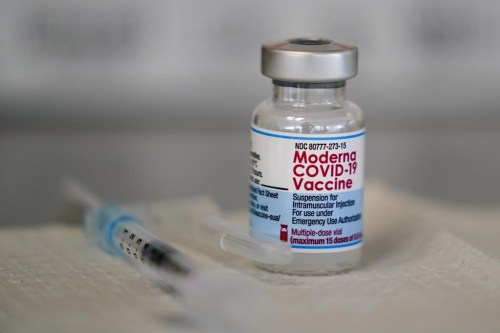
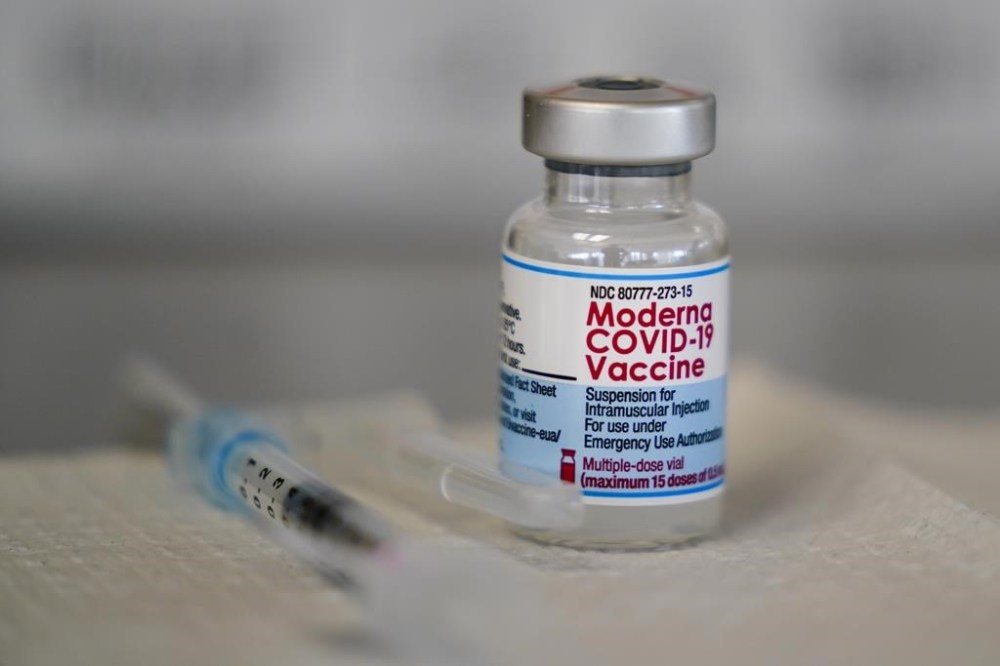
A Canadian study suggests cases of heart muscle inflammation related to COVID-19 mRNA vaccines are rare but higher than expected among young men who got a second dose of Moderna compared with those who were administered Pfizer-BioNTech’s vaccine.
Lead author Dr. Naveed Janjua, an epidemiologist at the BC Centre for Disease Control, said the findings related to second doses for both vaccines show men between the ages of 18 and 29 are most at risk of myocarditis if they received Moderna’s COVID-19 vaccine.
He said the study bolsters previous research elsewhere with more robust data, which is based on hospitalizations, emergency room visits and lab tests in British Columbia after 10.2 million doses of both vaccines were administered to those aged 12 and over between December 2020 and March 2022.
The study, published this week in the Canadian Medical Association Journal, used the data to determine if people sought care for myocarditis seven and 21 days following vaccination.
About seven million doses of Pfizer and 3.2 million doses of Moderna were administered. Nearly four million first doses were given, along with 3.8 million second doses and nearly 2.4 million third shots.
Researchers identified 99 cases of myocarditis among a total of 10.2 million doses that were administered. They expected to see about seven cases, most of them among females, based on what would have been typical. Instead, the study showed 80 males developed myocarditis, and 19 females.
Most cases were among men and after the second dose. On average, the males were younger than females, age 28 versus 45 among cases within seven days, and age 31 versus age 49 among cases within 21 days.
Out of 100,000 second doses of Moderna administered to men between the ages of 18 and 29, the study found 22 cases of myocarditis. That compares with five cases for those who received a second shot of the Pfizer vaccine per 100,000 men in that age group.
However, seven days after a third dose of Moderna, the findings show there were four cases of the heart condition per 100,000 doses in that age group, versus three cases per 100,000 doses following a booster of Pfizer.
Cases of myocarditis are typically mild for young men who seek medical help for chest pain following vaccination, Janjua said, adding treatment involves monitoring of symptoms, sometimes in hospital, as their condition may resolve with or without medication.
“When I say mild, I mean self-resolving. So, these were people who had illness for one or two days, or three days, and then they recovered. When we compare that with a COVID infection-related myocarditis, we see that (condition) stays for a very long time, that for 10 to 12 days people were admitted to hospital.”
Symptoms can include chest pain, shortness of breath or a rapid or abnormal heart rhythm.
Myocarditis can occur for various reasons, he said, including a viral infection like the flu, for example, typically among older people.
“We don’t expect any residual effects given the mildness of illness,” Janjua said of myocarditis involving mRNA vaccines administered to young men, who are otherwise not susceptible to the condition.
Authors of the study say they support the use of Pfizer for second shots among men between the ages of 18 and 29, based on their findings. That’s in keeping with the National Advisory Committee on Immunization’s recommendation last December, when it said Pfizer is preferable for first and second doses over Moderna for those between the ages of 12 and 29.
For booster shots, NACI said in a statement that Pfizer “may be preferred” for those aged 18 to 29.
Earlier this month, the agency said there is currently no evidence to suggest any meaningful difference in protection between different bivalent booster vaccines targeting the original COVID-19 strain and the Omicron subvariant, “nor any clinical trials directly comparing the Moderna (50 mcg) and Pfizer-BioNTech (30 mcg) bivalent booster products.”
Authors of the British Columbia-based study found there is little to no difference in myocarditis rates between Moderna and Pfizer-BioNTech following a third dose.
Janjua, who is also a clinical professor at the University of British Columbia’s school of population and public health, said that may be because Moderna slashed the dosage by half to 50 micrograms for the booster shot, while it remained the same for Pfizer’s booster, at 30 micrograms.
“Moderna had a better response compared to Pfizer,” Janjua said of the primary doses. “But, of course, with the higher dose, you may see some of these complications, such as myocarditis.”
Moderna did not respond to requests for comment on the study or the risk of myocarditis from second doses.
Cases of post-COVID-19 vaccination linked with myocarditis and pericarditis, inflammation of the two-layered sac surrounding the heart, have been reported internationally since 2021 among males as young as 12, prompting ongoing research.
A study published in January in the Journal of the American Medical Association with research that included the US Centers for Disease Control and Prevention was based on data seven days following a second dose of an mRNA vaccine.
For men aged 18 to 24, it reported 56 cases per million doses after the Moderna vaccine compared with 52 cases per million doses for those who received a second shot of Pfizer.
Janjua said researchers elsewhere are trying to determine why males face a higher risk of myocarditis linked to COVID-19 mRNA vaccines compared with females, but hormonal differences related to immunity are believed to be a factor.

While most cases have been mild and resolved quickly, the National Advisory Committee on Immunization strongly recommended last December that people aged 12 to 29 receive the Pfizer vaccine.
Overall, Janjua said the risk of complications from a COVID-19 infection is much higher than developing myocarditis from a Moderna vaccine, which he would advise if there is no other choice.
“Go with whatever is available to reduce your risk of getting infected.”
This report by The Canadian Press was first published Nov. 23, 2022.
This story was produced with financial assistance from the Canadian Medical Association.