Public Health Agency of Canada says flu epidemic has begun as rates rise

Advertisement

Advertise with us

Canada has entered a flu epidemic, the national public health agency said Tuesday, as some experts warned the surge of respiratory illnesses in the country will worsen.

Read this article for free:


By clicking the button above, an account will be created and you will begin to receive some of our recommended newsletters. You may opt out of any newsletter by visiting your Email and Communication Preferences page or by clicking "unsubscribe" at the bottom of any email.

or

Already have an account? Log in here »

To continue reading, please subscribe:

Digital Subscription

One year of digital access for only $1.44 a week*

  • Enjoy unlimited reading on winnipegfreepress.com
  • Read the E-Edition, our digital replica newspaper
  • Access News Break, our award-winning app
  • Play interactive puzzles

*Billed as $5.77 plus GST every four weeks. After 52 weeks, price increases to the regular rate of $19.95 plus GST every four weeks. Offer available to new and qualified returning subscribers only. Cancel any time.

To continue reading, please subscribe:

Add Free Press access to your Brandon Sun subscription for only an additional

$1 for the first 4 weeks*

  • Enjoy unlimited reading on winnipegfreepress.com
  • Read the E-Edition, our digital replica newspaper
  • Access News Break, our award-winning app
  • Play interactive puzzles
Start now

*Your next Brandon Sun subscription payment will increase by $1.00 and you will be charged $17.95 plus GST for four weeks. After four weeks, your payment will increase to $24.95 plus GST every four weeks.

Hey there, time traveller!
This article was published 15/11/2022 (1446 days ago), so information in it may no longer be current.

Canada has entered a flu epidemic, the national public health agency said Tuesday, as some experts warned the surge of respiratory illnesses in the country will worsen.

The Public Health Agency of Canada said in its FluWatch report that the rate nearly doubled in one week, to 11.7 per cent between Oct. 30 and Nov. 5, compared to 6.3 per cent the week before.

The agency declared an epidemic, which happens most years after the threshold of a five per cent positivity rate is surpassed, though it said influenza levels are higher than would have been expected when compared to pre-pandemic years.

People walk pass a sign for flu shots in Toronto on January 9, 2018. Canada has entered a flu epidemic, the national public health agency said Tuesday, after the test positivity rate nearly doubled in one week. The Public Health Agency of Canada said in its FluWatch report that the rate jumped to 11.7 per cent the week of Oct. 30 to Nov. 5, compared to 6.3 per cent the previous week. The agency declared an epidemic, which happens most years after the threshold of a five per cent positivity rate is surpassed, though it said influenza levels are higher than would have been expected when compared to pre-pandemic years. THE CANADIAN PRESS/Doug Ives

The agency said there were 13 confirmed influenza outbreaks in the first week of the month, including nine in long-term care homes and one in a school or daycare.

The surge in flu cases comes as Canada’s health-care system grapples with a triple threat of respiratory viruses — COVID-19, influenza and respiratory syncytial virus. Already, pediatrics hospitals in Ontario are overwhelmed by a surge in patients with respiratory illnesses, leading to the cancellation of some non-urgent surgeries.

Dr. Alan Drummond, an Ontario emergency physician, described the current spike in flu cases as the “calm before the storm,” saying the worst is yet to come.

“I don’t have a crystal ball, but my gut sense is that we may be in serious trouble, if we end up with both concurrent COVID and resurgent influenza … with a vulnerable hospital population,” he said in an interview.

“We are clearly talking about a tridemic of influenza, COVID and RSV,” he said. “It is not going to be good.”

Drummond said measures put in place previously for COVID-19, such as masking and social distancing, decreased flu cases significantly the past two years, and could stem the current surge along with the public getting vaccinated against the flu and COVID-19.

“Those two strategies alone, will help a great deal in terms of preventing some of kind of conflagration of infectious diseases,” he said.

Ontario’s chief medical officer of health strongly recommended Monday that residents wear masks in all indoor public settings, while Quebec’s college of physicians urged people to wear masks in public as respiratory viruses there are also filling up emergency rooms.

Alberta Premier Danielle Smith has said she will not impose a mask mandate and Saskatchewan’s chief medical health officer said Tuesday he is not recommending masks.

The McMaster Children’s Hospital in Hamilton said Tuesday its pediatric in-patient unit is operating at between 130 and 140 per cent capacity and seeing a daily average of nearly 200 patients per day at its emergency department.

Hospital president Bruce Squires said wait times are exceptionally long as a result — often in excess of 24 hours — and called the situation “truly unprecedented.”

“There’s a lot of time left in what is traditionally the children’s viral season,” said Squires. “We really have no choice but to plan for the possibility that this will continue and, in fact, get worse.

Dr. Angelo Mikrogianakis, chief of pediatrics at the hospital, recommended the public and children get the flu shot along with masking to prevent children from getting sick and overwhelming capacity in the care system.

Mikrogianakis said pediatrics goes through a respiratory illness surge that overwhelms hospitals every winter, but noted the current situation is significantly worse.

“My simplest way of describing this is: we are seeing three winter surges combined into one and we’ve started earlier than we usually do,” he said, adding that the winter surge typically starts in December but this year began in October.

“It’s going to be longer and likely require more supports from our hospital systems, and challenge our responsiveness and our supports for sick children more than we’ve probably ever seen in my career.”

Dr. Timothy Sly, an epidemiology professor at Toronto Metropolitan University, said the flu season started earlier than usual and cases have surged sharply because natural immunity against common cold viruses — such as rhinovirus, parainfluenza virus and RSV — has dropped due to COVID-19 restrictions being in place the last two winters.

“This is because the masks have worked. We have been protecting against COVID and (that) has managed to make us more vulnerable now to these seasonal viruses,” he said in an email.

Sly said if hospitals continue to remain overcrowded with patients, it will lead to further cancellations of surgeries and delays in diagnosis of other health conditions such as cancer and heart diseases.

“We need to slow the spread of all respiratory conditions” to decrease pressure on hospitals, he said.

– With files from Tyler Griffin

This report by The Canadian Press was first published Nov. 15, 2022.

Report Error Submit a Tip

More Stories

Teemu Selanne living the good life in southern California

Mike McIntyre 19 minute read Preview

Teemu Selanne living the good life in southern California

Mike McIntyre 19 minute read Friday, Oct. 15, 2021

LAGUNA BEACH — He likes his coffee black. His steak “medium rare plus.” And he’s an extremely generous pour, especially when it comes to a Moscow mule.

His left knee is giving him all sorts of trouble these days, he’s admittedly almost always running behind schedule and his biggest pride and joy are his four children, who keep him and his wife Sirpa hopping with their numerous athletic pursuits.

He is Teemu Selanne, the beloved Winnipeg Jets legend who, you’ll be happy to know, is still living the good life just a stone’s throw from the Pacific Ocean in this little piece of southern California paradise.

Despite being nearly eight years removed from the end of a Hall of Fame hockey career, the Finnish Flash remains a big deal around here. That was clear as we sat down earlier this week for an exclusive chat inside “Selanne’s Steak Tavern” — a high-end eatery he owns that sits along the stunning Pacific Coast Highway.

Read
Friday, Oct. 15, 2021

The long and winding road

Editorial 4 minute read Preview

The long and winding road

Editorial 4 minute read 2:01 AM CDT

As theatre goes, it sent a strong message.

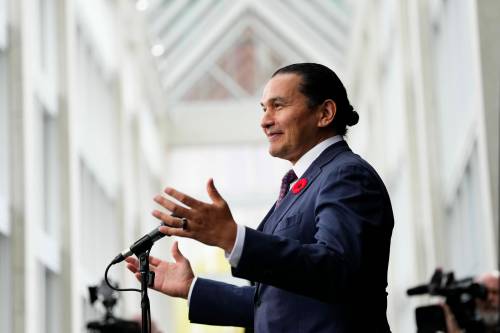
Manitoba Premier Wab Kinew, standing in front of microphones and television cameras, holding up his Indigenous status card and saying that he didn’t feel Canada should have “a race-based form of identification in this country, but that is a reality,” adding that it was time to abolish the Indian Act.

“I think it’s time to abolish the Indian Act, get rid of the Indian Act, move past the Indian Act, and it needs to be done with First Nations people and First Nations governments, of course. I think it’s long overdue that we have a relationship with Indigenous Peoples in Canada that reflects who we are as Canadians today,” he said.

The Indian Act — the name alone suggests how out-dated and out of place the law has become. Originally dating from 1876, the law was put in place to “amend and consolidate the laws respecting Indians” and gave the Minister of the Interior the responsibility to “control and management of the reserves, lands, moneys and property of Indians in Canada.”

Read
2:01 AM CDT

Provincial budget fails to chart new course

Editorial 4 minute read Preview

Provincial budget fails to chart new course

Editorial 4 minute read Wednesday, Apr. 13, 2022

If the 2022 Manitoba budget was intended to provide a lifeline for the Progressive Conservative government, it must surely be considered a failure.

Prior to the budget’s release, Premier Heather Stefanson and her government were teetering on the edge of the political abyss. Manitobans are profoundly unhappy with the government’s performance on most issues, including pandemic management. National polls show Ms. Stefanson is Canada’s least popular premier.

That political context made this budget a high-priority project for the Tories. It was, simply put, their best chance to shed the lingering burden left by former premier Brian Pallister, and rebuild the party brand under a new leader.

Unfortunately, Ms. Stefanson’s first budget remains shackled to the deeply flawed fiscal and political logic that defined the Pallister years. And no single budgetary measure embodies that failure more than the premier’s decision to continue cutting education property taxes.

Read
Wednesday, Apr. 13, 2022

Province’s first female dentist took skill, insight wherever needed

David Sanderson    25 minute read Preview

Province’s first female dentist took skill, insight wherever needed

David Sanderson    25 minute read Saturday, Apr. 3, 2021

Some stories take longer to get around to than others.

In the fall of 2011 I hooked up with Fiona Odlum at an Academy Road Starbucks for a lighthearted feature about people who report on traffic for a living. Odlum, currently a contributor at CBC Saskatchewan, was working for 680 CJOB at the time, clueing rush-hour commuters in on stalls, lane closures and fender-benders they’d be wise to avoid.

Odlum turned the tables at one point by asking a few questions of her own including, “So, what’s your main beat?”

I don’t really have one, I told her, but if pressed, I would probably go with human-interest pieces.

Read
Saturday, Apr. 3, 2021

The new normal in Canadian politics

David McLaughlin 5 minute read Preview

The new normal in Canadian politics

David McLaughlin 5 minute read 2:01 AM CDT

“Nothing happening, all at once.”

Welcome to the new normal of Canadian politics, where normality is the new normal. Routine and stable are in; disruptive and excessive are out. Exhibits A and B are the Alberta referendum and the British Columbia election. Voters opted for stability over volatility.

The opposite of being normal is being different from the norm. In politics that means different from where we’ve been and what we’ve come to expect. Two competing trends have dominated our politics for the past decade and a half — progressivism and populism. Think Justin Trudeau and liberal, progressive identity politics in Canada, and Donald Trump and conservative, populist MAGA politics in America. We are now experiencing a swing away from both those trends.

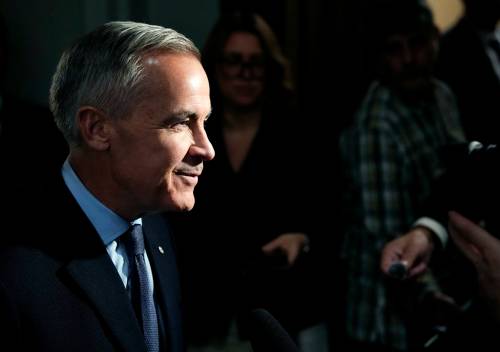
Representing this “new normal” are Prime Minister Mark Carney, for one, and newly elected British Columbia premier, Lorne Doerksen, for another. Both are considered normal because they talk and act like adults in a childish political world. Their political flair is to not have any political flair. They stand out for not standing out.

Read
2:01 AM CDT

A little toponder, a lot to celebrate

Erna Buffie 5 minute read 2:01 AM CDT

Well, another civic election season has come and gone, and I have to say it was a doozy. The most surprising event was the steady climb in support for young mayoral candidate Noah Redden, who started out with just four per cent public support in September but had reached a solid 14 per cent support in October.

On election day, Redden nearly came in second, less than one percentage point behind Kevin Klein, an experienced politician.

Indeed, the 27-year-old’s accomplishment was nothing short of astonishing. Particularly given that his shoestring campaign was given very little coverage — largely, according to one pundit, because he didn’t send out any press releases.

This when Redden’s unwritten press releases were there for everyone to see on Instagram, as he popped up in locations across the city, posting videos about what he hoped to achieve as mayor.