Grocer profits in 2022 top five-year average, Loblaw beats best results: report
Advertisement
Read this article for free:
or
Already have an account? Log in here »
To continue reading, please subscribe:
Digital Subscription
One year of digital access for only $1.44 a week*
- Enjoy unlimited reading on winnipegfreepress.com
- Read the E-Edition, our digital replica newspaper
- Access News Break, our award-winning app
- Play interactive puzzles
*Billed as $5.77 plus GST every four weeks. After 52 weeks, price increases to the regular rate of $19.95 plus GST every four weeks. Offer available to new and qualified returning subscribers only. Cancel any time.
To continue reading, please subscribe:
Add Free Press access to your Brandon Sun subscription for only an additional
$1 for the first 4 weeks*
- Enjoy unlimited reading on winnipegfreepress.com
- Read the E-Edition, our digital replica newspaper
- Access News Break, our award-winning app
- Play interactive puzzles
*Your next Brandon Sun subscription payment will increase by $1.00 and you will be charged $17.95 plus GST for four weeks. After four weeks, your payment will increase to $24.95 plus GST every four weeks.
Read unlimited articles for free today:
or
Already have an account? Log in here »
Hey there, time traveller!
This article was published 03/11/2022 (1459 days ago), so information in it may no longer be current.
Canada’s top three grocers all posted higher profits this year compared with their average performances over the last five years, new research from Dalhousie University has found.
Critics have accused grocers of so-called greedflation, suggesting they are profiteering at a time when food prices are rising at the fastest rate in more than 40 years, and researchers say a lack of transparency in their financial results isn’t helping.
“These companies are massive and quite diversified from a retail perspective so we recommend dividing food sales from other sales,” said Sylvain Charlebois, co-author of the report by the Agri-Food Analytics Lab and Dalhousie professor.
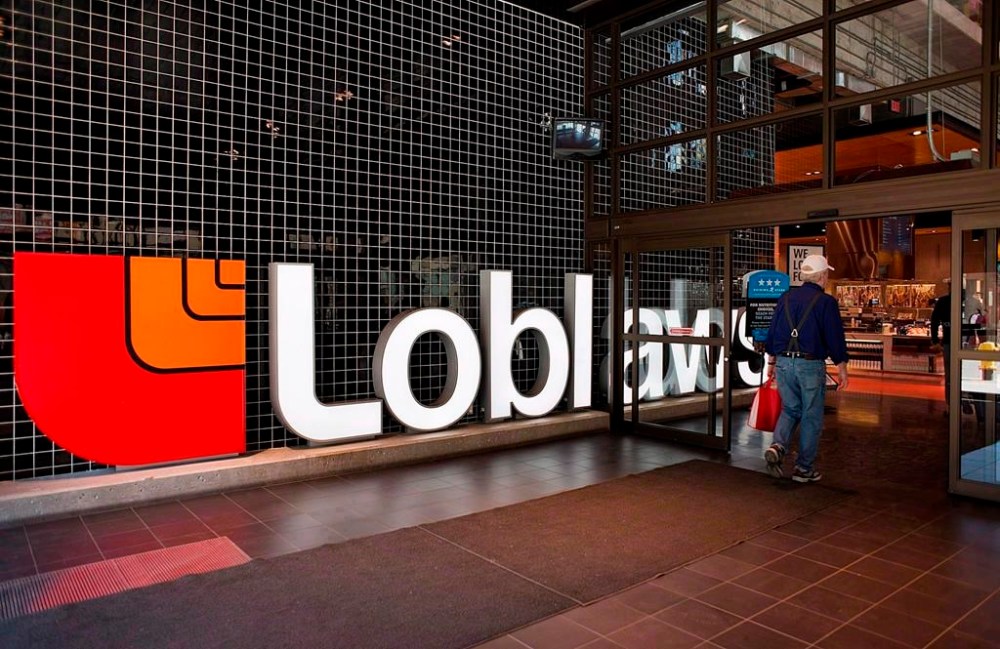
Loblaw Companies Ltd. was particularly notable, the report found, as it has outperformed not only its five-year average performance but did better than any of those years individually.
The grocery chain’s gross profit in the first half of 2022 beat its previous best results by $180 million — equivalent to about an extra million dollars a day, the research found.
By comparison, Metro Inc.’s recent gross profit was $11 million below its best performance over the past five years while Sobeys Inc. parent Empire Co. Ltd. made $37 million less in the first half of the year compared with its best results, the report said.
But the report authors said the lack of more detailed financial data makes its difficult to explain why all three supermarket companies are exceeding their average performances this year.
“We wanted to see if grocers were taking advantage of high inflationary times to charge an excess amount of money for food,” said Samantha Taylor, a senior instructor of accounting at Dalhousie’s Rowe School of Business and co-author of the report.
“But it’s inconclusive. We don’t have that data.”
Under international financial reporting standards, publicly traded companies can lump together operating segments with similar characteristics.
Loblaw’s retail segment, for example, includes sales from grocery stores, drugstores including its Shoppers Drug Mart chain and other health, beauty and general merchandise sales.
So it’s unclear whether sales growth is due to food or other items such as baby clothes or makeup.
Charlebois said the report’s findings underscore the need for more transparency in Canada’s grocery sector.
“Selling food is not the same thing as selling lipstick.”
It’s quite possible that consumers are spending more money on products that have a higher gross profit margin like cosmetics and apparel, Taylor said.
“It’s also possible grocers have increased their margins on food. We just don’t know.”
The report comes as food inflation in Canada continues to spiral higher. Grocery prices jumped 11.4 per cent in September compared with a year before, the biggest increase since 1981, according to Statistics Canada.
Surging food prices have prompted the Competition Bureau of Canada to launch a study on competition in the grocery industry.
But the grocers defended their profits, saying their margins haven’t changed.
Loblaw vice-president Catherine Thomas said retail is “the face of inflation, but we are not the cause.”
“Inflation is a global issue, not a uniquely Canadian one, and the price on our shelf represents many costs and many companies up the supply chain,” she said. “This is one more study that looks at food prices without looking even one step further up the chain, including the major price increases from global manufacturers.”
Loblaw’s profit margin on food has remained flat since inflation set in, Thomas added.
Charlebois suggested the best way for Loblaw to defend its position would be to release the full data.
“On one side, you have people trying to find a scapegoat and pointing fingers at grocers,” he said. “On the other side, you have grocers defending themselves but without really much transparency.”
Metro vice-president of public affairs and communications Marie-Claude Bacon said the Montreal-based grocer’s gross profit margins have remained stable for many years.
“Despite misleading claims by some, we work hard everyday to provide value to our customers and help them in the current context of global inflation,” she said.
Sobeys did not immediately respond to a request for comment.

Retail Council of Canada national spokeswoman Michelle Wasylyshen said while grocers’ overall revenue increased during the pandemic as more people ate at home, profit margins have been relatively consistent.
“The grocery industry is a relatively low-margin business,” she said. “Typically, grocery profits equate to three or four per cent of revenues.”
The overwhelming driver of price increases on store shelves is the unprecedented price increases that grocers themselves face from their vendors such as food manufacturers, processors and wholesalers, Wasylyshen said.
Canada also has lower food inflation than many other countries, with food price increases hitting 13 per cent in the United States and 14.5 per cent in the United Kingdom, she said.
This report by The Canadian Press was first published Nov. 3, 2022.
Related Articles
Desperation at the grocery store, food bank
Advertisement Advertise With Us
Advertisement Advertise With Us