The long game
A better future for new generation of disease-resistant elm trees
Advertisement
Read this article for free:
or
Already have an account? Log in here »
To continue reading, please subscribe:
Digital Subscription
One year of digital access for only $1.44 a week*
- Enjoy unlimited reading on winnipegfreepress.com
- Read the E-Edition, our digital replica newspaper
- Access News Break, our award-winning app
- Play interactive puzzles
*Billed as $5.77 plus GST every four weeks. After 52 weeks, price increases to the regular rate of $19.95 plus GST every four weeks. Offer available to new and qualified returning subscribers only. Cancel any time.
To continue reading, please subscribe:
Add Free Press access to your Brandon Sun subscription for only an additional
$1 for the first 4 weeks*
- Enjoy unlimited reading on winnipegfreepress.com
- Read the E-Edition, our digital replica newspaper
- Access News Break, our award-winning app
- Play interactive puzzles
*Your next Brandon Sun subscription payment will increase by $1.00 and you will be charged $17.95 plus GST for four weeks. After four weeks, your payment will increase to $24.95 plus GST every four weeks.
Read unlimited articles for free today:
or
Already have an account? Log in here »
Hey there, time traveller!
This article was published 09/09/2022 (1498 days ago), so information in it may no longer be current.
Rick Durand is taking a long-term strategic approach to developing a new generation of elm trees that are highly resistant to Dutch elm disease (DED). Durand is the lead researcher and developer of what is the largest Dutch elm disease project in Canada.
In August, participants from the nursery and landscape industry and provincial and municipal tree programs gathered at Futura Farms in St. Andrews to tour the Dutch Elm Disease tree trial. They were there to gain a firsthand view of the project field site and the promising response amongst 100 elm trees that were inoculated in June with DED to test for tolerance.
The 100 elms in the DED tree trial at Futura Farms consist of the best selections of American and Japanese elms. The elms were planted in 2019 and 2020 but the process of collecting seed began in the 1980s when Durand, a professional plant breeder, was growing and evaluating American and Asian elm trees at Prairie Shade Nursery in Portage la Prairie. In 2011, Durand sent seed he had collected to Bylands Nursery in West Kelowna, B.C. In 2013, Durand moved to Kelowna to manage Bylands Nursery’s research program. From the more than 5,000 American elm and 3,000 Japanese elm seedlings, Durand made 100 selections each. These were reduced to 15 of the best American elm selections and the 10 best Asian elm selections, all of which were increased in numbers by way of budding (grafting). In 2020, 1,200 elms were shipped from Bylands to the DED project site at Futura Farms.

Rick Durand photo
A selection of 100 elm trees were inoculated with Dutch Elm Disease. Some trees died within 10 days while others showed no sign of disease.
On June 22nd, 2022, when the selection of 100 elm trees were inoculated, Durand cut an opening in the tree trunks using a budding knife. Jon Leferink, retired urban forester, injected DED fungus in suspension which was provided by Manitoba Forestry and Peatlands Branch. The open wound was wrapped with packaging tape to seal the opening. “There are very few people who want to kill trees,” says Durand, “but that is part of the process to find out which trees are resistant to DED.”
Within 10 to 14 days of the inoculation, some of the elms were already showing signs of being infected with DED: yellowing leaves to begin with and then brown, dead leaves. Some of the inoculated trees died completely within 10 days. But there were also elms in the trial that showed degrees of DED resistance and some that did not show any signs of infection.
Asiatic elms have higher resistance to DED than native species of elm such as American elm. The best Asian selection in the trial, Night Rider elm, showed less than 15 per cent damage from DED after inoculation. Night Rider elm, which was introduced by Durand in 2020, is 75 per cent Japanese and 25 per cent Siberian. “The damage on Night Rider is typical for Asian elms,” says Durand. “When the Asian elms get the disease, their response is not always immediate, but they quickly wall off the infection.” The affected portion dies, he says, but most importantly, the rest of the tree survives.
The Asian elms in the trial showed variability in their response to the inoculation. For example, Northern Empress Japanese elm, which was developed at North Dakota State University, lost approximately 50 to 60 per cent of its branches before it walled off the DED infection. There were other trees in the trial as well that were able to survive the disease. “They wall off the disease from spreading further into the plant and if they have that ability, they are more likely to survive,” says Durand. “But of course, we want better than that.”
In addition to developing a diversity of American and Asian elm trees that are cold hardy to the prairie climate and highly resistant to DED (no one in the horticultural world says a tree is totally resistant anymore, because extreme environmental stresses could always prove you wrong somewhere down the road), the goal is also to develop improved branch strength and crown form. “Elms don’t always behave — they are a bit of a wild child,” says Durand. “We don’t want municipalities or homeowners dealing with a lot of structural problems and the associated expense.” Improved crown forms require less pruning. The disease-resistant elm trees that will be selected and introduced to the market, once they have been fully evaluated and tested, will also have high ornamental value.

Karen Graham photo
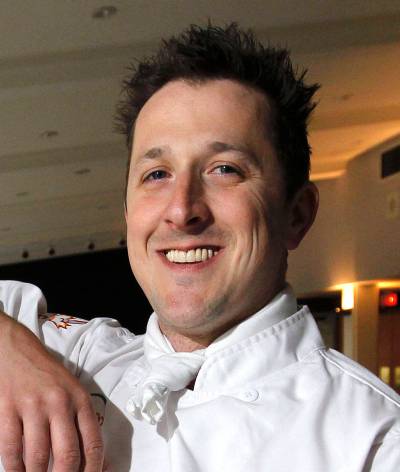
Rick Durand, native Manitoban and plant breeder, is the lead researcher for the Dutch Elm Disease trial located at Futura Farms.
Bylands is preparing to make a number of introductions from the trial, one of which has been developed by Durand and is a hybrid cross between American elm and Japanese elm. That’s a first. No one else has achieved that. The as-yet unnamed variety is a triploid which means it has three sets of chromosomes. It is fast-growing but what is even more significant, it has not shown any signs of Dutch elm disease since it was inoculated. Bylands will make the new hybrid available for sale to wholesale tree growers in 2023.
Winnipeg has lost more than 33,000 elms to DED in the past five years alone. The loss of these iconic trees with their cathedral-like canopies has hit us hard. Over the last decade in our city, it’s been more about removing dead trees than planting new ones. Trees die for many reasons, says Durand: windstorms, ice storms, pests, and disease. Elms have significant value because they are long-lived trees that can endure tough urban conditions.
“Winnipeg is truly blessed with rich soils and large boulevards that allow the elms to spread their roots out and absorb all that good nutrition,” says Durand. “Elm trees can withstand periods of drought and survive short-term flooding. There are elms that are over 200 years old in Winnipeg and that speaks volumes as to their cold hardiness and adaptability.”
Over his 40-year career, Durand has developed and introduced numerous cultivars of plants. Durand says he is driven by one thing — a passion for trees.
“The ultimate goal is to introduce plants that are adaptable to the prairie urban environment and that will provide added diversity in the urban community,” he says.

Rick Durand photo
This unnamed elm tree signals a brighter future: high resistance to Dutch Elm Disease, improved branch strength, and better crown form.

“We’ve already learned things from the DED trial at Futura.”
But there are also five other trials where the elm trees are being assessed in different regions across the prairies: three trials in Alberta (Strathmore, Red Deer and Edmonton), one in Saskatoon and one at Jeffries Nursery in Portage la Prairie. The trees will be planted in urban areas and evaluated for their disease resistance and cold hardiness to the prairie climate. “Playing the long game is important,” says Durand. “It can take 15 to 20 years to really understand a tree. We’re building up a base, but it takes time.”
Futura Farms is owned by Carl Durand, who is Rick Durand’s son. It is the site for this all-important Dutch elm disease tree trial, but the research program also involves several other tree species, including maple, oak, birch, aspen and linden, as well as fruit trees such as apple, pear and plum varieties that are being evaluated for prairie hardiness and disease resistance.
The future’s looking brighter.
colleenizacharias@gmail.com

Rick Durand photo
Night Rider elm, an Asian elm, showed less than 15 per cent damage after inoculation.

Colleen Zacharias / Winnipeg Free Press
Participants from different levels of government along with horticultural professionals gathered at Futura Farms in St. Andrews in August at the Dutch Elm Disease tree trial.
Related Articles
If a tree falls in the urban forest…
Advertisement Advertise With Us
Advertisement Advertise With Us