

NDP expects crypto, data centre electricity levy to shave about $50 annually off residential Hydro bills
Advertisement
Read this article for free:
or
Already have an account? Log in here »
To continue reading, please subscribe:
Digital Subscription
One year of digital access for only $1.44 a week*
- Enjoy unlimited reading on winnipegfreepress.com
- Read the E-Edition, our digital replica newspaper
- Access News Break, our award-winning app
- Play interactive puzzles
*Billed as $5.77 plus GST every four weeks. After 52 weeks, price increases to the regular rate of $19.95 plus GST every four weeks. Offer available to new and qualified returning subscribers only. Cancel any time.
To continue reading, please subscribe:
Add Free Press access to your Brandon Sun subscription for only an additional
$1 for the first 4 weeks*
- Enjoy unlimited reading on winnipegfreepress.com
- Read the E-Edition, our digital replica newspaper
- Access News Break, our award-winning app
- Play interactive puzzles
*Your next Brandon Sun subscription payment will increase by $1.00 and you will be charged $17.95 plus GST for four weeks. After four weeks, your payment will increase to $24.95 plus GST every four weeks.
Read unlimited articles for free today:
or
Already have an account? Log in here »
Revenue from the province’s new electricity levy on cryptocurrency businesses and large AI data centres will go toward offsetting residential bills, rather than the coffers of cash-strapped Manitoba Hydro.
The levy is expected to generate $20 million annually, which would take about $50 per year off every household’s electricity bill starting in 2027, Finance Minister Adrien Sala told reporters Thursday.
“This is one step that we can make as a government to make life more affordable for Manitobans,” Sala said.
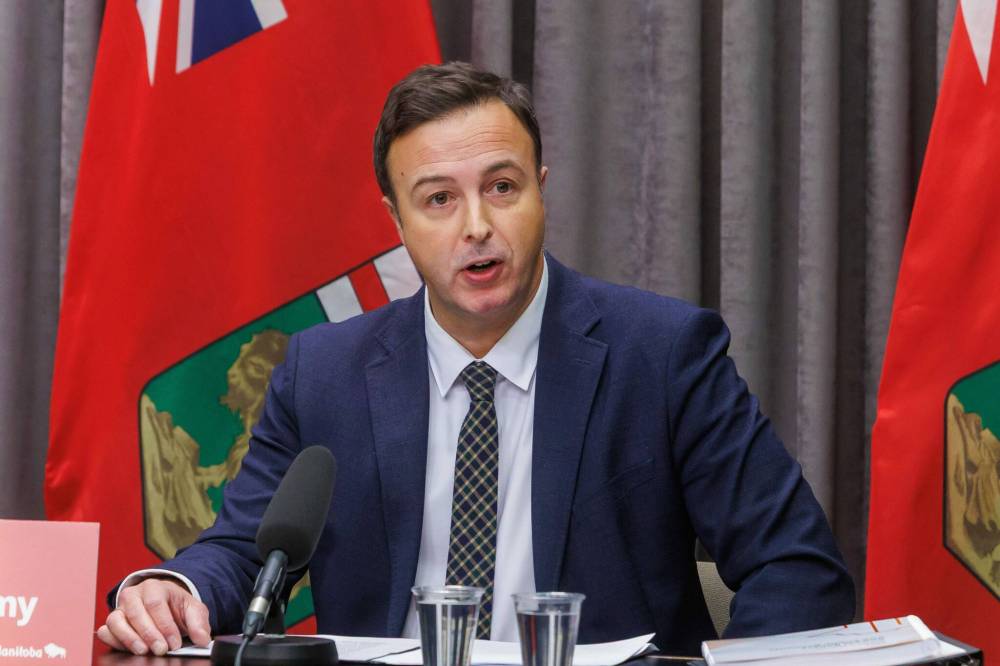
MIKE DEAL / FREE PRESS FILES
Finance Minister Adrien Sala
The default levy is set at 100 per cent of the current rate charges, with $20 million in revenue equivalent to a one per cent rate increase, Sala said.
Legislation went into effect in June requiring Hydro to establish a mandatory electricity levy on crypto operations and large AI data centres, which require large amounts of power. Sala said the facilities drive major pressures on rates and “costly increases” for residents.
The proposed levy and other measures are in the majority NDP government’s Budget Implementation and Tax Statutes Amendment Act, which was introduced Thursday.
The estimated $20 million in revenue reflects the current number of crypto companies in Manitoba, said Sala, who did not have a figure for the number of crypto companies currently operating in Manitoba.
Manitoba is not currently home to any AI data centres that require more than five megawatts of power and would be required to pay the levy.
Bell Canada is building a data centre, which will require 5.5 megawatts of power, in the Rural Municipality of Rosser. Sala would not say if the centre will pay the province’s levy.
In April, a legislature committee was told the levy and a proposal to limit electricity usage at peak times could force some crypto companies out of business.
Sala acknowledged there will be a “cost impact” for companies.
“It’s important that we ensure crypto operations are paying their fair share,” he said.
The revenue will go toward household electricity bills at a time when Hydro has a debt of more than $25 million, and the Crown corporation warns of an energy deficit in the coming years.
Sala said the province has introduced other measures to bring about $200 million annually back into Hydro’s side of the ledger.
“We’re focused on supporting Hydro, making sure that they have what they need, while we keep rates affordable,” he said.
Sala suggested the decision to direct the revenue toward household bills will not undermine the Public Utility Board’s work, which includes setting electricity rates.
“The (PUB) will continue to be able to do the important work that they do,” he said.
Konrad Narth, the Progressive Conservatives’ interim leader, disputed the government’s estimated savings per residential bill, telling reporters he doesn’t think the levy will provide any measurable benefit to ratepayers or Hydro.
“We heard in committee on the bill that was brought forward that small operators that were in existence in Manitoba would be forced to close, lay off the staff that they have and shutter their facilities,” he said.
“If there’s no revenue because of the government discouraging the operation of those facilities, there’s nothing to reimburse the average ratepayer in Manitoba.”
The legislation would also return the Workers Compensation Board to summary government for the purposes of financial reporting, starting with the 2027-28 fiscal year.
“The WCB has significant assets and liabilities, and these should be shown on the province’s books openly and transparently,” Sala said, noting the board is a statutory body created by government.
He said the WCB will continue to operate independently when it returns to the government reporting entity. The entity includes all funds and organizations controlled by the government, including Hydro.
Bringing the WCB into the entity introduces volatility, Sala said in response to a question about whether the move could help the NDP to achieve its promise to balance the budget.
The former Tory government removed the WCB from summary financial reporting in 2018, saying the board’s funds are not the government’s money, and the move would allow the organization to be managed solely for the benefit of employers and workers.

Sala said a new provision in the Workers Compensation Act allows the government to provide an advance of funding to the WCB if there isn’t enough money to compensate workers.
“This means that if a truly extraordinary event occurs — for example, what we saw with COVID — workers will continue to be properly compensated,” he said.
The provision says the government cannot drain the funding for other purposes, Sala said.
The province is seeking advice from Deloitte Canada with respect to the WCB’s financial reporting status.
chris.kitching@winnipegfreepress.com
As a general assignment reporter, Chris covers a little bit of everything for the Free Press.
Our newsroom depends on a growing audience of readers to power our journalism. If you are not a paid reader, please consider becoming a subscriber.
Our newsroom depends on its audience of readers to power our journalism. Thank you for your support.
History
Updated on Thursday, October 15, 2026 5:45 PM CDT: Adds details, comments.