‘People’s princess’ remains public property 25 years later

Advertisement
Read this article for free:
or
Already have an account? Log in here »
To continue reading, please subscribe:

Digital Subscription
One year of digital access for only $205*
- Enjoy unlimited reading on winnipegfreepress.com
- Read the E-Edition, our digital replica newspaper
- Access News Break, our award-winning app
- Play interactive puzzles
*First annual payment billed as $205.00 + GST for one year. This annual subscription will automatically renew at $233.00 + GST every 52 weeks (10% off the regular annual price of $259.35). Offer available to new and qualified returning subscribers only. Cancel any time.
To continue reading, please subscribe:
Add Free Press access to your Brandon Sun subscription for only an additional
$1 for the first 4 weeks*
- Enjoy unlimited reading on winnipegfreepress.com
- Read the E-Edition, our digital replica newspaper
- Access News Break, our award-winning app
- Play interactive puzzles
*Your next Brandon Sun subscription payment will increase by $1.00 and you will be charged $17.95 plus GST for four weeks. After four weeks, your payment will increase to $24.95 plus GST every four weeks.
Read unlimited articles for free today:
or
Already have an account? Log in here »
Hey there, time traveller!
This article was published 02/09/2022 (1489 days ago), so information in it may no longer be current.
For a wide cross-section of people, Aug. 31, 1997 was a “where were you when” date in history.
That was the day Diana, Princess of Wales, died from injuries sustained in a car crash in the Pont de l’Alma tunnel in Paris, France, that also killed her companion, Dodi Fayed, and driver Henri Paul.
This week marked 25 years since the tragic death of the “people’s princess,” as she was called, at just 36. She left behind two young boys, Prince William, who was 15, and Prince Harry, 12. Billions of people watched her funeral in September 1997 just as they had tuned in to watch her wedding to Prince Charles in July 1981. Both moments of her short life turned into spectacles.
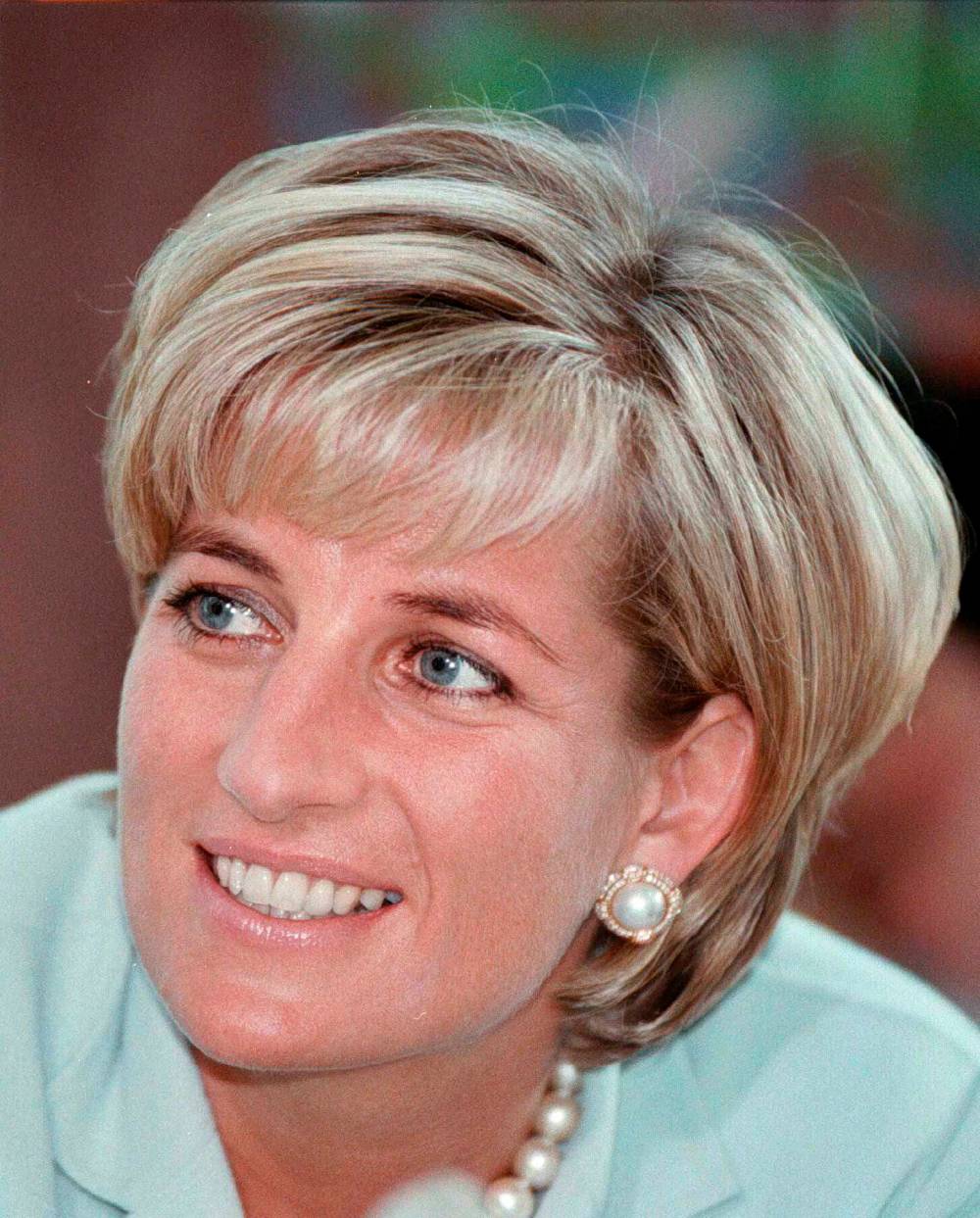
John Stillwell/The Associated Press FILEs
In this 1997 photo, Diana, Princess of Wales, is seen months before her death at age 36.
As a member of the British Royal Family, Diana Spencer became an object of adoration and obsession among both the public and the press, which constantly hounded and scrutinized her — particularly after her divorce.
She was a different princess, one who, in her own estimation, “lead with her heart, not her head.” She was a modern woman in a generations-old institution that was anything but. She was a humanitarian, philanthropist and a pioneering advocate for those living with HIV/AIDS, at a time when the disease was heavily stigmatized and surrounded by homophobia.
As far as many are concerned — including her son Harry — it was that obsession with her that ultimately killed her. A 2008 inquest would find that she was “unlawfully killed” by the negligent driving of both her chauffeur and the paparazzi chasing them.
The voracious appetite for all things Diana has not waned much in the intervening quarter-century, and has actually ramped up again in recent years.
Netflix’s dishy historical royal drama The Crown reached its Diana seasons in 2020 with the fantastic Emma Corrin starring as the young “Shy Di,” as she was dubbed by the British press, and will return in November with Elizabeth Debicki assuming the role for Season 5, which will cover the years leading up to her death.
Kristen Stewart also took a turn as Princess Diana in 2021’s Spencer, which takes place over a truly harrowing Christmas. A few weeks ago, HBO Max also unveiled a new documentary, The Princess.
Twenty-five years on, and we’re still consuming her.
The treatment and objectification of Diana Spencer called to mind the treatment and objectification of another icon, Marilyn Monroe. Turns out, I’m hardly the only one to make this connection, as recent death anniversary content has shown; they are also inextricably linked by the song Candle in the Wind, originally written by Bernie Taupin and Elton John as a tribute to Monroe, and then rewritten as a tribute for Diana.
Indeed, their stories bear uncanny biographical similarities — both died in the month of August, both at the age of 36, with Monroe gone 60 years last month. But both were also hunted, hounded and closely examined through a constantly snapping lens. Both were magnets for conspiracy theories surrounding their untimely, tragic deaths. Both walked the line — in the public consciousness, anyway — between dream girl and tragic figure, ideal and cautionary tale. Both died young and blond and beautiful.

And both remain sources of fascination and obsession, inspiration and imitation. People still hang framed Marilyn prints in their homes and dress up like her on Halloween; Princess Diana’s signature off-duty look — bike shorts peeking out from under an oversized sweatshirt — is arguably just as influential on fashion today as her wedding dress was in the 1980s. They are icons.
With that status comes the documentaries, films, TV shows, podcasts, the death anniversary content (I’m guilty, too), the rehashing of the most tragic details of their lives. They become copies of copies of copies until it gets harder and harder to tease apart the iconography from the person. And icons, it seems, are never allowed to rest, not even in death.
Maybe we always want more content — and create more content — because we know there will never actually be more. Diana never got to be who she might have become, but there will always be more episodes, articles and docuseries, commemorating, remembering, consuming.
jen.zoratti@winnipegfreepress.com
Twitter: @JenZoratti
Jen Zoratti is a Winnipeg Free Press columnist and author of the newsletter, NEXT, a weekly look towards a post-pandemic future.
Our newsroom depends on a growing audience of readers to power our journalism. If you are not a paid reader, please consider becoming a subscriber.
Our newsroom depends on its audience of readers to power our journalism. Thank you for your support.
Jen Zoratti is a Winnipeg Free Press columnist and author of the newsletter, NEXT, a weekly look towards a post-pandemic future.
Our newsroom depends on a growing audience of readers to power our journalism. If you are not a paid reader, please consider becoming a subscriber.
Our newsroom depends on its audience of readers to power our journalism. Thank you for your support.
Advertisement Advertise With Us
Advertisement Advertise With Us