Ribbon skirts connect pride, culture

Lending of traditional garment for special events helps overcome cost barrier

Advertisement

Advertise with us

When Kyrra Kematch burned part of her ribbon skirt at a sweat ceremony, she needed a quick solution. The 17-year-old had registered for the Matriarch Summit, a gathering of Indigenous women, girls, two-spirit and gender-diverse individuals, but couldn’t afford to purchase a new skirt.

Read this article for free:


or

Already have an account? Log in here »

To continue reading, please subscribe:

Subscribe and receive a limited-edition Free Press branded hat or tote.

Digital Subscription

One year of digital access for only $205*

  • Enjoy unlimited reading on winnipegfreepress.com
  • Read the E-Edition, our digital replica newspaper
  • Access News Break, our award-winning app
  • Play interactive puzzles

*First annual payment billed as $205.00 + GST for one year. This annual subscription will automatically renew at $233.00 + GST every 52 weeks (10% off the regular annual price of $259.35). Offer available to new and qualified returning subscribers only. Cancel any time.

To continue reading, please subscribe:

Add Free Press access to your Brandon Sun subscription for only an additional

$1 for the first 4 weeks*

  • Enjoy unlimited reading on winnipegfreepress.com
  • Read the E-Edition, our digital replica newspaper
  • Access News Break, our award-winning app
  • Play interactive puzzles
Start now

*Your next Brandon Sun subscription payment will increase by $1.00 and you will be charged $17.95 plus GST for four weeks. After four weeks, your payment will increase to $24.95 plus GST every four weeks.

Hey there, time traveller!
This article was published 11/07/2022 (1523 days ago), so information in it may no longer be current.

When Kyrra Kematch burned part of her ribbon skirt at a sweat ceremony, she needed a quick solution. The 17-year-old had registered for the Matriarch Summit, a gathering of Indigenous women, girls, two-spirit and gender-diverse individuals, but couldn’t afford to purchase a new skirt.

“I didn’t want to wear it to the Matriarch Summit because it’s a really professional event,” Kematch said. “I found this lady on Facebook who was renting out her ribbon skirts to anyone who needed them, as long as you gave them back.”

That lady was Sasha Gosselin, who began lending her collection of handmade ribbon skirts to strangers in the last few months.
JESSICA LEE / WINNIPEG FREE PRESS
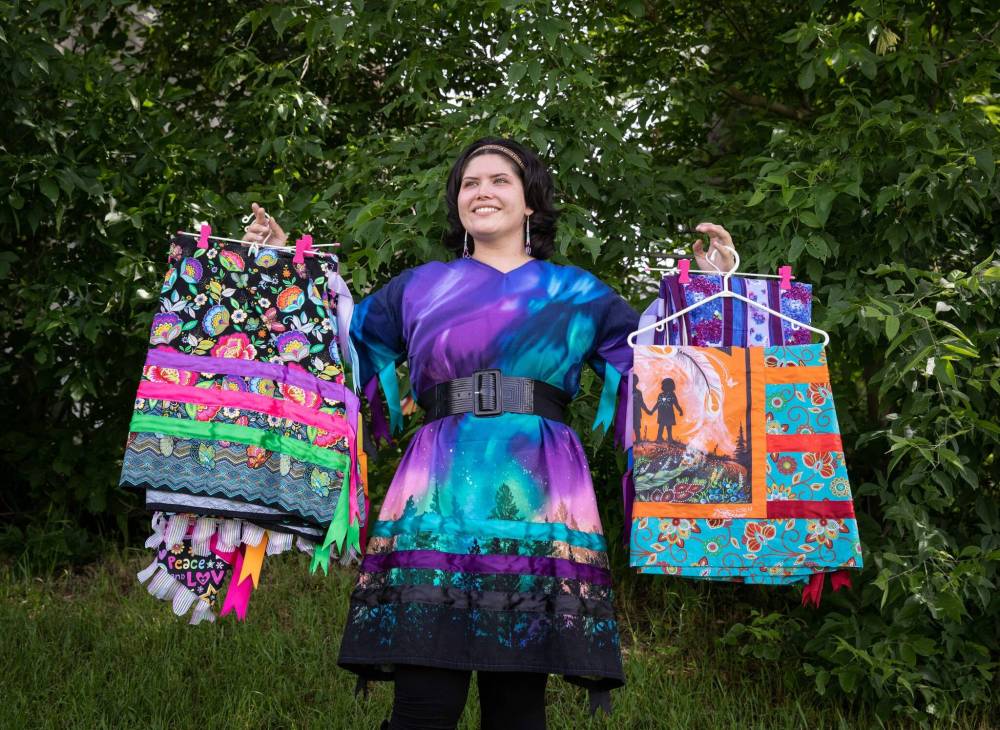
Sasha Gosselin started making ribbon skirts in March and now has a dozen to lend out.
JESSICA LEE / WINNIPEG FREE PRESS Sasha Gosselin started making ribbon skirts in March and now has a dozen to lend out.

Kematch was pleasantly surprised by Gosselin’s kindness and generosity.

“She just hands them out and lets anyone wear them, anytime,” Kematch said. “That’s absolutely wonderful. I love what she’s doing.”

Gosselin, who is originally from Treaty 4, only recently began creating ribbon skirts. Originally, she picked up the sewing machine to reconnect with her culture from her dad’s side of the family, but it soon became a catalyst to help others connect, too.

“After wearing my first ribbon skirt and feeling that sense of connection to my culture and the pride of wearing it, I wanted to be able to share that,” Gosselin said. “I started making my own skirts and I decided that I would take a chance and put them out there completely free of charge so that other people would get to experience what I got to.”

At first, Gosselin began informally lending the skirts by spreading the word on different Facebook groups. Recently, she launched a Facebook page called kisêwâtisiwin (“kindness” in Cree) to display her collection.

Retailing between $100-400, the cost of ribbon skirts can be a significant barrier for some, Gosselin said. Amid the grad and powwow season, the ribbon skirt demand has been high for artisans such as April Tawipisim, who owns Winnipeg-based Turtle Woman Indigenous Wear.
JESSICA LEE / WINNIPEG FREE PRESS
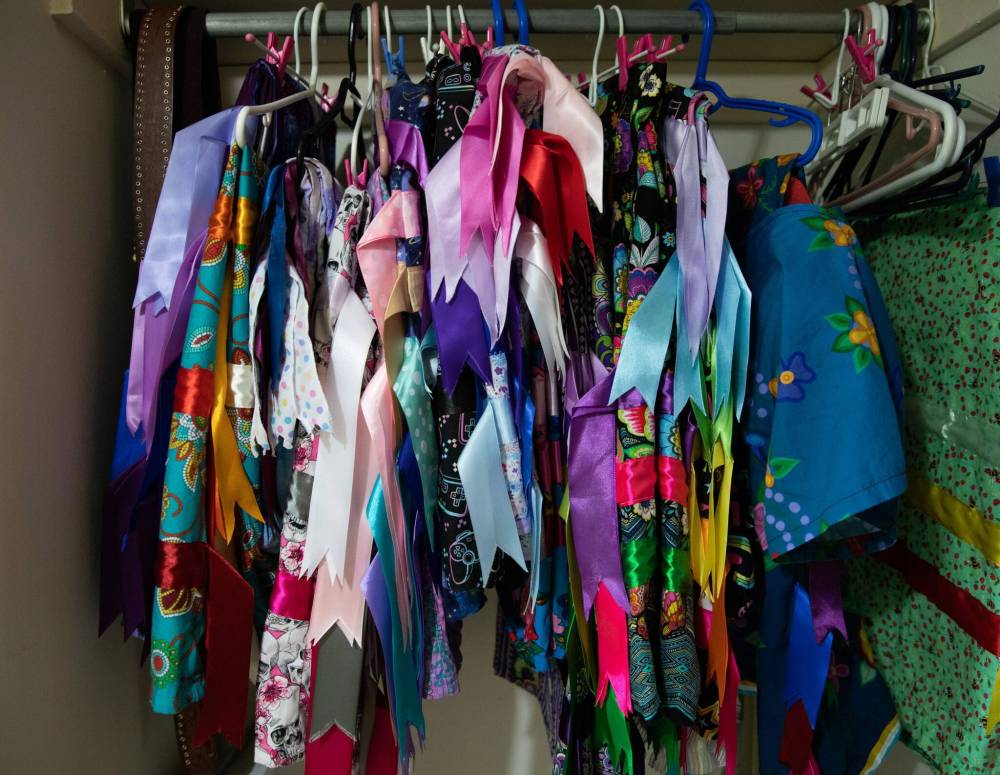
Gosselin started making the skirts in March and now has a dozen to lend out.
JESSICA LEE / WINNIPEG FREE PRESS Gosselin started making the skirts in March and now has a dozen to lend out.

“On average, we sell about 10 skirts per week, and there’s been a real high demand for ribbon skirts with grad,” Tawipisim said.

Ribbon skirts are worn during ceremonies to evoke pride and a spiritual connection to the earth. One of Gosselin’s favourite aspects of the process is attaching ribbon drops to the sides of the skirts, which she sees as the “whispering of them going up to Creator, having them long so they’re close to the ground and they touch the earth.

“Our ancestral women wore dresses from cotton skirts and then added ribbons and made it nice and fancy,” Tawipisim said. “As time went by and things evolved, the shorter skirts became more fashionable.”

In just a few months, Gosselin’s ribbon skirts have been worn to a host of special events, from high school graduations to sundance ceremonies. One woman even travelled an eight-hour drive from Norway House Cree Nation to pick up a custom-designed skirt for her graduation.

“You might wear them to any kind of thing where you want that powerful feeling behind you, whether that’s going to a grad ceremony (or) going to something where you’re receiving some type of honour,” Gosselin said. “Just being present and showing that we’re still here.”

Kematch is just one of many Indigenous women who have borrowed Gosselin’s skirts, but she remains touched by her act of kindness.
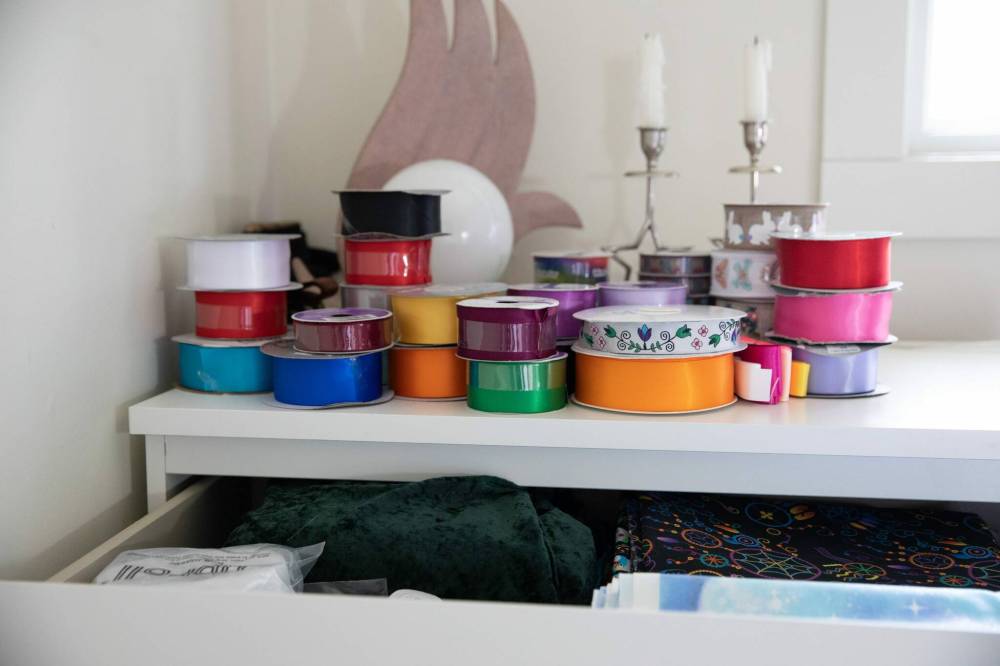
JESSICA LEE / WINNIPEG FREE PRESS
Retailing for prices between $100 and $400, the cost of ribbon skirts can be a significant barrier for some.
JESSICA LEE / WINNIPEG FREE PRESS Retailing for prices between $100 and $400, the cost of ribbon skirts can be a significant barrier for some.

“The ribbon skirt is really important to me because it’s something I hold near and dear to my heart, and it makes me feel more empowered,” Kematch said. “Out of the kindness of her heart, and for being such a trusting woman, she has let people borrow her skirts and bring them back for events. I just think that’s absolutely beautiful.”

As grad season comes to a close, Gosselin is eager to share her wardrobe with anyone heading to ceremonies. Emulating its Cree namesake for kindness, Gosselin hopes kisêwâtisiwin will help others feel the pride of wearing the threads of one’s culture, regardless of financial situation.

cierra.bettens@freepress.mb.ca

Report Error Submit a Tip

More Stories

Time to revamp Hydro’s water licence

Will Braun 5 minute read Preview

Time to revamp Hydro’s water licence

Will Braun 5 minute read 2:00 AM CDT

On Sept. 1, Manitoba Hydro’s 50-year licence to divert 85 per cent of the flow of the second largest river in the province and flood the fourth largest lake expired. How different will the next 50 years of the Churchill River Diversion look?

The northern project is a cornerstone of the engineering wonder that provides Manitoba with inexpensive and reliable electricity.

Using control structures and a nine-kilometre channel blasted through granite, the project backs up the Churchill River — which carries five times more water than the Red — as it flows through Southern Indian Lake, a lake 50 times larger than West Hawk and Falcon lakes combined, causing it to overflow southward toward the huge dams on the distant Nelson River.

After touring Southern Indian Lake in 2022, Wab Kinew — then opposition leader — referred in a statement to witnessing “islands disappearing into the lake, shorelines eroding quickly, a landscape covered with debris, (and) fish spawning grounds lost….”

Read
2:00 AM CDT

Scores of dead bodies found floating in India's Ganges River

The Associated Press 3 minute read Preview

Scores of dead bodies found floating in India's Ganges River

The Associated Press 3 minute read Tuesday, May. 11, 2021

NEW DELHI (AP) — Scores of dead bodies have been found floating down the Ganges River in eastern India as the country battles a ferocious surge in coronavirus infections. Authorities said Tuesday they haven't yet determined the cause of death.

Health officials working through the night Monday retrieved 71 bodies, officials in Bihar state said.

Images on social media of the bodies floating in the river prompted outrage and speculation that they died from COVID-19. Authorities performed post mortems on Tuesday but said they could not confirm the cause of death due to the decomposition of the bodies.

More corpses were found floating in the river on Tuesday, washing up in Ghazipur district in neighboring Uttar Pradesh state. Police and villagers were at the site, about 50 kilometers (30 miles) from Monday’s incident.

Read
Tuesday, May. 11, 2021

Awareness is the first line of defence

Joseph Borsa 4 minute read Preview

Awareness is the first line of defence

Joseph Borsa 4 minute read Updated: 8:15 AM CDT

September is Prostate Cancer Awareness Month in Canada. This proclamation helps focus public attention on the very important protective role that such awareness can play in reducing the death and suffering associated with this disease.

The underlying reason for that is simple. In its beginning, prostate cancer, as is true for all cancers, starts and grows silently and stealthily, giving no indication through pain or other symptoms of its presence and of the developing pathology. Everything appears normal to the unsuspecting host until the cancer has grown to an extent that it interferes with normal function. There might then be pain, bleeding or some other manifestation of the growing tumour.

Unfortunately, by that time the disease may have reached an advanced stage, which is much more difficult to treat, and less likely to have a favourable outcome. It is a general truth in dealing with all types of cancer that the earlier it is discovered and treated, the better the likelihood of a favourable outcome. Awareness can be a major determinant of whether such early discovery happens or not.

Discovery of the cancer during its period of silent, surreptitious growth creates the opportunity for early treatment. Fortunately, in the case of prostate cancer such detection is favoured by two factors.

Read
Updated: 8:15 AM CDT

Pallister’s education policies crash the party

Niigaan Sinclair 5 minute read Preview

Pallister’s education policies crash the party

Niigaan Sinclair 5 minute read Monday, May. 10, 2021

The University of Manitoba graduated 510 Indigenous students on Saturday, the largest cohort in its history.

Comparatively, in 2011 — the year I started teaching at the U of M — there were 158.

That’s more than three times as many and one of the highest numbers in North America (University of Saskatchewan hasn’t released this year's numbers yet but it is often slightly higher than the U of M).

This means we will have more Indigenous professionals entering the workforce than ever before, and its a number that has been increasing every year for a decade.

Read
Monday, May. 10, 2021

Vote for your local trustees

John R. Wiens 4 minute read Yesterday at 2:00 AM CDT

It’s the start of a new school year, but not just any school year. It’s also school board election year.

Nominations are public knowledge and close on Sept. 22 and, on Oct. 28, new or continuing trustees will be elected, re-elected or acclaimed. For the next four years the people chosen will make many of the crucial decisions that affect our children’s education. It’s a big deal (one-third of our children’s school lives).

As a former superintendent, I want to encourage everyone to get involved and, at the very least, vote.

At least two school divisions during the last round elected or acclaimed people who were openly residential school deniers and sexists, people willing to break the law, deny human rights and who defied their educators’, communities’ and government’s efforts to rein them in. They were community dividers, pitting people against one another and against children. Therefore, it’s important to vote responsibly, meaning voters need to familiarize themselves with their candidates.

Indian club apologizes for quarantine breach in Maldives

John Duerden, The Associated Press 4 minute read Monday, May. 10, 2021

Bengaluru FC owner Parth Jindal has apologized for an “inexcusable” breach of COVID-19 protocols by two of his players and a coach that led to the Indian club being told to leave the Maldives before a scheduled AFC Cup playoff game against a local team.

The players and a member of the coaching staff were reported by local media to have left their hotel in the capital Male on Saturday, sparking criticism from the Maldives sports minister.

Jindal told the Associated Press on Monday that against a backdrop of a surging COVID-19 cases in India and rising local opposition to the game going ahead, he understood the reaction on the island.

“The optics and timing of the breach has led to the reaction and what the players did was inexcusable," Jindal said. "They were well aware of the protocols and they knew they couldn’t step out, however briefly”