Getting fleeced: from sheep to skein

Advertisement

Advertise with us

When you need a haircut, you really need a haircut. And Yo-Yo Bah needs a haircut.

Read this article for free:

or

Already have an account? Log in here »

To continue reading, please subscribe:

Subscribe and receive a limited-edition Free Press branded hat or tote.

Digital Subscription

One year of digital access for only $205*

  • Enjoy unlimited reading on winnipegfreepress.com
  • Read the E-Edition, our digital replica newspaper
  • Access News Break, our award-winning app
  • Play interactive puzzles

*First annual payment billed as $205.00 + GST for one year. This annual subscription will automatically renew at $233.00 + GST every 52 weeks (10% off the regular annual price of $259.35). Offer available to new and qualified returning subscribers only. Cancel any time.

To continue reading, please subscribe:

Add Free Press access to your Brandon Sun subscription for only an additional

$1 for the first 4 weeks*

  • Enjoy unlimited reading on winnipegfreepress.com
  • Read the E-Edition, our digital replica newspaper
  • Access News Break, our award-winning app
  • Play interactive puzzles
Start now

*Your next Brandon Sun subscription payment will increase by $1.00 and you will be charged $17.95 plus GST for four weeks. After four weeks, your payment will increase to $24.95 plus GST every four weeks.

Hey there, time traveller!
This article was published 26/05/2022 (1518 days ago), so information in it may no longer be current.

When you need a haircut, you really need a haircut. And Yo-Yo Bah needs a haircut.

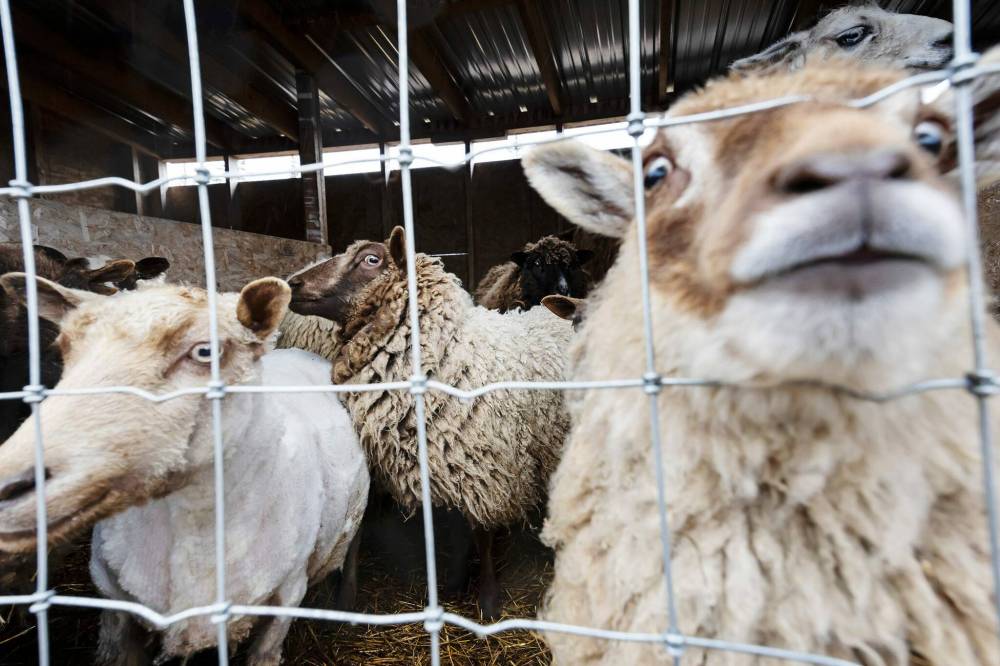
It’s the last day in April, and the sheep has been waiting all year to get shorn. For humans, that can mean looking shaggy, dishevelled and pre-historic. For Yo-Yo Bah and the other 37 sheep at Long Way Homestead — including Alexander Lambilton, Apollo, Mr. Sinister, Sage, and Shadrach — it means carrying around a lot of extra weight, which can be both uncomfortable and a hindrance to their life if the fleece reaches an extreme length.

An unshorn sheep is an unhappy sheep, and an unhealthy one at that. So a haircut is as much a wellness procedure as it is a grooming opportunity.
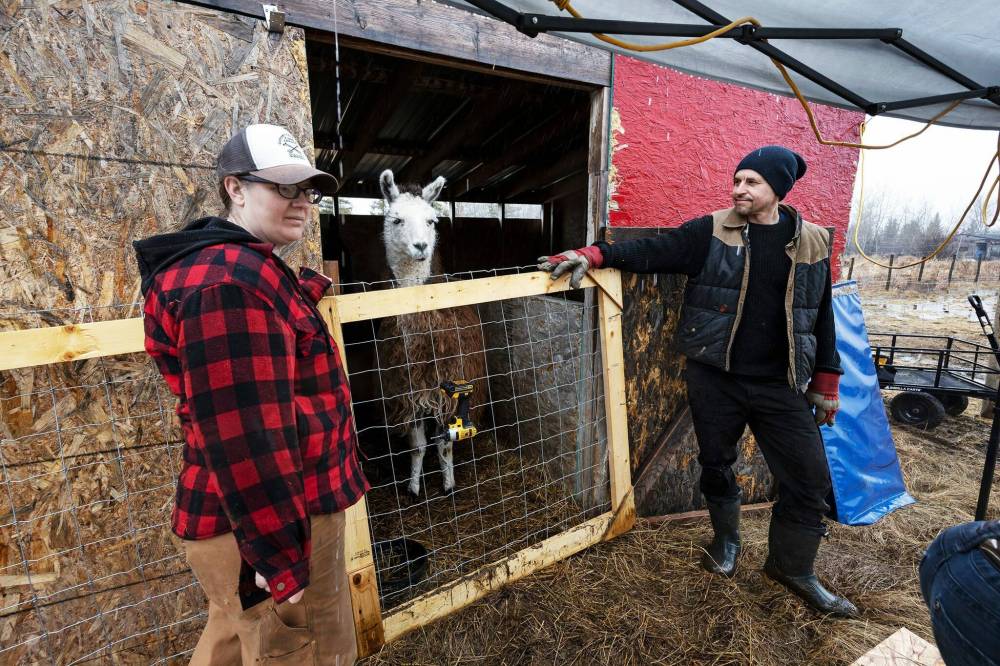
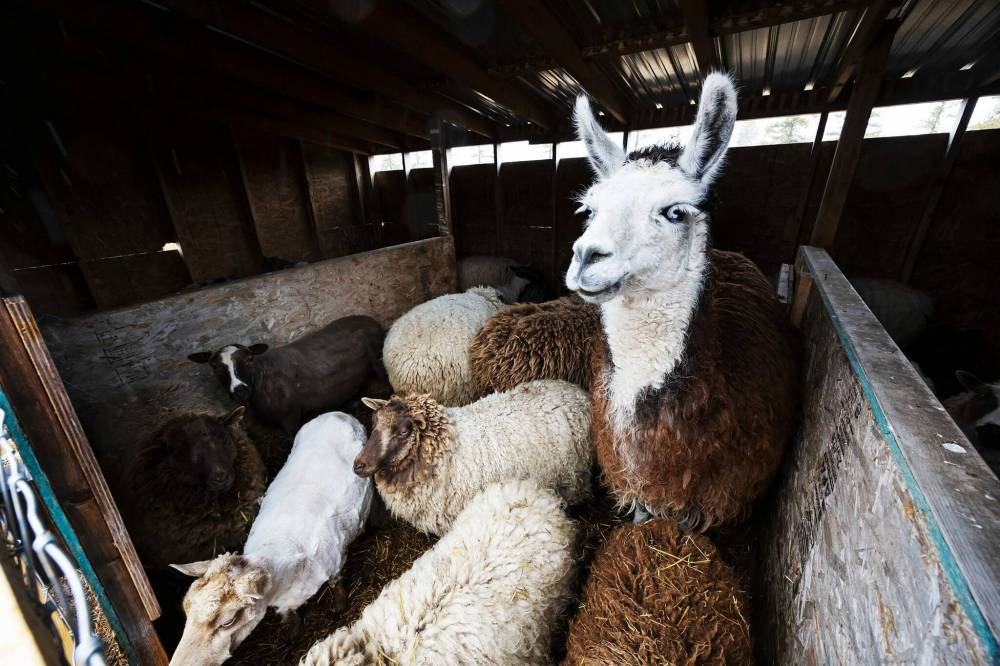
Shetland sheep at Long Way Homestead. Anna Hunter (left) and her husband Luke run the homestead in the town of St. Genevieve. They run a wool mill, make their own natural dyes, and run workshops, while raising two children. (Prabhjot Singh Lotey / Winnipeg Free Press)

Even if they didn’t make the appointment themselves, the sheep — who typically produce around four pounds of wool each — don’t mind the trip to the salon, says Anna Hunter, who with her husband Luke Palka runs the homestead about a 45-minute drive east of Winnipeg, in the town of Ste. Genevieve. At the homestead, they run the province’s only operational wool mill, make their own natural dyes, and run workshops, while raising two children.

The couple had big things planned for the big haircut: a shearing festival where community members could learn more about the animals, the wool, textile and fibre industry, and the homestead’s fibre processes. A chance to interact with textiles and their sources, and to understand the benefits of domestic production.

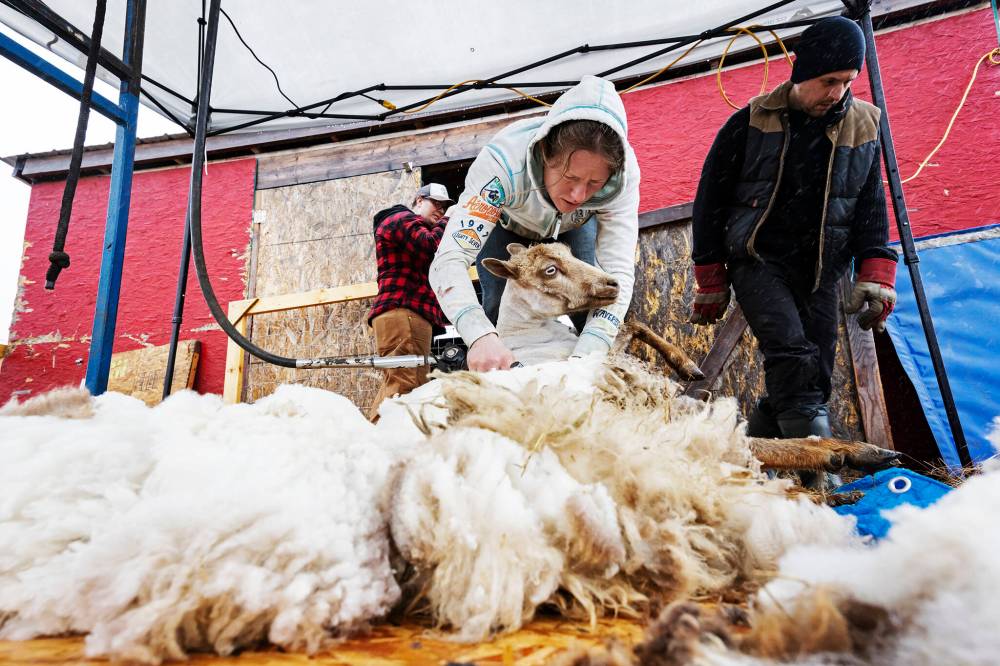
But it started raining, the festival was cancelled, and shearer Stacey Rosvold could only get to three members of the flock before the slippery conditions got too dangerous to keep going.
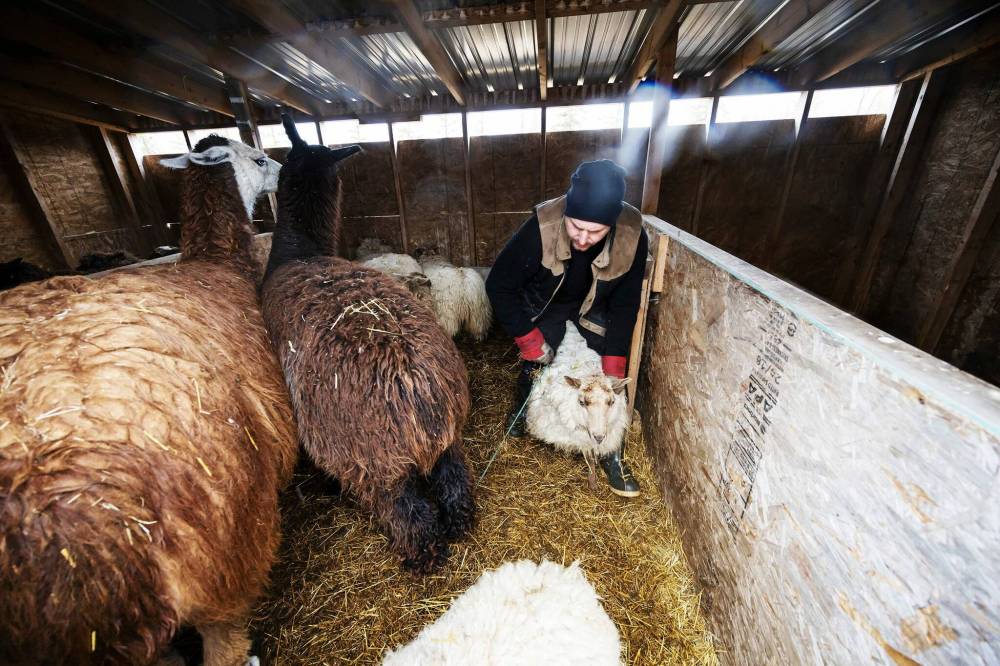
Luke Palka gathers a sheep for shearing. (Prabhjot Singh Lotey / Winnipeg Free Press)

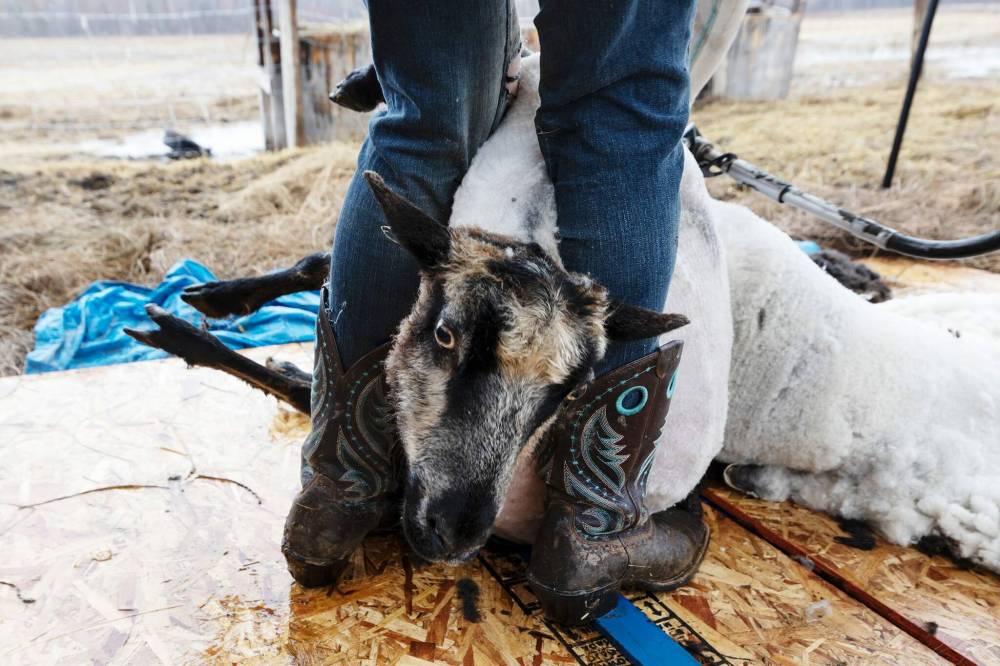
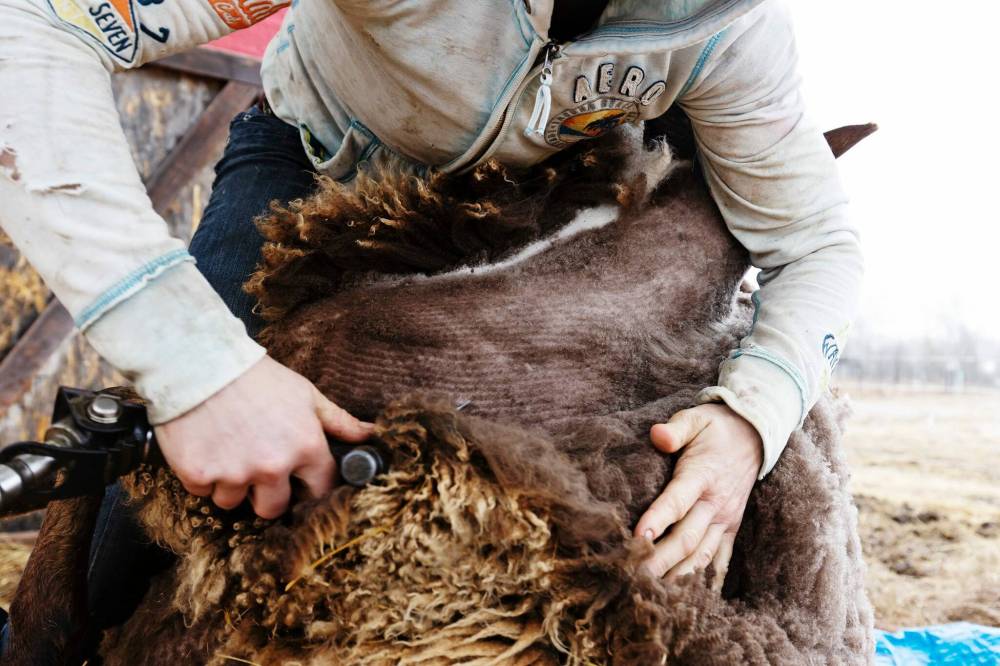
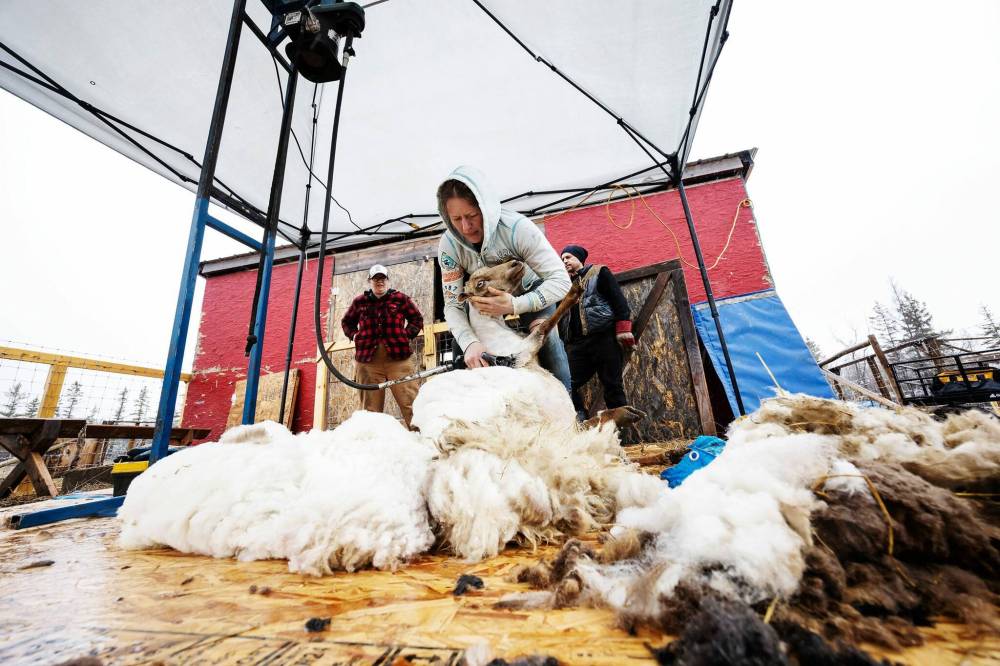
Rosvold has sheep of her own, but spends a good deal of her year on the road, travelling from farm to farm to help sheep shed their heavy coats of fleece. It’s hard work: she has to ensure the animals stay still and calm while handling the super-sharp shears. Just as a hairdresser tells you to look down or turn your head, Rosvold attempts and succeeds in controlling the shearing process. It’s as much athletic as it is cosmetic.

Shearing has to be done by hand, Hunter says, and there is a scarcity of experienced shearers in the province, which makes Rosvold a busy person: in the month of May, she was only home for three days, spending the bulk of the month shearing across the Prairies. This year, she estimates she will shear more than 20,000 sheep.

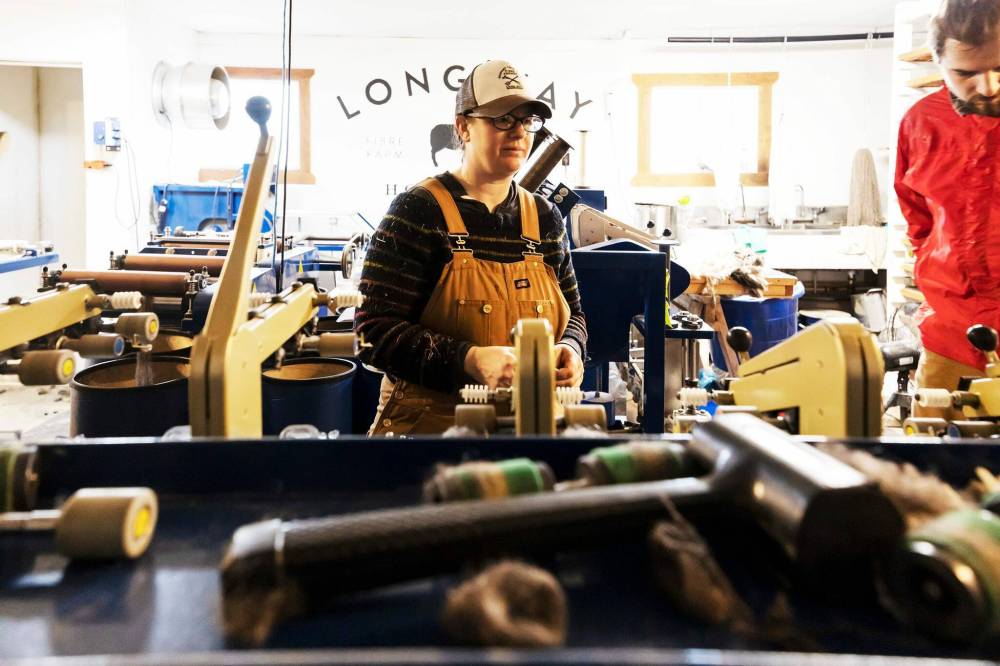
Once the fleece is removed, it’s taken to the mill, where it is scoured, dried, picked, and combed, before the fibre can become batting or roving, which can then be spun into yarn.
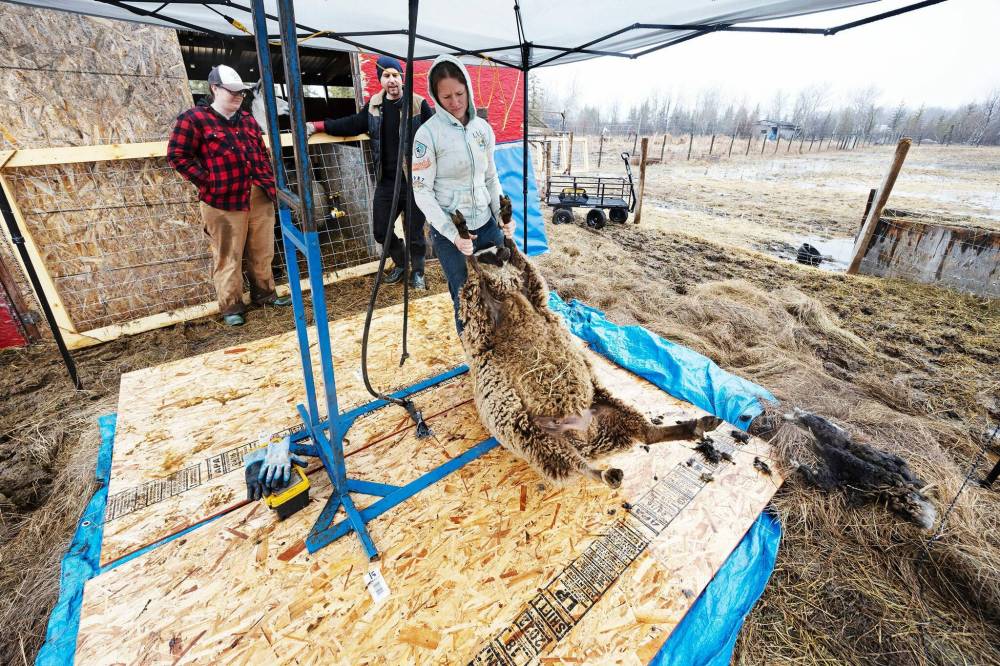
For sheep, shedding the heavy wool coat is more than a haircut, it’s a great relief. (Prabhjot Singh Lotey / Winnipeg Free Press)

It’s a laborious process, but Hunter says it’s worth it: wool is hypoallergenic, flexible, relatively fire-retardant, odour resistant, hygroscopic (temperature regulating) and most importantly, renewable and biodegradable. It can be grown and shorn annually, while unused fibres can be returned to the soil to decompose.

For Yo-Yo Bah, it’s a little bit much. But the sheep will get a haircut soon, Hunter says. When you need a haircut, you really need a haircut.

ben.waldman@winnipegfreepress.com
Shearer Stacy Rosvold with barn owners, Anna Hunter, left, and Luke Palka. (Prabhjot Singh Lotey / Winnipeg Free Press)
(Prabhjot Singh Lotey / Winnipeg Free Press)
Shearer Stacey Rosvold holds a sheep steady as she finishes up the job. (Prabhjot Singh Lotey / Winnipeg Free Press)
The shearing process is as much athletic as cosmetic. (Prabhjot Singh Lotey / Winnipeg Free Press)
One down and many others to go. On this rainy day in late April, conditions made it too difficult to continue safely with the shearing. (Prabhjot Singh Lotey / Winnipeg Free Press)
Long Way Homestead now boasts nearly 40 sheep and a couple of llamas. (Prabhjot Singh Lotey / Winnipeg Free Press)
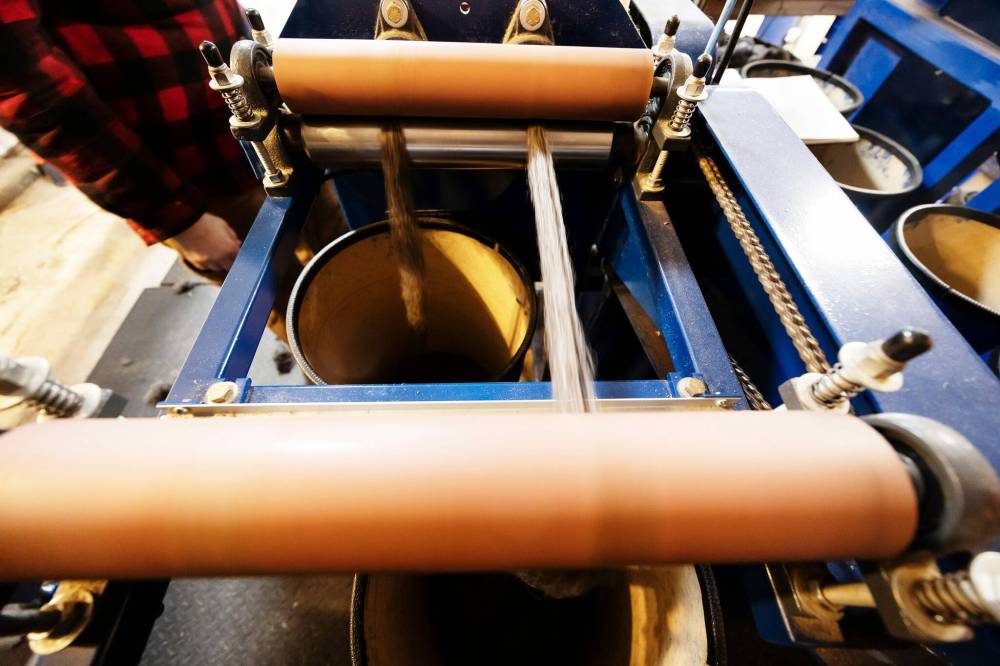
Wool roving passing through the draw frame machine. This further aligns the fibre in order to make smooth yarn.  (Prabhjot Singh Lotey / Winnipeg Free Press)
Wool roving passing through the draw frame machine. This further aligns the fibre in order to make smooth yarn. (Prabhjot Singh Lotey / Winnipeg Free Press)
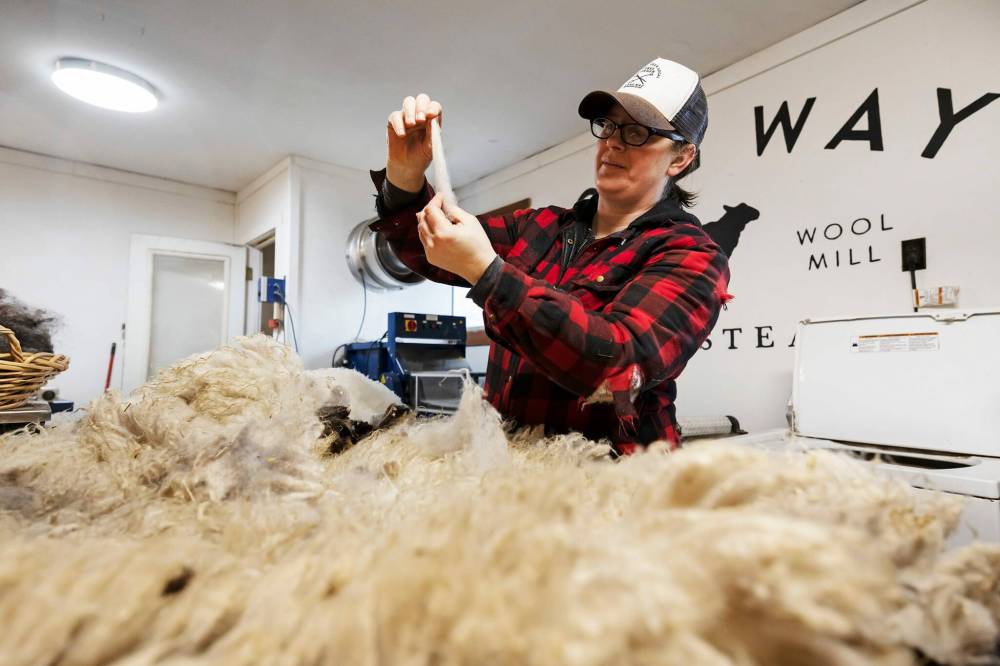
Anna Hunter tests the staple length and strength of some white wool — this happens during the skirting and evaluation process of each fleece that comes through the mill. (Prabhjot Singh Lotey / Winnipeg Free Press)
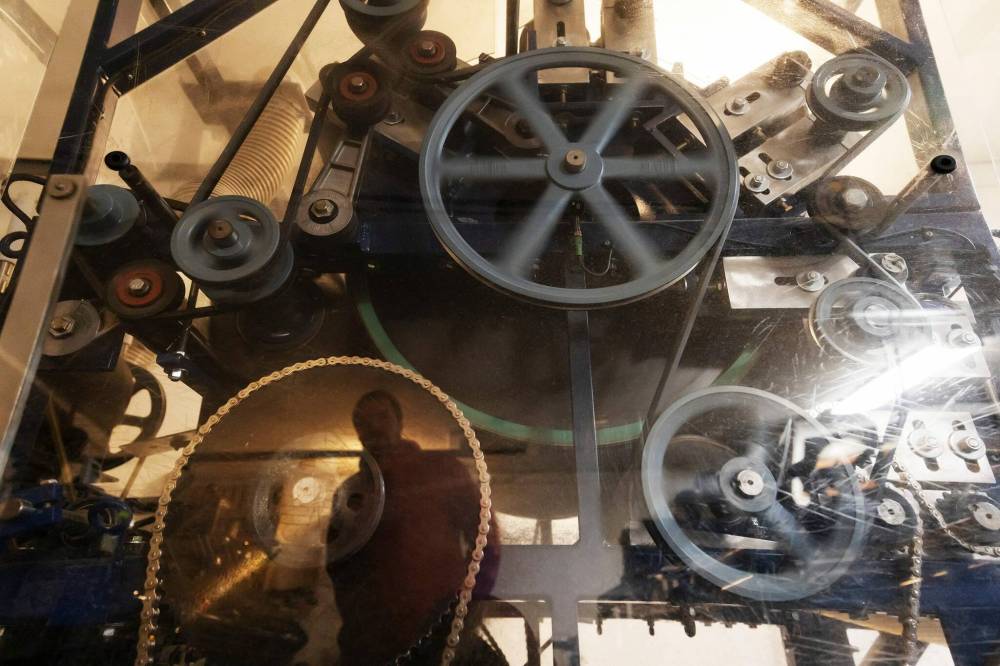
The carding machine: the wool passes through many different drums with tiny little teeth — essentially it is like a comb — combing all the fibres to be lying parallel to each other. (Prabhjot Singh Lotey / Winnipeg Free Press)
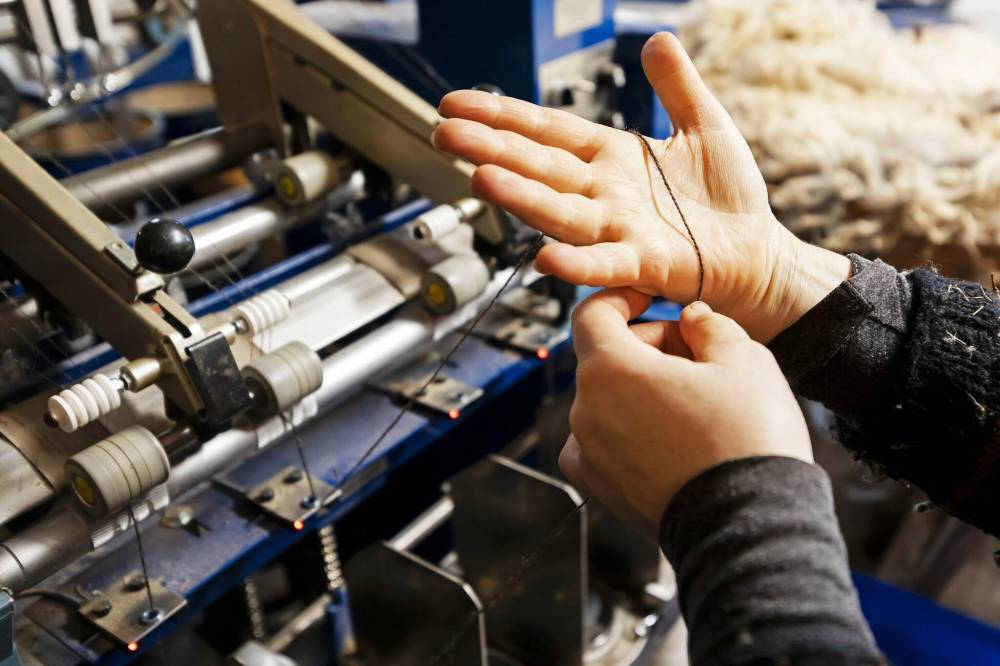
Hunter sets up the spinner, which is where roving fibre is transformed into spun yarn.They can spin 12 spindles at a time and can do a variety of yarn weights. (Prabhjot Singh Lotey / Winnipeg Free Press)
Hunter demonstrates the plying process. This is where they take two or more strands, twist them together in the opposite direction of which they were originally spun to create a stronger, more balanced yarn. (Prabhjot Singh Lotey / Winnipeg Free Press)
Hard work leads to a hearty lunch. (Prabhjot Singh Lotey / Winnipeg Free Press)
Report Error Submit a Tip

More Stories

Reader Bridge Media Literacy Project

What’s the difference between a news story and an opinion column?Dan Lett

There are subtle distinctions between 'news' and 'opinion' that are not always easy to ascertain.

New U.S. tariffs ‘more bluster than bite’

Gabrielle Piche 5 minute read Preview

New U.S. tariffs ‘more bluster than bite’

Gabrielle Piche 5 minute read 7:50 PM CDT

Manitoba businesses are watching with weary eyes as the United States threatens new 50 per cent tariffs on a variety of Canadian products.

However, should the levies come into effect Aug. 19, the effect on Manitoba’s GDP could be “pretty small,” said Fletcher Baragar, a University of Manitoba economics professor who researches the provincial economy.

Honey, furniture and printing materials leaving the province are among the tariff-exposed. The U.S. administration released a list of items Monday that would be hit by the levy in 30 days’ time.

Across Canada, $28 billion worth of annual exports to the U.S. could be affected, a Bank of Montreal note says. That’s 0.8 per cent of Canada’s economy.

Read
7:50 PM CDT

Marlborough Hotel owner clears hurdle for lane purchase tied to redevelopment

Malak Abas 3 minute read Preview

Marlborough Hotel owner clears hurdle for lane purchase tied to redevelopment

Malak Abas 3 minute read Thursday, Apr. 16, 2026

The owner of the historic Marlborough Hotel, which is set for a $48-million redevelopment, has received support froma city committee to purchase and fence off a lane behind the building.

Harminder Walia has asked the city to close the public lane between the hotel, at 331 Smith St., and the former Garrick Theatre, at 330 Garry St. Both properties are owned by Walia.

The downtown hotel, which opened in 1914, is set to undergo a massive transformation, led by CentreVenture Development Corp., in which 307 residential units would be created.

Walia plans to restore the hotel banquet hall and add other amenities. He wants to purchase and fence off the lane, and amalgamate the two properties.

Read
Thursday, Apr. 16, 2026

NDP handily retains northern seat in byelection

Carol Sanders 5 minute read Preview

NDP handily retains northern seat in byelection

Carol Sanders 5 minute read Updated: 10:41 PM CDT

Voters in The Pas-Kameesak stuck with the NDP — big time — in Tuesday’s byelection.

With all polls reporting, New Democrat Jennifer Flett received 74 per cent of the votes in the race to replace the late NDP MLA Amanda Lathlin. Flett, a former vice-chief and councillor for Opaskwayak Cree Nation, got a stronger mandate than the NDP received in the 2023 provincial election, when Lathlin received 67 per cent support.

Premier Wab Kinew welcomed Flett to the NDP caucus.

“She knows what families in her communities need, and I look forward to working with her to deliver better health care and more good jobs for The Pas-Kameesak,” he said in a release.

Read
Updated: 10:41 PM CDT

Students must be at forefront in strike talks

Editorial 4 minute read Preview

Students must be at forefront in strike talks

Editorial 4 minute read Tuesday, Nov. 16, 2021

New Manitoba premier Heather Stefanson and senior ministers have gone to considerable lengths to distance themselves from many unpopular aspects of the legacy of former premier Brian Pallister. The strike by University of Manitoba faculty is an opportunity to show how the new PC team is different from the old.

About 1,200 professors and librarians went on strike Nov. 2 after contract talks broke down over salary increases. There is a discouraging sense of déjà vu to seeing professors on the picket line instead of lecturing to a class — the last U of M faculty strike, in 2016, lasted for 21 days.

Ms. Stefanson and Advanced Education Minister Wayne Ewasko might say they want to stay out of the matter and let collective bargaining proceed without direct government interference but, like it or not, the past actions of their government are at the crux of the job action.

Faculty say they are striking because Mr. Pallister’s government imposed restrictive measures that froze wages in 2016, giving U of M professors some of the lowest salaries of Canadian research universities. They say this rock-bottom pay scale makes it hard to attract and keep good staff, with the inevitable result that students will look to other provinces for a highly regarded education.

Read
Tuesday, Nov. 16, 2021

Drug treatment court leads to success

Editorial 4 minute read Preview

Drug treatment court leads to success

Editorial 4 minute read 2:01 AM CDT

The criminal justice system has long been very good at punishing people for the consequences of addiction. It has been considerably less successful at addressing addiction itself.

That is why the success of Manitoba’s drug treatment courts deserves far more attention.

The Westman drug treatment court, which began in 2019, is built around a simple but important premise: If substance abuse is driving criminal behaviour, the best way to protect the public may not always be to put someone in jail for two years or less.

Sometimes, the more effective response is an intensive, closely supervised effort to help that person break the cycle.

Read
2:01 AM CDT