Canadian Olympians praise Biles, relate to mental health struggles on big stage

Advertisement

Advertise with us

Dara Howell was pushing herself hard physically and mentally in 2018, trying to prove she was back on top of the freestyle skiing world, when she tore her ACL on a jump gone awry.

Read this article for free:


By clicking the button above, an account will be created and you will begin to receive some of our recommended newsletters. You may opt out of any newsletter by visiting your Email and Communication Preferences page or by clicking "unsubscribe" at the bottom of any email.

or

Already have an account? Log in here »

To continue reading, please subscribe:

Digital Subscription

One year of digital access for only $1.44 a week*

  • Enjoy unlimited reading on winnipegfreepress.com
  • Read the E-Edition, our digital replica newspaper
  • Access News Break, our award-winning app
  • Play interactive puzzles

*Billed as $5.77 plus GST every four weeks. After 52 weeks, price increases to the regular rate of $19.95 plus GST every four weeks. Offer available to new and qualified returning subscribers only. Cancel any time.

To continue reading, please subscribe:

Add Free Press access to your Brandon Sun subscription for only an additional

$1 for the first 4 weeks*

  • Enjoy unlimited reading on winnipegfreepress.com
  • Read the E-Edition, our digital replica newspaper
  • Access News Break, our award-winning app
  • Play interactive puzzles
Start now

*Your next Brandon Sun subscription payment will increase by $1.00 and you will be charged $17.95 plus GST for four weeks. After four weeks, your payment will increase to $24.95 plus GST every four weeks.

Hey there, time traveller!
This article was published 28/07/2021 (1919 days ago), so information in it may no longer be current.

Dara Howell was pushing herself hard physically and mentally in 2018, trying to prove she was back on top of the freestyle skiing world, when she tore her ACL on a jump gone awry.

Howell, the Olympic gold medallist in slopestyle in 2014, says she was distracted by negative thoughts when the injury occurred at the first World Cup of the 2018-19 season.

So when U.S. gymnastics star Simone Biles said she was pulling out of the team final and the all-around competition at the Tokyo Games this week to focus on her mental well-being, Howell commended that decision.

Simone Biles, of the United States, waits to perform on the vault during the artistic gymnastics women's final at the 2020 Summer Olympics, Tuesday, July 27, 2021, in Tokyo. THE CANADIAN PRESS/AP-Gregory Bull

“It takes a lot of courage for her to sit there and say: ‘You know what, I’m not in a good headspace, I could get injured,'” Howell said Wednesday by phone from her home in Huntsville, Ont.

“Good on her and her coaches for supporting that and not pressuring her to go because it’s the Olympic stage.”

Howell, now 26, was just 19 when she won gold at the Sochi Games.

While ecstatic about her performance, Howell said she wasn’t ready for the surge of attention she got upon returning to Canada as an Olympic champion. She struggled with the expectation she felt to keep winning competitions, and even quit skiing at one point to escape that pressure.

“My headspace was so bad, I don’t even really remember a lot of it because I was so overwhelmed,” said Howell, who returned to the sport in time for the 2018 Games but placed 21st.

“I think when you’re pushing yourself so hard and you’re already a little bit fragile, it’s this constant angel/devil in your head. You try and push through, because as an athlete that’s what you think you’re supposed to do.”

Biles, the most decorated gymnast of all time with 30 combined Olympic and World Championship medals, hasn’t said if she will participate in next week’s individual events.

She posted on social media this week she felt the “weight of the world” on her shoulders.

A recent peer-reviewed study from researchers at the University of Toronto’s Faculty of Kinesiology suggests that’s not a unique feeling for Olympic athletes.

The study, published this month in the journal Psychology of Sport and Exercise, surveyed 186 Canadian summer Olympians in December 2019 as they prepared for the 2020 Games, and found that 31.7 per cent of them reported symptoms of depression while 18.8 reported moderate to severe symptoms of general anxiety.

The study, believed to be the first to analyze mental health in Canadian Olympians, said stress and training load were “statistically significant correlates” of depression and anxiety.

“That’s quite telling of the amount of stress and pressure and expectations that athletes are (feeling) knowing they’re going to the Olympics,” said Zoe Poucher, the sports psychology PhD student that led the study. “It’s like, ‘Oh my God, I’ve worked my whole life and now I’m here. Will it go well? Will it not go well? What will people expect of me?'”

Cynthia Appiah, a 31-year-old bobsledder from Toronto, said the figures from the study weren’t shocking, adding that her own experiences attempting to qualify for multiple Olympics were among the most stressful of her life.

Appiah, currently feeling the added stress of training for the 2022 Games during the COVID-19 pandemic, said she could relate to Biles on some levels.

“I wouldn’t say I felt the pressure of the world, but I felt the pressure of my world,” said Appiah, a bobsled alternate at the Pyeongchang Games. “Having the feeling you’re letting down your support system, your family, your friends if you don’t make the team or don’t do well, you feel subconsciously the weight of that world.”

Appiah said she didn’t know what she would do if she was in Biles’ situation, but she applauded the American’s candour in speaking about her mental state in the same matter-of-fact way athletes talk about physical injuries.

While Appiah didn’t know the specifics around Biles’ situation, she expects it was likely “the most difficult decision she’s ever made.”

“As athletes, the last thing we want to do is pull ourselves from any competition,” she said from Calgary, where Canadian bobsledders train. “We constantly put ourselves under pressure to perform to the point we forget to take a breath and allow ourselves to be healthy on all cylinders.”

Biles isn’t the only high-profile athlete to bring mental health to the forefront lately.

No. 2-ranked tennis star Naomi Osaka withdrew from the French Open last month, saying in a statement she had suffered from “long bouts of depression” after winning the U.S. Open in 2018.

Both athletes received praise for their openness but also dealt with some criticism and resistance. Osaka was fined by the French Open when she declined to do post-match press conferences, while Biles has been chastised online by some.

Howell said having two of the biggest stars in sports talk openly about mental health is a “massive step in the right direction,” though the lingering criticism has been tough to see.

“As Olympic athletes people think we’re made to win medals,” she said. “They sometimes forget that we’re humans.”

This report by The Canadian Press was first published July 28, 2021.

Report Error Submit a Tip

More Stories

Canadian Olympians relate to Biles' struggle

Melissa Couto Zuber, The Canadian Press 5 minute read Preview

Canadian Olympians relate to Biles' struggle

Melissa Couto Zuber, The Canadian Press 5 minute read Wednesday, Jul. 28, 2021

Dara Howell was pushing herself hard physically and mentally in 2018, trying to prove she was back on top of the freestyle skiing world, when she tore her ACL on a jump gone awry.

Howell, the Olympic gold medallist in slopestyle in 2014, says she was distracted by negative thoughts when the injury occurred at the first World Cup of the 2018-19 season.

So when U.S. gymnastics star Simone Biles said she was pulling out of the team final and the all-around competition at the Tokyo Games this week to focus on her mental well-being, Howell commended that decision.

"It takes a lot of courage for her to sit there and say: 'You know what, I'm not in a good headspace, I could get injured,'" Howell said Wednesday by phone from her home in Huntsville, Ont.

Read
Wednesday, Jul. 28, 2021

The landscape that taught us to see

Stephen Borys 6 minute read Preview

The landscape that taught us to see

Stephen Borys 6 minute read 2:01 AM CDT

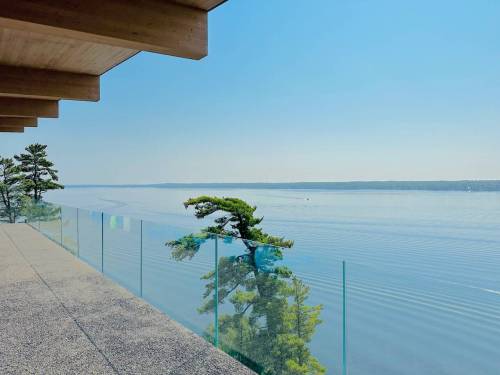
The white pine stood at the edge of the lake, leaning out over the water, its branches bent by years of wind and weather. Beyond it stretched an expanse of blue water beneath a clear sky, a distant tree line and other pines rising along the rocky shoreline. From the deck above, the landscape seemed both expansive and remarkably still.

I had been looking at it for only a few moments when Tom Thomson and the Group of Seven entered the picture. Not literally, of course. But once the association appeared, I could not unsee it. The pine became The Jack Pine and The West Wind. The surrounding rocks, water and sky called up A.Y. Jackson, Arthur Lismer, Franklin Carmichael and Lawren Harris. A landscape I had been looking at all weekend suddenly became part of a visual history Canadians have carried with them for more than a century.

Perhaps that is the Group of Seven’s greatest achievement. They did not simply paint the Canadian landscape. They changed the way we see it.

I was at the lake for a quiet weekend, reflecting on the cultural, community and development projects that occupy much of my work through Civic Muse. Increasingly, I see these pursuits as part of the same conversation — place and identity, how we understand it, care for it and decide what is worth carrying forward.

Read
2:01 AM CDT

Carrying a torch for tiki

Eva Wasney 5 minute read Preview

Carrying a torch for tiki

Eva Wasney 5 minute read Monday, Nov. 15, 2021

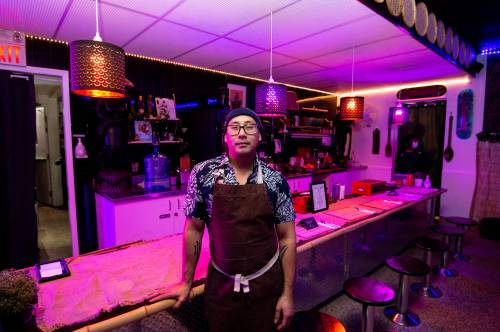
A paper tiki mask is the only indication that the door it’s affixed to leads somewhere other than a dive bar. Ring the doorbell and walk through the kitchen, however, and you’ll be transported to an island-themed lounge that’s equal parts kitschy and comfortable.

“This is just from people’s houses, like my mom’s,” says Allan Pineda, pointing to the wood carvings, water-buffalo horns and rattan furniture decorating the room. “A lot of the stuff you see in here, you’d see in a Filipino’s house back in the day — like second-wave immigrants in the ‘60s and ‘70s, they’d bring this stuff home (from the Philippines).”

Pineda is a local chef and part of the team behind the Bahay Kubo Tiki Bar, a pop-up Filipino drinking and dining experience hosted weekly at an undisclosed Winnipeg establishment.

The details are hush-hush because the temporary eatery is meant to operate like a speakeasy. The dinners are an offshoot of Baon Manila Nights, which Pineda started as a way to highlight Winnipeg’s Filipino culinary scene.

Read
Monday, Nov. 15, 2021

Multi-year budget to force councillors, bureaucrats to focus on the big picture

Aldo Santin 12 minute read Preview

Multi-year budget to force councillors, bureaucrats to focus on the big picture

Aldo Santin 12 minute read Tuesday, Feb. 26, 2019

City hall is putting the final touches on the 2019 preliminary budget -- but the real tough job will start after that.

The city is committed to developing a four-year budget beginning with 2020, and having it in place by the end of this year.

It's a process that is filled with uncertainties, trying to balance four successive annual budgets at the same time, using assumptions on revenues and expenses that can change without notice: a provincial government that has frozen funding to city hall at 2016 levels and is reluctant to disclose annual funding commitments or share in unexpected revenues; erratic fuel prices; a possible change in government in Ottawa, which could bring new spending priorities. And in the middle of that four-year span, another civic election where new members of council may have other priorities than those laid out by the current crop of office holders.

Municipal governments across Manitoba are required to approve their annual operating and capital budgets by the end of March each year. But the criticism of decision-making at city hall has been that all the decisions are made on a year-to-year basis, keeping voters happy with an eye on the next election.

Read
Tuesday, Feb. 26, 2019

Director Schrader returns to silver screen with complex view of religion and belief

Alison Gillmor 4 minute read Preview

Director Schrader returns to silver screen with complex view of religion and belief

Alison Gillmor 4 minute read Thursday, Jun. 14, 2018

Bleak, wintry and rigorously controlled — until it’s not — this Book of Job-like drama from American filmmaker Paul Schrader looks at the challenges of faith.

The 71-year-old Schrader, known for scripting four Martin Scorsese films (including Taxi Driver and Raging Bull) and for directing his own (including American Gigolo, Affliction and Auto Focus), grew up in a strict Calvinist home — he famously did not see a film until he was 17 — and has always been drawn to stories of agonizing and uncertain redemption.

As the Rev. Toller (Ethan Hawke) wrestles with what it means to lead a righteous life in our badly broken world, his spiritual fate remains in doubt. It is certain, however, that First Reformed marks a cinematic rebirth for Schrader after recent disasters like The Canyons and Dog Eat Dog. Serious, complex and moving, this is not a perfect film, but even its flaws are powerful.

Toller is a solitary man who has come to the ministry late in life, after a family tragedy and a failed marriage. First Reformed, a historic church in upstate New York that was once a stop on the Underground Railroad, has since been reduced to an austerely beautiful tourist shop, more of a museum than a place of worship.

Read
Thursday, Jun. 14, 2018

Indigenous-, newcomer-focused job fair puts opportunity in spotlight

Gabrielle Piché 3 minute read Tuesday, Oct. 27, 2026

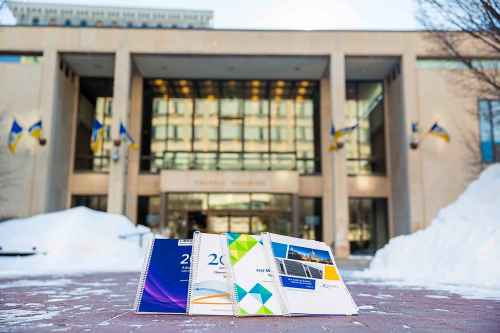
Canadian Armed Forces pamphlets grazed the side of Serena Valiquette’s ribbon skirt, as the Grade 9 student clutched the handouts tight.

“When I get to age, I’ll probably apply,” said Serena, 14, joining pockets of students hopping from booth to booth — City of Winnipeg here, Manitoba Public Insurance there — at a job fair in Winnipeg on Tuesday.

The job seekers, present and future, were largely Indigenous and newcomers. It was the demographic organizer Clayton Sandy aimed to attract.

“We have the ability to open doors for young people,” Sandy said. “This is one of the ways we use.”