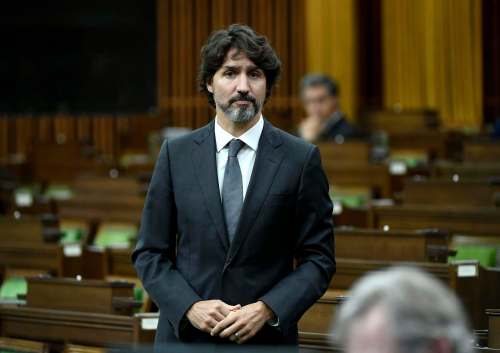
There may be restrictions on unvaccinated people in the future, but is that ethical?
Advertisement
Read this article for free:
or
Already have an account? Log in here »
To continue reading, please subscribe:
Digital Subscription
One year of digital access for only $1.44 a week*
- Enjoy unlimited reading on winnipegfreepress.com
- Read the E-Edition, our digital replica newspaper
- Access News Break, our award-winning app
- Play interactive puzzles
*Billed as $5.77 plus GST every four weeks. After 52 weeks, price increases to the regular rate of $19.95 plus GST every four weeks. Offer available to new and qualified returning subscribers only. Cancel any time.
To continue reading, please subscribe:
Add Free Press access to your Brandon Sun subscription for only an additional
$1 for the first 4 weeks*
- Enjoy unlimited reading on winnipegfreepress.com
- Read the E-Edition, our digital replica newspaper
- Access News Break, our award-winning app
- Play interactive puzzles
*Your next Brandon Sun subscription payment will increase by $1.00 and you will be charged $17.95 plus GST for four weeks. After four weeks, your payment will increase to $24.95 plus GST every four weeks.
Read unlimited articles for free today:
or
Already have an account? Log in here »
Hey there, time traveller!
This article was published 15/12/2020 (2142 days ago), so information in it may no longer be current.
The COVID-19 vaccine may not be mandatory for Canadians, but those who choose to opt out of getting the shot could face restrictions down the road.
Some experts expect airlines to require proof of vaccination from their customers in the near future, with Australia’s Qantas already suggesting that’s in their plans, and things like concerts and sporting events could follow suit.
While some individuals may take that as an invasion of privacy or erosion of civil liberties, Juliet Guichon, an associate professor of law and ethics at the University of Calgary’s Cumming School of Medicine, says preventing another global pandemic would outweigh those concerns.

“I don’t think a pandemic is about fairness,” Guichon said. “So for people to say that, it’s a bit irrelevant.”
Ontario’s health minister Christine Elliott said last week that certain restrictions on travel or access to communal spaces like movie theatres could come into effect for unvaccinated individuals in the future, but when those potential limitations would happen wasn’t clear.
The vaccine rollout began Monday in Ontario and Quebec with the initial doses going to health care workers and nursing home residents. Distribution is expected to take months to reach the majority of Canadians, but the federal government has suggested it hopes to inoculate most people by fall 2021.
Andrew Sneddon, a philosophy professor and ethics expert with the University of Ottawa, says any restrictions would need to be thought out based on feasibility.
If an airline says you can’t fly without proof of inoculation, the vaccine should be readily available to the public before those restrictions take effect, he said.
“There’s a saying in ethics that ought implies can — if something ought to be the case, it has to be possible,” Sneddon said. “So if we’re going to be told: ‘you should have a vaccine and you should have documentation,’ this only makes sense if we can do that.”
Sneddon says he expects potential restrictions to be met with some resentment from individuals worried about privacy implications.
While most medical information is supposed to be kept private, Sneddon added that the contagious nature of COVID-19 means the same rules don’t necessarily apply.
“I’m not sure (privacy) is a very persuasive concern,” he said. “For one thing, we can distinguish between widespread violations of privacy, like if all of our health information was being revealed, and very specific disclosures, and that’s what this would be.”
Dr. Anita Ho, a bioethicist and health services researcher at UBC, says not every corner of the world will approach COVID vaccination the same way.
In places like New Zealand, which did well in fending off the virus, getting a vaccine may not be high on peoples’ list of priorities, she said. Other nations may have limited supply of vaccine or require people pay for the shot themselves, putting a financial barrier on immunization.
All of that impacts the ethics of potential mobility restrictions, she said. And logistics of how we will prove our immunization status will need to be worked out.
“Are we going to require people provide paper verification or electronic verification? That’s another important question,” she said. “We need to ensure there are applications that are privacy compliant … and that also do not reveal more than what they need to know.”
Guichon says it makes sense for airlines to impose travel restrictions on unvaccinated passengers, because it could put potential customers at ease.
But is it legal to implement such restrictions?
Since Canadians are granted mobility rights in the country’s Charter of Rights and Freedoms, Guichon says that could be seen as an infringement. Someone with a disability that prevented them from getting the COVID vaccine could make that case, she added, but the rest of us couldn’t.

Travel could be further impacted if entire countries decide to ban those who haven’t been inoculated from crossing into their borders.
Dr. Ross Upshur, an infectious disease expert at the University of Toronto, says that’s not a new concept, and certain countries still request a yellow fever certificate before entering. He expects a number of nations to apply similar rules to COVID-19.
“Countries have that right to restrict whoever comes in. I think what we’re going to see, at least in the short term, is that if you want to travel outside of the country, you’re going to have to demonstrate some sort of proof immunization,” he said.
“As long as there are active cases … and movement between countries, there’s always the possibility of re-introduction of the pandemic.”
This report by The Canadian Press was first published Dec. 15, 2020.
Related Articles
Canada secures early vaccine doses from Moderna
Advertisement Advertise With Us
Advertisement Advertise With Us