A look at how workplaces can prepare for possible coronavirus outbreak

Advertisement

Advertise with us

TORONTO - Companies wary of what an infectious outbreak could do to their workforce and bottom line are revisiting contingency plans as the new coronavirus continues to spread.

Read this article for free:


or

Already have an account? Log in here »

To continue reading, please subscribe:

Subscribe and receive a limited-edition Free Press branded hat or tote.

Digital Subscription

One year of digital access for only $205*

  • Enjoy unlimited reading on winnipegfreepress.com
  • Read the E-Edition, our digital replica newspaper
  • Access News Break, our award-winning app
  • Play interactive puzzles

*First annual payment billed as $205.00 + GST for one year. This annual subscription will automatically renew at $233.00 + GST every 52 weeks (10% off the regular annual price of $259.35). Offer available to new and qualified returning subscribers only. Cancel any time.

To continue reading, please subscribe:

Add Free Press access to your Brandon Sun subscription for only an additional

$1 for the first 4 weeks*

  • Enjoy unlimited reading on winnipegfreepress.com
  • Read the E-Edition, our digital replica newspaper
  • Access News Break, our award-winning app
  • Play interactive puzzles
Start now

*Your next Brandon Sun subscription payment will increase by $1.00 and you will be charged $17.95 plus GST for four weeks. After four weeks, your payment will increase to $24.95 plus GST every four weeks.

Hey there, time traveller!
This article was published 10/02/2020 (2428 days ago), so information in it may no longer be current.

TORONTO – Companies wary of what an infectious outbreak could do to their workforce and bottom line are revisiting contingency plans as the new coronavirus continues to spread.

Marie-Helene Primeau of the Montreal-based risk management company Premier Continuum says she’s spent recent days fielding questions from several firms seeking guidance on what to do if the rapidly spreading illness that originated in China threatens the health of employees and customers.

“Everyone’s looking at their state of readiness,” says Primeau, whose company provides training and advice to a range of firms including banks, insurance companies, government agencies and those in manufacturing.

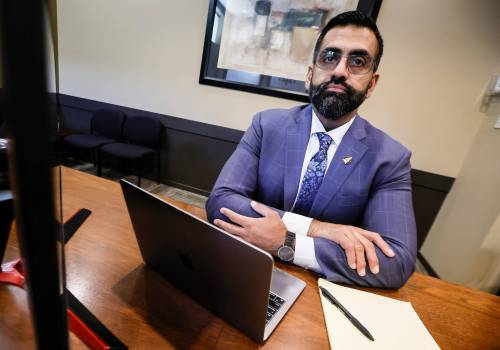
Companies wary of what an infectious outbreak could do to their workforce and bottom line are revisiting contingency plans as the new coronavirus continues to spread. Marie-Helene Primeau of the Montreal-based risk management company Premier Continuum, shown in a handout photo, says she's spent recent days fielding questions from several firms seeking guidance on what to do if the rapidly spreading illness that originated in China threatens the health of employees and customers. THE CANADIAN PRESS/HO

“They’re actively revisiting the plans, but they’re not necessarily stockpiling masks.”

Health officials in Canada have repeatedly stressed that the risk to public health remains low. Seven cases have been identified in Canada, while worldwide, the illness known as 2019-nCoV has sickened more than 37,000 people and killed more than 800, nearly all in China.

Nevertheless, Canadians are being urged to remain vigilant against infection, with medical experts reminding the public we’re still in the throes of flu season and that good hygiene is advised — wash hands frequently, cough and sneeze into tissue or your upper sleeve, and don’t touch your face.

Disaster management expert Amin Mawani says workers and managers alike should take this time to combat misinformation, repeat hygiene tips, be clear on sick leave policies and prepare for the possibility of mass absenteeism.

If an outbreak hits, employers should encourage unwell workers to stay home, Mawani says, but a key step to mitigating an outbreak’s impact is to keep people from getting sick in the first place.

“You can’t buy traditional insurance in a sense, but you can prepare for it by spending some money planning for it and stockpiling certain things — masks and whatever else you might need,” says Mawani, academic director of the health industry management program at the Schulich School of Business at York University in Toronto.

A possible outbreak has critics refocused on provincial sick day allowances in Ontario, where the Progressive Conservative government offers most workers three days of unpaid leave each year and allows bosses to demand a doctor’s note.

Health-care workers say that can make it hard for some to stay home when necessary, and if sick people work in high-risk settings — such as food services, long-term care facilities or childcare spaces — the impact can be significant.

“A lack of paid sick days results in children and adults transmitting infections at school and work, exacerbating contagion throughout the province,” the group Decent Work and Health Network warn in an open letter to Premier Doug Ford.

Mawani agreed employers should consider whether they’re prepared to ease sick day restrictions if the virus strikes staff, noting hardline policies also threaten morale and loyalty.

Workers should also consider coming up with their own protective measures, he adds.

“In some ways employees can take the initiative, they can say: ‘Look, I can easily do this at home,’ or ‘I can do this on the weekend. Why do I need to come in tomorrow?'” he says.

“And employers should be willing to listen during this phase so even if (workers) don’t start working from home now (the company) can have plans ready.”

John Yamniuk of the Toronto-based consulting firm DRI Canada says there are ways to limit person-to-person infection at the office, even those with open layouts, communal spaces, and shoulder-to-shoulder computer stations: Is there room to leave a vacant spot between workers? Is there an unused meeting room that can be transformed into an alternate work space?

“If you’re in a call centre environment, (think about) providing extra cleaning services, providing individual headsets for folks so they’re not sharing keyboards or things like that,” adds Yamniuk, based in Calgary.

Primeau’s advice includes making sure contact information for staff and partners are up-to-date.

She also encourages managers to run through “a tabletop exercise” — in which each person discusses their role during an emergency and all agree on how best to respond to various scenarios.

And don’t assume you can just rely on a temp agency if a lot of people call in sick, she adds, because you can’t guarantee availability or loyalty.

“Temporary backup was something that was brought up when we were talking about the (H1N1) pandemic 10 years ago but the thing is that those individuals will also be sick as well,” she says.

“It’s more (about) focusing on what’s key. What’s urgent to perform? What are the critical activities, rather than calling upon a temp.”

This report by The Canadian Press was first published Feb. 9, 2020.

Report Error Submit a Tip

More Stories

What’s luck got to do with it?

Tim Kist 5 minute read Yesterday at 2:01 AM CDT

We all seek certainty in our daily lives. We expect if we make a decision, the outcome will be just as we planned: a direct correlation between the decision and result.

You, as a business leader, seek the same certainty from the decisions you make. And sometimes, the result is what was expected. Sometimes, it isn’t.

The big question is: why is it so difficult to achieve the business results you expect when you carefully craft your plans and seemingly make good decisions?

The truth is we cannot predict the future. This means we almost never know precisely how customers will respond to a sales quote, what competitors are planning, and a myriad of other external variables at play.

‘Detrimental to the growth of female hockey in Manitoba’

Joshua Frey-Sam 7 minute read Preview

‘Detrimental to the growth of female hockey in Manitoba’

Joshua Frey-Sam 7 minute read Friday, Oct. 2, 2026

She lived the best of both worlds.

For the last three years, the 17-year-old wore a sweater for two different hockey programs — her high school team and AAA club in the Manitoba Female Hockey League — and was preparing to flourish in both colours again this winter.

Recently, however, the blue-liner was disappointed to learn she is no longer eligible to play her Grade 12 season with her school owing to a new policy imposed by Hockey Manitoba that bans players from participating in the Manitoba Women’s High School Hockey League if they are rostered on a U18 AAA team.

The rule applies to all athletes who play for both Winnipeg-based and rural AAA teams.

Read
Friday, Oct. 2, 2026

Premier League would be all too relieved if Blues simply went away for a while

Jerrad Peters 6 minute read Preview

Premier League would be all too relieved if Blues simply went away for a while

Jerrad Peters 6 minute read Friday, Oct. 2, 2026

Manchester City will face Liverpool in the Premier League next weekend.

That is a statement of fact. The match will kick off Sunday, October 11 at 4:30 p.m. local time (10:30 a.m., CT, FuboTV) at Anfield, though the 90 minutes that follow will be more a spectacle than a game, if not a circus.

By now the football world — as well as the general news cycle and relevant authorities — has had more than a week to absorb the shock of the sport’s biggest tremor of recent times.

Man City, according to the findings of an independent commission, broke more than 100 of the Premier League’s financial rules between 2009 and 2018. Its breaches, per the ruling, were deliberate, premeditated and at industrial scale.

Read
Friday, Oct. 2, 2026

Workplaces prepare for possible outbreak

Cassandra Szklarski, The Canadian Press 5 minute read Preview

Workplaces prepare for possible outbreak

Cassandra Szklarski, The Canadian Press 5 minute read Monday, Feb. 10, 2020

TORONTO - Companies wary of what an infectious outbreak could do to their workforce and bottom line are revisiting contingency plans as the new coronavirus continues to spread.

Marie-Helene Primeau of the Montreal-based risk management company Premier Continuum says she's spent recent days fielding questions from several firms seeking guidance on what to do if the rapidly spreading illness that originated in China threatens the health of employees and customers.

"Everyone's looking at their state of readiness," says Primeau, whose company provides training and advice to a range of firms including banks, insurance companies, government agencies and those in manufacturing.

"They're actively revisiting the plans, but they're not necessarily stockpiling masks."

Read
Monday, Feb. 10, 2020

Broadening prediction-market gambling a bad idea

Editorial 4 minute read Preview

Broadening prediction-market gambling a bad idea

Editorial 4 minute read Yesterday at 2:01 AM CDT

Let’s make a prediction: sooner or later, when Canadian governments find a way to take their own cut of the action, prediction-contract gambling on everything from sports to entertainment to political decisions is going to come to Canada.

And that’s a horrible, dangerous, pernicious idea.

Unless you have particular access to information — either inside information or strategic information based on skills or education — you’re not likely to make money at it. In fact, structurally, you’re likely to lose. In prediction markets, you basically pay an amount, plus fees from the company involved, to bet on whether something will or will not happen within a certain time frame. The amount you pay for your contract depends on how other people are also betting.

As Wealthsimple describes it, “You buy whichever side you think is right. Prices move with demand, so if the market leans towards one outcome, the more that side costs. If a lot of people are backing the TSX to finish above 38,000, yes gets more expensive and no gets cheaper.”

Read
Yesterday at 2:01 AM CDT

Khan should’ve taken high road: Goertzen

Carol Sanders 5 minute read Preview

Khan should’ve taken high road: Goertzen

Carol Sanders 5 minute read Friday, Oct. 2, 2026

The veteran Progressive Conservative who championed Obby Khan’s leadership bid says the former Blue Bomber dropped the ball by dissing his Tory teammates before he stepped down.

“I wouldn’t recommend it, and I didn’t recommend it,” Kelvin Goertzen (Steinbach) said in an interview Friday.

Khan resigned as PC leader and quit the caucus Monday saying some members were secretly plotting his ouster, even after he won a confidence vote on Sept. 25.

On Tuesday, Khan lashed out in a CJOB interview, naming the alleged plotters, saying constituents deserved to know which of their elected representatives “lacked moral integrity.” Khan told the Free Press he was “deeply emotionally hurt,” and felt stabbed in the back.

Read
Friday, Oct. 2, 2026