Science Says: What to know about the viral outbreak in China

Advertisement

Advertise with us

Health authorities are closely watching an outbreak of respiratory illness caused by a new virus that originated in China. Governments are stepping up surveillance of airline passengers from central China and taking other steps to try to control the outbreak.

Read this article for free:


or

Already have an account? Log in here »

To continue reading, please subscribe:

Subscribe and receive a limited-edition Free Press branded hat or tote.

Digital Subscription

One year of digital access for only $205*

  • Enjoy unlimited reading on winnipegfreepress.com
  • Read the E-Edition, our digital replica newspaper
  • Access News Break, our award-winning app
  • Play interactive puzzles

*First annual payment billed as $205.00 + GST for one year. This annual subscription will automatically renew at $233.00 + GST every 52 weeks (10% off the regular annual price of $259.35). Offer available to new and qualified returning subscribers only. Cancel any time.

To continue reading, please subscribe:

Add Free Press access to your Brandon Sun subscription for only an additional

$1 for the first 4 weeks*

  • Enjoy unlimited reading on winnipegfreepress.com
  • Read the E-Edition, our digital replica newspaper
  • Access News Break, our award-winning app
  • Play interactive puzzles
Start now

*Your next Brandon Sun subscription payment will increase by $1.00 and you will be charged $17.95 plus GST for four weeks. After four weeks, your payment will increase to $24.95 plus GST every four weeks.

Hey there, time traveller!
This article was published 21/01/2020 (2428 days ago), so information in it may no longer be current.

Health authorities are closely watching an outbreak of respiratory illness caused by a new virus that originated in China. Governments are stepping up surveillance of airline passengers from central China and taking other steps to try to control the outbreak.

Here’s what you should know about the illness:

WHAT IS THE NEW VIRUS?

Pharmacist Liu Zhuzhen stands near a sign reading
Pharmacist Liu Zhuzhen stands near a sign reading "face masks are sold out" at her pharmacy in Shanghai, Tuesday, Jan. 21, 2020. Heightened precautions were being taken in China and elsewhere Tuesday as governments strove to control the outbreak of a novel coronavirus that threatens to grow during the Lunar New Year travel rush. (AP Photo/Fu Ting)

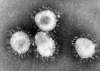
Scientists have identified it as a new coronavirus. The name comes from the Latin word for crowns or halos, which coronaviruses resemble under a microscope. The coronavirus family has many types that affect people. Some cause the common cold while others originating in bats, camels and other animals have evolved into more severe illnesses such as SARS — severe acute respiratory syndrome — or MERS — Middle East respiratory syndrome.

WHERE DID IT COME FROM?

The first cases appeared last month in Wuhan, a city in central China’s Hubei province. Many of the first people infected had visited or worked at the Huanan Seafood Wholesale Market in Wuhan, which has since been closed for an investigation. Chinese health officials say they believe the illness first spread from animals to people. They now say it can spread between people.

HOW WIDESPREAD IS IT?

China has identified more than 500 cases and 17 deaths, most of the illnesses and all of the deaths in Hubei province. Cases have also been confirmed in Thailand, South Korea, Japan, the U.S. and Taiwan. The outbreak coincides with China’s busiest travel season as people visit their families or go abroad for the Lunar New Year holiday. That travel rush is expected to spread the disease more widely.

WHAT ARE THE SYMPTOMS?

Common symptoms include a runny nose, headache, cough and fever. Shortness of breath, chills and body aches are associated with more dangerous kinds of coronavirus, according to the U.S. Centers for Disease Control and Prevention. In serious cases, the virus can cause pneumonia.

HOW IS IT TREATED?

There is a test to identify the virus, but no vaccine to prevent an infection. Patients with the virus have been isolated in hospitals or homes to prevent spreading it. The symptoms are treated with pain and fever medication, and people are advised to drink plenty of liquids and rest while they recover.

HOW IS IT SPREADING?

Many coronaviruses can spread through coughing or sneezing, or by touching an infected person. Scientists believe the new virus can spread from person to person in close contact through the respiratory tract.

COULD IT BE AS BAD AS SARS?

So far, the virus appears less dangerous and infectious than SARS, which also started in China in 2002-03 and killed about 800 people. However, viruses can mutate into more dangerous and contagious forms, and it’s too early to say what will happen with this one.

___

The Associated Press Health and Science Department receives support from the Howard Hughes Medical Institute’s Department of Science Education. The AP is solely responsible for all content.

Report Error Submit a Tip

More Stories

50 years ago, we thought we could change the world

Robert Milan and Miriam Cooley 8 minute read Preview

50 years ago, we thought we could change the world

Robert Milan and Miriam Cooley 8 minute read 2:00 AM CDT

Winnipeg, 50 years ago.

We began as a small loose unorganized group of teaching friends and educators who shared the same political and social convictions.

We defined ourselves as socialists, feminists and political activists. We were a cross section of educational minds — language arts and social studies teachers, an art teacher, an early childhood educator, a Winnipeg school trustee, a school principal — making our group quite representative of school culture at the time.

Our questions and discussions about politics, education and society arose from a diversity of backgrounds, yet reflected a progressive cohesiveness. The political climate in Manitoba helped bring us together. Sterling Lyon was premier and his Conservative government was pursuing policies that we strongly opposed. To us, his government represented a determined assault on many of the social and political values we believed in, particularly related to education. Eventually we decided that perhaps we should do more than talk. And so the Socialist Teachers Education Movement — STEM — was born.

Read
2:00 AM CDT

Why is Cuba embracing freer markets?

Peter McKenna 5 minute read Preview

Why is Cuba embracing freer markets?

Peter McKenna 5 minute read Friday, Jul. 24, 2026

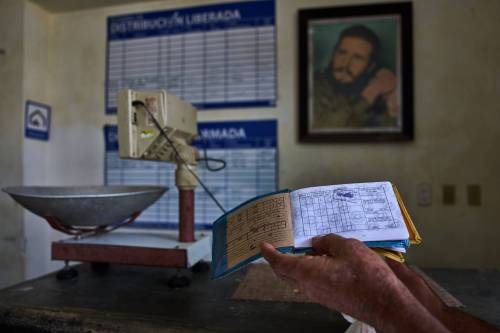
As long as Donald Trump is entangled in a war with Iran, Cuba is probably safe from being next on his hit list.

But if the mercurial U.S. president can somehow extricate himself from the Persian Gulf trap, then all bets are off. One thing is certain: Trump is not going to give up the idea of getting his greedy hands on the Caribbean island.

In response to Trump’s threats of military invasion, the beleaguered Cuban government is understandably in full panic mode. Right now, it is just trying desperately to keep its head above water as the situation on the ground in Cuba deteriorates further with each passing day.

Not all of the blame for the country’s current humanitarian crisis can be laid at the feet of the Trump White House. The Cuban political leadership deserves its fair share of blame for poor economic and financial management, for too much emphasis on expanding the tourism market, and for not enough attention on modernizing the electrical grid and attracting much-needed foreign investment.

Read
Friday, Jul. 24, 2026

Today’s horoscope

Georgia Nicols 4 minute read Yesterday at 2:00 AM CDT

MOON ALERT: Caution! Avoid shopping (except food and gas) and important decisions after 9 a.m. today. After that, the moon moves from Libra into Scorpio.

ARIES (March 21-April 19)

Discussions with partners, spouses and close friends will be exciting but unpredictable. You might also meet a real character — someone exciting. Alternatively, someone you know might do something to surprise you. Check moon alert!

TAURUS (April 20-May 20)

Sinclair named Canada’s columnist of the year

5 minute read Preview

Sinclair named Canada’s columnist of the year

5 minute read Saturday, May. 4, 2019

Winnipeg Free Press Indigenous writer Niigaan Sinclair has been named Canada’s best columnist, winning a distinguished National Newspaper Award, which was presented at a gala in Toronto Friday evening.

Sinclair, who is Anishinaabe, joined the Free Press as a regular columnist in June 2018. Sinclair, who is on sabbatical from his job as an associate professor at the University of Manitoba, writes about Indigenous issues.

In accepting the award, Sinclair said it was his childhood dream to write for the Free Press. He said Winnipeg is the centre of reconciliation in Canada, calling it “the most imperfect city, but the most perfect.”

“I’m honoured to receive the National Newspaper Award for column writing, the same award Richard Wagamese received in 1990. It’s a testament to the incredible support and belief the Free Press has in me, and also how critically important the conversations and issues in Winnipeg are for the national stage.”

Read
Saturday, May. 4, 2019

Staying away to keep the heat on

Editorial 4 minute read Preview

Staying away to keep the heat on

Editorial 4 minute read 2:00 AM CDT

It’s a tough sell these days for U.S. tourism groups seeking to attract Canadian visitors as tension, tariffs and traded verbal barbs continue to rise between the two countries.

Or, as one Canadian marketing executive put it, “It’s just a wasted effort.”

Indeed, it does seem as if — for a sizable percentage of the Canadian population, anyway — there’s nothing U.S. tourism officials can say that will rekindle interest in vacation visits to American destinations, as long as President Donald Trump remains in office and continues to actively antagonize what was once his country’s closest trading partner and most steadfast ally.

With Canada having applied, as promised by Prime Minister Mark Carney, reciprocal tariffs on $28 billion worth of U.S. goods crossing into this country, there’s no reason to believe relations between the governments of the two nations will improve soon.

Read
2:00 AM CDT

Beware invasive, ‘frightening’ waterhemp

Laura Rance-Unger 4 minute read Preview

Beware invasive, ‘frightening’ waterhemp

Laura Rance-Unger 4 minute read Saturday, Aug. 29, 2026

There’s a threat lurking on the edge of Manitoba farmers’ fields this fall that’s even scarier than the escalating trade war with their biggest customer.

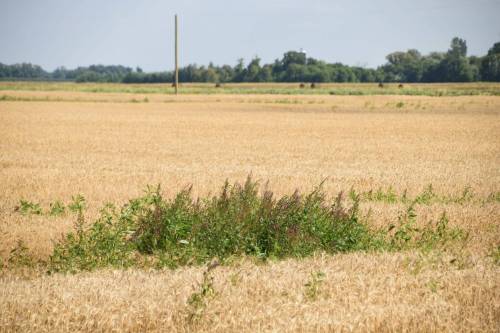
Provincial extension advisers are warning farmers to watch for a weed known as “tall waterhemp,” which, true to its name, may already be towering above ready-to-harvest crops.

Those wispy tentacles waving in the breeze look pretty innocuous from a distance. But this highly invasive member of the pigweed family produces hundreds of thousands of seeds that are just itching for dispersal through farmers’ combines and across their fields.

Each of those tiny seeds — one small pill container filled halfway holds 44,000 — can produce plants with stems the width of saplings and heights of two to five metres. One or two plants can quickly turn into a patch. If waterhemp takes over a field, it can choke out the growing crop and cut yields by more than 90 per cent.

Read
Saturday, Aug. 29, 2026