Dashed hopes in France turn to fruitful endeavour at home

Advertisement
Read this article for free:
or
Already have an account? Log in here »
To continue reading, please subscribe:
Digital Subscription
One year of digital access for only $1.44 a week*
- Enjoy unlimited reading on winnipegfreepress.com
- Read the E-Edition, our digital replica newspaper
- Access News Break, our award-winning app
- Play interactive puzzles
*Billed as $5.77 plus GST every four weeks. After 52 weeks, price increases to the regular rate of $19.95 plus GST every four weeks. Offer available to new and qualified returning subscribers only. Cancel any time.
To continue reading, please subscribe:
Add Free Press access to your Brandon Sun subscription for only an additional
$1 for the first 4 weeks*
- Enjoy unlimited reading on winnipegfreepress.com
- Read the E-Edition, our digital replica newspaper
- Access News Break, our award-winning app
- Play interactive puzzles
*Your next Brandon Sun subscription payment will increase by $1.00 and you will be charged $17.95 plus GST for four weeks. After four weeks, your payment will increase to $24.95 plus GST every four weeks.
Read unlimited articles for free today:
or
Already have an account? Log in here »
Hey there, time traveller!
This article was published 28/08/2021 (1888 days ago), so information in it may no longer be current.
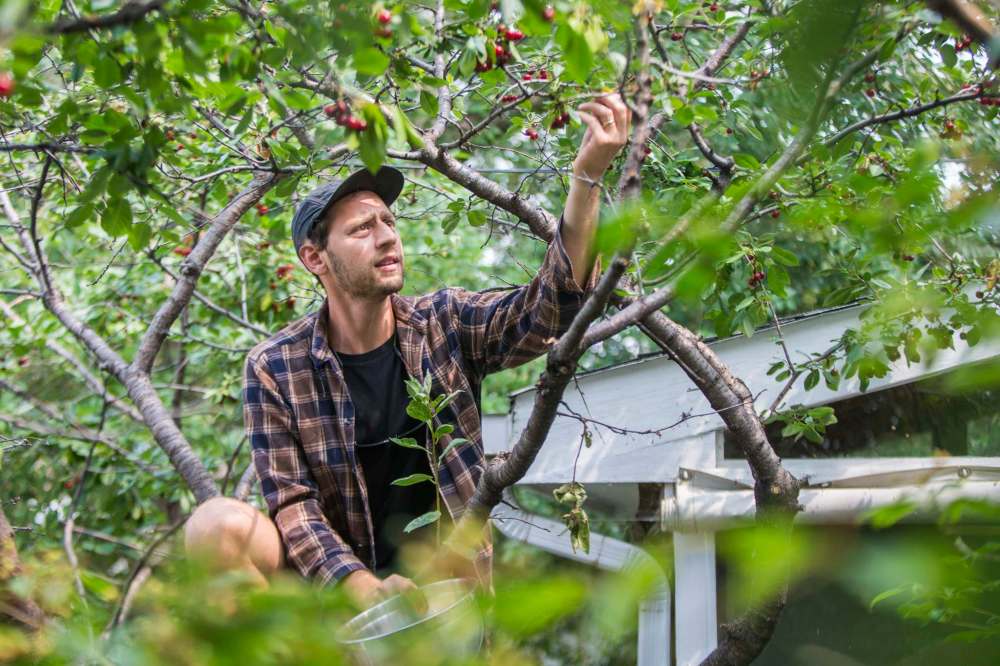
It’s a hot day in late July, and Jesse Oberman is up in my backyard cherry tree.
The 29-year-old Oberman is on the hunt for all manner of backyard fruit for his Next Friend Cider. Hoping to make use of forgotten or neglected fruit that would otherwise go to waste, he wants all manner of apples, cherries, pears, stone fruit — you name it.
Except it turns out he doesn’t want my cherries. They’re a few days too ripe for his purposes — some are sweet (too ripe), others have been visited by bugs. It’s one of the few times Oberman’s had to turn down fruit offered up to him — not something he likes to do, given his desire to reduce food waste.
Were it not for the COVID-19 pandemic, Next Friend wouldn’t likely exist. After spending time in the U.K. completing his sommelier training and working harvests at wineries every year since 2016, he and his partner were angling to set up shop in France and start making their own wines. But as coronavirus cases rose dramatically in France, they figured coming back to Winnipeg was the safe bet, and hightailed it home.

“I didn’t really know what to do. At the time I was feeling lost — I thought we were going to live in France forever and be winemakers,” Oberman says. “We had a space lined up, we had fruit — we were going to make wine.”
Oberman and his partner eventually settled in Fort Garry, where he noticed an abundance of apple trees in the neighbourhood. “All our neighbours were talking about how they’d take (the fruit) down, shovel them into the compost, feed the deer, the wasp situation,” he says.
It wasn’t long before the idea of making cider began to ferment in his mind.
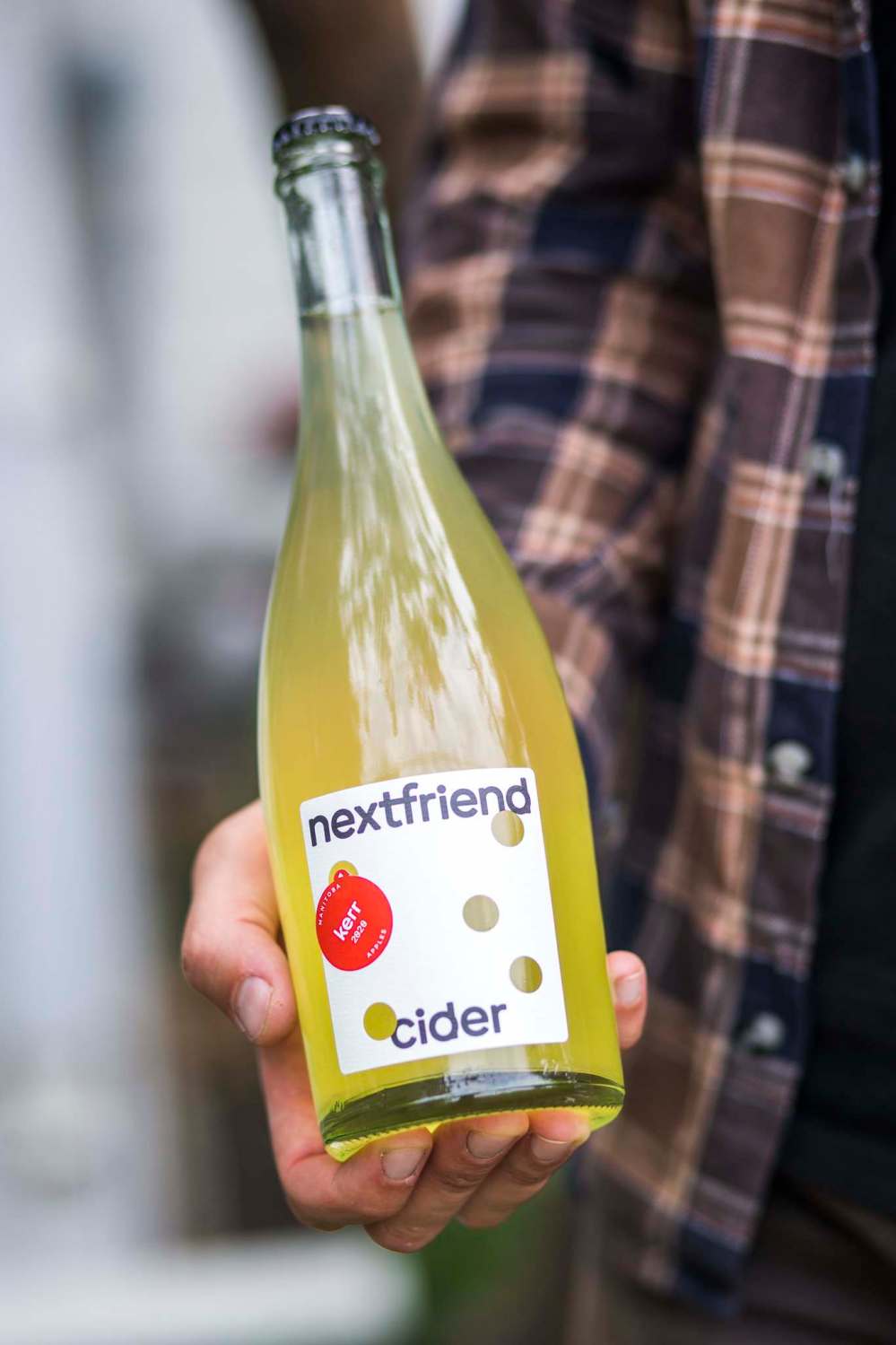
The first two Next Friend releases were a “pet nat” (sparkling wine or, in this case, cider with bubbles that occur naturally via bottle fermentation) and a sparkling cider made with Kerr apples from a single tree. There were a couple hundred 750ml bottles of the former and fewer than 100 of the latter, and both sold out in a flash. Given the amount of fruit Oberman’s hauling in this year, he should have much more inventory to sell.
Since before leaving for the U.K., Oberman has also run a wine importing agency called Élevage Selections, which specializes in such “natural” wines made without additives, pesticides or other chemicals, fermented using naturally occurring yeasts and unfiltered. Next Friend Ciders are made with similarly minimal intervention. “All that’s in my cider is apple juice,” he says. “I don’t pasteurize, I don’t water back, I don’t add any sugar, yeast, nutrients. The conversation’s more about what I don’t do.”
As the Next Friend idea became clearer, Oberman reached out to Adam Carson, co-owner of local craft beer producer Low Life Barrel House, currently brewing under Barn Hammer’s roof on Wall Street but slated to open in their own space on Daly Street North this fall. Low Life specializes in more experimental beers, many of which are aged in oak foeders and pick up traces of brettanomyces (or “brett”) — a yeast strain that imparts a slightly funky, earthy note in beer and wine (which is tasty in moderation).
Carson and Oberman’s visions about making drinks are well-aligned, and it wasn’t long before they, along with Barn Hammer owner/Low Life co-owner Tyler Birch, were making plans. With an aim to make some wine-based products from grapes sourced in Ontario, Low Life took Oberman on as an assistant brewer to help with the wine projects on the docket while learning about making beer, and allowing him to make his Next Friend ciders under Barn Hammer’s roof, as well.
One of the most important components of Next Friend’s operating principles is donating a portion of sales to a different environmental or food security group every year. This year’s beneficiary is Direct Farm Manitoba and their Manitoba Community Food Currency Program. “They give food currency to people who wouldn’t normally be able to, say, afford to shop at a farmer’s market,” Oberman explains. “Now they have access not only to food, but good local food. It’s supporting local farmers and supporting people who can’t always afford to eat healthy.”
Late August, the cherries are still in my tree, shrivelled up and drooping. Oberman will be happy to know some of the birds have been enjoying them, meaning they’ve not entirely gone to waste.
I check in with Oberman by phone for an update; not surprisingly, when I call him he’s in someone’s backyard picking apples. He’s harvested nearly 2,000 kilograms of fruit so far this year — mainly apples but also cherries, saskatoons, plums, currants and chokecherries, most of which is already fermenting. He figures he’ll have far more Next Friend Cider to sell when things are bottled and ready to be released next year.
He’s hoping to bottle his next release, an apple-pear blend called Side Eye, next week, and expects to have just north of 200 bottles for sale in late September once it’s fully bottle-conditioned.
In the meantime, he still wants your fruit. His schedule is now pretty packed in terms of picking, but anyone looking to unload some fruit can go ahead with picking and get in touch Oberman to arrange a pick up or drop off. Oberman will pay market value for anyone picking the fruit themsleves; to get in touch, visit nextfriendcider.com, send Oberman a message on Instagram (@nextfriendcider) or email info@nextfriendcider.com. “Unless it’s Kerr apples,” he says about the Manitoba native variety of apple. “I’ll travel far and wide for those.”
The Next Friend 2020 Kerr cider is long gone — Oberman was only able to produce about 100 bottles of the stuff, made from apples from a single tree. I managed to snag a bottle when it came out earlier this summer, and cracked it for inspiration while writing this piece. It’s slightly cloudy, bone dry, has lovely green-apple skin and chalky flavours and brings loads of racy acidity — enough to perk me up over a rainy weekend to finish the story.
Even if you’re not sure whether your fruit is suitable for Oberman’s needs, he’s keen to talk — fruit that doesn’t taste great for eating could potentially be useful for cider. (Except for my cherries, it would seem.)
“I don’t really say no to fruit,” he says with an exhausted laugh. “Anything that seems bad to eat, I’m probably into.”
Wines of the week
Erath 2019 Pinot Noir (Oregon, U.S. — $29.99, Liquor Marts and beyond)
Bright cherry, floral, raspberry, earth and blueberry notes on the nose of this Oregon Pinot Noir are attractive, with hints of leather in there as well. It’s dry, light-bodied and juicy, with loads of red berry and cherry flavours and an intriguing orange-peel note that comes with the fresh acidity. Chill this down for 15 minutes and enjoy on a hot day, if there are any left. 4/5

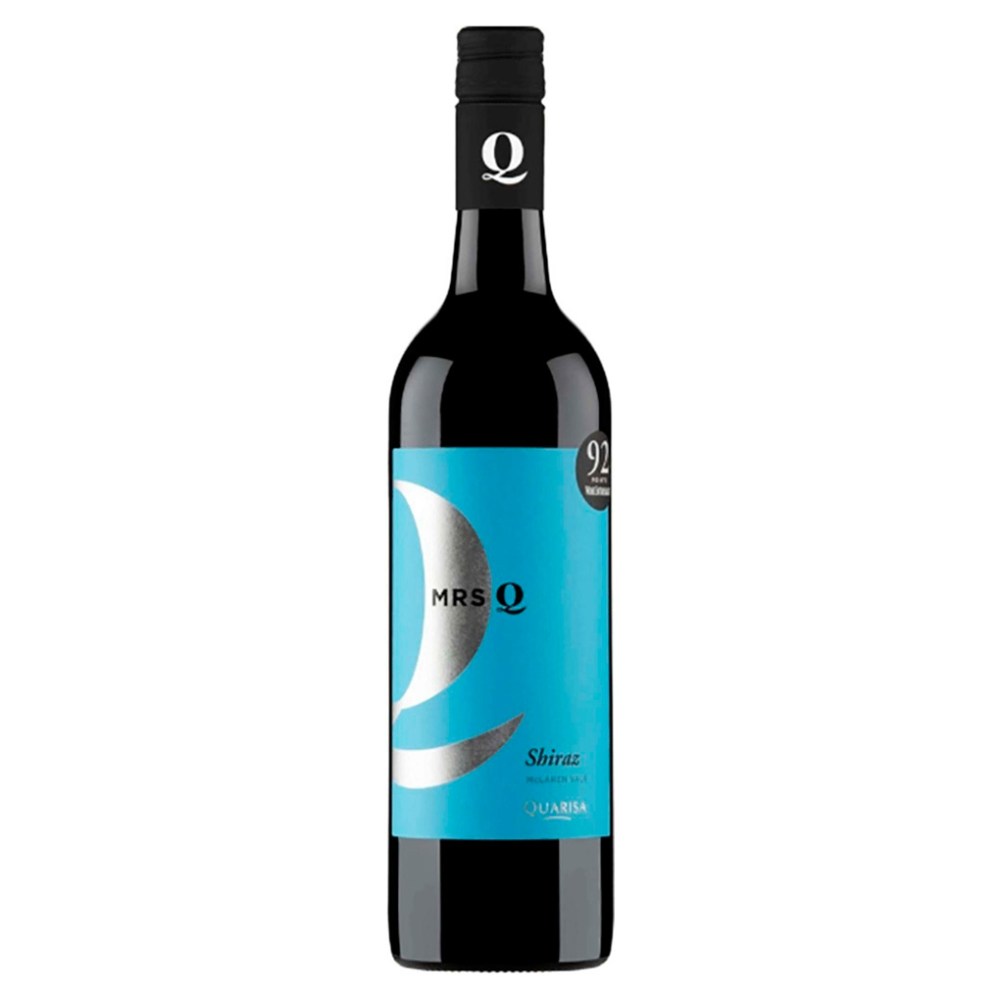
Quarisa 2016 Mrs. Q Shiraz (McLaren Vale, Australia — $17.99, Liquor Marts and beyond)
Black cherry, tar, earth, iron and cocoa show most promenently on the nose of this Aussie Shiraz. On the medium-plus palate it’s more of the same, with a touch of sweetness to the fruit that’s countered by some peppery tannins and a long finish. An older vintage, but still holding up relatively well. Drink now. 3/5
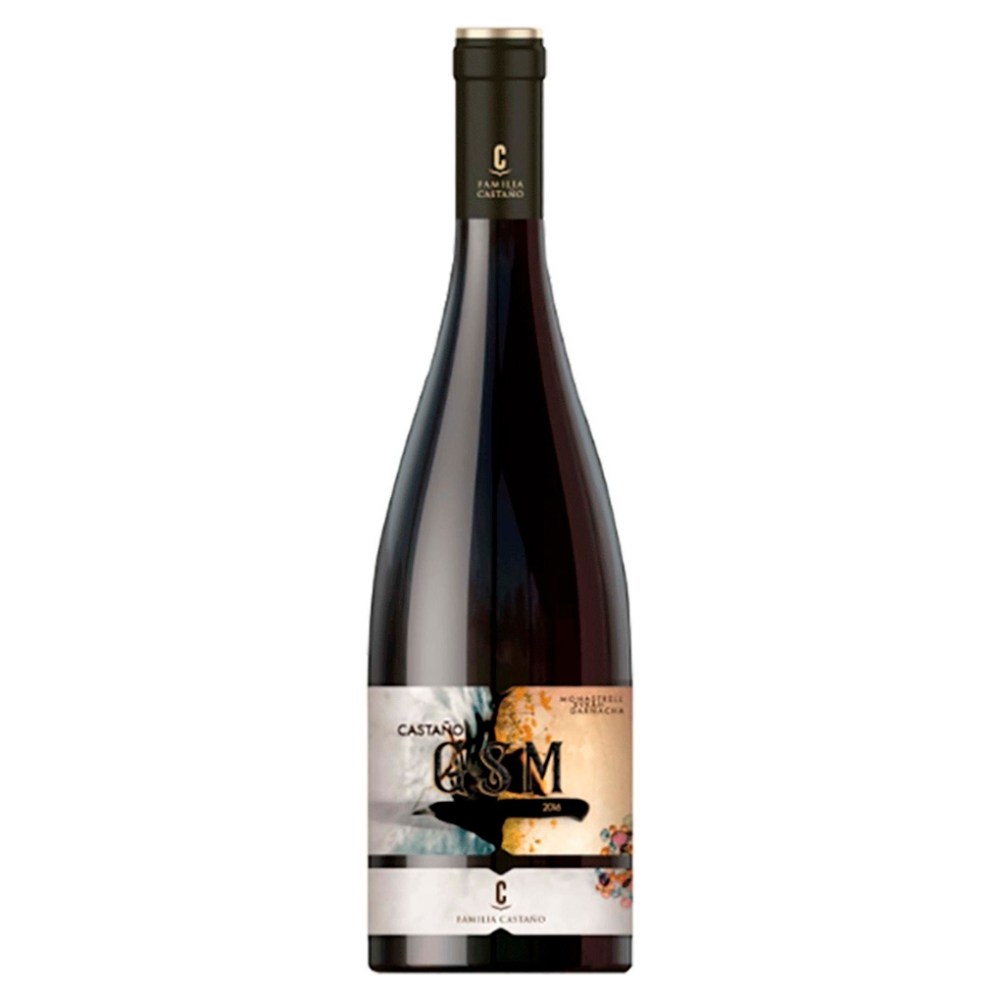
Bodegas Castaño GSM (Yecla, Spain — $19.99, Liquor Marts and beyond)
This Garnacha/Monastrell/Syrah blend from southeastern Spain offers up herbal, blackberry, plum, cherry and violet aromas. It’s dense, full-bodied and chewy, with up-front blackberry, plum and blueberry flavours, secondary black cherry and licorice notes, soft tannins and a long, fruit-forward finish. Four months in oak barrels seems just right. A great value. 4/5
uncorked@mts.net
Twitter: @bensigurdson
Our newsroom depends on a growing audience of readers to power our journalism. If you are not a paid reader, please consider becoming a subscriber.
Our newsroom depends on its audience of readers to power our journalism. Thank you for your support.
Our newsroom depends on a growing audience of readers to power our journalism. If you are not a paid reader, please consider becoming a subscriber.
Our newsroom depends on its audience of readers to power our journalism. Thank you for your support.
Related Articles
Warm and fuzzy for Winnipeg winter


Advertisement Advertise With Us
Advertisement Advertise With Us