Empire to invest $2.1 billion over three years to expand, grow earnings

Advertisement

Advertise with us

STELLARTON, N.S. - Empire Company Ltd. plans to spend $2.1 billion over the next three years on building and renovating stores, expanding its e-commerce offering and growing its private label portfolio as it drives to add $500 million in annualized earnings.

Read this article for free:


By clicking the button above, an account will be created and you will begin to receive some of our recommended newsletters. You may opt out of any newsletter by visiting your Email and Communication Preferences page or by clicking "unsubscribe" at the bottom of any email.

or

Already have an account? Log in here »

To continue reading, please subscribe:

Digital Subscription

One year of digital access for only $1.44 a week*

  • Enjoy unlimited reading on winnipegfreepress.com
  • Read the E-Edition, our digital replica newspaper
  • Access News Break, our award-winning app
  • Play interactive puzzles

*Billed as $5.77 plus GST every four weeks. After 52 weeks, price increases to the regular rate of $19.95 plus GST every four weeks. Offer available to new and qualified returning subscribers only. Cancel any time.

To continue reading, please subscribe:

Add Free Press access to your Brandon Sun subscription for only an additional

$1 for the first 4 weeks*

  • Enjoy unlimited reading on winnipegfreepress.com
  • Read the E-Edition, our digital replica newspaper
  • Access News Break, our award-winning app
  • Play interactive puzzles
Start now

*Your next Brandon Sun subscription payment will increase by $1.00 and you will be charged $17.95 plus GST for four weeks. After four weeks, your payment will increase to $24.95 plus GST every four weeks.

Hey there, time traveller!
This article was published 22/07/2020 (2294 days ago), so information in it may no longer be current.

STELLARTON, N.S. – Empire Company Ltd. plans to spend $2.1 billion over the next three years on building and renovating stores, expanding its e-commerce offering and growing its private label portfolio as it drives to add $500 million in annualized earnings.

Empire, which owns the Sobeys and Safeway grocery chains, unveiled a new three-year strategy dubbed project horizon focused on growing its market share and building on cost efficiencies it started to realize with its previous three-year strategy project sunrise, which recently wrapped. It achieved more than its savings target of $550 million.

“Empire now has the team, the structure and the vision to achieve its sales and earnings potential,” said Michael Medline, CEO, in a statement.
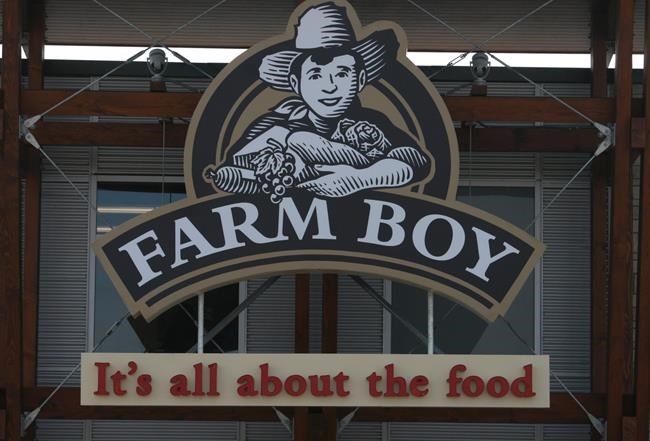
A Farm Boy grocery store logo shown at a store location in Oakville, Ont., Friday, May 17, 2019. Empire Company Ltd. plans to spend $2.1 billion over the next three years on building and renovating stores, expanding its e-commerce offering and growing its private label portfolio as it drives to add $500 million in annualized earnings.THE CANADIAN PRESS IMAGES/Richard Buchan

He highlighted the urgency for the industry amid the COVID-19 pandemic — though the plan’s financial target of a $500 million increase in yearly EBITDA (earnings before interest, taxes, depreciation and amortization) does not include impacts related to the global crisis.

“As the retail landscape in Canada continues to react and shift under the seismic waves caused by the pandemic it is clear now, more than ever, that we must be able to serve customers where, when and how they want to shop,” he said, pointing to the plan’s focus on driving growth and what the Nova-Scotia-based chain called planning to “win at e-commerce.”

The focus on growing market share includes accelerating plans for the company’s two e-commerce fulfilment centres that have yet to be built.

Empire partnered with British firm Ocado to build four robotics fulfilment centres in Canada. It opened the first in the Greater Toronto Area in June, and the second one in Montreal is under construction. Empire expects that the automated warehouse will start operating in early 2022 thanks to a slight construction delay due to the pandemic.

Empire will “accelerate” plans for the two remaining fulfilment centres in Western Canada.

It will also test a store pick solution also using Ocado’s technology at the end of the summer in Nova Scotia that will offer online grocery home delivery from a large selection of products. It plans to expand that service across the country over several years, focusing on areas without the density to justify a fulfilment centre and as an interim solution where its fulfilment centres will be built.

The company also plans to grow its market share by investing in its store network, improving store space productivity, growing its private label portfolio and providing personalized communication and offers to customers.

Empire will add about 20 new Farm Boy locations in Ontario and convert between 30 and 35 conventional stores in Western Canada to FreshCo.

The company will continue to build “on cost and margin discipline” by using technology to improve its systems and processes, optimize its supply chain productivity and other measures.

The new plan is “essentially consistent with expectations,” said Irene Nattel, an RBC Dominion Securities Inc. analyst, in a note. Though, the planned spending and targeted benefits are above current forecasts, she said.

She noted Empire currently lags behind competitors Loblaw and Walmart “in terms of national e-commerce availability and share of wallet.”

Walmart Canada recently announced it plans to invest $3.5 billion over the next five years with a focus on technology to make so-called “smarter stores.”

It will build two new distribution centres and renovate an existing facility, as well as renovate 150 stores over the next three years.

The announcement also included plans to accelerate digitization, such as expanding electronic shelf labels, and revamping checkouts. The chain said it would aim to offer a complete merchandise pick-up service at about 70 per cent of its Canadian locations by the end of the year.

This report by The Canadian Press was first published July 22, 2020.

Companies in this story: (TSX:EMP.A) (TSX:L)

Report Error Submit a Tip

More Stories

Performance (ice-cream) art

Maggie Macintosh 5 minute read Preview

Performance (ice-cream) art

Maggie Macintosh 5 minute read Thursday, Jan. 2, 2020

As 2020 resolutions counter temptation, Teri-Lynn Friesen and Élise Page will be waiting to console those who slip — and they’ll have ice-cream scoops at the ready.

Late last year, the creative duo opened Fête — Winnipeg’s newest coffee and ice-cream parlour, offering an ever-changing menu of 16 made-in-house ice-cream flavours, affogato and, if it’s Sunday morning, pancakes.

There’s also no pressure to pick a flavour at first sight; the shop offers unlimited samples.

“If you gave up coffee, we’re here for you when you need to come back. If you gave up sweets, we’re also here for you,” said Friesen, co-owner of the shop at 300 Assiniboine Ave.

Read
Thursday, Jan. 2, 2020

Third fire hits troubled Manitoba Housing apartment block

Malak Abas 4 minute read Preview

Third fire hits troubled Manitoba Housing apartment block

Malak Abas 4 minute read Yesterday at 3:19 PM EST

Residents of a North End Manitoba Housing apartment block with a long history of trouble say they’re shaken after the building was hit with its third fire in eight months Friday night.

An apartment complex at 145 Powers St. was evacuated by firefighters after a fire broke out at around 7:45 p.m.

When longtime resident Sharon Markwell heard the fire alarm go off, she chalked it up to a false alarm — kids will get into the building and pull the fire alarm around once or twice a month, she said — until smoke began billowing into the hallway of her fifth-floor apartment.

“Once I realized that I could smell smoke very, very strongly, and the smoke was seeping into my room, into my apartment, I said to myself, ‘This is no false alarm. This is the real thing,’” Markwell, 64, told the Free Press Sunday.

Read
Yesterday at 3:19 PM EST

US rolls to women's hoops gold medal in Bird's last Olympics

Doug Feinberg, The Associated Press 6 minute read Preview

US rolls to women's hoops gold medal in Bird's last Olympics

Doug Feinberg, The Associated Press 6 minute read Sunday, Aug. 8, 2021

SAITAMA, Japan (AP) — Sue Bird and Diana Taurasi walked off the basketball court together, arm-in-arm, one last time at the Tokyo Games.

They started their journey together five Olympics ago and ended it in the same fashion as always — with gold medals hanging around their necks.

“All of what we’ve done for USA Basketball, we’ve done together. It’s fitting,” Bird said after the 90-75 win over Japan on Sunday.

And now it's over — at least for the 40-year-old Bird.

Read
Sunday, Aug. 8, 2021

Expect a reasonable approach to keep Manitoba’s minimum wage out of cellar

Tom Brodbeck 5 minute read Preview

Expect a reasonable approach to keep Manitoba’s minimum wage out of cellar

Tom Brodbeck 5 minute read Tuesday, May. 31, 2022

The devil will be in the details when it comes to how much the Stefanson government will increase the minimum wage in 2022 under proposed legislation that’s expected to become law this week.

My prediction: government will boost the base wage by at least $1.10 an hour this year.

As expected, the Stefanson government plans to alter its inflation-based formula for setting the minimum wage, which now stands at $11.95 an hour. Normally, the base wage is indexed to the previous year’s rate of inflation. That’s sound policy during normal times. However, with inflation growing at rates not seen in more than 30 years, an immediate adjustment is required to ensure minimum-wage earners don’t lose purchasing power.

Conservative governments in Saskatchewan, Ontario and New Brunswick have all announced significant increases to their base wages in 2022, putting pressure on the Stefanson government to follow suit. Failure to do so would see Manitoba’s minimum wage (previously scheduled to rise 40 cents an hour to $12.35 on Oct. 1) rank lowest in the country.

Read
Tuesday, May. 31, 2022

New council, new opportunies for Winnipeg

Brent Bellamy 6 minute read Preview

New council, new opportunies for Winnipeg

Brent Bellamy 6 minute read 2:00 AM EST

Last week, Winnipeg voters returned Mayor Scott Gillingham to city hall for a second term, but the more surprising election storyline is that nine of the 15 councillors surrounding him will be new faces.

One encouraging aspect of the results is the community-building experience several of these new councillors bring to the job. Their backgrounds in urban planning, neighbourhood advocacy and community development offer valuable perspectives as Winnipeg confronts difficult questions about how it grows.

These perspectives will be particularly important because some of the most consequential decisions councillors can make happen when they evaluate residential development proposals at committee meetings. Over the next four years, the 16 people we’ve just elected will bear the enormous responsibility of deciding where and how Winnipeggers live. These choices will have profound implications for quality of life, social opportunity and the economic viability of our city. They will shape not only the Winnipeg we know today, but the city we leave to our children and grandchildren.

At committee meetings, councillors will hear endless arguments about parking, traffic, and protecting “neighbourhood character.”

Read
2:00 AM EST

Manitoba’s First Nations and the Indian Act

Hersh Seth 6 minute read 2:00 AM EST

On Monday in Ottawa, Manitoba Premier Wab Kinew called for the Indian Act to be abolished. Prime Minister Mark Carney said he was open to working with First Nations to reform or repeal this law, calling it racist.

The act was created in 1876 and still controls Indian status, reserve lands and band governance. It’s understandable why many people want a better relationship.

But repealing a law and building a new relationship are not the same. What would replace the act’s protections? Who decides? How do governments ensure removing federal authority gives First Nations power while the Crown keeps its promises?

Manitoba has faced these questions before. In 1971, First Nations created a document called Wahbung: Our Tomorrows, in response to then-prime minister Pierre Trudeau’s white paper on assimilation. More than 45 years later, elders and knowledge keepers met at Turtle Lodge, north of Winnipeg, to continue the conversation. Manitobans Dave Courchene Sr. and his son, Dave Courchene Jr., are generational links to the broader movement, and their story should be part of this discussion.