Invisible virtuoso
City collector of self-playing instruments welcomes fellow hobbyists for convention
Advertisement
Read this article for free:
or
Already have an account? Log in here »
To continue reading, please subscribe:
Digital Subscription
One year of digital access for only $1.44 a week*
- Enjoy unlimited reading on winnipegfreepress.com
- Read the E-Edition, our digital replica newspaper
- Access News Break, our award-winning app
- Play interactive puzzles
*Billed as $5.77 plus GST every four weeks. After 52 weeks, price increases to the regular rate of $19.95 plus GST every four weeks. Offer available to new and qualified returning subscribers only. Cancel any time.
To continue reading, please subscribe:
Add Free Press access to your Brandon Sun subscription for only an additional
$1 for the first 4 weeks*
- Enjoy unlimited reading on winnipegfreepress.com
- Read the E-Edition, our digital replica newspaper
- Access News Break, our award-winning app
- Play interactive puzzles
*Your next Brandon Sun subscription payment will increase by $1.00 and you will be charged $17.95 plus GST for four weeks. After four weeks, your payment will increase to $24.95 plus GST every four weeks.
Read unlimited articles for free today:
or
Already have an account? Log in here »
Hey there, time traveller!
This article was published 05/08/2017 (3366 days ago), so information in it may no longer be current.
During the past several summers, Alan Turner’s next-door neighbour has grown accustomed to puttering around in her backyard, listening to the strains of a grand piano wafting out of Turner’s home.
Because she’d always assumed her neighbour was an accomplished pianist, imagine her reaction a few weeks ago when Turner invited her into his house for the first time to show her the true source of the tunes.
“She was definitely surprised to find out it’s been a player piano, all along,” says Turner, president of the Automatic Musical Instrument Collectors’ Association (AMICA), a 54-year-old international organization that is holding its 37th annual convention in Winnipeg from Aug. 8 to Aug. 13. (Although Niagara Falls, Ont. hosted the club’s 1998 get-together, Turner points out most activities that year were staged in Niagara Falls, N.Y., which means this week’s event will be the first AMICA convention staged 100 per cent on Canadian soil.)
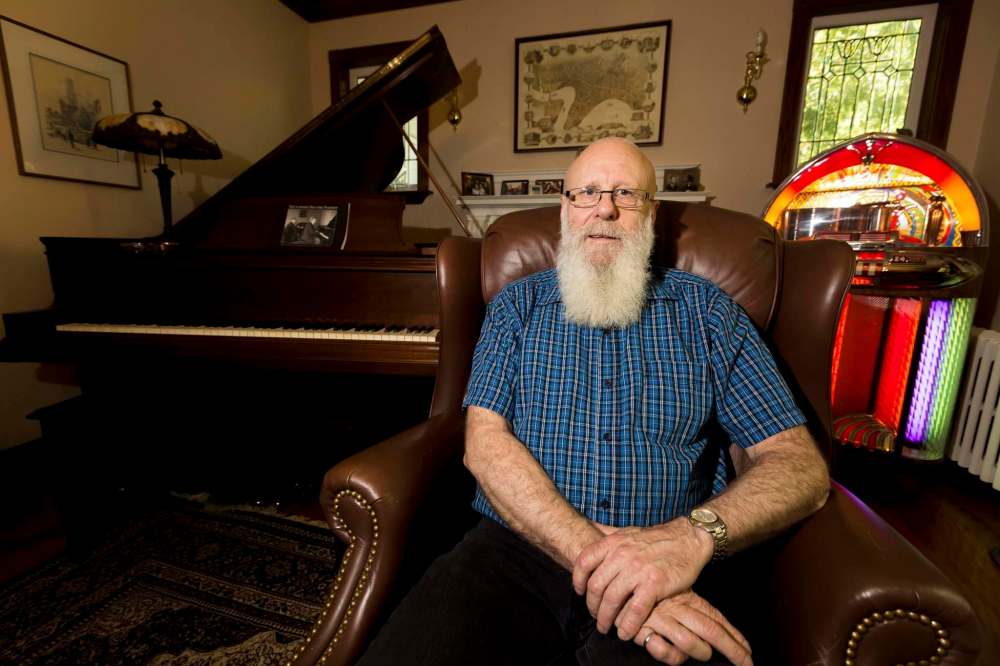
Turner’s personal collection of self-playing instruments — a mix of pianos and violins as well as an ingenious, 100-year-old contraption called an orchestrion, which consists of a player piano, xylophone, tambourine and maracas, all in one – is so vast when the question of how many he owns in total is raised, he begins counting on his fingers in order not to neglect any.
“There are the ones you see here in the living room, another bunch in the dining room, two more upstairs… plus two in the garage… that makes 15,” he says, chuckling when a scribe remarks a collection of, say, baseball cards would probably have taken up much less floorspace. “That’s true, but for those of us who collect these things, the size of the collection generally dictates the size of the house. My previous home was significantly smaller but as I started to accumulate more and more (instruments), it became readily apparent that house wasn’t going to be anywhere near large enough.”
Turner, 60, guesses he was 9 or 10 years old when he and his parents visited a hobby farm near Brandon owned by one of his uncles. Tucked away in one corner of the main living quarters was a piano the likes of which Turner had never encountered before. After being shown how it functioned, and being fascinated by the keys that seemingly played themselves, he asked if he could experiment with the device further.
“My uncle said no — that I wasn’t allowed to touch it,” he says, running his fingers through his perfectly-coiffed, long, grey beard that would make even a certain, jolly elf jealous. “But because I’m the type of person who, when told I can’t do something, wants to do it even more, I became more and more curious. It’s probably fair to say his denying me the opportunity to even lay a finger on that particular piano is what sparked my own interest.”

Granted, it’s not like Turner woke up the next day, and demanded his mother and father go out and purchase a player piano. Rather, it wasn’t until 2002 that Turner, an engineer by trade, bought his first instrument.
“I was living near Beausejour at the time but previous to that, I lived on the East Coast, which was where I became friends with an AMICA member from the Toronto area,” Turner says, shooing one of his two cats away from a reporter’s briefcase. “After mentioning to him one day I was in the market for a player piano, he put me in touch with a person in southern Ontario who was selling his. To make a long story short, I ended up paying this exorbitant amount of money to have it shipped to Manitoba.”
Turner bought his second player piano two years later from a Winnipeg auction house. Piano No. 3 involved renting a U-haul trailer and driving to a community in southern Ontario to scoop up a century-old instrument he purchased on eBay.
“Never say never, I usually say,” he replies when asked if he’s reached his limit, player piano-wise. “I’m not actively looking but through the organization, you often hear of ones that are available. And that’s one of the things (AMICA members) discuss a lot: what happens to these treasures when you either stop collecting or the inevitable occurs, and you pass away? Because the majority of our family members don’t share the same interests we do, we want to be sure these instruments end up in good homes, where they can be fully appreciated.”
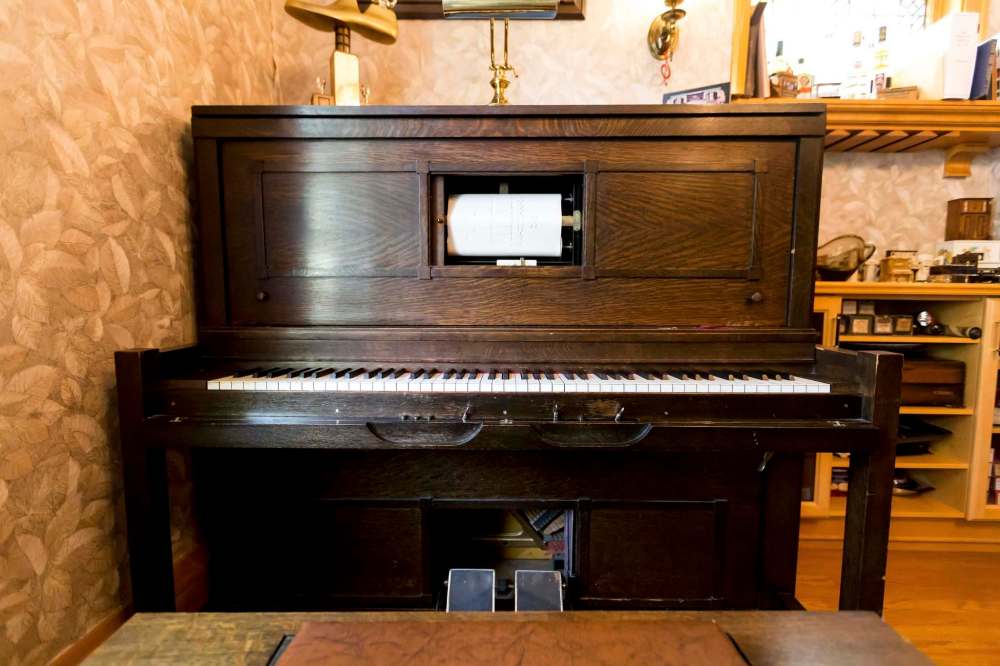
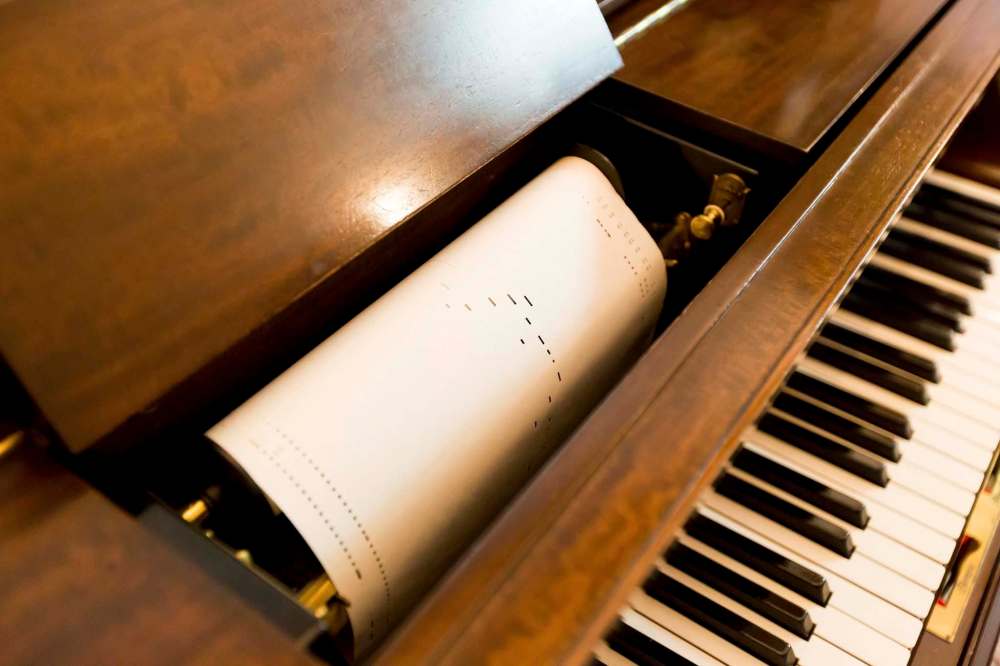
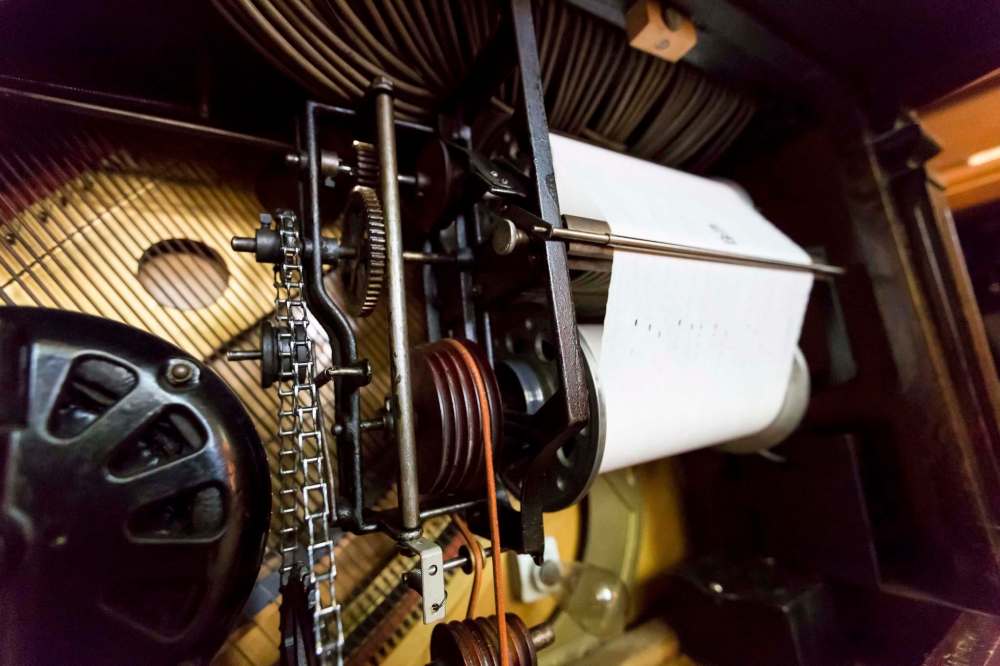
Instruments such as player pianos were the home entertainment systems of their day, Turner says. Before radios and phonographs rendered them virtually obsolete, if a household didn’t include a person who knew how to play piano, a self-playing “pianola” was the next best thing for people who took pleasure in listening to music or having a family sing-a-long after supper, or on special occasions.
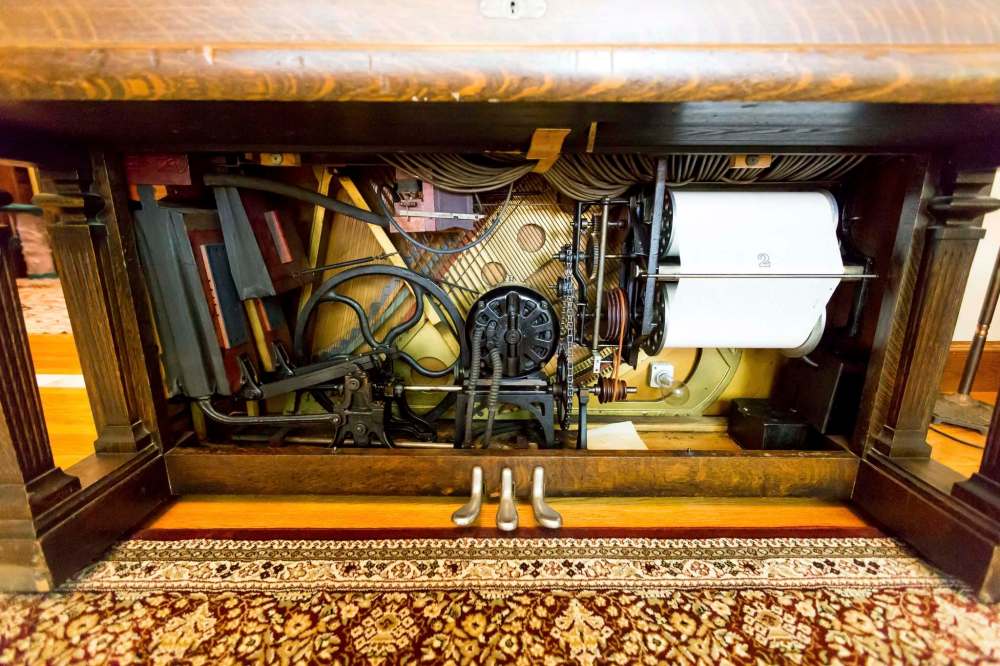
Except player pianos didn’t come cheap. In 1924, the year they reached their sales zenith, higher-end units cost in the neighbourhood of $250 each — about $7,000 in modern-day funds. (Not only that: piano owners also had to fork out money for 290-millimetre-wide, pre-perforated rolls of paper, each of which contained between eight and 10 songs. Turner guesses he has in the neighbourhood of 1,000 rolls — most of them in good or very good condition — he can listen to when the mood strikes.)
There are a number of events associated with this week’s convention that are open to the public, Turner says. On Aug. 11, Frederick Hodges, a pianist specializing in ragtime tunes, will perform at the Winnipeg Art Gallery’s Muriel Richardson Auditorium. Hodges, who hails from San Francisco, will provide the piano accompaniment for a silent film being shown on the auditorium’s movie screen. That same evening, Sean Sharp, a vocalist who has appeared at San Francisco’s West Coast Ragtime Festival and the Shasta Silent Film Festival in Shasta County, Calif., will also perform at the WAG. Sharp will present an “illustrated-songs slide show,” a type of performance art that was popular in the early 20th century. (For more information on both concerts, and for ticket prices, go to www.amica.org/Live/index.htm.)

Winnipeggers who want to get up close and personal with player pianos and other self-playing instruments will get that opportunity on Aug. 13, when Turner will host a free show-and-tell at the Fort Garry Hotel, the convention’s headquarters. (Turner is expecting close to 100 official attendees, from as far away Australia and Europe. He has scheduled an ambitious slate of tourist-type outings planned for them, including tours of the Assiniboine Park Zoo, Canadian Museum for Human Rights and the Exchange District.)
“One of AMICA’s founding members is coming up from San Francisco and another early member from the Los Angeles chapter who’s now living in Colorado is also going to be here. She’s in her 90s and I don’t know if she’s missed a convention since they started,” Turner says, listing Buffalo, Chicago, Cincinnati and London as some of the cities he’s visited in the past to attend AMICA conventions.
Oh, in case you were wondering, like the majority of AMICA members, Turner never learned how to play piano, aside from a few notes of Chopsticks.
“There are a few very good pianists in the organization but they are definitely the exception to the rule,” he says, cuing up the classic chestnut Me and My Shadow. “But the one thing we all have in common is a love of piano music. If you don’t have that, forget it. This will not be your thing.”
david.sanderson@freepress.mb.ca
Dave Sanderson was born in Regina but please, don’t hold that against him.
Our newsroom depends on a growing audience of readers to power our journalism. If you are not a paid reader, please consider becoming a subscriber.
Our newsroom depends on its audience of readers to power our journalism. Thank you for your support.