Road trippin’
Family history, solo highway sojourns paved path for celebrated author’s latest novel

Advertisement
Read this article for free:
or
Already have an account? Log in here »
To continue reading, please subscribe:
Digital Subscription
One year of digital access for only $1.44 a week*
- Enjoy unlimited reading on winnipegfreepress.com
- Read the E-Edition, our digital replica newspaper
- Access News Break, our award-winning app
- Play interactive puzzles
*Billed as $5.77 plus GST every four weeks. After 52 weeks, price increases to the regular rate of $19.95 plus GST every four weeks. Offer available to new and qualified returning subscribers only. Cancel any time.
To continue reading, please subscribe:
Add Free Press access to your Brandon Sun subscription for only an additional
$1 for the first 4 weeks*
- Enjoy unlimited reading on winnipegfreepress.com
- Read the E-Edition, our digital replica newspaper
- Access News Break, our award-winning app
- Play interactive puzzles
*Your next Brandon Sun subscription payment will increase by $1.00 and you will be charged $17.95 plus GST for four weeks. After four weeks, your payment will increase to $24.95 plus GST every four weeks.
Read unlimited articles for free today:
or
Already have an account? Log in here »
It’s 1967 and Lee Clarke has just been kicked out of UCLA when he receives his draft letter in the mail. Rather than report for basic training, he hops in a car and sets off across America on an amphetamine-fuelled road trip to bid farewell to his fractured, dysfunctional family before crossing the border into Canada.
Such is the premise for B.C.-born, Portland-based Patrick deWitt’s sixth novel Dodge City, published in September by House of Anansi. He’s in Winnipeg tonight at McNally Robinson Booksellers’ Grant Park location to launch the book.
The 51-year-old deWitt came to prominence with his sophomore novel, 2011’s The Sisters Brothers. The book was a critical and commercial success, winning the author the Governor General’s Literary Award for Fiction, the Rogers Writers’ Trust Fiction Prize and the Stephen Leacock Medal for Humour, and was adapted for the big screen in a film starring John C. Reilly and Joaquin Phoenix.
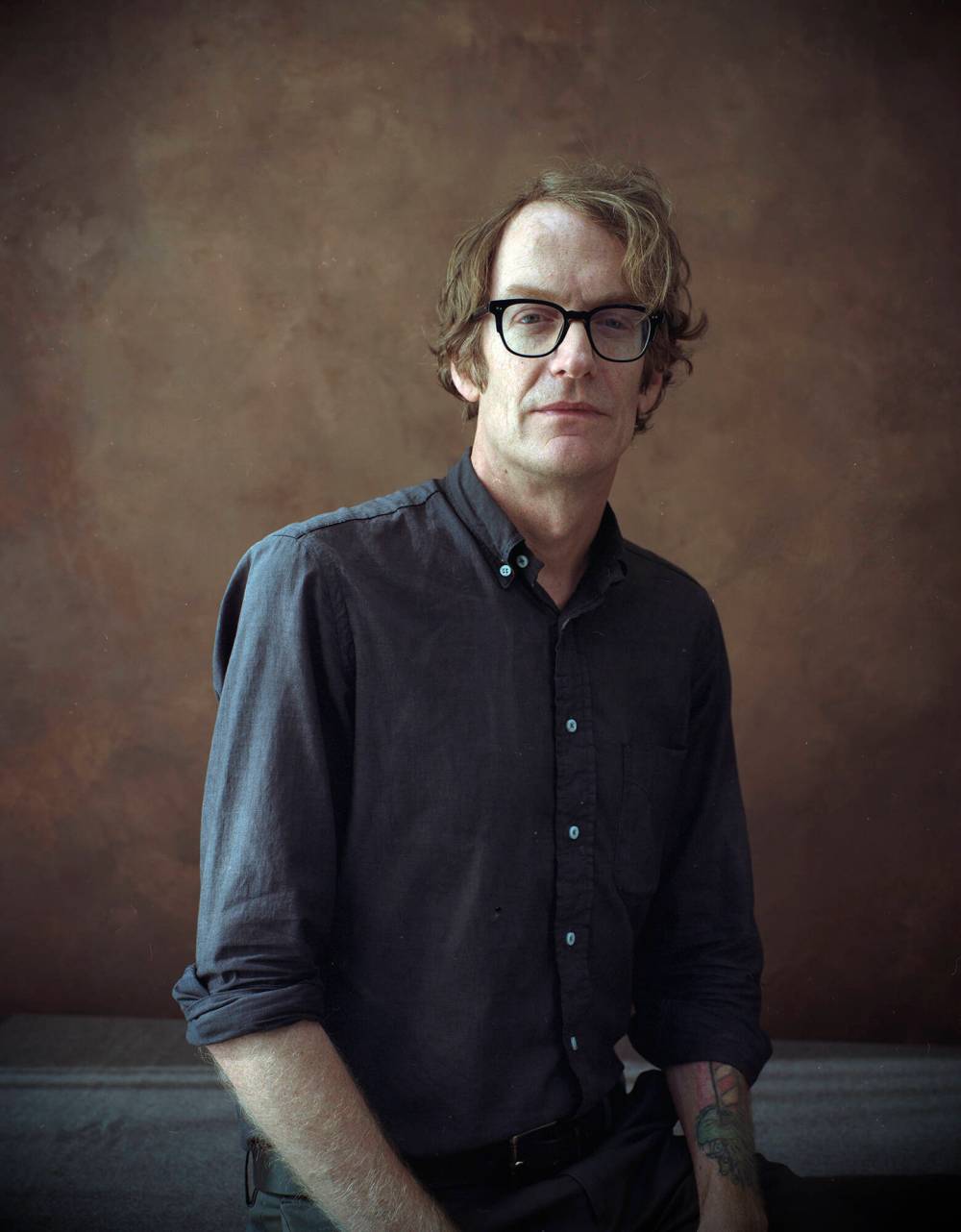
Ray Bidegain photo
Patrick deWitt’s father returned to Canada after receiving a draft notice while living in the U.S.
His 2018 novel French Exit was also adapted for cinema, and his 2023 novel The Librarianist won deWitt the Leacock Medal for the second time. Dodge City is deWitt’s fourth novel to make the Giller Prize long list.
In talking about the novel’s origins, deWitt points to his own family history.
“My father dodged the draft. He was born in Fort Erie, but was living in Southern California. And he got his draft notice; he left instantly, and was back in Canada ASAP, and he drove. As the son of the man, that’s a trip I’ve wondered about — thinking of your father as a young man driving across the country for that reason at that time,” he says.
DeWitt’s own time on the road also helped spur the writing of Dodge City.
“I had been taking a lot of long-distance solo road trips for no real good reason other than maybe wanting to reacquaint myself with the world post-COVID,” he says. “Driving long distances in silence, you arrive at a place in your mind that I found fascinating.”
Those two aspects of deWitt’s life converged as a vague starting point for his latest novel. And while there are many examples of the “road novel,” particularly written in the U.S., deWitt took a detour and opted not to read such works.
“I’m wary when I’m writing a book of being corrupted in some way,” he says, before adding Dodge City owes more to the big screen than other fictions.
“I was thinking of the movies Two-Lane Blacktop, Vanishing Point and Five Easy Pieces the most — like just the feeling, the emotion of Five Easy Pieces. I’d rewatch them during various points of my writing of the book.”
In Dodge City, Lee’s road trip sees him leaves behind his hippy girlfriend Cal in L.A. to see his father in Concrete, Wash., his mother in Billings, Mont., his brother in Duluth, Minn. and finally his twin sister in New York City.
Once deWitt had plotted out his protagonist’s path, the book came quite quickly — four set pieces, one for each family member Lee visits, connected by his time on the open road en route to Canada.
For Lee, evading the draft isn’t political, and as a character he’s relatively neutral in that capacity.
“This is something his country has asked of him, which he feels is beyond the boundaries of what he owes them. It’s not a big political decision for him — it’s just practical,” deWitt says.
Initially deWitt wrestled with unpacking questions around draft dodging and the politics of the era, but found it wasn’t working.
“The push and pull of it was going to be much more prominent. I wrote some of those scenes, and they just never really came to life for me — it turns out the question of whether or not one should attend the war that one has been invited to is not that fascinating a question for me. At least through my lens, it wound up feeling performative and a little bit rote — just not that interesting. So I pulled away and let Lee’s actions speak,” he says.
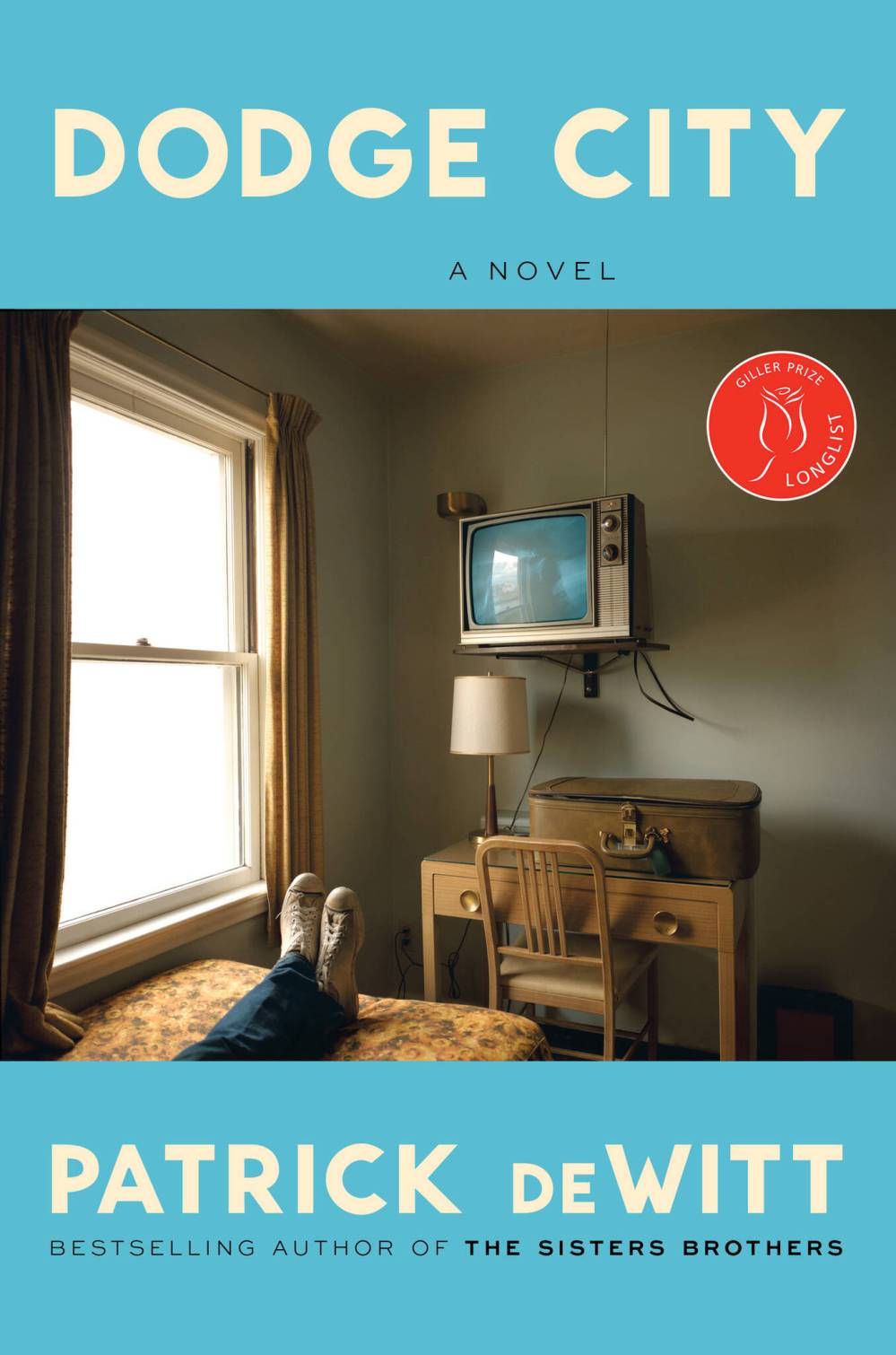
Dodge City
The book, then, ended up focusing on Lee and his relationship with each of his family members, the comical throes their own problems and what it was like for Lee to see them one last time before leaving the country.
“I thought this book should be about him saying goodbye to each of his individual family members, and his story would be told through their stories, we get to learn who he is through how they see him. What do they feel about Lee? What does Lee feel about them? Was their history fraught or loving? And what has happened to these people in Lee’s absence?” deWitt says.
Fans of deWitt have long admired his inimitable use of dialogue — he engages his characters in lengthy, revealing conversations, often to great comedic effect. And in these conversations, the fallibility of memory, and the way characters remember key events of the past, is called into question.
“I have always, from a very young age, had a really poor memory,” deWitt says. “I also come from a sort of a family of storytellers — in talking to people I tend to improve stories or disimprove stories, depending on what I want out of the story.”
In his own life stories and those of his characters, deWitt is more interested in those kinds of improved/disimproved truths.

“There’s emotional truth, and then there’s factual truth. I’m aiming for emotional truth rather than anything else. If it feels correct, that’s good enough for me,” he says before adding, with a laugh, “but I do get things wrong with sort of alarming frequency.”
When it’s suggested the author’s writing has mellowed slightly over the years, deWitt concurs.
“I’m cynical by nature. I’m a child of the ’90s — we’re dark-hearted, cynical people,” he says, laughing. “We can’t live through the times we’re living through and not achieve some level of disdain for humanity.”
He pauses before continuing. “But I’m happier letting go of as much of that arms-crossed attitude as I can. I do think my work has softened — I don’t mean that it’s become less vital for me. I just think that it’s become… a little bit fairer. I look at (2009’s) Ablutions, my first book — I’m not that person anymore. And I’m really glad I’m not, because that person was dark as f—k and unhappy. I don’t feel unhappy anymore.”
ben.sigurdson@winnipegfreepress.com
Our newsroom depends on a growing audience of readers to power our journalism. If you are not a paid reader, please consider becoming a subscriber.
Our newsroom depends on its audience of readers to power our journalism. Thank you for your support.
Book launch
Patrick deWitt
Launching Dodge City in conversation with Anna Leventhal
● McNally Robinson Booksellers, Grant Park (1120 Grant Ave.)
● Tonight, 7 p.m.
● Free
Our newsroom depends on a growing audience of readers to power our journalism. If you are not a paid reader, please consider becoming a subscriber.
Our newsroom depends on its audience of readers to power our journalism. Thank you for your support.
Advertisement Advertise With Us
Advertisement Advertise With Us