Q&A: Tony Kushner on playing therapist to Steven Spielberg
Advertisement
Read this article for free:
or
Already have an account? Log in here »
To continue reading, please subscribe:
Digital Subscription
One year of digital access for only $1.44 a week*
- Enjoy unlimited reading on winnipegfreepress.com
- Read the E-Edition, our digital replica newspaper
- Access News Break, our award-winning app
- Play interactive puzzles
*Billed as $5.77 plus GST every four weeks. After 52 weeks, price increases to the regular rate of $19.95 plus GST every four weeks. Offer available to new and qualified returning subscribers only. Cancel any time.
To continue reading, please subscribe:
Add Free Press access to your Brandon Sun subscription for only an additional
$1 for the first 4 weeks*
- Enjoy unlimited reading on winnipegfreepress.com
- Read the E-Edition, our digital replica newspaper
- Access News Break, our award-winning app
- Play interactive puzzles
*Your next Brandon Sun subscription payment will increase by $1.00 and you will be charged $17.95 plus GST for four weeks. After four weeks, your payment will increase to $24.95 plus GST every four weeks.
Read unlimited articles for free today:
or
Already have an account? Log in here »
Hey there, time traveller!
This article was published 10/11/2022 (1451 days ago), so information in it may no longer be current.
NEW YORK (AP) — “The Fabelmans” is Steven Spielberg’s most autobiographical movie, but the introspection it required wasn’t done in isolation.
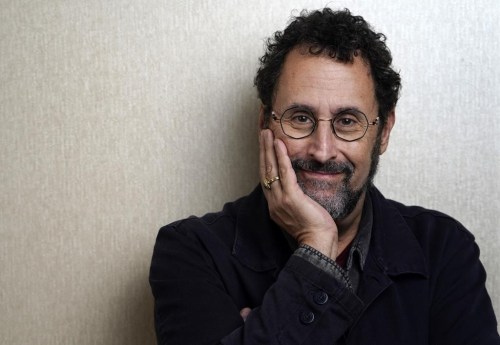
The film, rather, grew out of conversations between Spielberg and his frequent collaborator Tony Kushner, the “Angels in America” playwright who penned three of Spielberg’s best films: “Munich,” “Lincoln” and “West Side Story.” As Spielberg reflected on his childhood memories, he had in Kushner one of the most decorated therapists anyone’s ever had: a Pulitzer Prize-winning playwright turned amateur psychiatrist.
As one of the great dramatists of the last half century, Kushner is used to doing copious amounts of research. (Spielberg once bragged that Kushner read 400 books on Abraham Lincoln in preparation for their 2012 historical drama.) But this time, most of the investigative work was long chats and Zooms during the pandemic that dug into Spielberg’s roots as a filmmaker and the two figures most responsible for making him who he is: his mother, Leah Adler, and his father, Arnold Spielberg. In “The Fabelmans,” they’re fictionalized as Mitzi (Michelle Williams) and Burt Fabelman (Paul Dano).
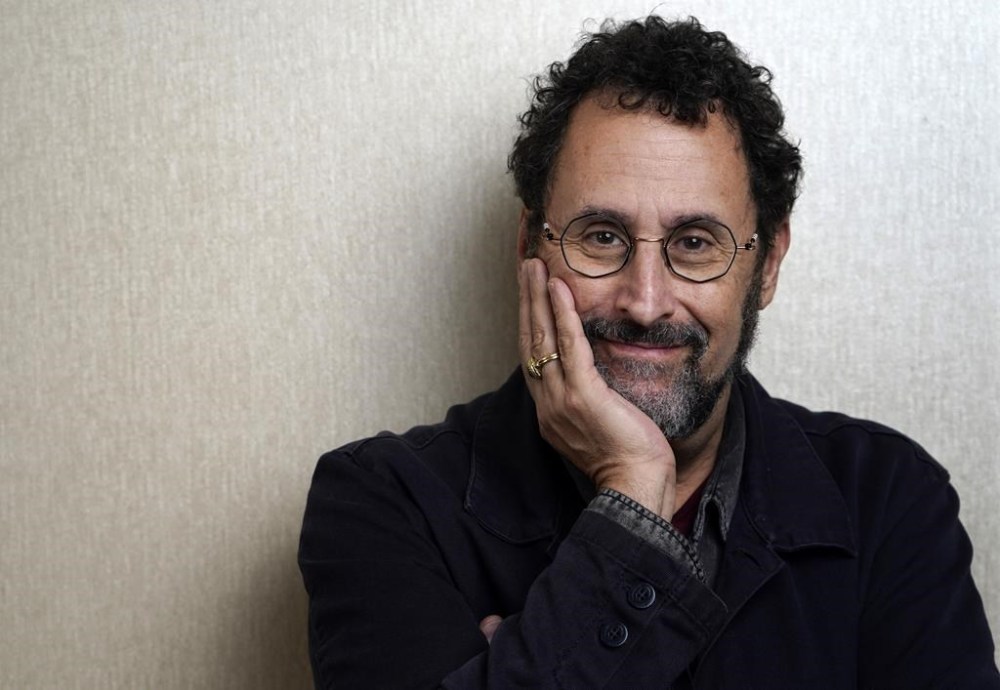
“The Fabelmans,” which opens in select theaters Friday and expands Nov. 23, is the first time Kushner and Spielberg have shared screenwriting credits. And it represents the closeness that’s evolved in their ongoing collaboration. In a recent interview, Kushner reflected on their dialogue together on “The Fabelmans,” his own upbringing and his unexpected second career as a screenwriter.
AP: While making “Munich,” Spielberg first told you about a formative moment for him relating to a home movie he shot that contained a family revelation. In the film, it’s a powerful, almost Rosebud-like moment. Was that the initial germ to making “The Fabelmans”?
Kushner: I didn’t know it at the time when he first told me — it was the first day of filming on “Munich” — but it rang a lot of bells for me. Not just as a kind of amazing thing that happened, which it is, but also that it speaks to certain things that I feel create the spinal cord of this movie. What it has to say about the uses of art as one is growing up in trying to make a world that isn’t safe and that is unmanageable and overwhelming into a place that one can inhabit with an illusion of security and an illusion of control. The more masterly you get over the tools that produce these illusions, the more powerful those tools become. But they have a life of their own and they will lead you places you didn’t expect to go. They turn out to be a means of both self-protection and self-exposure, of safety but also danger.
AP: Spielberg has never seemed to me someone naturally prone to self-reflection. Did your conversations about his childhood strike you as different?
Kushner: I’m not in therapy and psychoanalysis right now but I’ve done many, many, many years of it. I’m a confirmed old Freudian. Steven has not spent a lot of time in therapy and doesn’t really want to — which is true of a lot of artists. For the most part, it felt like a continuation of our conversation. It became a little more instrumental and pointed. I began to grill him about certain things. There were some places where he let me know there was a kind of pain he didn’t particularly want to share. I didn’t want to be intrusive. I have good manners. Sometimes I even thought: Would a tougher interviewer bust him on this and make him divulge these things? He also was so forthcoming and open and generous. His mother had just died before we really started working on “West Side Story,” and his father at 102 was going into his final decline while we were filming. So at a fairly old age, in his 70s, Steven was arriving at orphanhood. He was in a period of mourning.
AP: The mother in “The Fabelmans,” as played by Michelle Williams, is an enormously rich, complicated character who’s largely drawn from Spielberg’s own mother, a pianist who gave up performing to raise their family. But is there some of your mother there, as well? She was a concert bassoonist and an actor. You’ve described her as having “a very deep and somewhat tragic sense of life.”
Kushner: It certainly made it possible for me to understand Mitzi/Leah, who I didn’t meet. It gave me insight and made it possible for to really dig in with Steven in thinking about his mother and her choices and her behavior, including some of the more outlandish things she did in terms of being a woman of real artistic ability. I’ve spent a lot of time thinking about the women of that generation, specifically. This is before modern, post-war feminism has really cohered into a visible movement. It’s the Betty Friedan moment, where it’s beginning to cohere. For women like Steven’s mother — my mother was a bit younger — they were aware that there was something coming. That the role of women had changed profoundly over the course of the 20th century and that new possibilities were opening, but opening up in fitful ways. It was an exciting period, I would imagine, but also a period filled with a lot of uncertainty and pain and guilt, I think. That became really important to me and to Steven in thinking about her. We talked about the similarities a lot.
AP: It’s interest how, for you, politics are always woven into the personal, most notably in “Angels.” And it is here, too, even in an intimate domestic drama.
Kushner: Oh, yeah. One of my favorite movies of all time — being a gay man, this is not surprising — is “All About Eve.” I adore it. It’s this astonishing portrait. One of our greatest actors ever (Bette Davis) is given one of the greatest parts ever. She’s the glorious center of this, and the master of the universe. But there’s still this moment in the car where she has to make this speech: “A woman without kids and without a husband, what is she?” Mankiewicz uses the ugly word “something.” “She’s something with a French provincial office.” It makes your teeth hurt. It’s such a betrayal, in a way, of what the entire film is saying, which is: Who cares about the guys? They’re just here to make problems for these extraordinary women. But that’s that era. You couldn’t get away from it, even in a movie that almost completely gets away from it. It’s still a masterpiece of phenomenal proportions. But that one moment, it shows you how powerful that stuff was.
AP: You’ve said that seeing the response your mother engendered from an audience performing in “Death of a Salesman” prompted you to be a playwright.
Kushner: I was only 6 years old or something. I didn’t really know what was going on with the play. But it was a very powerful experience for me. I could see that she was coming out on stage every night at the end and making everybody cry. And grown-ups crying is a big deal when you’re a little kid. I got very interested in what she was doing that made that happen. She did it in a number of other plays. She had a real tragedian spirit. And I could see that working with these feelings in public — these dark, scary, forbidden aspects of oneself — that was fascinating to me.
AP: You’ve been making films with Spielberg for almost two decades now. Does this chapter of your career surprise you?
Kushner: It does. I didn’t really see myself as having a career as a screenwriter, ever. The penultimate line in “Millennium Approaches,” the first half of “Angels” is: “Very Steven Spielberg.” So I’ve clearly been thinking about Steven long before I met him. I somehow fell into this. There are times when I think: “How did this happen? This is wild.” For some reason, or many reasons, we seem to work really well together. That’s rare. You don’t find people you can really dig into the depths with and have work that you feel really proud of emerge from that and a desire to do more. Everyone knows this but he is an era-defining artist and I consider it an incredible privilege to be working with him on these things.
AP: Was there also some draw to cinema? Did you feel your interests gravitating more toward film than theater?

Kushner: No. I’ve always loved film, I’ve always loved TV and I’ve always loved theater. To my dying day, I’m going to think of myself primarily as a playwright, although I’ve recently filled out forms where I say “playwright/screenwriter.” I feel like I’ve finally earned the right to call myself that. Had I done one movie with Steven and then done one movie with some scary guy who took my script and mangled it and turned it into something I was horrified to have my name attached to it — all the horror stories one hears — I’m quite certain that would be in the end for me. And I live in fear of it. I’m working on a couple projects now that Steven isn’t involved with. I’m learning what life is like outside of Amblin. So far, it’s all been going OK. But we know each other’s moves really well now. I trust him 10,000%. The reason I’ve spent 20 years now working in film is because I really love working with him. I’m also working on a couple plays right now. There are some things that only theater does, just as there’s things that only film can do. I keep telling Steven that he needs to direct something on stage because he’s an incredible blocker. A lot of stage directors can’t do it. I think he’d make an amazing theater director. Maybe that will happen, we’ll see.
AP: Then he’d be in your turf.
Kushner: Yes, and I’d have the copyright to the text and I wouldn’t have to change anything I wouldn’t want to. (Laughs)
___
Follow AP Film Writer Jake Coyle on Twitter at: http://twitter.com/jakecoyleAP
Related Articles
Spielberg delivers his own origin story in personal film
Advertisement Advertise With Us
Advertisement Advertise With Us