Spike Lee talks Oscar diversity ahead of appearance at Toronto Black Film Festival

Advertisement

Advertise with us

TORONTO - Oscar-winning filmmaker Spike Lee says "it's going to be a long, hard process" to increase diversity on a substantial level at the Academy Awards.

Read this article for free:


By clicking the button above, an account will be created and you will begin to receive some of our recommended newsletters. You may opt out of any newsletter by visiting your Email and Communication Preferences page or by clicking "unsubscribe" at the bottom of any email.

or

Already have an account? Log in here »

To continue reading, please subscribe:

Digital Subscription

One year of digital access for only $1.44 a week*

  • Enjoy unlimited reading on winnipegfreepress.com
  • Read the E-Edition, our digital replica newspaper
  • Access News Break, our award-winning app
  • Play interactive puzzles

*Billed as $5.77 plus GST every four weeks. After 52 weeks, price increases to the regular rate of $19.95 plus GST every four weeks. Offer available to new and qualified returning subscribers only. Cancel any time.

To continue reading, please subscribe:

Add Free Press access to your Brandon Sun subscription for only an additional

$1 for the first 4 weeks*

  • Enjoy unlimited reading on winnipegfreepress.com
  • Read the E-Edition, our digital replica newspaper
  • Access News Break, our award-winning app
  • Play interactive puzzles
Start now

*Your next Brandon Sun subscription payment will increase by $1.00 and you will be charged $17.95 plus GST for four weeks. After four weeks, your payment will increase to $24.95 plus GST every four weeks.

Hey there, time traveller!
This article was published 10/02/2020 (2454 days ago), so information in it may no longer be current.

TORONTO – Oscar-winning filmmaker Spike Lee says “it’s going to be a long, hard process” to increase diversity on a substantial level at the Academy Awards.

The illustrious writer-director-producer will receive a lifetime achievement award from the Toronto Black Film Festival on Thursday, just days after an Oscars show in which all four acting awards went to white actors.

In fact, there was only one person of colour nominated in an acting category at Sunday’s show — Cynthia Erivo, who played the lead in the Harriet Tubman biopic “Harriet.”

Spike Lee arrives at the Vanity Fair Oscar Party on Sunday, Feb. 9, 2020, in Beverly Hills, Calif. (Photo by Evan Agostini/Invision/AP)

Meanwhile, no female filmmakers were nominated for best director.

“It’s not going to turn around until there’s more diversity amongst the gatekeepers,” Lee said in a phone interview conducted a few days before Sunday’s show, in which the South Korean black comedy “Parasite” won four Oscars and became the first non-English language film to get best picture.

“These are the people that have a green-light vote. That’s when a fundamental change will happen and we get rid of the feast or famine thing.”

Lee said he feels the Academy of Motion Picture Arts and Sciences has “done a great job of getting more people in as voting members.”

But he “knew there was no way in hell people of colour” would get the same amount of Oscar nominations in the acting categories this year that they did 2017, when Denzel Washington, Viola Davis, Octavia Spencer, Naomie Harris, Ruth Negga, Mahershala Ali, and Dev Patel were all up for trophies.

“That wasn’t happening,” Lee said, noting such situations usually run in cycles.

Those 2017 nominations came after two years in which no actors of colour were nominated, prompting the #OscarsSoWhite hashtag movement aimed at increasing diversity at the Academy, which responded by making changes to its membership.

“It’s not gonna happen overnight,” Lee said. “It’s feast or famine.”

The prolific auteur — whose other acclaimed films include “She’s Gotta Have It,” “Do the Right Thing,” “Jungle Fever” and “Malcolm X” — got an honorary Oscar in 2016 but didn’t attend the ceremony because of the lack of diversity amongst nominees.

But until “BlacKkKlansman,” which was up for six Oscars in total, he’d never been nominated for an Academy Award for best director. He ended up winning the golden statuette for best adapted screenplay for the film’s biographical story of a black police detective who infiltrated a Ku Klux Klan cell in Colorado in the 1970s.

“It’s a fight, and you’ve got to keep at it,” Lee said.

“I’ve never thought that because I won an Oscar that means that the fight was over and we’ve arrived where we need to be. No way in hell.”

Lee will discuss his career and views on current events at Thursday’s Toronto Black Film Festival, which will also feature a restored version of his 2000 film “Bamboozled.” The satire centres around a modern minstrel TV show in which black actors don blackface makeup.

“All this stuff is happening in culture. It’s still relevant,” Lee said of the film’s themes of racism.

The Toronto Black Film Festival kicks off Feb. 12 with Van Maximilian Carlson’s “Princess of the Row” and closes Feb. 16 with Bernard Attal’s “Restless.”

Lee has also appeared at the Montreal Black Film Festival and praised the efforts of Fabienne Colas, who founded and is president of both festivals.

“She works very hard,” Lee said. “I’m telling you, it’s not easy what she’s doing. It’s not easy but she’s dedicated and she’s doing her thing.”

Lee’s upcoming projects include the film “Da 5 Bloods,” about black soldiers in the Vietnam War.

He’s also a professor of film at the NYU Tisch School of the Arts.

He said his advice to his students and others who want to break into the industry and make a change is to “keep pushing” and “keep working on your craft.”

“Just do the best where we can make it,” Lee said. “Let the world see it.”

This report by The Canadian Press was first published Feb. 10, 2020.

Report Error Submit a Tip

More Stories

Letters, Oct. 30

7 minute read 2:00 AM CDT

Embarrassed by turnout

I am ashamed by the poor turnout of voters in the recent municipal election in Winnipeg. Just 38 per cent of eligible voters is a disgrace to the thousands of men and women who gave their lives in past wars, where they were defending democracy and the right to vote.

My grandfather was an infantry soldier in the First World War, and my father-in-law flew in Avro Lancasters in the Second World War. For both I am grateful.

Maybe the 62 per cent that had a flimsy excuse for not voting will keep this mind for the next election. People died for our right to vote.

Trump touts USMCA win in state of the union

James McCarten, The Canadian Press 6 minute read Preview

Trump touts USMCA win in state of the union

James McCarten, The Canadian Press 6 minute read Tuesday, Feb. 4, 2020

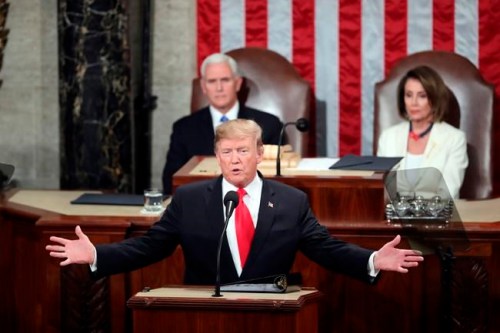
WASHINGTON - President Donald Trump declared his scorched-earth political style an unmitigated success Tuesday in a fiercely partisan, made-for-TV state of the union speech that made it clear he expects to be back in the White House next year on the strength of the U.S. economy and his trade deals with Canada, Mexico and China.

Trump, addressing a joint session of Congress in the very chamber where House Democrats voted to impeach him less than two months ago, became only the second president in American history — Bill Clinton was the first — to deliver a state of the union while standing trial in the Senate.

Unrepentant, he pointedly refused to shake the offered hand of House Speaker Nancy Pelosi on the dais before singing the praises of what he billed as "the great American comeback," pointing to strong job growth, a soaring stock market and low unemployment as evidence of his leadership. And when he was done, Pelosi ripped up the speech in full view of the television cameras.

"America's enemies are on the run, America's fortunes are on the rise, and America's future is blazing bright. The years of economic decay are over," Trump declared, taking full credit for the country's "roaring economy," including what he billed as seven million new jobs and the lowest jobless rate in half a century — a "blue-collar boom" that he's counting on to help his re-election chances in November.

Read
Tuesday, Feb. 4, 2020

Submit a news tip

1 minute read Monday, Mar. 16, 2026

Submit a news tip

Shocking development

Kelly Taylor 6 minute read Preview

Shocking development

Kelly Taylor 6 minute read 2:00 AM CDT

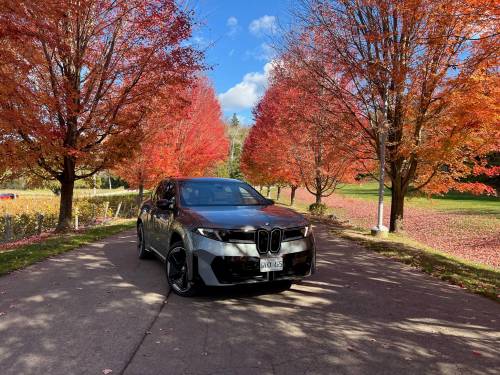
HOCKLEY VALLEY, Ont. — It’s not too often you get into a new vehicle, look at the interior, and say to yourself, “Wow, this is different… in a good way.”

Automakers tend to stick pretty close to defined norms, and when they differ, it’s not always successful. I’m looking at you, Toyota Yaris and Nissan X-Trail.

So, stepping into the 2027 BMW iX3 was refreshing. A bright parallelogram of a main touchscreen is closer to the driver than most, aided in no small part by pushing the instrument cluster to a narrow band just under the windscreen.

The effect is to clean up the look of the dash but without moving to a centre-mount instrument panel like the Yaris and X-Trail. The most valuable information (speed, battery charge, range) is right in front of the driver, visible above the top rim of the steering wheel.

Read
2:00 AM CDT

Is Canada headed for time chaos this weekend?

Michelle Bastian 5 minute read 2:00 AM CDT

When Manitoba Premier Wab Kinew declared Sept. 17 that the province would remain on permanent daylight time, he suggested it was a historical moment people would share with their “great-great-grandkids.” But, while Sunday, Nov. 1 has been heralded as the date many Canadians will stop changing their clocks, there are rumblings behind the scenes suggesting this will actually cause more trouble than ever before.

There are, of course, the warnings from chrono-biologists and sleep scientists about the damage permanent daylight time will do. The lighter evenings will mean many more dark mornings. But there is another set of problems in the offing in the critical infrastructure that underpins our digital lives.

While it used to be common to spend the Sunday morning after a time change going around our homes updating the clocks, we now wake up to devices that have already adjusted to the new time. These automatic updates occur regularly for daylight time, as well as when we travel to new time zones.

Our clocks are able to change by themselves owing to the hard work of a group of volunteers who were recently named in a list of the people who hold up the internet. This group, led by Paul Eggert, a computer scientist at UCLA, maintains a little-known tool called the Time Zone Database. Since the 1980s, it has kept track of regional, national and international debates about clock time and provided an up-to-date table of what time it should be on our walls.

A timeline of the WE Charity controversy

The Canadian Press 9 minute read Wednesday, Aug. 19, 2020

OTTAWA - A timeline of events regarding the Canada Student Service Grant program, based on public documents, events and statements from cabinet ministers, government officials, and WE Charity:

March 6, 2020: WE Charity staff prepare a concept paper on service learning for public servants at Employment and Social Development Canada.

April 5: Finance Minister Bill Morneau and Prime Minister Justin Trudeau talk over the phone about how to help students whose summer job and volunteer opportunities were vanishing due to the COVID-19 pandemic. Finance Department officials are tasked with considering options the next morning.

April 7: Small Business Minister Mary Ng and WE co-founder Craig Kielburger have an introductory phone call in which Ng asks WE to send what it calls a ``pre-established proposal'' to help young people launch businesses.