Holocaust educators, survivors fear lessons of the past fading with new generation
Advertisement
Read this article for free:
or
Already have an account? Log in here »
To continue reading, please subscribe:
Digital Subscription
One year of digital access for only $1.44 a week*
- Enjoy unlimited reading on winnipegfreepress.com
- Read the E-Edition, our digital replica newspaper
- Access News Break, our award-winning app
- Play interactive puzzles
*Billed as $5.77 plus GST every four weeks. After 52 weeks, price increases to the regular rate of $19.95 plus GST every four weeks. Offer available to new and qualified returning subscribers only. Cancel any time.
To continue reading, please subscribe:
Add Free Press access to your Brandon Sun subscription for only an additional
$1 for the first 4 weeks*
- Enjoy unlimited reading on winnipegfreepress.com
- Read the E-Edition, our digital replica newspaper
- Access News Break, our award-winning app
- Play interactive puzzles
*Your next Brandon Sun subscription payment will increase by $1.00 and you will be charged $17.95 plus GST for four weeks. After four weeks, your payment will increase to $24.95 plus GST every four weeks.
Read unlimited articles for free today:
or
Already have an account? Log in here »
Hey there, time traveller!
This article was published 07/11/2019 (2552 days ago), so information in it may no longer be current.
TORONTO – Teaching teens about the horrors of the Holocaust is more than just a history lesson for high school teacher Rachel Luke.
The language arts and drama teacher weaves it into her lesson plan where possible, and describes it as “character education” for a generation she fears is losing compassion for others.
“I’m very worried about this generation…. I see such a difference and a change in children just even in the past five years. A lot of them really lack empathy,” says Luke, who teaches kids in Grades 9, 10, 11 and 12.

“‘If someone’s getting bullied, if something’s happening, (they say): ‘It is not my responsibility,’ ‘It has nothing to do with me,’ ‘It’s not my business,’ ‘I’m not going to be a snitch.’ … This is the language that’s used (and) this is the culture of this generation.”
Drilling home the facts of the Holocaust is one way Luke tries to encourage students to understand the destructive impact of intolerance, racism and hate.
But Luke says it can be an uphill battle to reach some teenagers — many of whom have never even heard of the Second World War massacre until a teacher brings it up in class.
Combined with an apparent ease with derogatory racial slurs, Luke worries some youth aren’t even interested in learning why certain behaviour is hurtful.
“A student said to me today, ‘I censor myself when I’m in your class,'” says Luke, who runs the annual Remembrance Day assemblies at Glenforest Secondary School in Mississauga, Ont.
“They know in my classroom they have to behave a particular way. I’m not sure if that might happen in my colleague’s classrooms, I’m not sure that’s happening in the hallways.”
At the very least, a disturbing resurgence in anti-Semitic incidents around the world suggests little has been learned from Second World War crimes.
Reports of attacks and plots targeting U.S and Canadian synagogues continue to spark fear, while Nazi paraphernalia has found fascination among some youth, including late B.C. teen murder suspect Bryer Schmegelsky who allegedly sent photographs of a swastika armband and a Hitler Youth knife to an online friend.
Schools in particular have provided a backdrop for some shocking offences. Last week, a principal and teacher in Utah were suspended after a student dressed as Hitler for a Halloween parade.
Meanwhile, recent surveys back up Luke’s frustrations: One in five millennials hadn’t heard or weren’t sure if they had heard of the Holocaust, according to a poll released earlier this year by the Holocaust education group the Azrieli Foundation and the non-profit group the Claims Conference, which secures material compensation for Holocaust survivors around the world.
The survey of 1,110 Canadian adults found 62 per cent of millennials didn’t know that six million Jews were killed in the Holocaust.
A similar survey by the Claims Conference in the United States found 41 per cent of millennials believed two million or fewer Jews were killed during the Holocaust.
Carson Phillips, managing director of Toronto’s Sarah and Chaim Neuberger Holocaust Education Centre, says the good news is that teachers seem to recognize a connection between intolerance and gaps in knowledge.
“Any time we hear of these horrendous attacks our requests for education programming certainly increases,” says Phillips, whose group has organized a week of events leading up to Remembrance Day that focus on Holocaust awareness.
“This need for education is probably never going to go away.”
His centre’s 39th annual Holocaust Education Week includes speakers, films, musical performances, and events that link the Holocaust to current events. That included the Toronto premiere of the documentary “Cheating Hitler: Surviving the Holocaust,” which tells the stories of three Canadian Holocaust survivors who were children during the war.
The two-hour film also airs Monday on the History channel and Nov. 16 on Global. Its director Rebecca Snow says she “definitely” sees a connection between anti-immigrant sentiments and a poor understanding of what the Second World War was really about.
“And that’s terrible for the survivors of the Holocaust to see.”
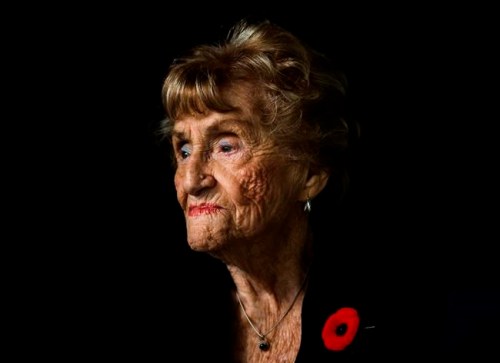
Holocaust survivor Rose Lipszyc, who was born in Lublin, Poland and lost her mother, father and two brothers in the war, says she was recently attacked online when someone accused her of lying about her experiences.
“They actually don’t believe it. It made me laugh to a certain extent,” says the 90-year-old Lipszyc, who came to Canada in 1952 and is one of the three survivors who shares her story in “Cheating Hitler.”
“How can you even think of that? Who would want to do that?”
Phillips himself struggles to explain how quickly these stories are slipping away, but has a few theories.
“We live in an age where we have access to media and digital at any hour of the day,” says Phillips, whose group runs hundreds of education programs for school children each year.
“Maybe there’s a bit of fatigue in terms of information overload. Or simply having so much access to information can be overwhelming.”
Plus, the sheer enormity of the Holocaust is hard to convey.
“It’s always, always, always a challenge with Holocaust education: How do you break down the enormity of the tragedy so that someone can understand it? Sometimes we hear the word six million but do we really know, can we conceptualize what six million really is?”
The Second World War is not part of Ontario’s curriculum until Grade 10 but Luke thinks it can be introduced as early as Grade 7.

Luke says there are certainly hopeful signs that teens are willing and able to grasp difficult material — her most recent Holocaust assembly seemed to strike a chord with many students, who wrote comments afterwards expressing gratitude for living in Canada and the need for equality regardless of race or religion.
“I was a little nervous because the past couple of times when I’ve had the survivors come in, I haven’t seen the same type of empathy and compassion… that I saw years ago,” she says.
“And I’m happy to say that (after) this past one we had, I saw that again. I was really happy about that.”
This report by The Canadian Press was first published Nov. 7, 2019.
Note to readers: This is a corrected story. A previous version that moved Nov. 7 said ‘Cheating Hitler’ was to premiere in Toronto on Saturday. In fact, it screened Wednesday.