Losing the plot
Cusk’s brief new novel skirts conventional storytelling in musings on celebrity, authenticity
Advertisement
Read this article for free:
or
Already have an account? Log in here »
To continue reading, please subscribe:

Digital Subscription
One year of digital access for only $205*
- Enjoy unlimited reading on winnipegfreepress.com
- Read the E-Edition, our digital replica newspaper
- Access News Break, our award-winning app
- Play interactive puzzles
*First annual payment billed as $205.00 + GST for one year. This annual subscription will automatically renew at $233.00 + GST every 52 weeks (10% off the regular annual price of $259.35). Offer available to new and qualified returning subscribers only. Cancel any time.
To continue reading, please subscribe:
Add Free Press access to your Brandon Sun subscription for only an additional
$1 for the first 4 weeks*
- Enjoy unlimited reading on winnipegfreepress.com
- Read the E-Edition, our digital replica newspaper
- Access News Break, our award-winning app
- Play interactive puzzles
*Your next Brandon Sun subscription payment will increase by $1.00 and you will be charged $17.95 plus GST for four weeks. After four weeks, your payment will increase to $24.95 plus GST every four weeks.
Read unlimited articles for free today:
or
Already have an account? Log in here »
Can a novel hold up without a conventional reliance on plot and characterization? Do abstract observations and commentary offer enough intrigue to replace concrete storytelling? These are questions readers may ask while turning the pages of Rachel Cusk’s latest novel, Life of M.
Cusk, who is a Canadian-born author living in the U.K. and best known for the Outline trilogy, is back with an idiosyncratic, slim novel. In it, we meet a mega-celebrity who bears an uncanny resemblance to Natalie Portman. The celebrity, known only as M, allows an unnamed author, whose gender and other defining characteristics are withheld, to follow her around to gain insight for an autobiography.
The actions of M are observed from an impassioned distance, and the author in the book relies mainly on on-screen performances and a public persona to create the contents of the autobiography. Themes of life imitating art and art imitating life are dramatized in ways that illustrate how stardom can obfuscate a person’s true self while diminishing their capacity for emotional connection.

Siemon Scamell-Katz photo
Despite her main character’s resemblance to Natalie Portman, Rachel Cusk has denied basing her book on the actor.
“Acting involved pretending to be other people, whose own emotional states — such as (M) understood them — could preoccupy her for a time. Once they were completed, she was as locked out of these recordings as the millions of other eyes that watched them,” Cusk writes.
The narrator also observes that M is smaller in person than in her ubiquitous image, that she is recognized by people wherever she goes but truly known by no one, and lives in a house that was “like a big doll’s house, with her as the doll inside.”
Direct parallels to Portman’s life can be witnessed in a variety of scenes. For example, M contends that her childhood ended abruptly after starring in a film as a child who is sexually abused by a stepfather. Portman also admits to being “sexualized” as a child actor and “being very scared by it.”
The salacious scenes in M’s film were ultimately cut, she tells the unnamed author, after her mother complained. Yet the psychological damage had already been done because the act of the abuse had already been permitted — only the viewing denied.
“Not being seen was perhaps equivalent to being seen by everybody,” writes Cusk.

Like Portman, M also once starred as a ballerina in a major film that received acclaim from general audiences but scorn from true ballerinas for the ways in which her portrayal fell short.
While Cusk denies basing the Life of M on Portman’s persona, she is acquainted with the celebrity after one of her previous books was featured in Portman’s book club. What is undeniable, however, is that Cusk is offering a terse commentary on fame, authenticity and the psychological impact of being observed throughout this 192-page novel.
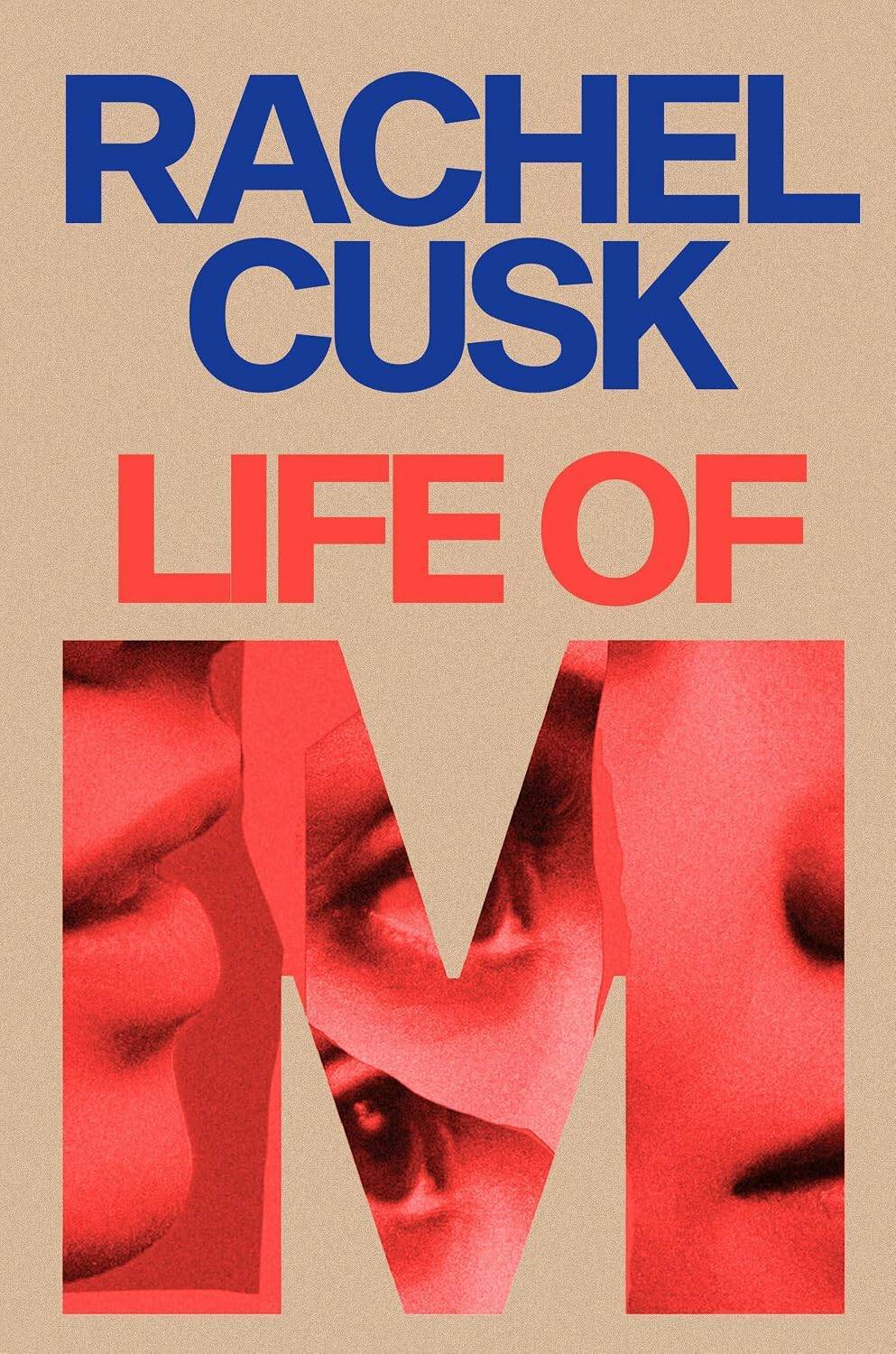
Life of M
Yet the wilful vagueness regarding setting, plot and characterization becomes a distraction for those wanting a connected narrative. Exquisite details of a painting are offered, for example, yet the viewer of the painting remains nondescript.
Readers who enjoy the parts more than the sum of a book will find Life of M gratifying. Others may find it an elegantly written jumble of discombobulation too puzzling for words.
Rochelle Squires is a lifelong reader in search of books that leave a lasting impression.