Timely themes in Korean-Canadian immigration story
Advertisement
Read this article for free:
or
Already have an account? Log in here »
To continue reading, please subscribe:
Digital Subscription
One year of digital access for only $1.44 a week*
- Enjoy unlimited reading on winnipegfreepress.com
- Read the E-Edition, our digital replica newspaper
- Access News Break, our award-winning app
- Play interactive puzzles
*Billed as $5.77 plus GST every four weeks. After 52 weeks, price increases to the regular rate of $19.95 plus GST every four weeks. Offer available to new and qualified returning subscribers only. Cancel any time.
To continue reading, please subscribe:
Add Free Press access to your Brandon Sun subscription for only an additional
$1 for the first 4 weeks*
- Enjoy unlimited reading on winnipegfreepress.com
- Read the E-Edition, our digital replica newspaper
- Access News Break, our award-winning app
- Play interactive puzzles
*Your next Brandon Sun subscription payment will increase by $1.00 and you will be charged $17.95 plus GST for four weeks. After four weeks, your payment will increase to $24.95 plus GST every four weeks.
Read unlimited articles for free today:
or
Already have an account? Log in here »
The inheritance referenced in the title of Jane Park’s novel has nothing to do with financial assets. Rather, the title refers to the inheritance of trauma, specifically the kind of generational trauma that is never defined, dealt with or even discussed among members of a family.
Park is a second generation Korean-Canadian author who currently lives in Calgary. Inheritance is her debut novel.
Park’s narrator is Anne Kim, the daughter of Korean immigrants to Canada, who mostly tells her story, and her family’s story, from two different vantage points — the early 1990s when Anne, her brother Charles and their parents move to the rural town of Crow Plains, Alta. to run a small grocery store, and 2014, when Anne returns home from New York, where she lives and works as a lawyer, to attend her father’s funeral.
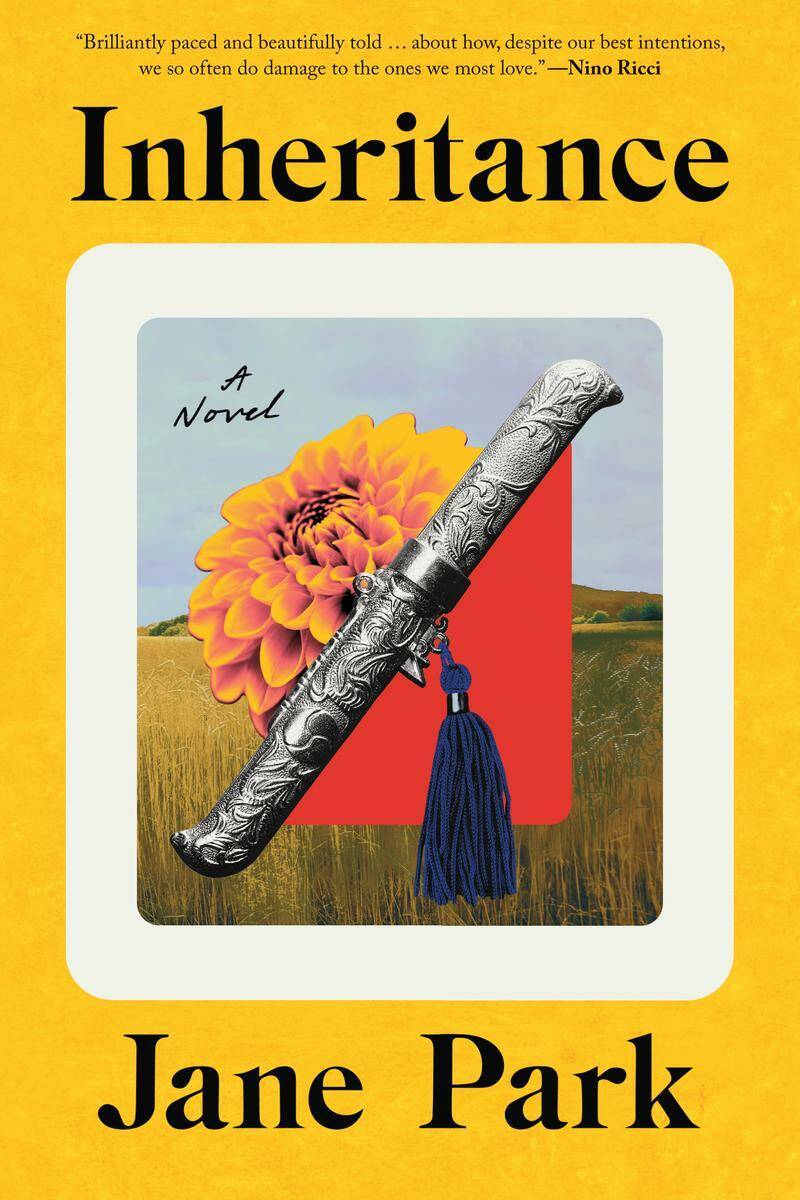
Inheritance
Most of Anne’s narrative is an account of her childhood, one scarred by her parents’ monetary and cultural struggles, the overt racism the family faced in Crow Plains and her attempts to be seen, heard and appreciated by her exhausted and depressed mother and father. Anne’s frustration, fears and resentments are vividly described in these accounts, and they certainly make up the most compelling parts of the novel.
“I cry every day in front of my mother and father,” Anne says, after starting Grade Seven in the new town. “After I walk home from school, I enter the store, stand in front of the cash register, and begin to cry, saying that I cannot bear to be inside that classroom where no one speaks to me except to call me ‘chink.’ My mother asks if I have shame, for I should never cry inside the store, what will the customers think? But there are no customers in the store, I say, so I do not feel any shame.”
The chapters focused on Anne as an adult, unfortunately, are less engaging.
While it’s easy for readers to empathize with Anne as a child, the adult Anne is not nearly as likable. She also is not as good a storyteller as she was as a girl. Too many scenes from her adult life that should be pivotal and powerful, including charged confrontations she has with her mother as well as with her boyfriend Richard, fail to make any impact at all.
More significantly, two major plot points — one regarding an uncle left behind in North Korea and the other a horrific crime that changed the course of Charles’ life — fizzle as well, even though it seems they’re intended to clarify for readers the roots of the Kim family’s discontent and distress.

Nonetheless, Park is to be commended for exploring many critical and timely themes, among them family duty versus individual ambition, mental illness, addictions, racism and the fraught challenges of immigration and assimilation. It’s unfortunate that in trying to cover so many topics, she seems to have spread herself too thin. In most instances, Park’s prose is solid and compelling, but she doesn’t delve deep enough into many of the subjects or suggestions she introduces.
Her characters, too, suffer from a lack of depth. By the end of the novel, readers only really know Anne. Her boyfriend is a footnote and her father, mother and particularly Charles remain elusive.
Still, in spite of its flaws, Inheritance is an important novel. While every immigrant story is obviously different, most share certain elements. It is difficult to move to a new country, learn a new language, earn a living and make friends. When generational trauma is added to that mix, those hardships are even greater.
That’s the story Park is telling in her first novel. And it likely will be a story that she tells even better when she writes her next book.
Sharon Chisvin is a Winnipeg writer, editor and oral historian.