Trio of cruise-ship storylines converge in post-9/11 boat journey to Bermuda
Advertisement
Read this article for free:
or
Already have an account? Log in here »
To continue reading, please subscribe:
Digital Subscription
One year of digital access for only $1.44 a week*
- Enjoy unlimited reading on winnipegfreepress.com
- Read the E-Edition, our digital replica newspaper
- Access News Break, our award-winning app
- Play interactive puzzles
*Billed as $5.77 plus GST every four weeks. After 52 weeks, price increases to the regular rate of $19.95 plus GST every four weeks. Offer available to new and qualified returning subscribers only. Cancel any time.
To continue reading, please subscribe:
Add Free Press access to your Brandon Sun subscription for only an additional
$1 for the first 4 weeks*
- Enjoy unlimited reading on winnipegfreepress.com
- Read the E-Edition, our digital replica newspaper
- Access News Break, our award-winning app
- Play interactive puzzles
*Your next Brandon Sun subscription payment will increase by $1.00 and you will be charged $17.95 plus GST for four weeks. After four weeks, your payment will increase to $24.95 plus GST every four weeks.
Read unlimited articles for free today:
or
Already have an account? Log in here »
Hey there, time traveller!
This article was published 25/04/2026 (191 days ago), so information in it may no longer be current.
When it comes to cruise vacations, there are three types of people: those who love them, those who hate them, and those who love to hate them and remain fascinated by their cultural appeal.
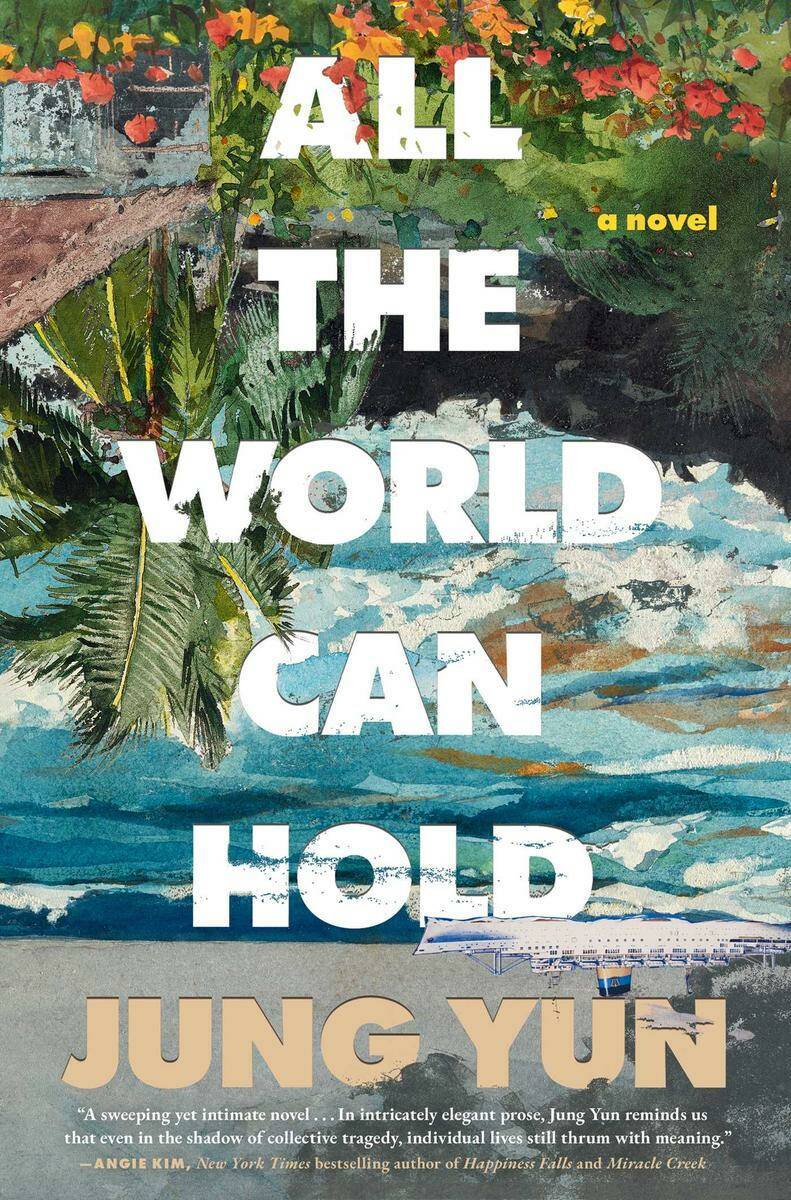
Jung Yun’s third novel, All the World Can Hold, scratches the itch of all these groups, criss-crossing the stories of three characters who embark on a five-day journey to Bermuda.
Cruises are inherently places of time-space warp, with their endless arrays of dining, leisure and entertainment options.
All the World Can Hold
What distinguishes this voyage from others is that it takes to sea on Sept. 16, 2001. It’s been five days since 9/11. The characters have all been impacted by the attacks in ways they have yet to recognize.
Adding to the surreal timing of this cruise is its theme. The cruise ship, the Sonata, was the setting of a popular ’80s show called Starlight Voyages, and most of its passengers are older fans eager to embrace a nostalgia for a time that has long passed.
Yun’s cast of characters have differing attachments to the Love Boat-themed cruise and its intents. There’s Franny, a Korean-American woman accompanied by her extended family and obsessed with throwing her mother a lavish 70th birthday on board. There’s Doug, a white, washed-up actor from the original Starlight Voyages cast on board (again) for the paycheque. And there’s Lucy, a Black graduate student phenom at MIT trying to escape the stress of high-stake job interviews at start-ups with silly names like “Google,” unsure if the future she is hurtling toward is the one she wants.
The book’s allure comes as much from the three distinct storylines as it does from the ins and outs of cruise culture: the incessant small talk with strangers, cruise lingo and ship design details, the drama with and amongst what looks like an impeccably trained staff.
Yun’s decision to set her novel so shortly after 9/11 is partly autobiographical. Her own family took a similar cruise while the nation remained in shock. Her work stands on the cusp of a contemporary moment, when 9/11 is beginning to be remembered as a distant past, something unfathomable to those of us who bore witness to it 25 years ago.

Somewhere in the middle of these two spectacles — the packaged desire of an all-inclusive nostalgia cruise and the grief and confusion of a national security attack — lies the lives of everyday people who never knew they would make it as far as they have.
They embody different versions of survivor’s guilt that unfolds to reveal their deepest secrets and regrets. Alongside rigorously scheduled dance lessons and synchronized table-side dessert service, they come to reckon with the fact that they still have infinite futures ahead of them. Loss, desire and longing are often entangled.
Yun weaves between characters’ narratives, cruise culture and national tragedy with surprising ease, accentuating that the most superficial and staged places can contain moments of the truest clarity. Nothing may last, yet life is always brimming with possibility.
And sometimes, as Yun depicts, a towel folded perfectly into the shape of a swan is the thing that makes you realize it.
Serenity Joo is a professor of American literature at the University of Manitoba.