A quiet charm

Urquhart reflects on life’s milestones in thoughtful essay collection

Advertisement

Advertise with us

Emily Urquhart is a Kitchener-based journalist and folklorist, which is to say, she is more than unusually interested in stories and how stories are told. Not only that, but she is the daughter of novelist Jane Urquhart and painter Tony Urquhart, so she grew up watching artists tell stories for a living.

Read this article for free:


or

Already have an account? Log in here »

To continue reading, please subscribe:

Subscribe and receive a limited-edition Free Press branded hat or tote.

Digital Subscription

One year of digital access for only $205*

  • Enjoy unlimited reading on winnipegfreepress.com
  • Read the E-Edition, our digital replica newspaper
  • Access News Break, our award-winning app
  • Play interactive puzzles

*First annual payment billed as $205.00 + GST for one year. This annual subscription will automatically renew at $233.00 + GST every 52 weeks (10% off the regular annual price of $259.35). Offer available to new and qualified returning subscribers only. Cancel any time.

To continue reading, please subscribe:

Add Free Press access to your Brandon Sun subscription for only an additional

$1 for the first 4 weeks*

  • Enjoy unlimited reading on winnipegfreepress.com
  • Read the E-Edition, our digital replica newspaper
  • Access News Break, our award-winning app
  • Play interactive puzzles
Start now

*Your next Brandon Sun subscription payment will increase by $1.00 and you will be charged $17.95 plus GST for four weeks. After four weeks, your payment will increase to $24.95 plus GST every four weeks.

Hey there, time traveller!
This article was published 03/12/2022 (1389 days ago), so information in it may no longer be current.

Emily Urquhart is a Kitchener-based journalist and folklorist, which is to say, she is more than unusually interested in stories and how stories are told. Not only that, but she is the daughter of novelist Jane Urquhart and painter Tony Urquhart, so she grew up watching artists tell stories for a living.

Ordinary Wonder Tales, Urquhart’s third book of non-fiction, takes readers through the milestones in her life, from childhood to middle-age, while also introducing the legends and folk tales we’ve elaborated to help understand those milestones.

This book brings to mind Robin Wall Kimmerer’s work, which explores episodes in the Potawatomi scientist’s life where her Indigenous heritage and her botanist training intersect and where they diverge. The result is fascinating. Similarly, Urquhart’s combination of personal essays and folk tales allows her to recount the specifics of her life in quiet but moving prose but also to note how and why her experiences are universal, a part of a heritage of stories.
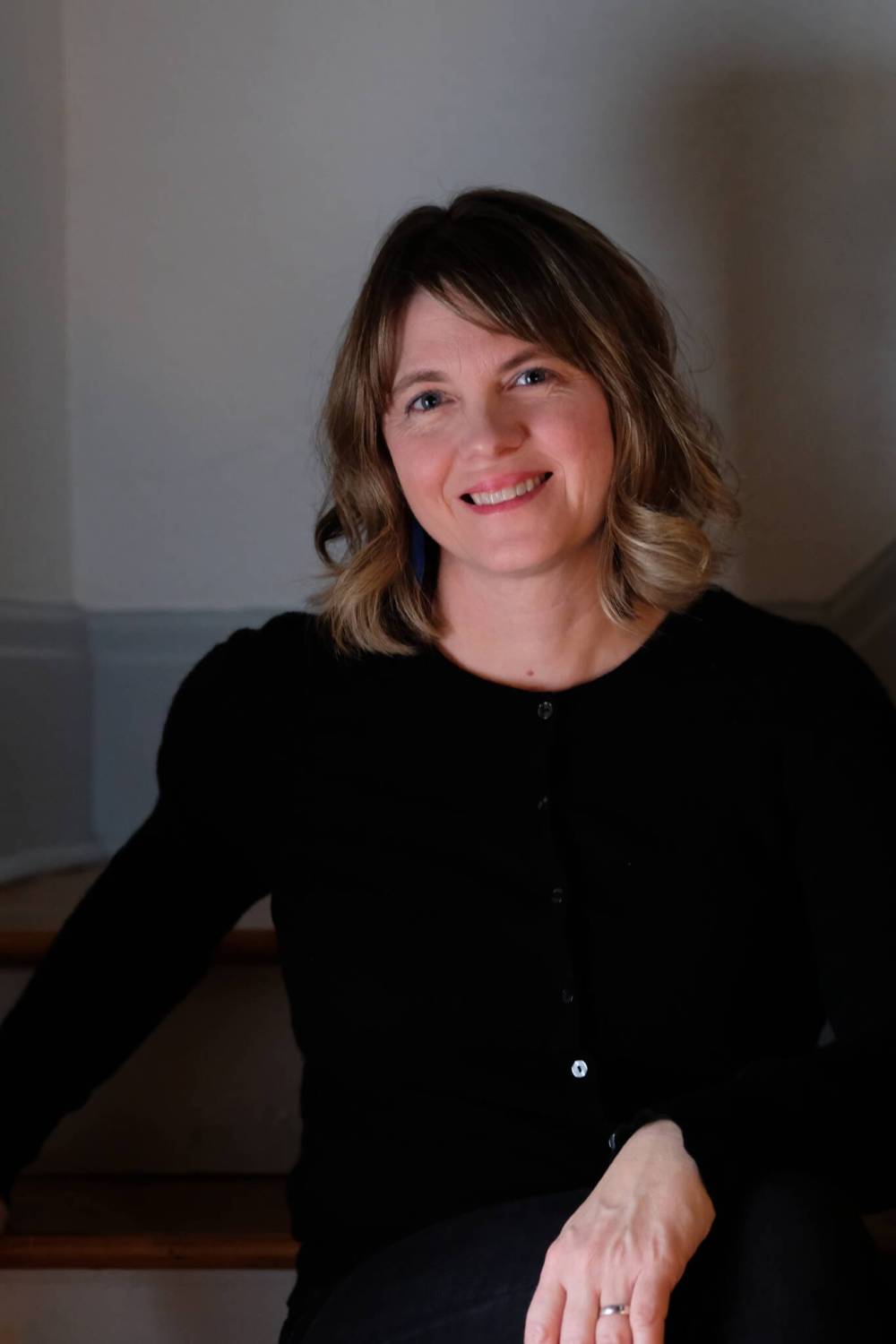
Andrew Trant photo
                                Author Emily Urquhart’s combination of personal essays and folk tales allows her to recount the specifics of her life in quiet but moving prose.

Andrew Trant photo

Author Emily Urquhart’s combination of personal essays and folk tales allows her to recount the specifics of her life in quiet but moving prose.

The book opens with Urquhart recounting the family story of the apparition — an “inky fluid mass” — that sometimes appeared in her borrowed bedroom in the village of Flavigny-sur-Ozergain in the Burgundy region of France when she was three. Urquhart was staying there because her father Tony was on sabbatical from teaching fine art and had borrowed the house from a colleague, as had other colleagues and friends. In the essay, Urquhart interviews the other children who stayed in that haunted bedroom, but also talks about the studies on the ability of young children to believe in almost anything and the key differences between a ghost story (or “personal haunting narrative”) and a fairy tale.

As the narrator of Ordinary Wonder Tales ages, so do her stories. The next essay recounts Urquhart’s experiences with sexual violence, comparing them not only with old European ballads but also the TV show Law and Order: Special Victims Unit. The ballads constitute a kind of horrible warning for women about abuse, rape and murder whereas SVU posited a world where women reporting sexual violence were treated with respect and dignity.

Next come the stories of a woman of child-bearing age: losing a child, having dubious encounters with the medical profession, having a child with a genetic condition and then deciding to have another child. These are bloody essays, but Urquhart’s way of thinking/feeling her way through the things that happened to herself and her loved ones, her way of turning them into stories, protects the reader.

The last part of the book focuses on the coronavirus pandemic and the history of plague tales, but also her father’s descent into dementia and the nature of memory.

Urquhart has treated the diagnosis of her daughter’s albinism in her first book, Beyond the Pale: Folklore, Family, and the Mystery of our Hidden Genes (2015), and her father’s Alzheimer’s disease in The Age of Creativity: Art, Memory, My Father and Me (2020), but these essays add to that material instead of re-treading it.

Beyond telling stories about stories, Urquhart does something else interesting in Ordinary Wonder Tales: she sets the fairy tales she is recounting in places she knows intimately. So that house in France reappears when she needs a starting place for a hero. Later, a maiden finds sanctuary on the banks of the Skeena River in British Columbia where Urquhart camped when she was pregnant with her second child. Urquhart notes that this interior decorating is completely involuntary: “What flickers to life in my mind’s eye as I read or listen to a story comes unbidden. I could no more conjure them on purpose than I could stop them from appearing.” Still, it’s a neat trick.
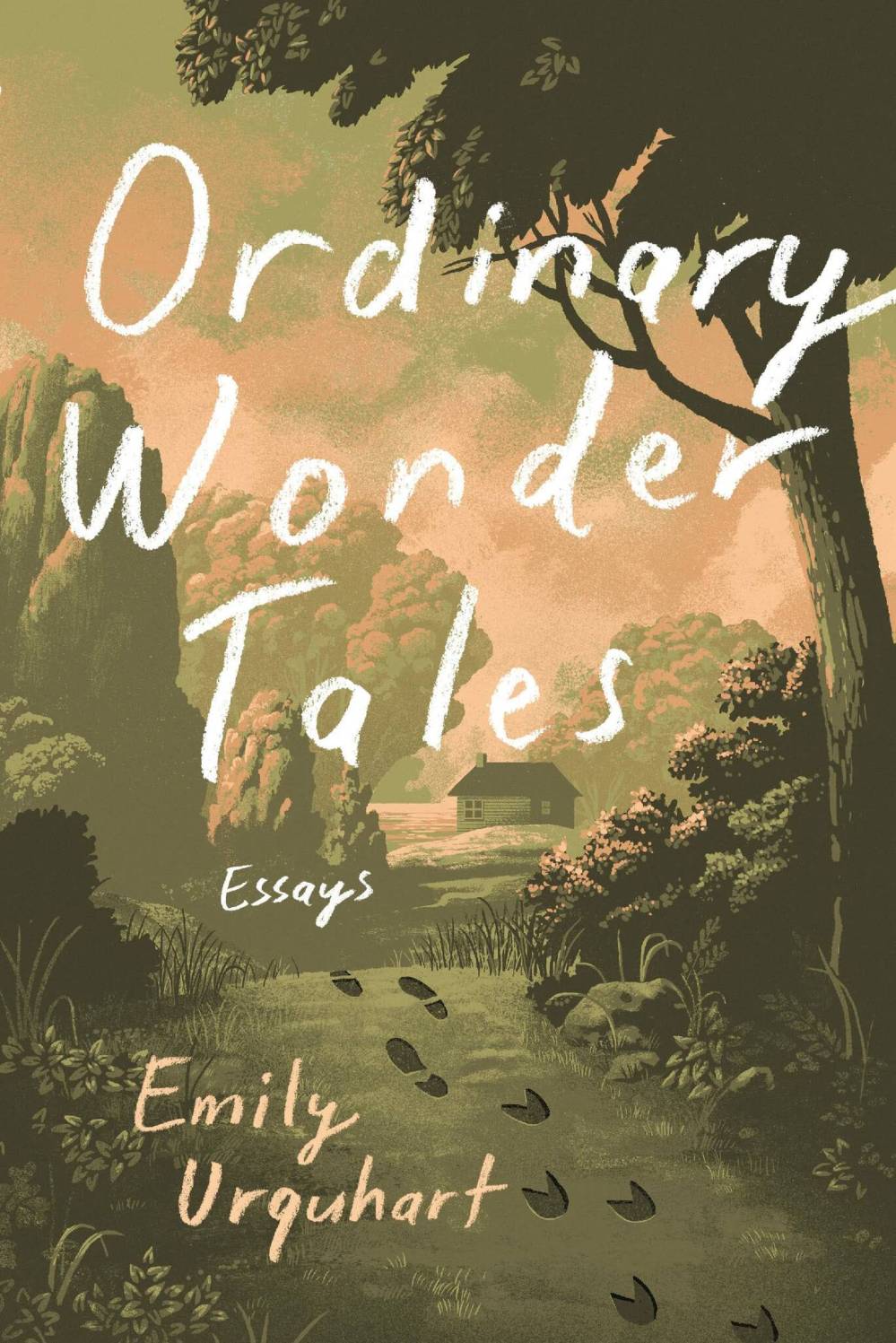
Ordinary Wonder Tales

Ordinary Wonder Tales

Ordinary Wonder Tales is a quietly charming book about all the ordinary tragedies in a life. Urquhart’s essays help us understand the stories we tell ourselves, while also being satisfying as stories themselves.

Ariel Gordon is the author of Treed: Walking in Canada’s Urban Forests, which attempts to combine the personal essay and science writing.

Report Error Submit a Tip

More Stories

PCs cleared of election violation for ‘intimacy coach’ invoice

Tyler Searle 4 minute read Preview

PCs cleared of election violation for ‘intimacy coach’ invoice

Tyler Searle 4 minute read Thursday, Jul. 16, 2026

Manitoba’s elections commissioner has cleared the Progressive Conservatives of wrongdoing after a $3,800 expense for a car rental appeared on an invoice from a company offering “intimacy coach” services.

The findings from the commissioner bring an end to a complaint raised by the NDP in October 2024, when it was alleged the PCs violated the Election Financing Act by forging financial documents related to the previous year’s election campaign.

“I am satisfied that the expense was indeed for a car rental, as the invoice described,” Bill Bowles wrote in a letter addressed to both parties Wednesday.

Concerns over the invoice to Lucid Vitality were first raised by a former PC staffer, whose internal emails with party officials were published in the Winnipeg Sun.

Read
Thursday, Jul. 16, 2026

Railways, costs and benefits — the long view

Barry E. Prentice 5 minute read 2:00 AM CDT

A railway bypass route for Winnipeg has been endorsed by Premier Wab Kinew for further feasibility study. Naturally, critics have emerged that question the economics of a railway bypass.

Doubters want to be convinced that the benefits exceed the costs, and quite rightly.

So, how should we be thinking about costs and benefits?

It is always easier to estimate the costs of large infrastructure projects than it is to measure benefits. Rail contractors can provide cost estimates of the kilometres of rail bed construction and rails required, plus the additional switches, overpasses and a railway trestle that will be needed. Land acquisition is a major cost and time delay.

From footnote to martyr: execution altered Scott’s place in history

Tom Brodbeck 5 minute read Preview

From footnote to martyr: execution altered Scott’s place in history

Tom Brodbeck 5 minute read Friday, Feb. 14, 2020

When Thomas Scott was marched outside the walls of Upper Fort Garry and executed by firing squad, it forever changed how history would treat Louis Riel and the Red River Resistance. The killing of Scott, whether a misguided error by Riel or an unavoidable step to prevent further bloodshed, would turn out to be one of the most pivotal events of the resistance.

Only a month after the Irish-born Canadian was condemned to death in March 1870, Riel opponents in Ontario used Scott’s execution to whip up anti-Métis sentiment in an effort to sabotage negotiations between Ottawa and the Red River Settlement. It nearly worked. Two of three Red River delegates sent to Ottawa to negotiate the terms of Manitoba’s entry into confederation were arrested on arrival (but later released) for Scott’s death. At the same time, Prime Minister John A. Macdonald was under increasing political pressure to send military troops to quell the resistance in Red River, rather than engage in peaceful negotiations.

Scott’s death didn’t just complicate matters for the Red River delegates. It undermined their efforts to bargain with Ottawa.

Scott was tried and convicted by a “military council” on March 3 for rebelling against the provisional government and attacking a Métis guard at Upper Fort Garry, where he and other political prisoners were held. The trial wasn’t conducted under normal court rules, even by 1870 Red River standards. Scott had no defence counsel and wasn’t present for much of the proceedings, which were conducted in French (a language he didn’t understand). Riel, one of the chief witnesses in the case, had to act as translator. The military council was not unanimous in its decision to sentence Scott to death. Some felt the penalty was too harsh.

Read
Friday, Feb. 14, 2020

DeKalb victory adds Team Ackland to list of province’s top curling teams

Taylor Allen 5 minute read Preview

DeKalb victory adds Team Ackland to list of province’s top curling teams

Taylor Allen 5 minute read Monday, Dec. 5, 2022

MORRIS, Man., — Don’t forget about Abby Ackland.

Read
Monday, Dec. 5, 2022

Investigating the Ukraine Airlines crash

Jordan Press, The Canadian Press 6 minute read Preview

Investigating the Ukraine Airlines crash

Jordan Press, The Canadian Press 6 minute read Wednesday, Jan. 8, 2020

OTTAWA - The crash of an airplane, anywhere in the world, launches an investigative process with standards for what evidence needs to be collected and who can be involved. Here's how it might work after the crash of a Ukrainian airliner flying from Tehran to Kyiv, with many Canadians aboard.

Who is involved?

Under rules set out by the International Civil Aviation Organization (ICAO), the countries where the crash happened, where the plane is registered, where the plane's operator is located, and where its manufacturer is based are all brought in. In this case, the Aircraft Accident Investigation Board of the Civil Aviation Organization of the Islamic Republic of Iran is in charge. Ukraine assists because the operator is based there, and so should the United States because that's where Boeing, the manufacturer of the 737-800 aircraft, is located.

The lead country can call in other outside experts to look more closely at the engines, the pilots and maintenance, among other areas, said Barbara Dunn, president of the Canadian Society of Air Safety Investigators.

Read
Wednesday, Jan. 8, 2020

Hot topic: mayor considers max temp for rental properties

Joyanne Pursaga 3 minute read Preview

Hot topic: mayor considers max temp for rental properties

Joyanne Pursaga 3 minute read Tuesday, Jul. 14, 2026

Mayor Scott Gillingham says he’s open to exploring a call to set a maximum temperature for indoor rental units.

“I think we should be looking at that, as far as what the specifics would be … (In) our overall body of work, recently, we have been addressing the heat and making sure people have places to get out from under the heat,” said Gillingham.

Tenant and environmental groups have called for a maximum indoor rental unit heat limit that doesn’t exceed 26 C. A city bylaw does require landlords to maintain a minimum daytime temperature of 21 C during cold weather.

Gillingham noted the city has added 24-7 safe spaces, extended spray pad hours, opened libraries as cooling spaces and added drinking water stations to provide relief on very hot days.

Read
Tuesday, Jul. 14, 2026