First World War medical narratives ghastly
Advertisement
Read this article for free:
or
Already have an account? Log in here »
To continue reading, please subscribe:
Digital Subscription
One year of digital access for only $1.44 a week*
- Enjoy unlimited reading on winnipegfreepress.com
- Read the E-Edition, our digital replica newspaper
- Access News Break, our award-winning app
- Play interactive puzzles
*Billed as $5.77 plus GST every four weeks. After 52 weeks, price increases to the regular rate of $19.95 plus GST every four weeks. Offer available to new and qualified returning subscribers only. Cancel any time.
To continue reading, please subscribe:
Add Free Press access to your Brandon Sun subscription for only an additional
$1 for the first 4 weeks*
- Enjoy unlimited reading on winnipegfreepress.com
- Read the E-Edition, our digital replica newspaper
- Access News Break, our award-winning app
- Play interactive puzzles
*Your next Brandon Sun subscription payment will increase by $1.00 and you will be charged $17.95 plus GST for four weeks. After four weeks, your payment will increase to $24.95 plus GST every four weeks.
Read unlimited articles for free today:
or
Already have an account? Log in here »
Hey there, time traveller!
This article was published 19/11/2022 (1426 days ago), so information in it may no longer be current.
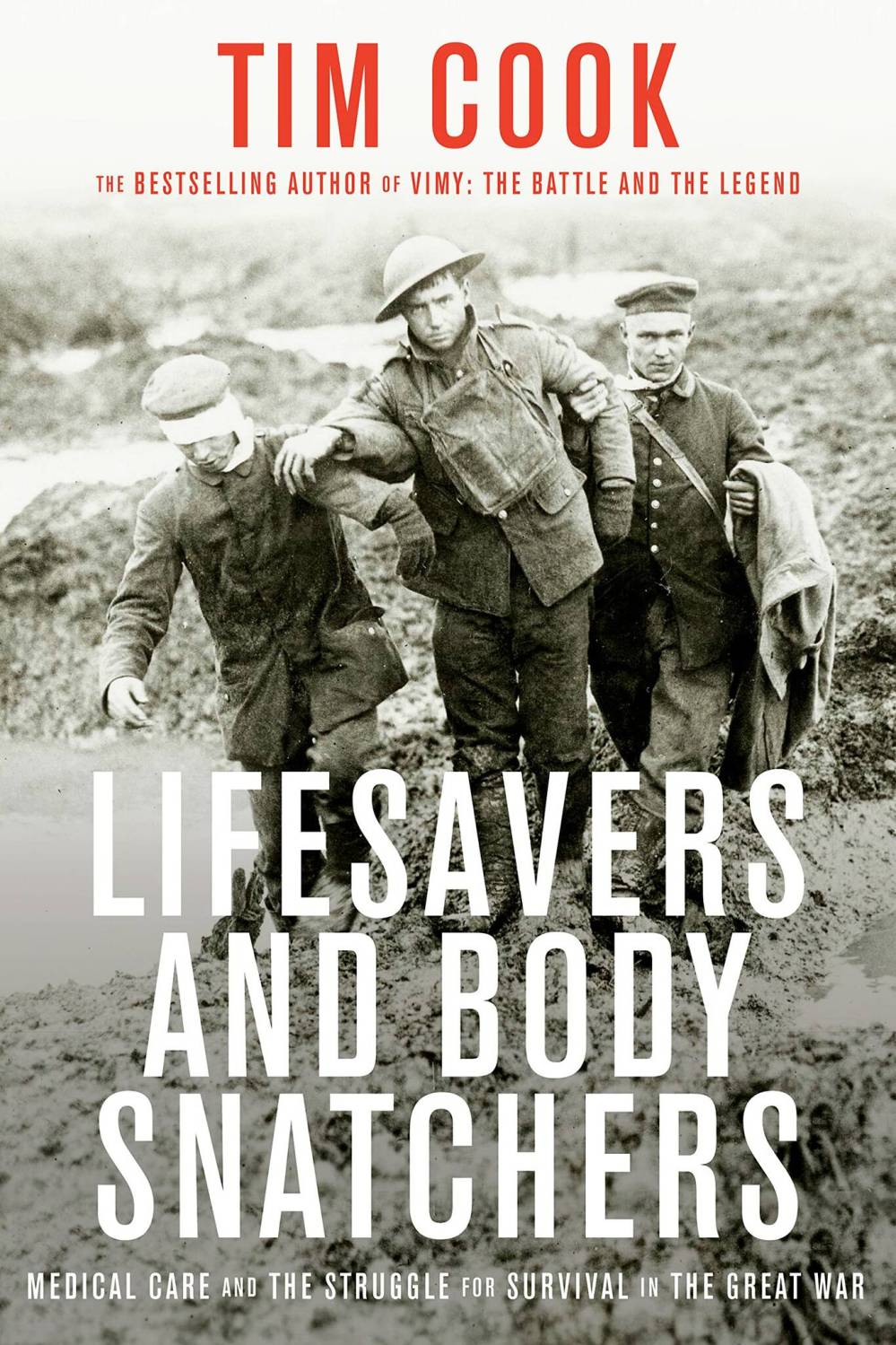
Can anything good come out of a world war? Canadian historian Tim Cook answers that question in this detailed doorstopper, with a focus on the medical personnel featuring personal narratives — which includes just enough statistics to reinforce his conclusions.
This is not a book for the squeamish. We tend to expect that film or photographs have the power to disturb or move us, but I have never felt such distress as reading Cook’s litany of horrors faced by those who served Canada in the First World War.
In the static trench system he describes, the smell of the dead is ever-present.
Lifesavers and Body Snatchers
Add to that the accompanying rats, the rot that is known as trenchfoot from standing in water, cholera, typhus and dysentery, shrapnel and bullet wounds — to say nothing of the flies and ever-present lice.
As the war continued, new weapons arrived. Cook offers graphic descriptions of the use of gas: chlorine, phosgene and, worst of all, mustard. As Cook describes it, “The vile mustard gas that turned lungs to fluid, and burned skin from the body… it retained its ability to burn and blind for up to two weeks.”
These are just some of the challenges that stretcher-bearers, nurses and doctors faced. Keep in mind that when the war began in 1914, the Canadian Army Medical Corps (CAMC) had only 20 permanent forces officers. During the war, the medical services expanded to over 20,000 volunteers, men and women, with about half of all Canadian doctors in uniform and about one-third of the country’s nurses.
Cook’s answer to the question — can anything good come out of war? — was the realization that disease kills more combatants than wounds. This, and the effort to transport the wounded as quickly as possible to nearby medical aid, led to the result that “nine out of 10 wounded soldiers survived their injury if they were cared for by a medical practitioner.”
As to disease, “Canadians had the highest rates of venereal disease in the British Forces,” about five times more than British soldiers. This problem seems to have been approached as a moral one rather than as a medical one, which was accompanied by blaming the women involved rather than the soldiers, according to Cook.

Two other engrossing issues stand out in Lifesavers and Body Snatchers as indicated in the title. Shellshock was renamed at the military’s insistence to NYD, Not Yet Diagnosed.
Here the civilian doctors came up against the military insistence to get soldiers back into the front lines after they were mentally incapacitated by what they had experienced. Grave doubts were expressed about the diagnosis as merely excusing cowardice and malingering.
The second was in the term “body snatchers.” In a practice that was known at the time but a revelation to readers of the book today, almost 800 Canadian soldiers who died from combat had some of their organs or bones sent back to Canada, with the idea that they would be part of a medical museum as an aid to medical practitioners. No soldier had given his permission, nor was their next of kin aware this had been done.
An unusual, seemingly disturbing footnote to another fine book from Tim Cook.
The closest Ron Robinson ever came to the smell of cordite was six years as an air cadet.