Governor General’s prize a ‘double-edged sword’ for trans poet Gwen Benaway

Advertisement

Advertise with us

When Gwen Benaway found out she had won the Governor General's Literary Award for poetry, she said her immediate reaction was not joy, but "intense fear and panic."

Read this article for free:


By clicking the button above, an account will be created and you will begin to receive some of our recommended newsletters. You may opt out of any newsletter by visiting your Email and Communication Preferences page or by clicking "unsubscribe" at the bottom of any email.

or

Already have an account? Log in here »

To continue reading, please subscribe:

Digital Subscription

One year of digital access for only $1.44 a week*

  • Enjoy unlimited reading on winnipegfreepress.com
  • Read the E-Edition, our digital replica newspaper
  • Access News Break, our award-winning app
  • Play interactive puzzles

*Billed as $5.77 plus GST every four weeks. After 52 weeks, price increases to the regular rate of $19.95 plus GST every four weeks. Offer available to new and qualified returning subscribers only. Cancel any time.

To continue reading, please subscribe:

Add Free Press access to your Brandon Sun subscription for only an additional

$1 for the first 4 weeks*

  • Enjoy unlimited reading on winnipegfreepress.com
  • Read the E-Edition, our digital replica newspaper
  • Access News Break, our award-winning app
  • Play interactive puzzles
Start now

*Your next Brandon Sun subscription payment will increase by $1.00 and you will be charged $17.95 plus GST for four weeks. After four weeks, your payment will increase to $24.95 plus GST every four weeks.

Hey there, time traveller!
This article was published 29/10/2019 (2559 days ago), so information in it may no longer be current.

When Gwen Benaway found out she had won the Governor General’s Literary Award for poetry, she said her immediate reaction was not joy, but “intense fear and panic.”

The Toronto writer and scholar says she’s shocked to be among the few transgender women to be recognized by a Canadian literary institution, even as she protests another.

News of the honour came as Benaway and others denounce Toronto Public Library for refusing to cancel an event featuring a speaker who has been critical of transgender rights. She’s since been fielding a barrage of online attacks for her role in the outcry.

Writer and scholar Gwen Benaway is photographed in her in Toronto apartment on Monday, October 28, 2019. Benaway says winning the Governor General's Literary Award for poetry can feel like a
Writer and scholar Gwen Benaway is photographed in her in Toronto apartment on Monday, October 28, 2019. Benaway says winning the Governor General's Literary Award for poetry can feel like a "double-edged sword."THE CANADIAN PRESS/Chris Young

Benaway, who is of Anishinaabe and Metis descent, hopes the awards spotlight on her third poetry collection, “Holy Wild,” will amplify her voice to reach other trans women, but fears the attention will also draw out a familiar chorus of people eager to silence her.

“It’s a double-edged sword,” Benaway, 32, said by phone ahead of Tuesday’s announcement of the literary prize winners.

“You have these moments where representation happens, and it means a lot to people like you, but at the same time, you’re almost more vulnerable.”

Benaway is among the critics who urged the library’s board to cancel the planned talk, saying the institution is providing a platform for Meghan Murphy to spread hate speech.

Murphy, a freelance writer who runs the website “Feminist Current,” has written that “allowing men to identify as women” poses a threat to women and their rights.

The library, meanwhile, says it is aware that the event has caused “anger and concern” but maintains it has an obligation to protect free speech.

Benaway said she would protest the talk set for Tuesday, titled “Gender Identity: What Does It Mean For Society, The Law and Women?” and hosted by a group called “Radical Feminists Unite.”

“It’s kind of funny to have literary recognition happen … during that time period, because it reminds me of how much work we have to do as trans people and trans women just to have our voices be heard, just for us to be taken seriously as artists and thinkers.”

Benaway said “Holy Wild,” published by Book*hug, tracks how institutional discrimination is entwined with more intimate forms of transphobia, drawing from her own experiences with romance and dating.

“I’ve heard from a lot of other trans women that the book was important to them, that it was one of the first times that they saw themselves,” said Benaway.

“I think it is important in that way to create these works of literature that show the possibilities, but I don’t want to sugarcoat the reality of what life is like for trans women in Canada. It’s still very difficult.”

The Governor General’s Literary Awards, which are administered by the Canada Council for the Arts, named six other English-language winners Tuesday.

Winnipeg’s Joan Thomas scored the fiction prize for “Five Wives,” published by Harper Avenue, a historical novel based on the real-life stories of women who must fend for themselves in the Ecuadorian rainforest after their missionary husbands are killed.

Thomas, whose previous accolades include the Amazon.ca First Novel Award, said she’s honoured to join the ranks of Manitoba-bred writers such as Miriam Toews, Sandra Birdsell and Carol Shields who have been recognized by the Governor General’s Literary Awards, which were founded in 1936.

“This is a prize that’s had so much historical significance,” said Thomas. “It’s always felt very prestigious to me.”

Don Gillmor of Toronto received the non-fiction prize for “To the River: Losing My Brother,” published by Random House Canada.

The drama honour was awarded to Toronto’s Amanda Parris for “Other Side of the Game” from Playwrights Canada Press.

Erin Bow of Kitchener, Ont., won the young people’s literature prize for text with “Stand on the Sky,” published by Scholastic Canada, while the illustrated books award went to Halifax’s Sydney Smith for “Small in the City” from Groundwood Books.

In the French-to-English translation category, the winner is Linda Gaboriau of Montreal for “Birds of a Kind” from Playwrights Canada Press, a translation of “Tous des oiseaux” by Wajdi Mouawad.

Each winner receives $25,000, while the publisher of each winning book receives $3,000 to support promotional activities. Finalists each receive $1,000.

Gov. Gen. Julie Payette will host a ceremony honouring the winners at Rideau Hall in Ottawa on Dec. 12.

This report by The Canadian Press was originally published on Tuesday, Oct. 29, 2019.

Report Error Submit a Tip

More Stories

Fact Check

1 minute read Thursday, Nov. 30, 2023

Fact Check

Having problems with the form?Contact Us Directly |

Doctor’s departure stressful for teen

Kevin Rollason 6 minute read Preview

Doctor’s departure stressful for teen

Kevin Rollason 6 minute read Sunday, Oct. 24, 2021

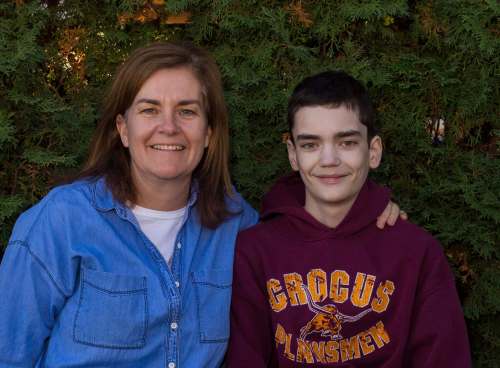
Morgan Walker is a typical teen — but only because a piece of his brain the size of a deck of cards was removed four years ago.

Walker, who had seizures multiple times a day before his surgery, fears other people might not be so lucky.

That’s because his surgeon, Dr. Demitre Serletis, is leaving the province and Health Sciences Centre. Serletis will start practising at the Cleveland Clinic in the new year.

“I was kind of shocked, but I understood why,” Walker said from his home in Brandon. “The government really hasn’t been respecting doctors.”

Read
Sunday, Oct. 24, 2021

Industry minister to meet Rogers CEO after outage

Tyler Griffin, The Canadian Press 4 minute read Preview

Industry minister to meet Rogers CEO after outage

Tyler Griffin, The Canadian Press 4 minute read Sunday, Jul. 10, 2022

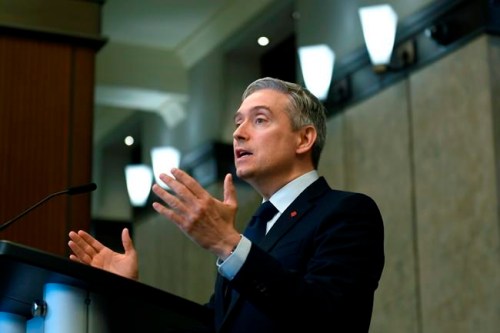
TORONTO - Canada's industry minister will convene a meeting with the leader of Rogers Communications in the wake of a massive outage that paralyzed the company's network and hampered several crucial services, his office announced on Sunday, even as some customers continued to report service disruptions.

A statement released from the office of François-Philippe Champagne said he plans to meet with Tony Staffieri and other telecom leaders to discuss the importance of improving "the reliability of networks across Canada."

The statement said Champagne found last week's widespread service disruption — which lasted at least 15 hours and knocked out access to numerous law enforcement, health care and banking services — "unacceptable," adding he has expressed that view directly to Staffieri.

"These services are vitally important for Canadians in their day to day life and we expect our telecom industry to meet the highest standards that Canadians rightly deserve," the statement read.

Read
Sunday, Jul. 10, 2022

Letters, Oct. 31

6 minute read 2:01 AM CDT

Civic election a missed opportunity

The outcome of the latest municipal election in Winnipeg is nothing short of baffling. The decline of what was once a proud, beautiful prairie hub is impossible to ignore.

Winnipeg is rapidly sliding into a state of structural and social dilapidation, yet voters have inexplicably chosen to hand incumbent Mayor Scott Gillingham a second term. The decision smells of complacency, and sadly, it represents a massive missed opportunity for real urban renewal.

Walking through downtown Winnipeg today is an exercise in heartbreak. A city centre that should be a bustling economic and cultural core has instead transformed into an absolute eyesore. Encampments and tents are permitted to dot the heart of the city. Streets that used to thrive are now dominated by the tragic, visible reality of severe addiction, with individuals wandering and staggering through public spaces without adequate intervention or care.

The trick to attracting wee, treat-seeking ghosts and goblins on Halloween is to go all-in

Jen Zoratti 5 minute read Preview

The trick to attracting wee, treat-seeking ghosts and goblins on Halloween is to go all-in

Jen Zoratti 5 minute read Wednesday, Oct. 31, 2018

When I was a kid in the 1990s, I lived for Halloween.

My mom, a gifted seamstress, made all of my costumes. Deciding what I’d dress up as involved imagination and a trip to the fabric or craft store.

I loved flipping through the McCall’s patterns, and running my hands along the bolts of fabric that my mom would transform into Little Bo Peep, or Dorothy from the Wizard of Oz, or, one year, a Christmas tree — complete with the star on top. Old things were repurposed into new things.

Trick-or-treating was my... I don’t know, some sort of sports reference. The goal? Amass as much candy as possible. We’d troll the neighbourhood for hours, dragging snow-sodden pillow cases full of it. We’d target specific streets, lured mostly by the promise of full-sized chocolate bars.

Read
Wednesday, Oct. 31, 2018

The long and winding road

Editorial 4 minute read Preview

The long and winding road

Editorial 4 minute read 2:01 AM CDT

As theatre goes, it sent a strong message.

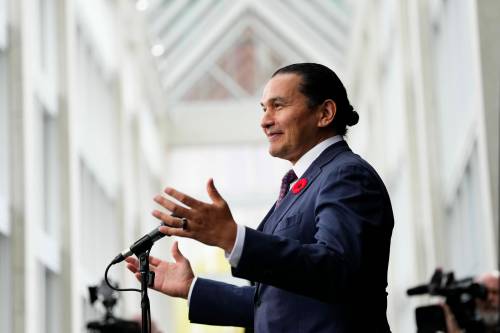
Manitoba Premier Wab Kinew, standing in front of microphones and television cameras, holding up his Indigenous status card and saying that he didn’t feel Canada should have “a race-based form of identification in this country, but that is a reality,” adding that it was time to abolish the Indian Act.

“I think it’s time to abolish the Indian Act, get rid of the Indian Act, move past the Indian Act, and it needs to be done with First Nations people and First Nations governments, of course. I think it’s long overdue that we have a relationship with Indigenous Peoples in Canada that reflects who we are as Canadians today,” he said.

The Indian Act — the name alone suggests how out-dated and out of place the law has become. Originally dating from 1876, the law was put in place to “amend and consolidate the laws respecting Indians” and gave the Minister of the Interior the responsibility to “control and management of the reserves, lands, moneys and property of Indians in Canada.”

Read
2:01 AM CDT