Sky-high balloons anchored to earthly history

Advertisement

Advertise with us

One might be excused for thinking of a balloon in the sky, its basket high above the horizon, as a uniquely distant and detached thing.

Read this article for free:


or

Already have an account? Log in here »

To continue reading, please subscribe:

Subscribe and receive a limited-edition Free Press branded hat or tote.

Digital Subscription

One year of digital access for only $205*

  • Enjoy unlimited reading on winnipegfreepress.com
  • Read the E-Edition, our digital replica newspaper
  • Access News Break, our award-winning app
  • Play interactive puzzles

*First annual payment billed as $205.00 + GST for one year. This annual subscription will automatically renew at $233.00 + GST every 52 weeks (10% off the regular annual price of $259.35). Offer available to new and qualified returning subscribers only. Cancel any time.

To continue reading, please subscribe:

Add Free Press access to your Brandon Sun subscription for only an additional

$1 for the first 4 weeks*

  • Enjoy unlimited reading on winnipegfreepress.com
  • Read the E-Edition, our digital replica newspaper
  • Access News Break, our award-winning app
  • Play interactive puzzles
Start now

*Your next Brandon Sun subscription payment will increase by $1.00 and you will be charged $17.95 plus GST for four weeks. After four weeks, your payment will increase to $24.95 plus GST every four weeks.

Opinion

Hey there, time traveller!
This article was published 25/05/2013 (4875 days ago), so information in it may no longer be current.

One might be excused for thinking of a balloon in the sky, its basket high above the horizon, as a uniquely distant and detached thing.

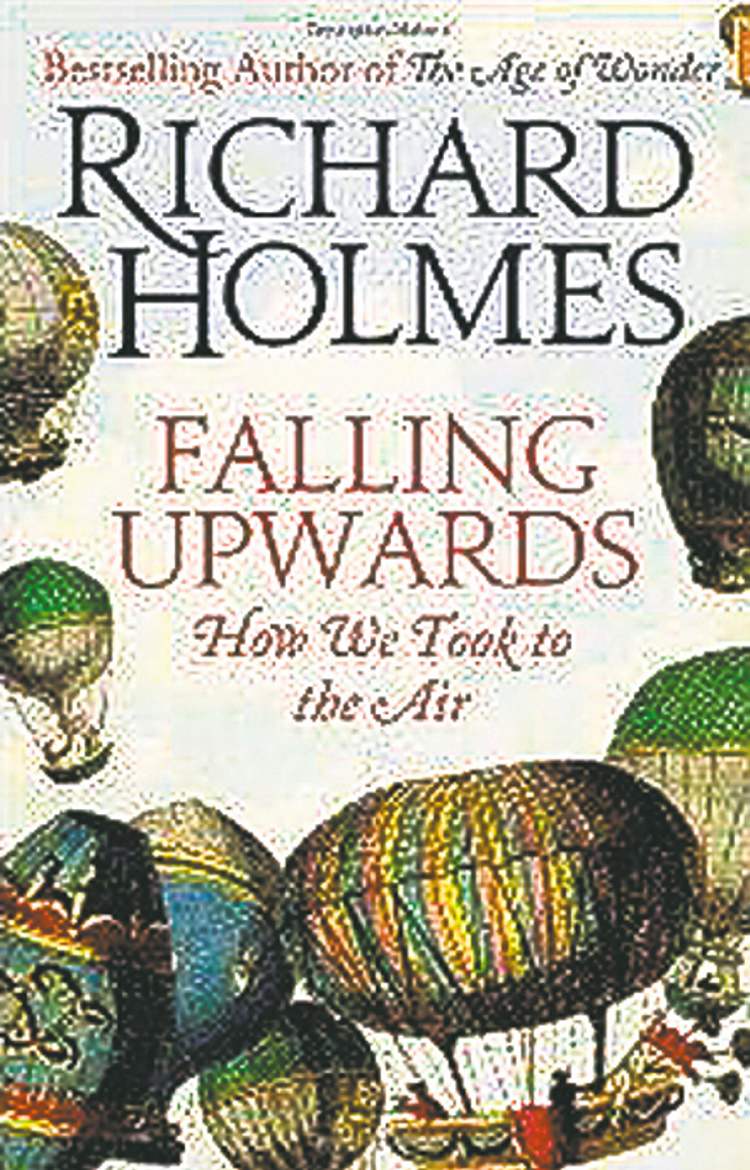
After all, a launched balloon seems above and apart from the grind of daily life. Falling Upwards, a fascinating new history of the dangerous early days of balloon flight, challenges this notion. Its author, British academic Richard Holmes, is intrigued by pioneers of ballooning and by their journeys to hazardous heights.

His accounts of these journeys show that balloons are best understood as tethered to earth, sometimes literally but always figuratively. Connecting ballooning to a wide range of political, technological and cultural developments, Holmes reminds us that balloons are anchored to history and that they bear the significant weight of the needs and desires of the innovative societies that built and launched them.
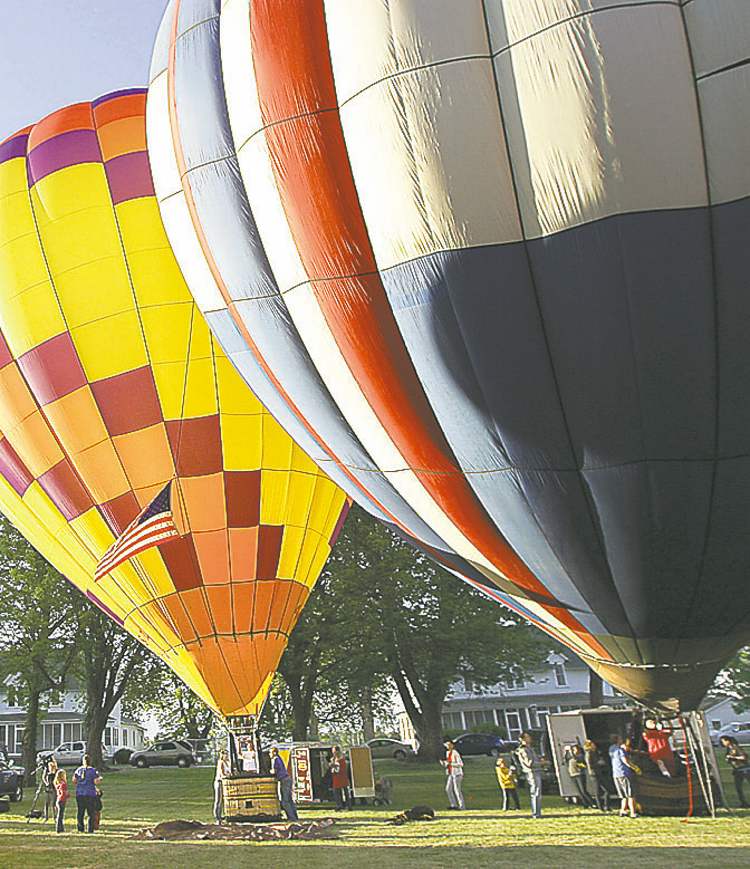
MCT
Richard Holmes tells engaging tale of balloons.
MCT Richard Holmes tells engaging tale of balloons.

Holmes is a biographer who specializes in the Romantic era, the age of Keats, Coleridge and Wordsworth. His recent bestseller, The Age of Wonder, won Britain’s Royal Society Prize for science books, appealing to a wide readership with its engaging discussion of connections between literary and scientific developments. Holmes takes a similar approach in this book; his ability to mix the cultural and the scientific is on show throughout.

For instance, in a gutsy preface, Holmes shares some of the extraordinary things that have been said and written about ballooning, gathering together the bon mots of such major figures as Charles Dickens, Victor Hugo, George Sand, Benjamin Franklin and Charles Darwin. It’s a hard act to follow: these quotations create an appetite in readers for both poetic prose and carefully contextualized information. Holmes delivers on both counts.

His opening chapter is structured by a selection of engaging anecdotes, some from the recent past. One concerns a priest from Brazil who lost his life in 2008 to an ill-fated fundraising effort involving a chair and a thousand helium party balloons. Another describes the 1979 escape from East Germany of two families who worked together to secretly build a hot-air balloon. Huddled together on a flimsy platform, their only guardrail made of clothesline, they launched their homemade balloon under the cover of darkness and, with the youngest passenger in his mother’s arms, floated across the heavily guarded border to land safely in the West.

While recent history plays a part, the focus of the book is the first century and a half of ballooning, a practice that took on cultural prominence in the 1780s with widely reported on ascents of manned, gas-filled balloons. In the decades that followed, balloons were launched in pursuit of the thrill of flight but were also launched for more pragmatic reasons.

Pleasure, science and politics all play a role in the history of the balloon, a fact suggested by the payloads of early balloons, which consisted of things as varied as cases of champagne, fragile scientific and photographic equipment, bags of smuggled letters and propaganda pamphlets.

The book is illustrated and contains several stunning images of early ballooning. There are some wonderfully fanciful engravings but the photographs the book contains are particularly memorable.

Among them are a pair of photographs taken of a crash that grounded an ill-fated attempt to reach the North Pole by balloon. In 1897, a trio of Swedish adventurers set out to conquer the pole but things went badly, as is often the way with polar expeditions, and their remains were discovered three decades later.
Among the carefully wrapped up belongings found near their bodies were sealed tins of exposed film. The photographs produced from them were taken by the youngest member of the trio, Nils Strindberg, and they are haunting.

They show Strindberg’s fellow explorers examining their grounded balloon against a backdrop of white snow and low cloud, a painful portrait of the landscape that would claim their lives weeks later.

Holmes focuses on the dangers faced by others, but he took a noteworthy risk of his own when he decided to write a history of ballooning that is both surprisingly poetic and very personal. Achieving something that the cultural history genre aspires to but rarely achieves, Falling Upwards traces what might be dismissed as a fad but in doing so manages to transform our understanding of an age.

Vanessa Warne teaches English at the University of Manitoba.

Report Error Submit a Tip

More Stories

Pallister’s ego behind carbon tax flip-flop

Dan Lett 6 minute read Preview

Pallister’s ego behind carbon tax flip-flop

Dan Lett 6 minute read Thursday, Oct. 4, 2018

It doesn't make any sense.

Earlier this week, Manitoba Premier Brian Pallister stunned onlookers inside and outside the province with a decision to abandon his own $25-per-tonne carbon tax — the core lever in a complex, provincewide plan to curb carbon emissions.

The premier told reporters Wednesday he was throwing out nearly two years of work on a homegrown climate change plan because Ottawa did not "respect" Manitoba's desire to hold carbon taxes at about half the level demanded by the federal government.

It was not clear what Pallister meant by respect; the two levels of government disagree about the level at which carbon taxes should be set. Up until this week, the two levels of government disagreed over policy and methodology.

Read
Thursday, Oct. 4, 2018

Sky-high balloons anchored to earthly history

Reviewed by Vanessa Warne 4 minute read Preview

Sky-high balloons anchored to earthly history

Reviewed by Vanessa Warne 4 minute read Saturday, May. 25, 2013

One might be excused for thinking of a balloon in the sky, its basket high above the horizon, as a uniquely distant and detached thing.

After all, a launched balloon seems above and apart from the grind of daily life. Falling Upwards, a fascinating new history of the dangerous early days of balloon flight, challenges this notion. Its author, British academic Richard Holmes, is intrigued by pioneers of ballooning and by their journeys to hazardous heights.

His accounts of these journeys show that balloons are best understood as tethered to earth, sometimes literally but always figuratively. Connecting ballooning to a wide range of political, technological and cultural developments, Holmes reminds us that balloons are anchored to history and that they bear the significant weight of the needs and desires of the innovative societies that built and launched them.

Holmes is a biographer who specializes in the Romantic era, the age of Keats, Coleridge and Wordsworth. His recent bestseller, The Age of Wonder, won Britain's Royal Society Prize for science books, appealing to a wide readership with its engaging discussion of connections between literary and scientific developments. Holmes takes a similar approach in this book; his ability to mix the cultural and the scientific is on show throughout.

Read
Saturday, May. 25, 2013

What does the PC stand for in party’s name? Seems to be Pretty Confused

Tom Brodbeck 5 minute read Preview

What does the PC stand for in party’s name? Seems to be Pretty Confused

Tom Brodbeck 5 minute read 1:11 PM CDT

It should have been obvious from the beginning that the Manitoba Progressive Conservative party was going to have trouble holding itself together under Obby Khan.

The warning came in April 2025, when the now-former PC party leader narrowly won the leadership over far-right populist candidate Wally Daudrich.

Technically, Khan won. Politically, however, it was a more complicated result.

Daudrich received more votes than Khan, but Khan prevailed because the party used a constituency-weighted points system that gave him just enough of an advantage to put him over the top.

Read
1:11 PM CDT

Northern style

AV Kitching 8 minute read Preview

Northern style

AV Kitching 8 minute read Tuesday, Sep. 15, 2026

North of North is partnering with the Winnipeg Art Gallery-Qaumajuq to celebrate the way it has propelled authentic northern fashion into the global spotlight at the gallery’s special edition of Crafted on the Catwalk tonight, featuring fashion and design from Manitoba, Nunavut, the Northwest Territories, Nunatsiavut and Nunavik.

Arnaquq-Baril and series stars Anna Lambe and Zorga Qaunaq spoke to the Free Press ahead of tonight’s catwalk show.

Read
Tuesday, Sep. 15, 2026

AI, animals and us

Jordan Laidlaw 5 minute read 2:00 AM CDT

It is now perhaps axiomatic to declare that artificial intelligence will revolutionize the world, as researchers and industry insiders are projecting the novel technology to become the greatest technological breakthrough in human history.

There has been a flurry of discussion in both our local and international contexts — and with good cause. We must remain steadfast to ensure our youth, local workforces, and environment are not negatively impacted by this burgeoning technology.

I wish to accentuate, however, a somewhat neglected area of public discussion around AI developments. Specifically, we urgently need to re-evaluate the ethos of humanity, particularly cognizant of the emergence of this digitally superintelligent species.

If artificial superintelligence (ASI) is ultimately achieved, leading academics theorize that these digital agents will be sentient, conscious, and astronomically more intelligent and powerful than us. In fact, numerous scholars believe AI to already possess some level of consciousness in its current iteration. This position is held by eminent evolutionary biologist Richard Dawkins, for example.

COVID-19 vaccine Q-and-A: What you need to know

Melissa Couto Zuber, The Canadian Press 5 minute read Preview

COVID-19 vaccine Q-and-A: What you need to know

Melissa Couto Zuber, The Canadian Press 5 minute read Wednesday, Jan. 13, 2021

Canada's COVID-19 vaccine rollout hits its one-month mark on Thursday, but questions remain about the inoculations themselves, how they're being distributed and what happens next.

The Canadian Press recently spoke with experts in infectious disease, immunology and public health to help get some clarity on popular queries.

WHO'S NEXT IN LINE TO GET THE VACCINE?

Canada's provinces seem to mostly be adhering to recommendations put forward by the National Advisory Committee on Immunization (NACI), which suggests first vaccinating those most vulnerable to severe COVID outcomes, as well as those who care for them.

Read
Wednesday, Jan. 13, 2021