Energetic, lucid Black still praises Nixon

Advertisement

Advertise with us

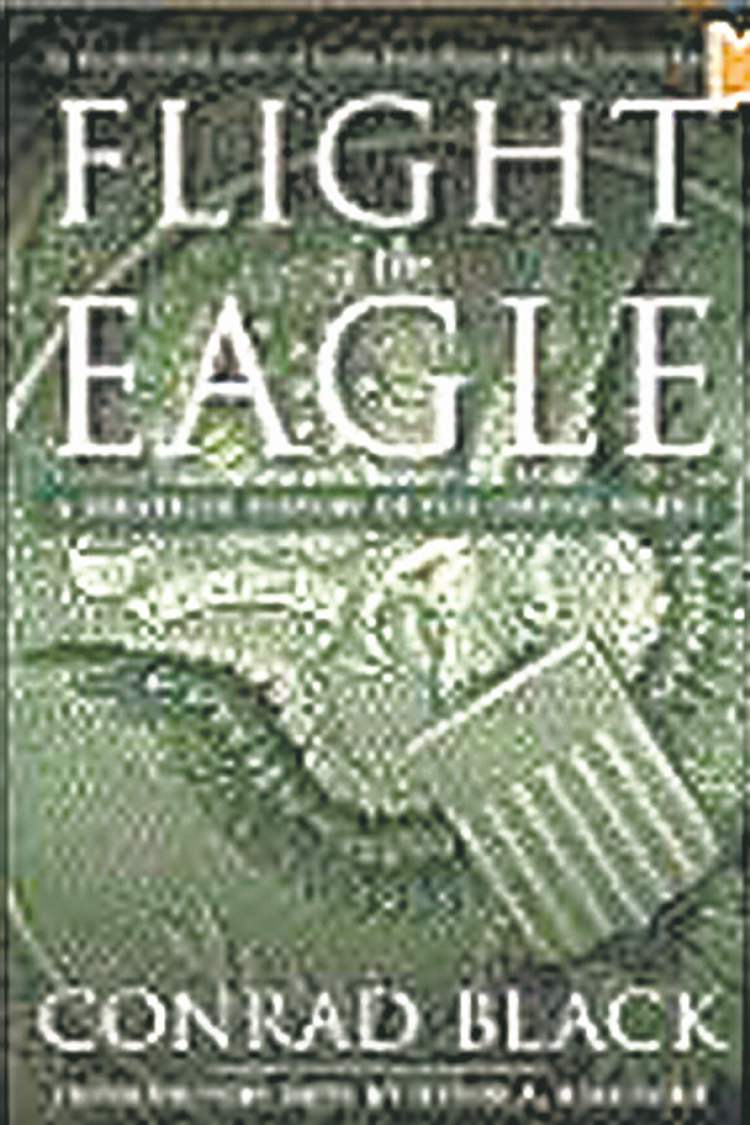
Ever since his fall from the heights of the newspaper publishing world, Conrad Black has shown a voracious appetite for literary achievement. Long historical biographies of American political leaders have become his intellectual passion.

Read this article for free:


or

Already have an account? Log in here »

To continue reading, please subscribe:

Subscribe and receive a limited-edition Free Press branded hat or tote.

Digital Subscription

One year of digital access for only $205*

  • Enjoy unlimited reading on winnipegfreepress.com
  • Read the E-Edition, our digital replica newspaper
  • Access News Break, our award-winning app
  • Play interactive puzzles

*First annual payment billed as $205.00 + GST for one year. This annual subscription will automatically renew at $233.00 + GST every 52 weeks (10% off the regular annual price of $259.35). Offer available to new and qualified returning subscribers only. Cancel any time.

To continue reading, please subscribe:

Add Free Press access to your Brandon Sun subscription for only an additional

$1 for the first 4 weeks*

  • Enjoy unlimited reading on winnipegfreepress.com
  • Read the E-Edition, our digital replica newspaper
  • Access News Break, our award-winning app
  • Play interactive puzzles
Start now

*Your next Brandon Sun subscription payment will increase by $1.00 and you will be charged $17.95 plus GST for four weeks. After four weeks, your payment will increase to $24.95 plus GST every four weeks.

Opinion

Hey there, time traveller!
This article was published 25/05/2013 (4858 days ago), so information in it may no longer be current.

Ever since his fall from the heights of the newspaper publishing world, Conrad Black has shown a voracious appetite for literary achievement. Long historical biographies of American political leaders have become his intellectual passion.

In this thick new volume, which covers an even larger U.S. canvas, he writes with boundless energy, graceful lucidity, considerable learning and unremitting hostility to the U.S. justice system (the “prosecutacacy”) that imprisoned him. An introduction by Henry Kissinger assures the reader that Black understands all the complexities of “balance-of-power” diplomacy.

In spite of its subtitle suggesting foreign policy as a main theme, Flight of the Eagle is, for the most part, conventional political narrative emphasizing the succession of presidential administrations and great debates in the national councils. The strength of his method is to show how politics at home shaped U.S. relations beyond its borders, especially in the 19th-century attempts to fix or expand those borders.
CP
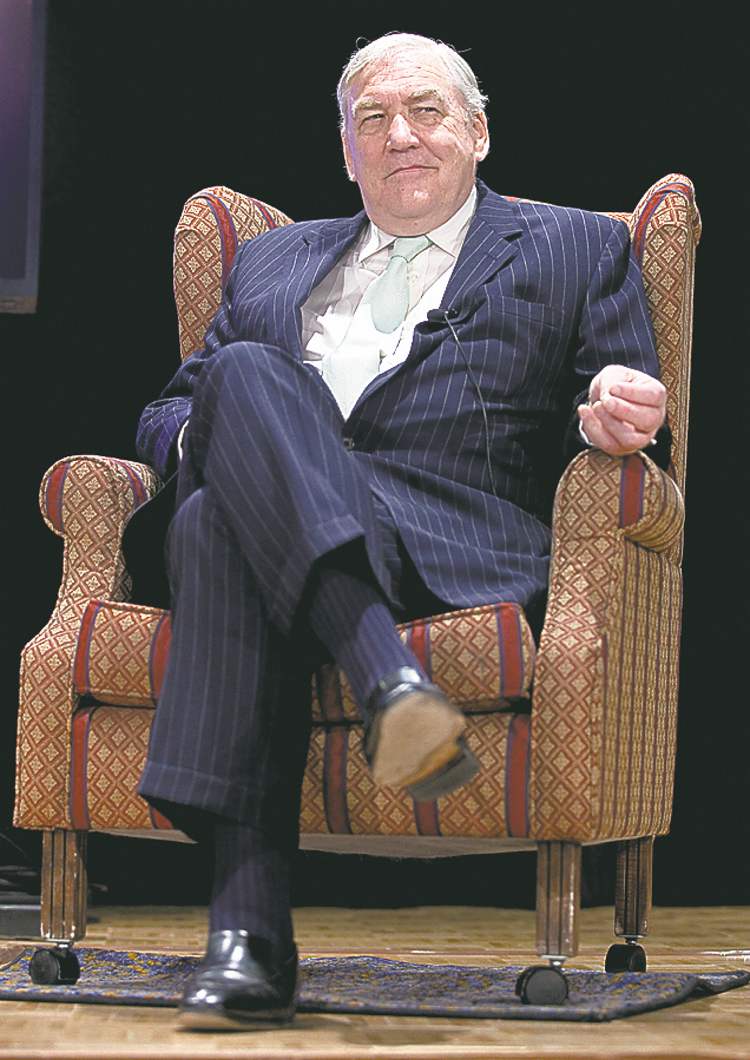
Conrad Black has voracious appetite for literary achievement.
CP Conrad Black has voracious appetite for literary achievement.

Black is at his best in finding majesty in moments of national crisis: Lincoln embattled in the Civil War, strangling secession, moving to abolish slavery, and being embraced by adoring freed slaves in Richmond; Franklin Roosevelt staving off the worst of the depression by novel governmental intervention to provide social security, and then gradually bringing a reluctant people to face an overseas war against Hitler.

The years 1937-1945, Black says, witnessed Roosevelt’s great “strategic triumph,” comparable to Lincoln’s conduct of the Civil War.

There is a body of conspiracy belief, mostly centred in the right-wing of the Republican Party, that condemns Roosevelt as a traitor deliberately arranging to have American sailors murdered at Pearl Harbor in 1941 and giving away, in 1945, two-thirds of Europe to Josef Stalin at the Yalta conference. Black will have none of this.

Although the book is sometimes enlivened by Black’s irreverence for the soaring rhetoric and spread-eagle nationalism of American public speech (“humbug” and “hypocrisy”), many passages wobble unevenly between sprightly argument and dull textbook-ese. The “American rape of its southern neighbour” in a campaign of “swaddled imperialism” during the Mexican War is certainly not the usual American textbook fare.

Black’s lack of familiarity with primary sources produces gaffes. Thomas Jefferson, an early Democrat, was an “elitist,” even if he favoured a broader voting public.

Perhaps. But letters between the two old rivals in old age show Jefferson refuting John Adams’ claim that birth, wealth and high family reputation generally prevail in politics.

Jefferson envisaged a future public school system that would find the “natural aristocracy” of ability and talent among the plain people. That talent emerged, as Black himself recognizes, in the careers of Lincoln, Grant, Truman, Eisenhower, Nixon, Reagan and Clinton.

Among the poor boys who made good, Richard Nixon, in Black’s eyes, stands out as an imaginative and visionary leader. He reminds us of great achievements: the 1972 opening to China and the Shanghai Communique, a world-changing event that may have prodded the Soviet Union into a quicker acceptance of the first strategic arms limitation agreement.
His unstinting praise of Nixon and Kissinger seeking an end to the American war in Vietnam betrays no hint of current scholarly controversies on the key question: could they have had the same terms in 1969, or certainly in 1971, that they finally accepted in 1973?

Excellent historians have argued that these uneasy partners were guided by political cynicism, delaying peace and ensuring the deaths of many thousands more.

In the end, Nixon was, Black complains, forced to resign in disgrace by vindictive partisans paying back old scores for the anti-communist demagogy of the early career. It does not bother Black that the majority of the American people, the official Republican Party, and almost everyone outside the Nixon family and loyal entourage disagrees with him.

Garin Burbank is a retired American history professor at the University of Winnipeg.
Report Error Submit a Tip

More Stories

Roblin links a hidden gem

Ryan Desjarlais 5 minute read Preview

Roblin links a hidden gem

Ryan Desjarlais 5 minute read Yesterday at 5:07 PM CDT

In between Manitoba’s “mountains” Duck and Riding lies the town of Roblin.

And nestled on the northern edge of this lovely Parkland community sits the Roblin Golf & Country Club, where the links are built around a picturesque water hole with rolling changes of elevation.

As the province get into the winds of autumn, be mindful that — although there are trees and brush — these placed growths offer little protection against stiff breezes.

The clubhouse is large and has a very good restaurant. There is a fleet of electric golf cars here for rent, and if anyone has mobility issues, a car is a good idea here. The course contains enough elevation changes that someone with that trick knee from high school sports might have a bad day.

Read
Yesterday at 5:07 PM CDT

Banjo Bowl a big deal for new and returning faces

Ken Wiebe 7 minute read Preview

Banjo Bowl a big deal for new and returning faces

Ken Wiebe 7 minute read Yesterday at 6:16 PM CDT

Kenneth Womack never doubted this day would come.

For all of the twists and turns along this journey, Womack believed in himself and the work he’s been putting in on the road to becoming a professional football player.

So, as the Winnipeg Blue Bombers receiver gets set to make his CFL on Saturday afternoon against the Saskatchewan Roughriders in the Banjo Bowl, you can be sure he’s going to take a moment to savour the experience while doing his best to make it feel like any other game he’s played previously.

“Once I run out the tunnel, it’s all going to sink in,” Womack said after Friday’s walkthrough.

Read
Yesterday at 6:16 PM CDT

International Peace Garden 9/11 remembrance ‘especially meaningful’

Alex Lambert 6 minute read Preview

International Peace Garden 9/11 remembrance ‘especially meaningful’

Alex Lambert 6 minute read Yesterday at 5:05 PM CDT

INTERNATIONAL PEACE GARDEN — Hundreds of people on the American side of the International Peace Garden, which straddles the Manitoba-North Dakota border, bowed their heads and observed a moment of silence Friday on the 25th anniversary of the 9/11 terrorist attacks.

Firefighters, politicians, military members and aviation officials were part of the ceremony at the garden, held to remember and honour the nearly 3,000 people who died and the heroic acts of first responders.

“Twenty-five years have passed, but the significance of that day has not diminished,” said Dave Schellenberg, the vice-chair of the Manitoba Association of Fire Chiefs.

On Sept. 11, 2001, terrorists hijacked four planes and flew two of them into the World Trade Center’s Twin Towers in New York City and a third one into the Pentagon in Washington, D.C., while a fourth one that was targeted to hit the White House crashed into a field in Pennsylvania. The attacks were orchestrated by al-Qaida.

Read
Yesterday at 5:05 PM CDT

American takes men’s senior title, Manitoban Fanning finishes third

Joshua Frey-Sam 7 minute read Preview

American takes men’s senior title, Manitoban Fanning finishes third

Joshua Frey-Sam 7 minute read Yesterday at 6:41 PM CDT

Todd Fanning did everything he could.

The decorated local golfer knew he would need to go low to have a chance at becoming the first Manitoban to win the Canadian men’s senior national championship on Friday, and while he held up his end of the bargain, in the end it was not to be.

Starting the day five shots back of the lead — a gap he closed quickly, actually taking the solo lead from a brief stretch early in the day — Fanning carded six birdies en route to tying a tournament-low four-under 68 in the final round at Niakwa Country Club.

The 58-year-old’s effort would be matched by Arizona’s Bryan Hoops, whose matching 68 carried him to a two-shot victory.

Read
Yesterday at 6:41 PM CDT

Double climate whammy hits home

Editorial 4 minute read Preview

Double climate whammy hits home

Editorial 4 minute read Wednesday, Sep. 9, 2026

It’s a bit of a one-two punch.

First, the show-and-tell of what global warming could be bringing us.

Then, the fact we’ve already failed our best chance of halting climate change.

On Sept. 3, the World Meteorological Organization released its forecast of the potential effects of the rapidly-developing super El Niño phenomenon.

Read
Wednesday, Sep. 9, 2026

Downtown no place to be after dark, huge majority of Winnipeggers say in survey

Joyanne Pursaga 4 minute read Preview

Downtown no place to be after dark, huge majority of Winnipeggers say in survey

Joyanne Pursaga 4 minute read Updated: Yesterday at 5:12 PM CDT

Most Winnipeggers are afraid to walk alone downtown and believe the city needs more police officers, a new survey finds.

Winnipeg Police Service released its 2026 citizen survey Friday.

Downtown safety appears to remain a major concern, with just 44 per cent saying they feel very or reasonably safe walking alone in the area during the day. The number plummets to eight per cent overall at night, down from nine per cent in 2024, the last time the survey was conducted.

This year, 14 per cent of men felt very or reasonably safe walking alone downtown at night, compared to just three per cent of women.

Read
Updated: Yesterday at 5:12 PM CDT